
Do you know what a check valve is in a plumbing system?A plumbing check valve is a one-way valve that allows water to flow in only one direction.When water starts flowing backward, the valve closes automatically.
It prevents backflow, protects pumps and other equipment, and helps your plumbing system operate safely and steadily.Next, I will explain what check valves do in plumbing systems and the problems you may face.
Do you know what role a check valve plays in a plumbing system?A check valve acts like a one-way guard in the whole plumbing system.Its main job is to let water flow in only one direction and close automatically when the flow reverses.A check valve also performs several other important functions:
You do not need to operate a check valve manually.It works automatically through water pressure and quietly protects key points in your plumbing system.
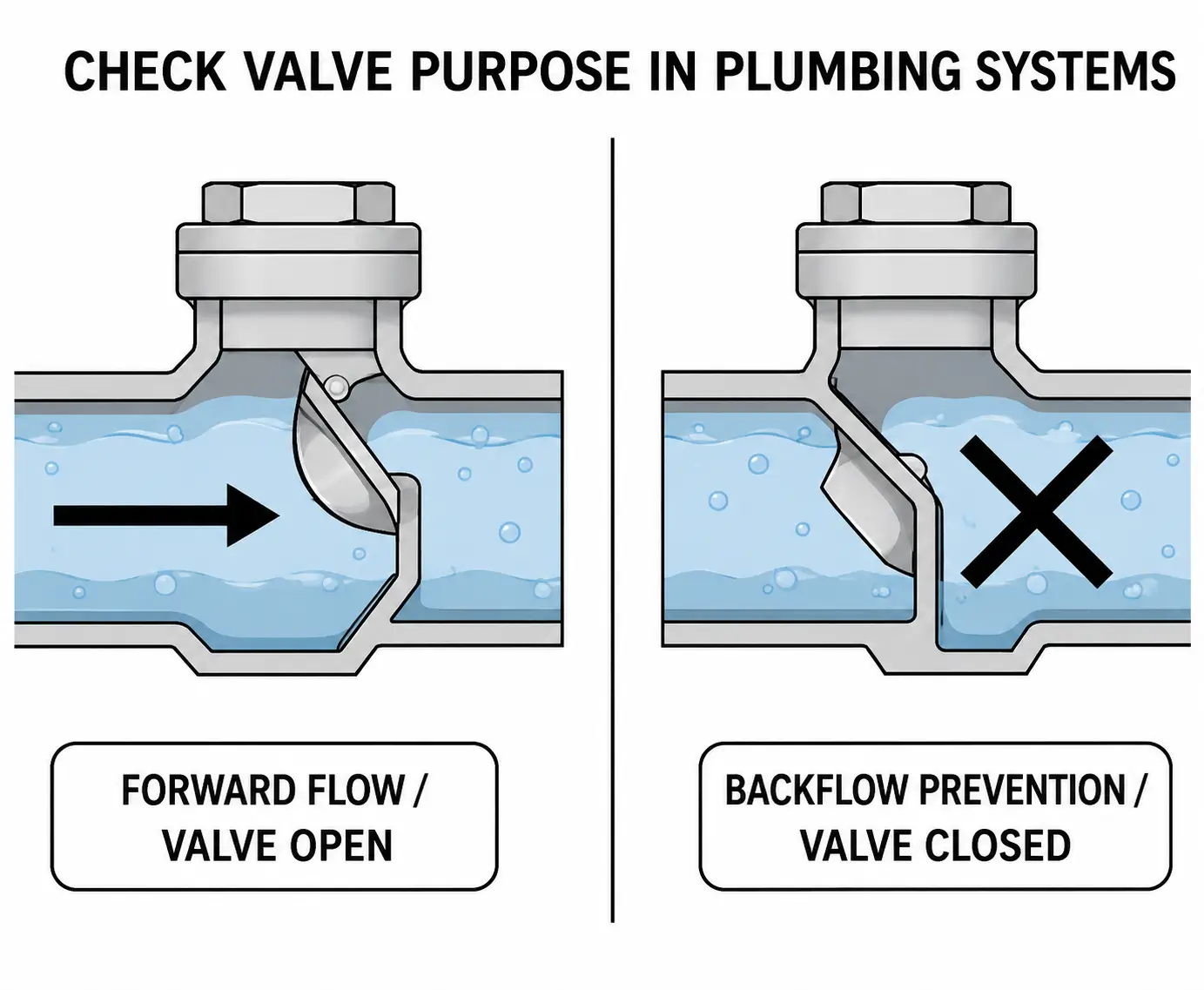
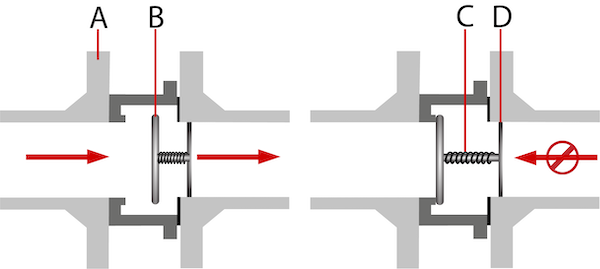
You may wonder how a plumbing check valve works.When the pump stops or pressure changes, the water may begin to flow backward.The backflow pressure and the disc’s weight push the disc tightly against the valve seat.
This quickly closes the passage and stops the water from flowing backward.The valve opens and closes automatically through pressure differences. You do not need to operate it manually.You can divide the working process into three steps:
Step 1—Forward Flow: Water pressure pushes the valve open.
Step 2—Flow Decreases: The valve disc begins moving back toward the closed position.
Step 3—Reverse Flow: The valve closes completely and prevents water from flowing backward.
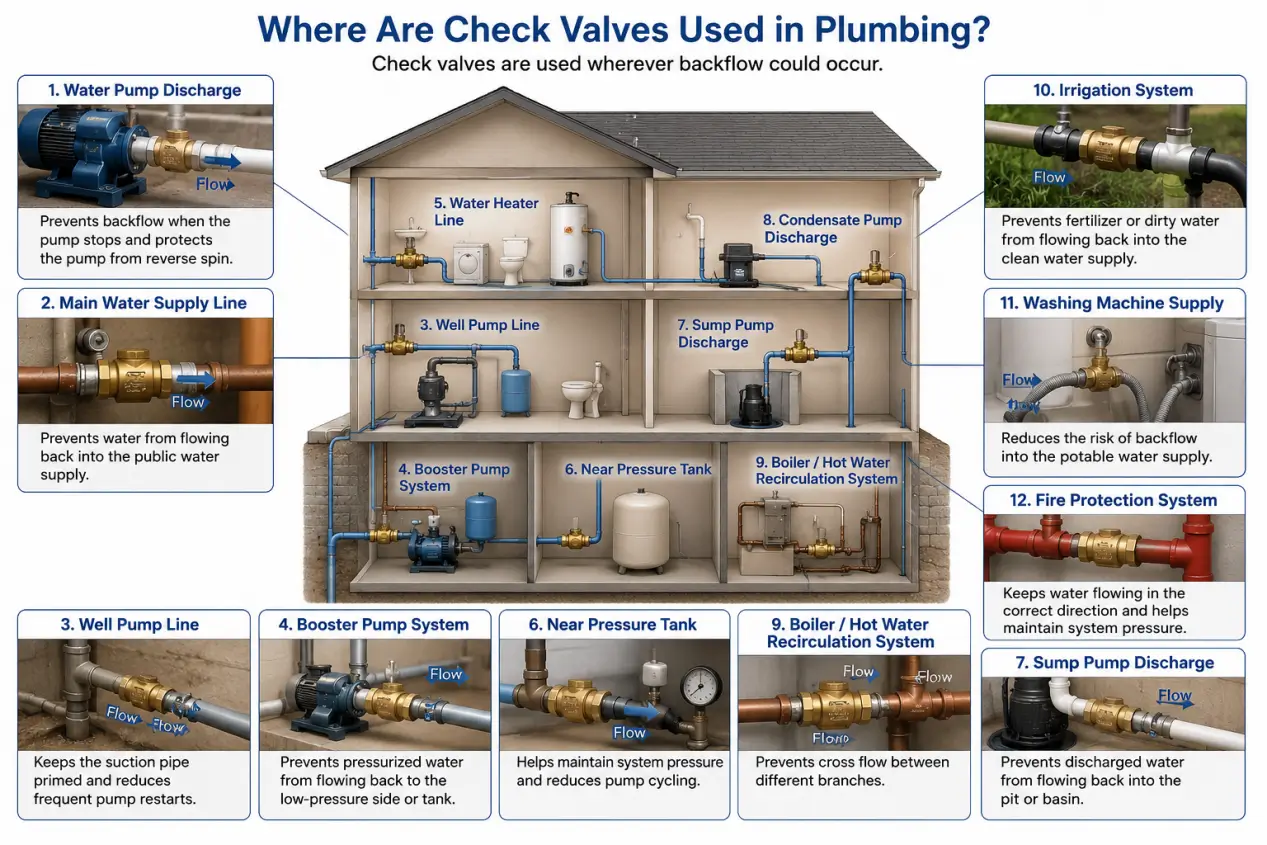
Do you know where plumbing check valves are usually installed?Check valves are normally placed where backflow, reverse pressure, or equipment reverse rotation may occur.Common installation locations include:
You should avoid installing the valve near elbows, tees, or other areas with unstable water flow.This helps the valve disc open and close smoothly.You must also make sure the arrow on the valve body points in the same direction as the normal water flow.
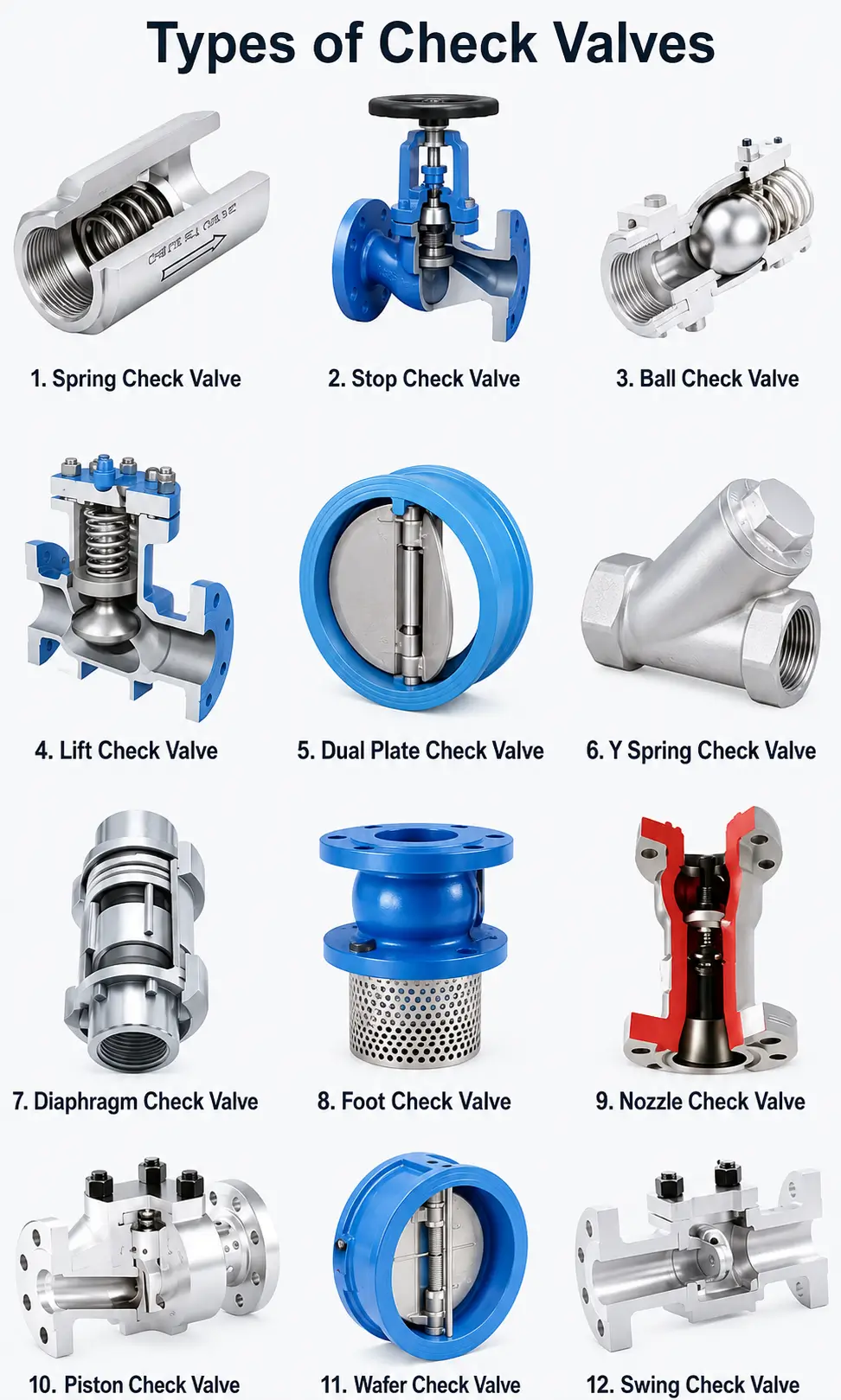
You may wonder which type of check valve is suitable for your system.Do not worry. I will introduce the main types one by one.Swing check valves have wide flow passages and are suitable for high-flow pipes.They are widely used in main pump lines inside HVAC mechanical rooms.
Lift check valves have a compact design and are better suited for narrow vertical installation spaces.Silent check valves are often preferred in modern projects.They can reduce water hammer, lower operating noise, and provide better protection for pumps.
Ventilation ducts commonly use louvered backdraft dampers.They open and close automatically through air pressure and prevent air from flowing backward.Small copper check valves are installed in refrigerant lines for air-conditioning and heat-pump systems.
These valves control the direction of refrigerant flow.When choosing a check valve, you should also consider:
You may easily confuse a check valve with a backflow preventer.Simply put, they are completely different devices.A check valve is a single valve that opens and closes automatically through fluid pressure differences.It has a compact design and is widely installed in HVAC, water supply, and drainage pipes.
Its main purpose is to protect pumps and fans from reverse flow and pressure impact.It mainly controls one-way flow during normal pipeline operation.A backflow preventer is usually a complete protection assembly.
Many types contain several valves and other protective parts, providing a higher level of backflow protection.Besides stopping reverse flow, it can also prevent contamination and separate clean water from unsafe water.The following table will help you understand the differences more clearly:
| Comparison Item | Check Valve | Backflow Preventer |
|---|---|---|
| Main Function | Controls one-way flow and protects equipment | Prevents contaminated water from returning to the clean water supply |
| Structure | Usually has one closing part | Usually contains several check parts or a pressure-relief structure |
| Protection Level | Provides basic backflow control | Provides a higher level of backflow protection |
| Common Uses | Pumps, hot-water, drainage, and circulation systems | Drinking water, irrigation, fire systems, and high-risk connections |
| Testing Requirements | Ordinary check valves usually do not need field testing | Some types require regular inspection or testing |
| Can They Replace Each Other? | Cannot replace a required backflow preventer | Provides specialized protection against water contamination |
| Cost | Usually lower | Usually higher |
| Maintenance Requirements | Relatively simple | Usually requires more inspection and maintenance |
You may think every plumbing system needs a check valve, but this is not true.The main question is whether your system has a real risk of reverse flow.Pump outlets, fan outlets, parallel pipes, and high-rise water zones can easily experience backflow after equipment stops.
Reverse flow may hit the impeller and disturb pressure throughout the piping system.Therefore, you usually need check valves at these locations.However, some pipes always carry water in one direction and have no conditions that could cause backflow.
Installing unnecessary check valves can increase flow resistance and system energy use.In such cases, the added valve may create more disadvantages than benefits.You can use the following questions to decide whether a check valve is needed:
You should know that check valves cannot be installed randomly in a piping system.They should be placed at key points with the highest risk of reverse flow.In water systems, the circulation pump outlet is the most common installation location.It prevents water from flowing backward after the pump stops and protects the pump impeller from impact.
When several pumps operate in parallel, you should install a separate check valve at each pump outlet.Check valves are also commonly installed in high- and low-zone risers, cooling tower branches, heat pump lines, and make-up water pipes.These valves help maintain stable pressure throughout the piping system.
In ventilation systems, check dampers are usually installed at fan outlets.Some exhaust ducts have check dampers near the outdoor vent.They prevent cold outdoor air and unpleasant smells from entering the room after the fan stops.
You should avoid installing check valves near elbows, tees, or other areas with unstable flow.This helps the valve disc open and close smoothly.You must also ensure that the arrow on the valve body points in the same direction as the normal fluid flow.
The installation direction is one of the most important requirements for a plumbing check valve.The arrow on the valve body must point in the same direction as the normal fluid flow.If you install the valve backward, it cannot work correctly.
It may block the flow and completely lose its backflow protection function.Correct installation allows the check valve to stop reverse flow and protect your pipes and equipment.Before installation, you can follow these steps:
You should also follow the valve’s design requirements.Some check valves support horizontal installation, while others are designed for vertical installation.You should not force the valve into an unsupported position.
You may think choosing the same valve size as the pipe size is enough.However, accurate sizing requires more than checking the pipe diameter.You should choose the valve size based on actual flow, flow speed, pressure loss, and operating conditions.You can follow these steps:
Step 1: Confirm the pipe size and connection type.
Step 2: Confirm the system’s flow range.
Step 3: Check the flow speed through the valve.
Step 4: Check the pressure loss across the valve.
Step 5: Confirm the valve’s opening pressure.
Step 6: Consider how your system operates.
Did you know that plumbing check valves are available with different connection types?Each connection type suits different pipe materials, sizes, pressure ratings, and maintenance needs.Flanged, threaded, wafer, and welded connections are the most common options in engineering projects.
Flanged connections are easy to inspect and maintain.Threaded connections are commonly used for small pipes.Wafer connections save installation space.Welded connections provide stronger sealing.
You should choose according to pipe size, pressure, and maintenance needs.The correct connection keeps the valve secure and helps prevent reverse flow.How should you choose from so many connection types?You can use the following table as a guide:
| Connection Type | Common Pipes or Applications | Main Advantages | Main Limitations |
|---|---|---|---|
| Threaded | Small water pipes and equipment lines | Easy to install and replace | Limited in large pipes and high-vibration areas |
| Flanged | Large pipes and high-flow systems | Strong and easy to maintain | Heavy and requires more space |
| Wafer | Between flanges and in limited spaces | Short, light, and space-saving | Requires accurate alignment during installation |
| Grooved | Fire protection and commercial building pipes | Fast installation | Requires grooved pipe ends and special couplings |
| Soldered | Single copper water supply pipes | Compact with reliable sealing | Heating temperature must be controlled |
| Compression | Small copper pipes | No welding required | May leak if installed incorrectly |
| Push-Fit | Residential repairs and upgrades | Very fast installation | Limited by material, pressure, and temperature |
| Socket Weld | Small high-pressure pipes | Good strength and sealing | Difficult to remove |
| Butt Weld | High-pressure and high-temperature industrial pipes | Reliable with fewer leak points | Difficult to install and replace |
| Union | Equipment requiring regular maintenance | Easy to disconnect | Has more joints and sealing parts |
You should not choose a connection type based only on valve size.You must also confirm that it matches your existing pipes and system pressure.
You should understand the problems that may occur when a plumbing check valve fails.If the valve disc becomes stuck open, fluid can flow backward after the equipment stops.The reverse water or air flow may strongly hit the pump or fan impeller.
Continuous impact can eventually damage important equipment.The backflow may also disturb system pressure and cause fluid to take the wrong path.This can reduce heat transfer and ventilation performance across the entire system.
If the disc becomes stuck half-open, the fluid flow remains unstable.You may notice pipe vibration and unusual noise.Flow resistance will also increase, causing the system to use more energy.If the check valve remains fully closed, it will block the fluid passage.
The system cannot move water or air normally.Cooling, heating, and ventilation performance may drop sharply, making normal operation difficult.Once you find a faulty check valve, you should immediately stop the related pump or equipment and shut off the water supply.After you confirm that the system pressure has been released, check the following items:
In most cases, you should install the check valve at the pump outlet, after the pump.When the pump stops, the outlet check valve closes and prevents water from flowing back into the pump.This helps maintain system pressure and reduces the risk of the pump rotating backward.
If a check valve is installed backward, the arrow on the valve body points against the normal water flow.This may cause:
Not always. Not every water heater needs a separate check valve.Whether you need one depends on the water supply design, hot-water circulation method, local rules, and the risk of hot-water backflow.
Yes. You should install a check valve on the sump pump discharge pipe.When the pump stops, the check valve prevents water in the discharge pipe from flowing back into the sump.
When choosing a plumbing check valve, you should not consider only the pipe size or simply choose the lowest-priced product.You need to select it carefully based on the actual operating conditions of your piping system.You should identify the fluid type and choose the correct valve size based on pipe size and flow rate.
You should also select the valve type and connection based on installation space and working pressure.For professional advice, you can provide the flow rate, pressure difference, fluid, and material requirements.We can help you choose a suitable check valve for your system.
—— We Will Provide You With Professional OEM Solutions.
Whether you require pump bearings, pump valves, mechanical seals, or other custom-engineered components, we support production based on your drawings as well as rapid prototyping.
Please complete the form on the right and upload your technical drawings or specifications. Our engineering team will review your requirements within 24 hours and provide a detailed quotation, application recommendations, and delivery schedule.
Copyright © 2025 Sakowit, All rights reserved.
WhatsApp us