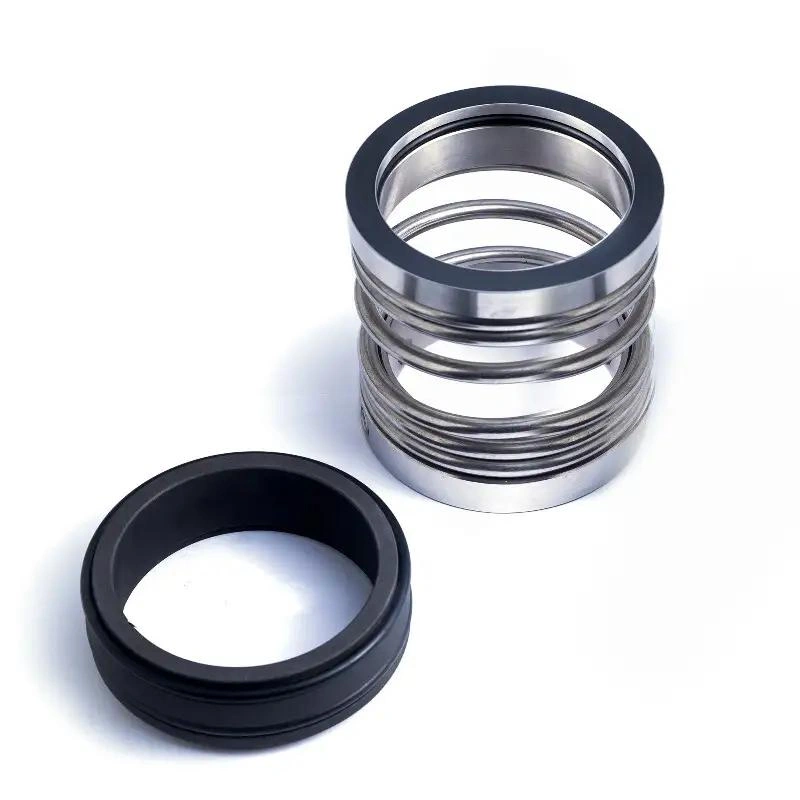

In long-term pump operation, you may notice that mechanical seals often perform better overall than traditional gland packing for shaft sealing.This does not mean gland packing is a poor choice. It is simple, low-cost, easy to maintain, and suitable for basic operating conditions.However, modern plants often need stable operation, low leakage, less maintenance, and better equipment protection. In these areas, the limits of gland packing become clearer.
Mechanical seals use closely matched sealing faces. This design helps reduce common problems such as shaft wear, leakage, higher energy use, and shorter service life.Mechanical seals also perform well under high pressure, high temperature, high speed, dangerous fluids, and strict safety or environmental requirements.
In many suitable applications, they can provide more stable operation, easier maintenance, and lower long-term costs.In this guide, I will explain the main advantages of mechanical seals over gland packing and the common problems you may face.
If you are comparing mechanical seals and gland packing, start with these key points.Mechanical seals mainly offer lower leakage, less friction, less shaft wear, less maintenance, and better performance during continuous operation.
| Comparison Item | Mechanical Seal | Gland Packing |
|---|---|---|
| Leakage Control | Usually has much lower leakage and is better for applications with strict leakage limits | Usually allows a small amount of leakage |
| Friction | Friction is mainly at the seal faces and is usually lower | Packing stays in contact with the shaft, creating more friction |
| Energy Use | Lower friction helps reduce energy loss during long-term operation | Higher friction may increase energy use |
| Shaft Wear | Causes little direct wear to the main shaft under normal conditions | Long-term contact may wear the shaft or shaft sleeve |
| Maintenance | Usually needs less frequent adjustment when correctly selected | Needs regular tightening, adjustment, or packing replacement |
| Service Life | Usually better for long-term continuous operation under suitable conditions | Packing is a wear part and needs regular maintenance |
| High Pressure / Speed | Usually more suitable, but correct materials and support systems are required | Friction and heat become more serious at high pressure and speed |
| Safety | Better for toxic, flammable, or volatile fluids | Small leaks may create higher safety risks |
| Environmental Performance | Easier to meet low leakage and clean production requirements | Continuous or occasional leakage must be managed |
| Initial Cost | Higher | Lower |
| Long-Term Cost | Often more cost-effective in continuous operation | Packing, energy use, shaft repair, and replacement costs must be considered |
Overall, mechanical seals offer lower leakage, less shaft wear, lower friction, and lower energy use than gland packing.They are also better suited for high pressure, high temperature, high speed, and other demanding operating conditions.
Under suitable conditions, mechanical seals usually last longer and can reduce downtime and maintenance work.However, these benefits depend on correct installation and proper support systems, such as flushing and cooling.
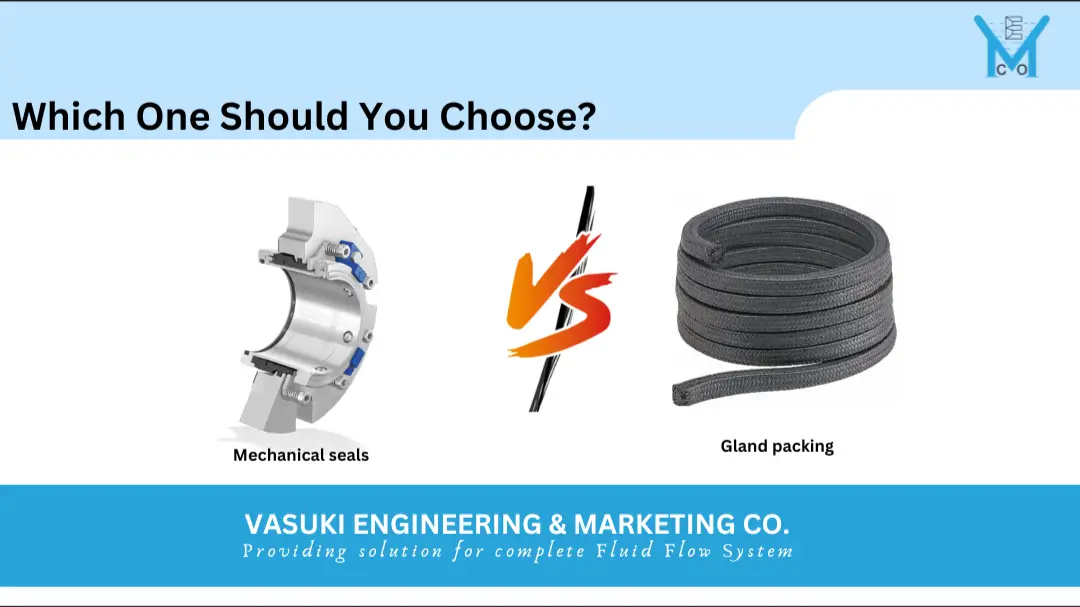
You should know that mechanical seals are not suitable for every situation.Their advantages over gland packing become clear only when the operating conditions match their strengths.
| Condition | Why Mechanical Seals Have a Clear Advantage |
|---|---|
| 24-Hour Continuous Operation | They need less frequent adjustment than packing, helping reduce maintenance and unexpected downtime. |
| Strict Leakage Control | Leakage is usually much lower, making it easier to meet production, safety, and environmental requirements. |
| Toxic, Flammable, or Volatile Fluids | They reduce fluid leakage and lower risks to people, equipment, and the environment. |
| High-Speed Rotating Equipment | Lower friction can reduce heat, energy use, and shaft wear. |
| High Pressure Conditions | Properly designed mechanical seals usually provide better leakage control. |
| High Temperature Conditions | With the right seal faces, secondary seals, and cooling, they can handle higher temperatures. |
| High Downtime Costs | Less adjustment and maintenance can reduce production losses caused by shutdowns. |
| Serious Shaft Wear Problems | Mechanical seals do not rely on packing pressing against the shaft, helping reduce shaft or sleeve wear. |
| Strict Environmental Requirements | Lower leakage helps reduce fluid loss, pollution, and cleanup work. |
| High-Value Fluids | Less leakage and waste can help reduce long-term operating costs. |
Therefore, mechanical seals show their greatest advantage when your equipment needs long continuous operation, strict leakage control, less shaft wear, and fewer costly shutdowns.
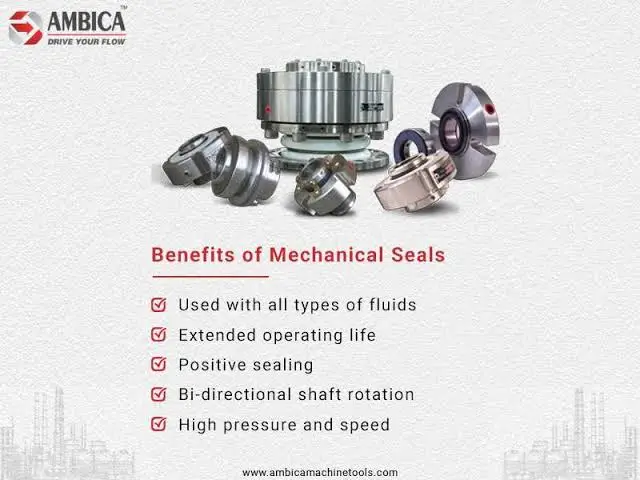
In factories, seal leakage can be a serious problem.Compared with gland packing, mechanical seals can keep leakage at a much lower level.This makes them better for equipment that needs cleaner operation and stricter leakage control.Mechanical seals can achieve near-zero leakage, keeping fluid loss at a very low level.
Without continuous dripping, the area around the equipment stays cleaner and requires less cleanup work.For plants with environmental requirements, lower leakage helps reduce pollution caused by fluid loss.It also reduces safety problems such as floor corrosion and slip risks caused by leaking fluids.
However, mechanical seals can still have very small amounts of leakage.Damaged seal faces, dry running, or poor installation can cause leakage to increase quickly.If you need lower leakage and cleaner operation, mechanical seals are usually better than gland packing.However, correct seal selection, installation, and support systems are still necessary.
Do you know why mechanical seals can keep leakage so low? One key reason is that the two seal faces are precisely lapped.This process makes the rotating and stationary faces very flat, allowing them to form a stable sealing surface.When the pump shaft rotates, the rotating face moves with the shaft while the stationary face remains still.
A very thin liquid film stays between the two faces to provide lubrication and carry away friction heat.If the faces are flat enough, the fluid cannot easily pass between them, so product leakage and loss are greatly reduced.
This is especially important when you are handling high-value, volatile, or dangerous fluids.However, you should remember that precisely lapped faces do not mean absolutely zero leakage.Mechanical seals still need a very thin liquid film during normal operation.The actual leakage level also depends on pressure, temperature, seal-face materials, and operating conditions.
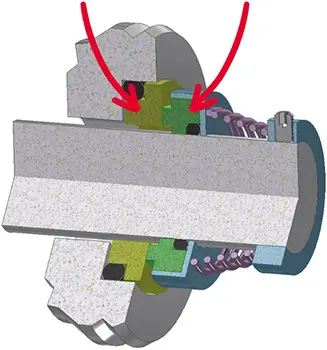
You should know that mess caused by seal leakage is a common problem in many plants.Mechanical seals use precise seal faces to achieve near-zero leakage and greatly reduce fluid dripping outside the equipment.Without continuous leakage, the pump, base, and surrounding work area can stay cleaner and drier.
This reduces daily cleanup work and also lowers the risk of equipment corrosion and slippery floors.If you work in a production area with strict cleanliness requirements, this advantage becomes especially important.However, you still need to inspect the mechanical seal regularly.If the seal faces are damaged, installed incorrectly, or the support system fails, leakage may increase and the cleanliness benefit will decrease.
Do you know why mechanical seals are better than gland packing for safety and environmental compliance?By reducing fluid leakage, mechanical seals can help you lower safety risks in the workplace.They also make it easier for you to meet requirements for leakage control, cleaner production, and environmental management.
This advantage is especially important in chemical, pharmaceutical, food, and energy industries, where safety and environmental requirements are often stricter.However, you should know that mechanical seals do not automatically guarantee compliance.You still need to choose the right seal based on the fluid, regulations, seal design, and support system.
When pumps handle toxic, flammable, volatile, or corrosive fluids, seal leakage can affect people, equipment, and the environment, not just workplace cleanliness.Mechanical seals control leakage through precise seal faces and usually leak less than gland packing during normal operation.This helps reduce the chance of dangerous fluids entering the work area.
It can also lower the risk of worker contact, harmful vapor spread, and fire.For volatile liquids, even a small leak can quickly turn into vapor.Mechanical seals help reduce fluid release, making them more suitable for chemical, oil, and pharmaceutical applications with strict leakage control.For highly toxic, flammable, or environmentally sensitive fluids, you can use double mechanical seals, barrier fluids, or other support systems.
These systems can further reduce the risk of dangerous fluids reaching the outside environment.However, mechanical seals do not mean absolutely zero leakage.For hazardous fluids, you still need the right seal design based on fluid type, pressure, temperature, and regulations.You should also carry out regular leakage checks and routine inspections.
When pumps handle volatile, toxic, or irritating fluids, even a small seal leak can create vapor, odors, or harmful emissions.It can also increase the chance of workers coming into contact with the fluid.Under normal conditions, mechanical seals can keep leakage at a much lower level.This helps reduce the amount of fluid released into the air and work area.
It can also lower volatile emissions and reduce the risk of breathing vapors or touching leaked fluids.This advantage is especially important in chemical, pharmaceutical, and oil industries with strict health and emission requirements.However, you should know that mechanical seals cannot completely remove emission and exposure risks.
Damaged seal faces, dry running, wrong materials, or support system problems can all increase leakage.You still need proper ventilation, leakage monitoring, regular inspections, and safety measures based on the fluid risk.
Compared with gland packing, one clear advantage of mechanical seals is lower friction and lower energy loss.Gland packing must press against the shaft or shaft sleeve, creating continuous friction while the equipment is running.Mechanical seal friction mainly occurs between the two seal faces.
During normal operation, a very thin liquid film forms between the seal faces and helps reduce friction.Compared with packing pressing continuously against the shaft, this design usually creates less friction loss.If your pump runs at high speed, operates continuously, or has high energy costs, mechanical seals are usually a better choice.
However, you should remember that mechanical seals are not completely friction-free.Wrong seal-face materials, poor lubrication, dry running, or weak cooling can quickly increase friction and temperature.To gain the benefits of lower friction and energy use, you need the right seal and proper lubrication, flushing, or cooling.
Do you know why gland packing creates more friction?The main reason is how it seals. Packing must stay pressed against the shaft or shaft sleeve to control fluid leakage.When the shaft rotates, the packing stays in direct contact with its surface, so friction continues during operation.
The tighter the gland is adjusted, the higher the contact pressure becomes, and the shaft must overcome more resistance.Mechanical seals work differently. Friction mainly occurs between the thin rotating and stationary seal faces.The contact area is much smaller, and a thin liquid film between the faces provides lubrication and helps reduce friction.
You should remember that tighter packing is not always better.The right setup balances leakage control, lubrication, cooling, and friction.If the packing is too tight, it can shorten the service life of both the packing and the shaft sleeve.
For pumps that run continuously for long periods, the energy difference caused by the seal can grow over time and is easy to overlook.Gland packing creates continuous sliding friction over a larger area between the packing and the shaft.This friction uses part of the motor’s power.
The longer the equipment runs, the more this extra energy loss can build up.Mechanical seals usually save more energy in high-speed, high-power, or continuous-operation equipment.The longer the pump runs, the more benefit you can gain from lower friction.
However, you should not assume that switching to a mechanical seal will greatly reduce the total energy use of the pump.Pump efficiency, operating point, motor efficiency, and system resistance are usually more important factors.
You should know that grooves and wear on pump shafts or sleeves are very common maintenance problems.Gland packing works by pressing tightly against the rotating shaft.During operation, the packing keeps sliding against the shaft surface and creates constant friction.If small particles enter the fluid, they can become trapped between the packing and shaft.
These particles can act like sandpaper and slowly wear the shaft surface.Over time, the shaft sleeve may develop grooves, scratches, or other visible wear.Mechanical seals work differently.They mainly seal through the rotating and stationary seal faces instead of rubbing packing directly against the shaft.
Because of this, they usually cause much less direct wear on the shaft surface.This can help protect the shaft sleeve, extend shaft life, and reduce future repair and replacement work.However, you should remember that mechanical seals are not completely free from wear.Most wear happens on the seal faces.
Dry running, particles, poor alignment, or weak lubrication can still damage these faces.If your equipment runs for long periods and often has shaft sleeve wear, mechanical seals usually offer a clear advantage.However, correct installation and good operating conditions are still necessary.
One of the biggest differences between mechanical seals and gland packing is how they contact the rotating shaft.Gland packing uses radial contact sealing.The gland compresses the packing, making it expand and wrap tightly around the rotating pump shaft from all sides.To control leakage, the packing must stay under pressure.
The tighter the packing is pressed, the stronger the shaft contact becomes.This also increases friction and makes shaft sleeve wear more likely.During normal operation, a small amount of leakage is usually needed.This leakage helps lubricate the packing and carry away heat created by friction.Mechanical seals use face sealing instead.The seal works through two parallel faces on the rotating and stationary rings.
Instead of gripping the shaft, these two seal faces stay in close contact.The sealing surfaces are flat and positioned at a right angle to the shaft.When the shaft rotates, friction mainly occurs between these two thin seal faces.A very thin liquid film forms between the faces to provide lubrication and remove heat.The shaft itself has little direct friction, so the mechanical seal does not normally cause direct shaft sleeve wear.
You should know that shaft sleeve wear is a common repair cost in pump maintenance.Gland packing rubs against the shaft sleeve for long periods, which can create grooves, scratches, and uneven wear.When the wear becomes serious, replacing the packing alone usually cannot restore stable sealing.
You may need to replace the shaft sleeve or repair, machine, or rework the worn surface.This adds not only part costs, but also more maintenance time and equipment downtime.Mechanical seals mainly work through the rotating and stationary seal faces.Under normal conditions, they do not keep rubbing against the shaft sleeve.
This can greatly reduce direct wear on the sleeve.For pumps that run continuously, you can reduce sleeve replacement and lower machining and repair work caused by shaft wear.However, you still need to check shaft runout, installation accuracy, and the seal fitting position.Mechanical seals reduce sleeve friction, but poor installation can still cause early seal failure.
Compared with gland packing, mechanical seals can usually provide longer continuous operation and longer maintenance intervals when the operating conditions and installation are correct.Gland packing is a wear part.As operating time increases, the packing gradually wears, loses flexibility, and may allow more leakage.
You need to tighten the packing, adjust the gland, and replace the packing when necessary.Mechanical seals mainly work through the rotating and stationary seal faces.Under normal conditions, they do not need the frequent adjustment required by gland packing.
If the seal faces stay well lubricated, the materials are correct, and dry running or heavy particle entry is avoided, sealing can remain more stable.However, you should know that mechanical seals do not always last longer.Wrong materials, poor installation, dry running, weak flushing, or too many particles can still cause early seal failure.
During operation, gland packing is constantly exposed to friction, pressure, and wear, so the leakage level may gradually change.To keep the seal working properly, you usually need to check and adjust the gland regularly.If the gland is too loose, leakage may increase.If it is too tight, friction, heat, and shaft sleeve wear may increase.
Because of this, gland packing often needs repeated adjustment during daily maintenance.Mechanical seals work differently.They mainly seal through the rotating and stationary faces.Springs or other loading parts can automatically make up for some seal-face wear.Under normal conditions, you usually do not need to tighten or adjust the seal as often as gland packing.
However, you should remember that less daily adjustment does not mean no inspection is needed.You still need to check leakage, temperature, vibration, and the condition of flushing or cooling systems regularly.If a mechanical seal leaks badly, you should not simply tighten it like gland packing.You need to check the seal faces, secondary seals, installation, and operating conditions.
In highly automated plants or factories running 24 hours a day, you should know that seal reliability is very important.Frequent leakage or manual adjustment can affect the stable operation of the entire production line.Gland packing needs regular checks for gland tightness, leakage, and shaft sleeve wear.
For continuous equipment, this can increase manual work and create more chances for downtime.Mechanical seals usually need less adjustment when they are correctly selected, installed, and operated.Their sealing condition is more stable, making them better for automated equipment and pumps that run continuously.
For unattended equipment, automated production lines, or plants with high downtime costs, mechanical seals usually offer a clearer advantage.However, you should remember that mechanical seals are not maintenance-free.You still need to monitor leakage, vibration, temperature, and flushing or cooling systems to detect problems early.
When a pump runs under high pressure, high speed, or high temperature, the seal is exposed to much heavier operating loads.These conditions can increase friction, heat, leakage, and material aging, making the differences between seal types more obvious.Gland packing works by pressing tightly against the rotating shaft.As pressure, speed, or temperature rises, friction and heat usually increase.
The packing may wear faster, become harder, or lose sealing ability.At the same time, shaft sleeve wear may also become more serious.Mechanical seals mainly work through the rotating and stationary seal faces.They do not need to press tightly around the shaft like gland packing.With the right design and selection, mechanical seals are usually better for continuous operation under high pressure, speed, or temperature.
For high-temperature applications, you can improve seal stability by choosing suitable face materials, secondary seals, and proper cooling or flushing systems.However, you should know that better performance in harsh conditions does not mean every mechanical seal can handle high pressure, speed, or temperature.
You still need to check pressure, temperature, speed, fluid properties, material combinations, and cooling or flushing conditions.If any of these conditions are not matched correctly, the mechanical seal may fail early.
Mechanical seals can handle higher pressure partly because their design can control face loading.Face loading simply means the force pressing the rotating and stationary seal faces together.As pump pressure increases, the fluid pressure acts on the seal rings.This creates force that pushes the two seal faces together.
The right face pressure helps keep the seal closed and reduces fluid leakage between the faces.However, tighter contact is not always better.If face loading is too high, the liquid film between the faces may become too thin.
This can quickly increase friction and temperature and cause faster seal-face wear.If face loading is too low, the faces may not stay in stable contact, which can increase leakage.Therefore, one key part of mechanical seal design is keeping face loading within a suitable range.
You should know that mechanical seals can work reliably with high temperatures or corrosive fluids only when the materials match the operating conditions.This includes the seal faces, secondary seals, and metal parts.The rotating and stationary seal faces handle both friction and sealing.So you need materials with good wear resistance, heat resistance, and chemical resistance.
| Material | Main Characteristics | Typical Considerations |
|---|---|---|
| Carbon Graphite | Low friction and good self-lubricating ability | Often paired with a hard seal face, but fluid and temperature compatibility must be checked |
| Silicon Carbide (SiC) | High hardness, good wear resistance, and good corrosion resistance | Often used for corrosive fluids, high temperatures, or fluids with some particles |
| Tungsten Carbide (TC) | High strength and good wear resistance | Suitable for higher loads and wear, but chemical compatibility still needs checking |
| Ceramic | Good wear resistance and resistance to many chemicals | Lower cost, but more brittle and less suitable for strong impact |
If you only tell the supplier that the fluid is chemical and the temperature is high, that information is usually not enough.You should provide at least:
For high-temperature and chemical applications, you should not choose seal materials only by heat resistance or corrosion resistance.You also need to check whether the seal faces, secondary seals, and metal parts are compatible with the actual fluid and temperature.
Mechanical seals usually cost more to buy than gland packing.If you only compare the initial price, you may miss the real cost over the equipment’s full service life.Gland packing is cheaper, but long-term costs may include packing replacement, gland adjustment, shaft sleeve wear, leakage loss, extra energy use, and downtime repairs.
When correctly matched to the application, mechanical seals can reduce leakage, lower shaft and sleeve wear, and extend maintenance intervals.These benefits can reduce future repair work and manual maintenance.The value of a mechanical seal is not a lower purchase price.
Its main value is the chance to reduce total costs over the equipment’s service life.However, you should know that wrong seal selection, poor installation, or unsuitable support systems can also lead to high repair costs.When comparing costs, you should calculate long-term expenses based on actual operating conditions, not only the purchase price of the seal.
The long-term cost advantage of mechanical seals usually comes from three areas: product loss, energy use, and labor costs.Gland packing allows some leakage.For low-value fluids like clean water, this loss may be small.But with oil, chemicals, or high-value liquids, long-term leakage can gradually increase operating costs.
Gland packing also needs regular checks, gland adjustment, and packing replacement.Frequent maintenance increases labor costs and may also create more equipment downtime.When correctly matched to the application, mechanical seals can reduce visible leakage, lower friction, and reduce daily adjustment.This gives you a chance to lower all three long-term costs at the same time.
However, you should know that mechanical seals are not always cheaper for every application.Operating time, fluid value, energy price, and maintenance frequency can all affect the final cost.When comparing costs, you should include product loss, energy use, labor, and downtime, not only the purchase price of the seal.
The long-term value of mechanical seals is not only lower leakage and energy use.It also comes from less downtime, fewer spare parts, and better lifecycle returns.Gland packing needs more frequent maintenance.As the packing wears and leakage increases, you may need to stop the pump to adjust the gland or replace the packing.You may also need to repair worn shaft sleeves.
Mechanical seals can usually run more steadily for longer when the seal is correctly selected and installed.This can reduce downtime caused by seal adjustment and replacement.Gland packing parts are usually cheaper, but long-term use may require frequent replacement of:
Mechanical seals usually cost more per unit, but replacement may be less frequent in suitable applications.They can also help reduce shaft sleeve wear.Mechanical seals need a higher initial investment.You should compare this cost with the savings they may bring later.
If long-term savings are higher than the extra purchase and conversion costs, mechanical seals can provide better lifecycle payback.When comparing gland packing and mechanical seals, do not only look at spare part costs.You should also include downtime, spare parts, maintenance labor, and equipment repair costs over the full service life.For continuous production or equipment with high downtime costs, mechanical seals may provide better long-term value even with a higher initial cost.
Although mechanical seals usually perform better in leakage control, shaft protection, and continuous operation, gland packing has not been completely replaced.In simple, low-risk applications or sites with limited maintenance resources, gland packing can still be more practical.
If your equipment works under mild conditions, handles safe fluids, and allows small leakage, gland packing can still be a practical choice.It is especially suitable when you value easy maintenance and lower initial cost.
When handling fluids with sand, solid particles, crystals, or other dirt, gland packing can sometimes be easier to maintain than standard mechanical seals.Gland packing has a simple design.Even if particles enter the sealing area, you can often keep it working by adjusting the gland or replacing the packing.
This is especially useful for slurry equipment where some leakage is acceptable and maintenance is easy.Standard mechanical seals have very precise seal faces.Hard particles can scratch or wear these faces and may cause leakage or early seal failure.When selecting a seal, you should consider particle size, concentration, hardness, fluid type, acceptable leakage, and whether flushing or isolation is available.
Compared with mechanical seals, one clear advantage of gland packing is lower upfront cost and simpler field repair.This can be attractive for pumps with limited budgets, lower equipment value, or mild operating conditions.Packing materials are usually cheaper and the sealing structure is simple.If leakage occurs, you can often restore operation by adjusting the gland, adding packing, or replacing the packing.
You usually do not need complex disassembly or precise alignment.This is especially useful at sites with limited maintenance support, such as remote plants, older equipment, or locations without skilled technicians.With basic tools and spare packing, you can handle most routine maintenance work.
However, you should remember that a lower upfront cost does not always mean a lower long-term cost.If packing needs frequent replacement, causes shaft sleeve wear, or leads to repeated downtime, the total cost can increase over time.
Yes. Mechanical seals usually need less adjustment than gland packing, but that does not mean they are maintenance-free.During normal operation, you should regularly check leakage, temperature, vibration, and the condition of flushing or cooling systems.
If you notice unusual leakage, higher temperature, or more vibration, you should check the seal faces, secondary seals, and installation condition.Mechanical seal life also depends on the fluid, pressure, temperature, particles, dry running, and installation quality.If you ignore these factors for too long, the mechanical seal may fail early.
No. Mechanical seals usually perform better in low leakage, low friction, less shaft wear, continuous operation, and high-pressure or high-speed conditions.However, they are not suitable for every application.If your equipment works under simple conditions with low pressure, low speed, safe fluids, and acceptable leakage, gland packing may be more economical.
It can also be easier for you to repair on site.If the fluid contains many particles and you do not have proper flushing, filtering, or isolation, standard mechanical seals may wear or fail quickly.So you should not choose a seal only because mechanical seals are more advanced.You should consider the fluid, pressure, temperature, speed, leakage limits, maintenance ability, and long-term cost before making your final choice.
—— We Will Provide You With Professional OEM Solutions.
Whether you require pump bearings, pump valves, mechanical seals, or other custom-engineered components, we support production based on your drawings as well as rapid prototyping.
Please complete the form on the right and upload your technical drawings or specifications. Our engineering team will review your requirements within 24 hours and provide a detailed quotation, application recommendations, and delivery schedule.
Copyright © 2025 Sakowit, All rights reserved.
WhatsApp us