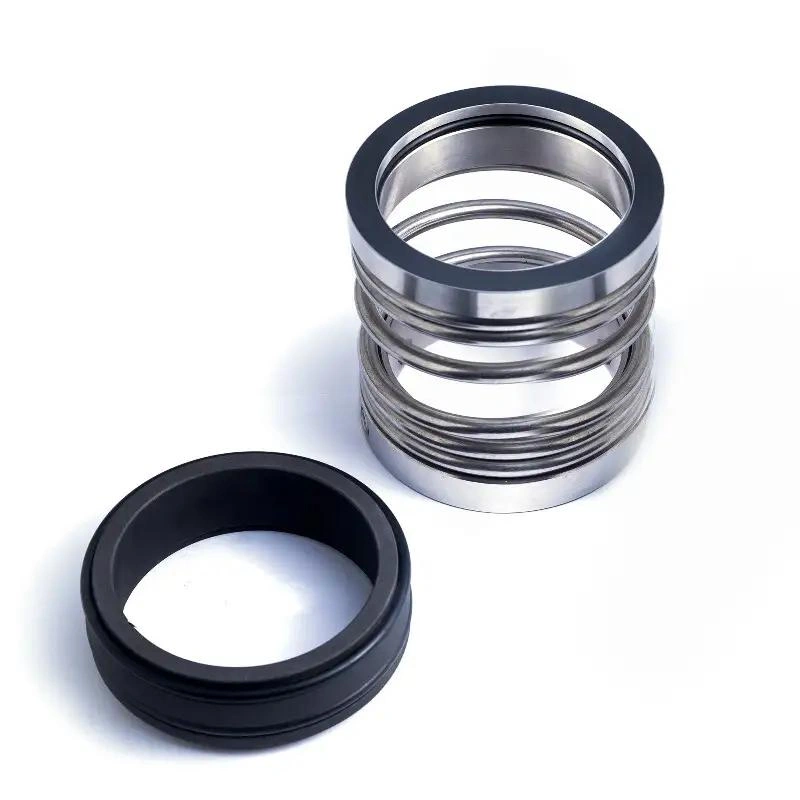

Do you know the main difference between balanced and unbalanced mechanical seals?The key difference is the effective hydraulic area exposed to fluid pressure, which changes the closing load on the seal faces.
| Comparison Item | Balanced Mechanical Seal | Unbalanced Mechanical Seal |
|---|---|---|
| Effective Hydraulic Area | Smaller | Larger |
| Closing Force from Fluid Pressure | Lower | Higher |
| Seal-Face Contact Load | Relatively lower | Relatively higher |
| Face Load as Pressure Increases | Increases more slowly | Increases more clearly |
| Friction and Heat | Easier to control | More likely to increase as pressure rises |
| Liquid Film Formation | Better for keeping a stable liquid film | Higher face load may make the liquid film thinner |
| High-Pressure Service | Usually better suited | Usually more limited |
| Closing Ability at Low Pressure | Needs the right balance ratio and spring load | Higher hydraulic closing force helps keep the faces closed |
In this guide, you will better understand the differences between these two seal designs and the problems you may face.
Do you know what the mechanical seal balance ratio is?Simply put, the Balance Ratio shows the relationship between the effective hydraulic area and the seal face area.A common simple formula is:Balance Ratio = Hydraulic Area ÷ Seal Face Area
The balance ratio tells you how much effective area allows fluid pressure to push the two seal faces together.For the same fluid pressure and the same seal face area:
| Balance Ratio Change | Effect on the Seal Faces |
|---|---|
| Higher Balance Ratio | Higher hydraulic closing load presses the faces together more strongly. |
| Lower Balance Ratio | Lower hydraulic closing load reduces pressure on the seal faces. |
| Balance Ratio Too High | Friction, heat, and seal-face wear may increase. |
| Balance Ratio Too Low | Closing force may become too low, which can increase leakage risk. |
However, you should remember that a lower balance ratio does not always mean a better seal.When you reduce the balance ratio, hydraulic face load decreases.This can help reduce friction and heat and support a stable lubricating film.But if the load becomes too low, the seal faces may not stay closed and stable enough.
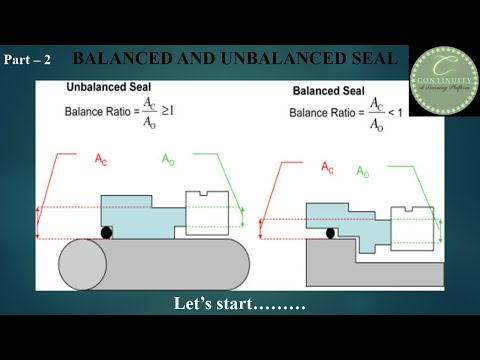
You should know that the balance ratio is basically an area ratio.It can be written as:B = Aₕ / A𝒇.Where:
For a seal where pressure acts from the outside diameter, a common formula is:B = (Dₒ² − Dᵦ²) / (Dₒ² − Dᵢ²) Where:
You can think of the numerator as the effective area where fluid pressure pushes the seal faces together.The denominator represents the total seal-face area.
If the higher pressure acts from the inside diameter, the formula changes:B = (Dᵦ² − Dᵢ²) / (Dₒ² − Dᵢ²) So, before you calculate the balance ratio, you must first confirm which side of the seal face has the higher pressure.You should not use the outside-pressure formula for an inside-pressure seal design.You should also remember that changing the balance diameter Dᵦ changes the mechanical seal balance ratio.
If you want to understand mechanical seal balance ratio, 1.0 is an important reference point.Simply put, a lower balance ratio usually means a lower hydraulic closing load on the seal faces.A higher balance ratio usually means a higher hydraulic closing load.
| Balance Ratio | Seal Type | Main Effect on Seal Faces |
|---|---|---|
| B < 1.0 | Balanced Mechanical Seal | Smaller effective hydraulic area and lower hydraulic face load |
| B ≈ 1.0 | Near the Dividing Point | Effective hydraulic area is close to the seal face area |
| B > 1.0 | Unbalanced Mechanical Seal | Larger effective hydraulic area and higher hydraulic face load |
In real seal selection, you should not decide only by checking whether the ratio is below 1.0.You also need to consider fluid pressure, speed, face materials, lubrication, spring load, and allowed leakage.
So, a balance ratio below 1.0 usually means lower hydraulic face load.A ratio above 1.0 usually means higher hydraulic face load.Your goal is not to make the balance ratio as low as possible.You need enough closing force to keep the faces stable while avoiding too much friction and heat.
Do you know how balanced and unbalanced mechanical seals differ in design?They may look very similar from the outside.The real difference is the position of the Balance Diameter compared with the inner and outer diameters of the seal face.This difference changes the effective hydraulic area exposed to fluid pressure.
As a result, it changes the closing load on the seal faces.KSB explains that balanced seals often use a step on the shaft or sleeve.This allows only part of the fluid pressure to create axial closing force.
| Item | Balanced Mechanical Seal | Unbalanced Mechanical Seal |
|---|---|---|
| Balance Diameter | The balance diameter is changed through the seal design. | The effective hydraulic area is usually larger. |
| Shaft or Sleeve Design | Often uses a step or diameter change to create hydraulic balance. | Usually has less hydraulic unloading. |
| Effective Hydraulic Area | Smaller | Larger |
| Seal Face Area | Does not always need to change. | Does not always need to change. |
| Hydraulic Closing Load | Lower | Higher |
| Effect as Pressure Increases | Face load increases in a more controlled way. | Face load increases more clearly as pressure rises. |
So, when you compare these two seal designs, you should not focus mainly on spring number or outside shape.You should focus on:Seal Face OD + Seal Face ID + Balance Diameter.The relationship between these three dimensions determines how the mechanical seal controls hydraulic balance.
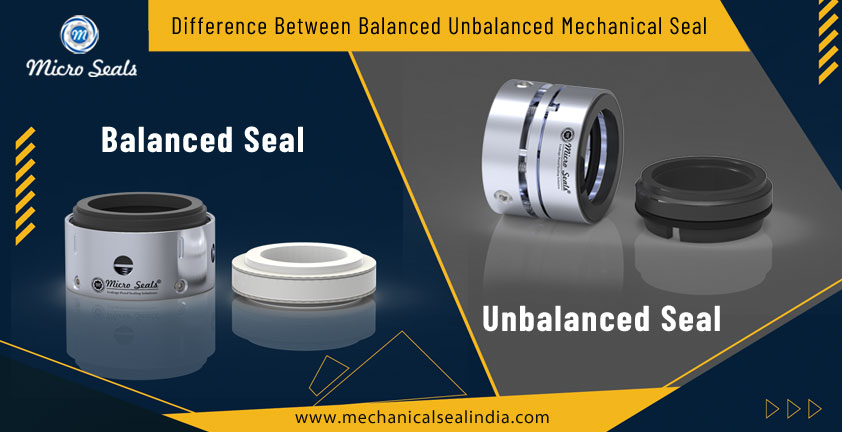
One key design feature of a balanced mechanical seal is the reduced effective hydraulic area.You should note that this does not reduce the fluid pressure inside the pump.Instead, it reduces the effective area where pressure acts to push the seal faces together.This smaller hydraulic area reduces the closing load acting on the seal faces.Under the same fluid pressure:
| Comparison Item | Balanced Mechanical Seal | Unbalanced Mechanical Seal |
|---|---|---|
| Fluid Pressure | Can be the same | Can be the same |
| Effective Hydraulic Area | Smaller | Larger |
| Hydraulic Closing Force | Lower | Higher |
| Seal–Face Load | Lower | Higher |
| Friction and Heat | Usually easier to control | More likely to increase as pressure rises |
| Lubricating Film | Easier to keep at a suitable level | High face load may make the liquid film thinner |
| High–Pressure Performance | Usually better | Usually more limited |
However, you cannot make the effective hydraulic area endlessly smaller.If the closing load becomes too low, the liquid film may become thicker and leakage may increase.In extreme cases, the seal faces may even separate.So, the goal of a balanced seal is not to create the smallest possible hydraulic area.You need a proper balance between face closing force, lubricating film, friction, heat, and leakage.
One main feature of an unbalanced mechanical seal is its larger effective hydraulic closing area.In an unbalanced seal, the seal faces are exposed to the full pressure being sealed.So, under the same fluid pressure, an unbalanced seal usually creates a higher hydraulic closing load.
However, as fluid pressure rises, the higher closing force pushes the two seal faces together more strongly.This may make the lubricating film thinner.It can also increase friction, heat, and wear on the seal faces.So, with an unbalanced mechanical seal, you should not think that more closing force is always better.You need enough closing force to keep the seal faces stable.But you should also avoid a face load high enough to damage the lubricating film.
If you want to quickly understand the difference between balanced and unbalanced mechanical seals, the easiest way is to compare them side by side.The main differences are balance ratio, effective hydraulic area, face closing load, friction, heat, and suitable pressure range.The table below helps you see the main differences and understand why each design fits different operating conditions.
| Comparison Item | Balanced Mechanical Seal | Unbalanced Mechanical Seal |
|---|---|---|
| Balance Ratio | Usually below 1.0 | Usually above 1.0 |
| Effective Hydraulic Area | Smaller | Larger |
| Hydraulic Closing Load | Lower | Higher |
| Seal–Face Load | Relatively lower | Relatively higher |
| Effect of Pressure on Face Load | Face load rises more slowly as pressure increases | Face load rises more strongly as pressure increases |
| Friction | Usually lower under the same pressure | Usually increases more as pressure rises |
| Heat Generation | Usually easier to control | More likely to increase at higher pressure |
| Lubricating Film | Easier to keep a suitable liquid film | Higher face load may make the liquid film thinner |
| Seal–Face Wear | Usually lower when correctly selected | May increase faster at higher pressure |
| High–Pressure Service | Usually better suited | Usually more limited |
| Higher Shaft Speed | Usually better suited with the correct design | Higher face load may increase heat and wear |
| Face Closing at Low Pressure | Depends more on the correct balance ratio and spring load | Higher hydraulic load helps keep the faces closed |
| Geometry | Uses balance diameter or stepped geometry to reduce hydraulic area | Uses a larger hydraulic closing area |
| Pressure Sensitivity | Less affected by rising pressure | More affected by rising pressure |
| Risk if Face Load Is Too Low | Leakage may increase or the faces may separate | Less likely because hydraulic closing load is higher |
| Risk if Face Load Is Too High | Usually lower under similar conditions | Friction, heat, and wear may increase |
| Typical Selection Focus | Higher pressure, higher speed, and lower face load | Simpler or lower-pressure applications |
You can use this comparison to decide which seal design better matches your pressure, speed, lubrication, and operating conditions.
In a mechanical seal, pressure, heat, leakage, and wear are closely connected.Fluid pressure affects the closing load on the seal faces.This face load then affects the lubricating film, friction, temperature, leakage, and wear.So, when you compare balanced and unbalanced mechanical seals, you should not look only at pressure capability.You should also consider these operating effects together.
| Comparison Item | Balanced Mechanical Seal | Unbalanced Mechanical Seal |
|---|---|---|
| Effect of Pressure on Face Load | Face load increases more slowly as pressure rises | Face load increases more clearly as pressure rises |
| Face Closing Load | Relatively lower | Relatively higher |
| Liquid Film | Easier to keep a suitable lubricating film | High face load may make the liquid film thinner |
| Friction | Usually easier to control | More likely to increase at high pressure |
| Heat Generation | Usually lower and easier to control | More heat may develop when face load is high |
| Seal–Face Wear | Usually lower when correctly selected | Wear risk may increase at high pressure |
| Leakage Control | Stable leakage control is possible with the right face load | Higher closing force can help limit leakage |
| Risk of Low Face Load | May cause a thicker liquid film, more leakage, or face separation | Low hydraulic load is usually less of a problem |
| Risk of High Face Load | Relatively lower | May increase friction, heat, and wear |
| High–Pressure Service | Usually better suited | Usually more limited |
| High–Speed Service | Easier to control face friction and heat | Higher face load may increase heat and wear |
| Main Design Goal | Control face load and balance leakage, liquid film, and friction | Use higher hydraulic closing force to keep the faces in contact |
Simply put, a balanced mechanical seal reduces the effective hydraulic area to control face load.This usually makes friction, heat, and wear easier to control at higher pressure.An unbalanced mechanical seal has a higher hydraulic closing load, which helps keep the seal faces in contact.
However, as pressure rises, friction, temperature, and wear may also increase more clearly.So, you do not need the highest or lowest possible face load.You need the right balance between closing force, lubricating film, leakage, friction, and wear.
Balanced and unbalanced mechanical seals differ not only in face load.They also differ in design complexity, cost, and suitable operating conditions.In general, unbalanced mechanical seals have a simpler design.You often see them used in lower-pressure and more stable operating conditions.Balanced mechanical seals reduce the effective hydraulic area through balance diameter, sleeve steps, or other design features.Because of this, design and size control are usually more important.
| Comparison Item | Balanced Mechanical Seal | Unbalanced Mechanical Seal |
|---|---|---|
| Design | You need to control the balance diameter and effective hydraulic area. | The design is usually more direct. |
| Geometry Complexity | Usually higher | Usually lower |
| Manufacturing and Size Control | Key dimensions need tighter control. | Usually simpler. |
| Initial Cost | May be higher, depending on the design. | Simple designs usually offer a cost advantage. |
| Installation | You need correct seal position and working dimensions. | Installation is usually more direct. |
| Low-Pressure Service | You can use it, but the balanced design may not always be necessary. | Usually a good fit. |
| High-Pressure Service | Usually better suited. | Usually more limited. |
| Higher Shaft Speed | Lower face load usually gives you an advantage. | Higher face load may increase heat and wear. |
| Simple and Stable Conditions | May add unnecessary design complexity. | Usually more practical. |
| Severe Operating Conditions | Gives you better control of face load. | You need more careful evaluation. |
| Main Selection Focus | Pressure, speed, face load, and liquid-film stability | Simplicity, low-pressure sealing, and cost |
So, if you have lower pressure, stable operation, and want a simpler design, an unbalanced mechanical seal is usually worth considering.If you face higher pressure, higher speed, or need better control of seal-face load, a balanced mechanical seal is usually worth evaluating.
How much pressure a mechanical seal can handle depends not only on the seal materials, but also on the load acting on the seal faces.The seal-face load usually comes from two main sources:
As system pressure increases, the load on the seal faces may also increase significantly.A balanced mechanical seal reduces the effective area exposed to fluid pressure through its structural design.This means that, at the same system pressure, a balanced seal usually has lower face loading than an unbalanced seal.
However, when selecting a seal, you should not look only at the “maximum allowable pressure.”You should also consider:Fluid pressure, temperature, speed, seal-face materials, balance ratio, spring load, fluid lubricity, and pressure fluctuations.For high-pressure, high-speed, or easily vaporized fluids, a balanced mechanical seal is usually worth considering first.
Do you know why balanced mechanical seals are better suited for higher pressure? It is because they reduce the effective area exposed to fluid pressure.In a mechanical seal, system pressure creates a force that pushes the rotating and stationary seal faces together.As pressure increases, this closing force usually increases as well.If the face load becomes too high, it may cause:
A balanced mechanical seal changes the seal geometry to reduce the closing force caused by system pressure.So, at the same system pressure, a balanced seal usually has lower face loading than an unbalanced seal.This helps reduce friction and heat while maintaining a more stable fluid film between the seal faces.However, a balanced design does not mean the seal can handle any pressure.The actual pressure limit still depends on seal design, materials, temperature, speed, and equipment conditions.
The same mechanical seal may have different pressure limits under different operating conditions.This is because pressure does not act alone. It works together with temperature, speed, fluid properties, and seal design to affect the seal faces.For example, at higher speeds, friction and heat at the seal faces may increase.If system pressure is also high, the load on the seal faces may increase even more.The fluid itself is also important.
If the fluid has poor lubrication or vaporizes easily, it may be harder to keep a stable fluid film between the seal faces.Seal-face materials also affect pressure capability.Different materials have different abilities to handle friction, temperature, wear, and chemical attack from the fluid.You also need to consider:
So, you should not judge whether a mechanical seal is suitable only by looking at its listed maximum pressure.A more reliable method is to provide the seal supplier with pressure, temperature, speed, fluid, and equipment operating conditions.Then you can confirm whether the seal is suitable for your actual application.
You know, when a mechanical seal is running, the rotating and stationary faces are not completely free from friction.When the two seal faces move against each other at high speed, they generate some frictional heat.The higher the face load, the greater the friction usually becomes.This is especially true under high-pressure and high-speed conditions, where the seal-face temperature may rise significantly.
To reduce direct contact, a mechanical seal usually relies on a very thin fluid film between the seal faces for lubrication.This fluid film is very important because it can help you:
If the fluid has poor lubricating ability, or the fluid film breaks down, the seal faces may come into more direct contact.This can cause higher temperatures, faster wear, and even damage to the seal faces.However, you should not rely only on the balanced design to solve all heat and wear problems.When you select a seal, you should also consider fluid lubricity, temperature, speed, seal-face materials, cooling conditions, and the flushing system.
In a mechanical seal, the rotating and stationary faces need enough contact pressure to stay together steadily and control leakage.This contact pressure usually comes from spring force and the closing force created by fluid pressure.If the contact pressure is too high, friction between the two seal faces usually increases.Higher friction may cause:
I also want to remind you that the goal of mechanical seal design is not to make face pressure as high as possible.Instead, you need enough contact pressure, but not too much.This helps reduce friction and heat and can also reduce seal-face wear under high-pressure conditions.When selecting a seal, you should also consider system pressure, speed, seal-face materials, fluid lubricity, temperature, and cooling conditions.
During operation, a very thin fluid film usually forms between the rotating and stationary seal faces.This fluid film is very important because it helps you reduce friction, control temperature, and reduce wear.If the fluid film is too thin, the two seal faces are more likely to touch directly.This increases friction and heat and can make the seal faces wear faster.If this condition continues, it may cause:
However, a thicker fluid film is not always better.If the fluid film is too thick, the gap between the seal faces may increase, which can cause more leakage.However, seal life does not depend only on fluid-film thickness.You should also consider vibration, shaft runout, alignment, material selection, and actual operating conditions.
Mechanical seal design is not simply about making leakage as low as possible.You also need to consider fluid-film stability, seal-face temperature, wear, and long-term reliability.If the seal faces are pressed too tightly together, leakage may decrease, but the fluid film between them may become thinner.This can increase friction and heat and may cause the seal faces to wear faster.
On the other hand, if the fluid film is too thick, lubrication and cooling may improve, but leakage may also increase.So, you need to balance several goals:
Balanced mechanical seals usually reduce face loading.This can help you maintain a more stable fluid film and lower friction under higher pressure.However, this does not mean a balanced seal is always more reliable in every application.
You also need to consider fluid properties, pressure changes, speed, temperature, vibration, shaft runout, seal materials, and flushing conditions.A reliable seal design does not push one parameter to the limit.Instead, you need the right balance between leakage, lubrication, wear, and operating stability.
Do you know why unbalanced mechanical seals can sometimes have lower leakage?At the same system pressure, an unbalanced seal usually has a higher closing force on the seal faces.Higher face pressure can press the two seal faces together more tightly.Under some stable operating conditions, this may help reduce leakage through the seal faces.However, higher closing force also has clear disadvantages:
So, you should not simply assume that an unbalanced seal always leaks less than a balanced seal.Actual leakage also depends on face flatness, fluid viscosity, pressure, speed, temperature, seal-face materials, and fluid-film condition.At lower pressure and under stable conditions, an unbalanced seal can use higher face loading to maintain good sealing contact.At higher pressure, too much face loading may increase friction, heat, and wear.This can reduce long-term stability and shorten seal life.So, when you choose between balanced and unbalanced seals, you need to consider leakage, face loading, friction, heat, and long-term reliability.
Balanced mechanical seals usually have lower face loading. This means friction between the seal faces is usually lower at the same pressure.Lower friction can reduce frictional heat and help control seal-face temperature, especially under higher pressure or higher speed.Stable temperature is very important for a mechanical seal because excessive heat may affect:
A balanced design reduces the closing force caused by pressure.This can reduce excessive face contact and help you keep the fluid film more stable.It can also help reduce the risk of overheating, dry friction, and rapid wear.
So, under high pressure, high speed, or with fluids that vaporize easily, balanced seals can usually operate more steadily.However, a balanced design alone does not guarantee reliable sealing.You still need to consider cooling, flushing, material selection, alignment, vibration, shaft runout, fluid properties, and actual operating temperature.
Although balanced mechanical seals offer clear advantages under high-pressure and high-speed conditions, they also have some limitations.Before choosing one, you should consider not only pressure capability, but also cost, installation accuracy, equipment condition, lubrication, flushing, and maintenance requirements.The table below summarizes the main limitations you should evaluate.
| Limitation | What It Means | Practical Impact |
|---|---|---|
| More Complex Design | Balanced seals usually have a more complex structure than unbalanced seals. | Design and manufacturing requirements may be higher. |
| Higher Initial Cost | More complex design and machining can increase the purchase cost. | It may not be economical for simple, low-pressure applications. |
| More Precise Installation | Installation position and dimensions need to be controlled carefully. | Incorrect installation may cause leakage or early seal failure. |
| Closing Force Can Be Too Low | Reducing face loading too much may reduce the force keeping the seal faces together. | The seal faces may separate under unstable conditions, increasing leakage risk. |
| Still Sensitive to Equipment Condition | Vibration, shaft runout, poor alignment, and bearing problems can still affect the seal. | A balanced design cannot correct mechanical problems in the equipment. |
| Cannot Prevent Dry Running | Balanced seals still need proper lubrication between the seal faces. | Dry running can cause overheating and rapid face damage. |
| May Need Flushing or Cooling | High temperatures, particles, or easily vaporized fluids may require extra support systems. | Installation and maintenance can become more complex. |
| Not Always Necessary at Low Pressure | Some low-pressure and stable applications do not need a balanced design. | An unbalanced seal may be simpler and more cost-effective. |
A balanced mechanical seal is not automatically the best choice for every application.Its main value appears when you need better control of face loading, heat, wear, and pressure-related stress.For low-pressure and stable operating conditions, a simpler unbalanced seal may still be suitable.So, you should choose the seal type based on the actual pressure, speed, temperature, fluid properties, equipment condition, and maintenance requirements.
Balanced mechanical seals usually have more advantages under high pressure and with fluids that provide poor lubrication.Under high pressure, the closing force on an unbalanced seal increases as pressure rises.This can cause more friction, heat, and wear.A balanced mechanical seal reduces the effective area exposed to pressure, which lowers the load on the seal faces.This can help you:
This advantage is also important when you are working with low-lubricity fluids.If the fluid does not provide good lubrication, it is harder to keep a stable fluid film between the seal faces.A balanced design lowers face contact pressure.This can help you reduce direct contact between the faces and provide better conditions for a stable fluid film.
However, you should remember that a balanced seal cannot completely solve low-lubricity problems.When selecting a seal, you should also consider seal-face materials, fluid viscosity, temperature, speed, flushing conditions, and cooling methods.
Balanced mechanical seals usually perform better under high pressure and high speed, but they also bring more design complexity and higher cost.Compared with unbalanced seals, balanced designs usually require more complex geometry and more precise machining.This means you may need to deal with:
You also need to consider the relationship between the fluid film and leakage.A balanced design lowers face loading. This helps reduce friction and heat and can also help keep the fluid film stable.However, if the closing force becomes too low, the fluid film may become thicker.The gap between the two seal faces may also increase.This can lead to more leakage.
On the other hand, if face loading is too high, the fluid film may become too thin.This can increase friction, heat, and wear.So, you should not simply aim for the lowest face loading or the lowest leakage.A better goal is to keep the right balance between face loading, fluid-film thickness, friction, temperature, and leakage.When you choose a balanced mechanical seal, you should also consider pressure, speed, fluid lubricity, allowable leakage, cost, and maintenance conditions.
Unbalanced mechanical seals have a simpler design and usually create higher closing force between the seal faces.This design can work well under lower pressure and stable operating conditions.However, the higher face load can also increase friction, heat, and wear as system pressure rises.The table below summarizes the main advantages and limitations you should consider.
| Aspect | Advantage or Limitation | What It Means in Practice |
|---|---|---|
| Simple Design | Advantage | Unbalanced seals usually have a simpler structure and are easier to manufacture. |
| Lower Initial Cost | Advantage | Simpler design and machining can help reduce the purchase cost. |
| Higher Closing Force | Advantage | Higher face pressure can help keep the seal faces together and control leakage. |
| Low-Pressure Applications | Advantage | They can work well when pressure is relatively low and operating conditions are stable. |
| Installation and Maintenance | Advantage | A simpler structure can make installation, replacement, and maintenance easier. |
| Higher Face Loading | Limitation | Face load increases more as system pressure rises. |
| More Friction and Heat | Limitation | Higher face pressure can increase friction and seal-face temperature. |
| Faster Face Wear | Limitation | Higher contact pressure may cause the seal faces to wear faster. |
| Thinner Fluid Film | Limitation | High face loading may make the lubricating fluid film too thin. |
| Limited High-Pressure Capability | Limitation | Excessive face loading can make unbalanced seals less suitable for high-pressure service. |
| Low-Lubricity Fluids | Limitation | Poor lubrication combined with high face loading can increase overheating and wear risks. |
| Shorter Life Under Severe Conditions | Limitation | High pressure, speed, or heat can reduce long-term seal reliability and service life. |
Unbalanced mechanical seals can be a practical choice when you need a simple, economical seal for lower-pressure and stable operating conditions.Their higher closing force can help control leakage, but this advantage becomes a limitation as pressure and heat increase.So, you should evaluate pressure, temperature, speed, fluid lubricity, seal-face materials, leakage requirements, and equipment conditions before choosing an unbalanced seal.
One clear feature of an unbalanced mechanical seal is its relatively simple design.This can give you several direct benefits:
Unbalanced mechanical seals also usually have a higher closing force on the seal faces.This means the rotating and stationary faces are pressed together more tightly.That helps you keep stable contact between the two seal faces.Under suitable low-pressure conditions, tighter face contact can help control leakage.
However, you should remember that higher closing force is not always an advantage.As system pressure increases, face loading also increases.This may cause:
So, unbalanced mechanical seals are most suitable when you need simple design, lower cost, lower pressure, and stable operating conditions.
The main limitations of an unbalanced mechanical seal usually become more noticeable as system pressure increases.As pressure rises, the closing force acting on the seal faces also increases.This presses the rotating and stationary faces together more tightly.If face pressure becomes too high, it may cause:
If the fluid film becomes too thin, the two seal faces are more likely to touch directly.This can further increase friction and temperature.It may also cause scratches, deformation, or faster damage to the seal faces.So, you should not look only at the simple design and lower cost of an unbalanced mechanical seal.When pressure, speed, or temperature is high, you should also evaluate face loading, frictional heat, fluid-film stability, and material wear resistance.
When choosing between balanced and unbalanced mechanical seals, you should not look only at the seal design.You need to consider pressure, speed, temperature, fluid lubricity, leakage requirements, and equipment operating conditions.If you have higher pressure, higher speed, or higher heat load, a balanced mechanical seal is usually worth considering.You can usually consider a balanced mechanical seal when:
If you have lower pressure, stable operation, and greater concern about simplicity and cost, an unbalanced seal may be more suitable.You can consider an unbalanced mechanical seal when:
However, you should not make your decision based only on whether the pressure is high or low.Even at low pressure, poor fluid lubrication, high temperature, or strong vibration can still cause higher friction and wear in an unbalanced seal.Likewise, using a balanced mechanical seal does not mean all sealing problems will be solved automatically.
When choosing between balanced and unbalanced mechanical seals, you should also consider fluid volatility, lubricity, and whether the fluid is hazardous.If the fluid evaporates or vaporizes easily, frictional heat near the seal faces may make it turn into vapor more easily.Once the fluid film starts to vaporize, lubrication between the seal faces becomes worse.This may cause:
Fluid lubricity is also very important.If the fluid provides poor lubrication, it becomes harder to keep a stable lubricating film between the seal faces.In this case, high face pressure may make the fluid film even thinner.This can increase direct contact, heat, and wear.
So, with low-lubricity fluids, you should pay more attention to face loading, seal-face materials, cooling, and flushing conditions.If the fluid is toxic, flammable, corrosive, or otherwise hazardous, leakage control becomes even more important.In this situation, you should not choose the seal arrangement only by comparing balanced and unbalanced designs.You should also consider allowable leakage, material compatibility, single or dual seal design, and whether barrier or buffer fluid is needed.
When choosing between balanced and unbalanced mechanical seals, you should evaluate pressure, speed, temperature, and duty cycle together.These factors work together and affect face loading, heat, and wear.Pressure is one of the most direct factors.As system pressure rises, the closing force on an unbalanced seal usually increases more clearly.This may cause:
Speed also affects seal-face temperature.The higher the speed, the greater the sliding speed between the seal faces, and the more heat friction may produce.If high speed is combined with high face loading, the seal faces are more likely to overheat and wear quickly.
Temperature affects not only the seal faces, but also fluid viscosity, lubricity, and elastomers such as O-rings.As temperature rises, some fluids become less viscous, which can make the fluid film harder to keep stable.If the fluid is close to its vaporization temperature, frictional heat near the seal faces may further increase vaporization risk.You also need to consider the duty cycle, meaning whether the equipment runs continuously or starts and stops frequently.
If the equipment runs continuously, the seal must handle steady friction and heat for a long time.If the equipment starts and stops often, the seal may repeatedly operate before a stable fluid film is fully formed.This can increase the risk of seal-face wear.So, you should not judge seal selection by only one parameter.If you have high pressure, high speed, high temperature, or long continuous operation, you should pay more attention to balanced seals, face materials, cooling, and flushing conditions.
When choosing between a balanced and unbalanced mechanical seal, consider pressure, speed, temperature, fluid properties, lubrication, and operating conditions together.Do not make the decision based on only one factor.The examples below can help you understand the basic selection logic.
| Application Example | Operating Condition | More Suitable Design | Why |
|---|---|---|---|
| General Water Pump | Low pressure, normal temperature, good fluid lubrication, and stable operation | Unbalanced Seal | Simple design and lower cost. It is usually enough for stable, low-pressure applications. |
| High-Pressure Process Pump | Higher pressure, continuous operation, and higher speed | Balanced Seal | It reduces face load, helping to lower friction, heat, and seal face wear. |
| Light Hydrocarbon Service | Fluid evaporates easily, and the fluid film is sensitive to heat | Balanced Seal | Lower face load helps reduce friction heat and lowers the risk of fluid vaporizing near the seal faces. |
| Low-Lubricity Fluid | The fluid provides poor lubrication | Balanced Seal | It reduces contact pressure between the seal faces and lowers the risk of friction and rapid wear. |
| Simple Low-Pressure Utility Pump | Low pressure, small operating changes, and high cost sensitivity | Unbalanced Seal | A more complex design is usually unnecessary. A simple seal is often more economical. |
| High-Speed Continuous Pump | High speed and long periods of continuous operation | Balanced Seal | Lower face load helps control friction heat and reduce long-term wear. |
These examples show general selection logic, not fixed rules.For final selection, always check the seal manufacturer’s actual pressure, temperature, and speed limits.You should also confirm the real operating conditions of the equipment and the fluid.
If you are using a moderate-pressure water pump, you should not choose a balanced or unbalanced seal only because the fluid is water.You should first confirm several key conditions:
If the pressure is moderate, speed and temperature are stable, and the water is relatively clean, an unbalanced mechanical seal may still be suitable.However, if the pump runs continuously for long periods, or seal chamber pressure creates high face loading, you should further evaluate a balanced mechanical seal.
If your equipment handles high-pressure hydrocarbons, you usually need to be more careful when selecting a mechanical seal.These fluids are often highly volatile, and some are also flammable.Under high pressure and higher temperatures, the seal faces work under more demanding conditions.If face loading becomes too high, it may cause:
However, you should not choose the final seal design only because the service involves high-pressure hydrocarbons.You also need to confirm:
So, in high-pressure hydrocarbon service, you should evaluate face loading, vaporization risk, leakage control, and seal support systems together.
If your fluid has poor lubricity, or the operating pressure is close to the fluid’s vapor pressure, the seal works under more sensitive conditions.If face loading is too high, it may cause:
If the actual fluid pressure is close to its vapor pressure, a small temperature rise or pressure drop may cause the liquid to vaporize.Once vapor forms in the fluid film, lubrication may become weaker and seal-face operation may become unstable.This may further increase:
In these conditions, you should usually give more consideration to a balanced mechanical seal.Its lower face loading can help reduce friction and heat.However, you should not rely only on a balanced design to solve these problems.You should also check fluid viscosity, pressure margin above vapor pressure, temperature, speed, seal-face materials, flushing method, and cooling conditions.
Not always. A balanced mechanical seal is not better than an unbalanced seal in every application.A balanced seal reduces the effective area exposed to fluid pressure, which lowers face loading.It is usually more suitable for:
Under low pressure, stable operating conditions, and with fluids that provide good lubrication, an unbalanced seal may already be suitable.So, you should not simply assume that a balanced seal is always better.You should choose based on pressure, temperature, speed, fluid properties, lubricity, allowable leakage, and operating conditions.
Usually, you cannot reliably identify whether a mechanical seal is balanced or unbalanced just by looking at it.Seal balance depends on the relationship between the effective hydraulic area exposed to pressure and the seal-face area.In other words, it depends on the internal geometry and the balance ratio.
—— We Will Provide You With Professional OEM Solutions.
Whether you require pump bearings, pump valves, mechanical seals, or other custom-engineered components, we support production based on your drawings as well as rapid prototyping.
Please complete the form on the right and upload your technical drawings or specifications. Our engineering team will review your requirements within 24 hours and provide a detailed quotation, application recommendations, and delivery schedule.
Copyright © 2025 Sakowit, All rights reserved.
WhatsApp us