
Choosing the right cartridge mechanical seal for mining applications is essential for reducing leakage, minimizing downtime, and improving pump reliability in abrasive slurry environments. The ideal seal depends on slurry concentration, particle size, operating pressure, temperature, seal face materials, and flushing conditions. In this guide, we explain how to select the best heavy-duty cartridge mechanical seal for mining pumps and slurry systems.
Why Mining Pumps Need Heavy-Duty Cartridge Seals?
As is well known, mining environments are extremely harsh, and standard mechanical seals are prone to failure under such conditions. Therefore, mining pumps require heavy-duty compression seals.
The medium transported by mining pumps is not ordinary water, but a mixture containing a large number of hard particles. Standard sealing surfaces are prone to failure when exposed to such media. In addition, mining pumps are often used for long-distance transport, high-head pumping, or the conveyance of heavy slurries. This means that mechanical seals must be robust enough to withstand harsher pressure and vibration conditions. The key advantage of heavy-duty seals lies in their construction using wear-resistant sealing materials, as the particles in the slurry can quickly wear down standard sealing surfaces.
Types Of Cartridge Mechanical Seals For Mining
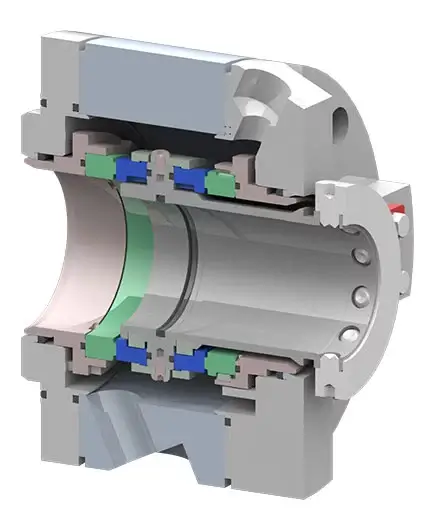
There is more than one type of compression-fit mechanical seal commonly used in the mining industry. Depending on the type of mining pump, slurry concentration, pressure, and particle size, the requirements for seal types vary significantly. Mining mechanical seals can be broadly classified into the following categories.
1. Single Cartridge Seal
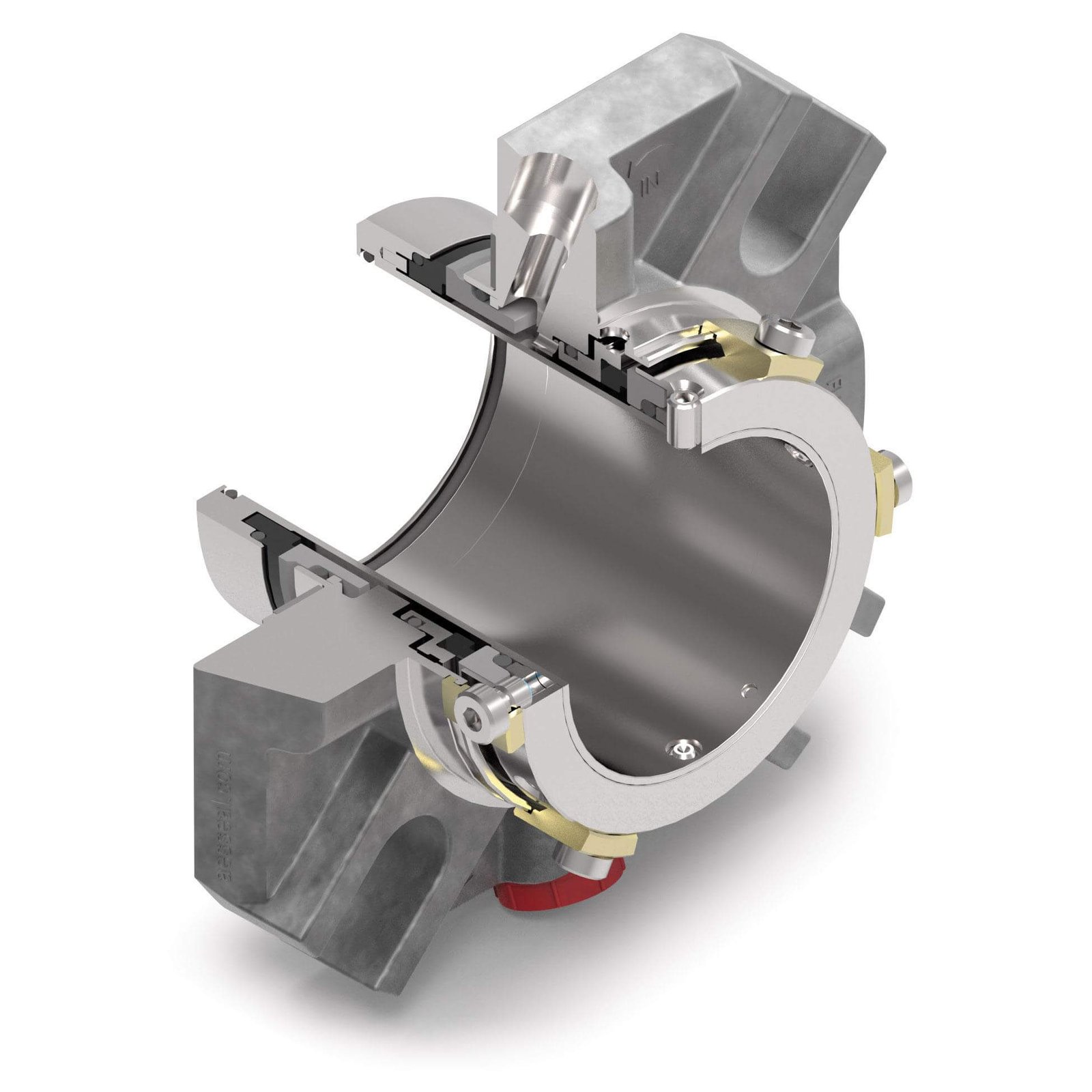
The single cartridge seal is the most common and least expensive type of cartridge seal.
It features only one set of sealing faces and directly seals the slurry medium. Compared to other cartridge seals, it is very cost-effective. It is suitable for use in standard slurry pumps handling low-risk slurries, slurries of moderate concentration, and general-purpose mining pumps.
However, the single cartridge seal also has its drawbacks. Its resistance to leakage is limited, and its service life decreases when exposed to high-particle-content or high-pressure slurries.
2. Double Cartridge Seal
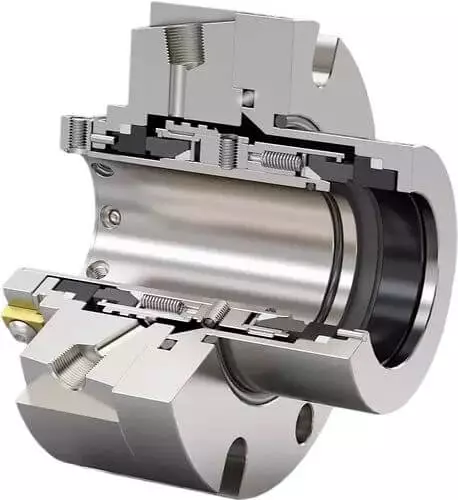
Double cartridge seals are very common in heavy-duty mining applications. Their primary function is to prevent slurry from directly entering the main sealing surface. They are suitable for high-concentration slurries, high-wear conditions, toxic or hazardous media, and high-pressure mining pumps.
Double cartridge seals have a very long service life, a low risk of leakage, and provide consistent sealing performance. However, they require a flushing system.
3. Slurry Seal
Slurry Seal is a heavy-duty seal specifically designed for slurry applications. It is essentially a “reinforced version of a mining machinery seal.”
Slurry Seal features a larger sealing surface, thicker springs, a more robust anti-clogging design, and greater resistance to particulate matter.
4. Balanced Seal
The Balanced Seal is suitable for high-pressure mining pumps. It is commonly used in many high-head pumps in the mining industry. Its design reduces pressure on the sealing surfaces.
The advantages of the Balanced Seal include lower heat generation, reduced risk of burnout, and stable performance even under high pressure.
Best Seal Face Materials For Mining Applications
When selecting mechanical seals for your mining equipment, the choice of seal face material is of the utmost importance.
This is because mining pumps handle slurry, mud, and tailings water, which contain a large number of hard particles. If the seal face is not hard enough, it will wear out quickly.
The following are the common materials used in cartridge mechanical seals for mining, along with their advantages and disadvantages.
| Seal Face Material | English Name | Main Characteristics | Suitable Applications | Advantages | Disadvantages |
|---|---|---|---|---|---|
| Silicon Carbide | SiC | High hardness, excellent wear resistance, corrosion resistant | Slurry pumps, tailings pumps, corrosive mining fluids | Long service life, strong wear resistance, excellent corrosion resistance | Lower impact resistance than TC |
| Tungsten Carbide | TC | Extremely wear resistant, strong impact resistance | Large particle slurry, high vibration, high pressure pumps | Very durable, resistant to chipping, ideal for heavy-duty mining applications | Lower corrosion resistance than SiC |
| Carbon Graphite | Carbon | Self-lubricating, low friction | Clean water, oil, low particle fluids | Stable operation, low friction | Poor abrasion resistance in slurry applications |
| Ceramic | Ceramic | Hard surface, low cost | Light-duty applications | Economical | Brittle, poor impact resistance |
Common Material Combinations In Mining
| Application Condition | Recommended Face Combination |
|---|---|
| General mining slurry | SiC vs SiC |
| Corrosive slurry | SiC vs SiC |
| High vibration & impact | TC vs TC |
| Large particle slurry | TC vs TC |
| Clean or low-solid fluid | Carbon vs SiC |
| Low-cost light-duty service | Ceramic vs Carbon |
How To Select The Right Seal For Slurry Pumps?
When selecting a mechanical seal for a slurry pump, the most important factor is not the brand or price, but the operating conditions.
This is because different slurries cause completely different levels of wear on the seal.
1. consider particle size and concentration
If the slurry contains a large number of solid particles, has a high concentration, or contains very hard particles, the service life of a standard mechanical seal will be very short.
In such cases, we recommend using a heavy-duty slurry seal or a double cartridge seal.
- For large particles and high impact, tungsten carbide (TC) is the preferred choice.
- For fine particles and highly corrosive conditions, silicon carbide (SiC) is the preferred choice.
2. Check the pressure and RPM
High-pressure, high-speed operating conditions can easily lead to problems with mechanical seals. For such applications, we generally recommend using a balanced cartridge seal. This type of cartridge seal reduces the load on the sealing surfaces, resulting in more stable operation.
3. Check whether the medium is corrosive
Many slurries are not only highly abrasive but also corrosive. Choosing the wrong materials can significantly reduce seal life. We recommend using SiC faces and seal ring materials such as corrosion-resistant metals, FKM, or PTFE.
4. Check the pump’s vibration levels
Many slurry pumps used in mining operations experience significant vibration. Standard seals are prone to leakage after prolonged use. We recommend using heavy-duty cartridge seals, which feature a more robust design and are better suited for heavy-duty applications.
Common Seal Failures In Mining Pumps
The most common issues with mechanical seals in mining pumps are actually limited to the following:
- Seal face wear: Particles in the slurry act like sandpaper, constantly wearing down the seal face.
- Dry running and burnout: If the pump runs dry, lacks fluid, or is insufficiently flushed, the seal faces will experience high-temperature friction.
- Spring blockage: When slurry particles enter the spring area, they prevent the seal from compensating properly.
- Vibration-induced leakage.
- Improper installation
How To Extend Seal Service Life?
To extend the service life of mechanical seals in mining pumps, you need to pay special attention to the combination of selecting the right seal, operating under the right conditions, and performing proper maintenance.
- Select the right seal type: The harsher the operating conditions, the stronger the seal design must be.
- Select the right seal face material: Wear is the biggest enemy of mining seals.
- Ensure Flushing and Cooling: Many seals fail not due to wear, but because they are dried out and burned.
- Reduce Pump Vibration: The smoother the pump runs, the longer the seal will last.
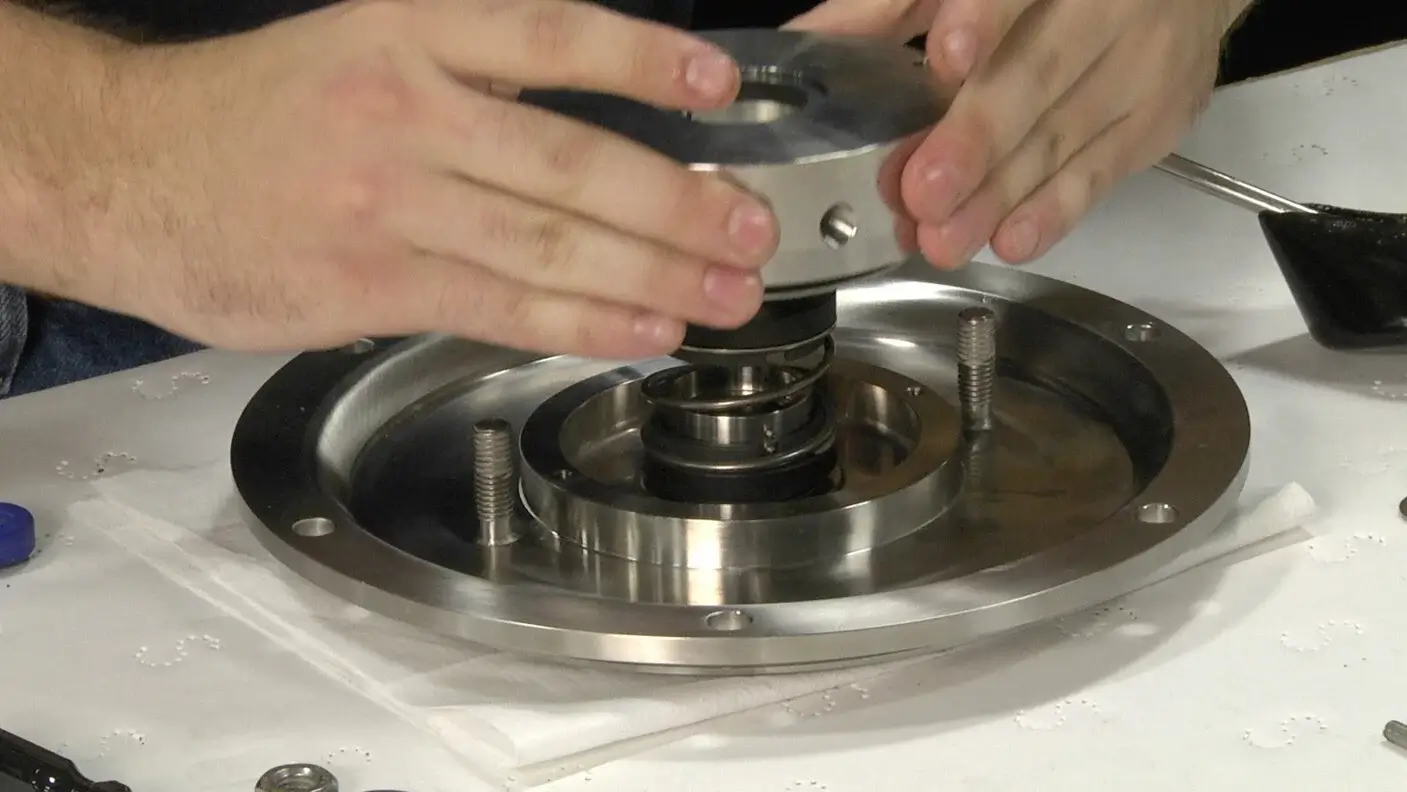
- Proper Installation: Incorrect installation can cause a new seal to fail quickly.
Conclusión
Selecting the right cartridge mechanical seal, wear-resistant face materials, and proper flushing and installation methods for your mining pumps can effectively reduce leakage, minimize downtime, and extend seal life.
In the mining industry, mechanical seals are not merely components; they directly impact equipment stability and overall production efficiency.
 Spanish
  English
  Portuguese
  Russian
  Arabic