
If your air compressor exhibits air leakage, decreased pressure in the storage tank, persistent air leakage from the pressure switch,or difficulty in restarting after shutdown.The Check valve for air compressor may be one of the first components requiring inspection. Many issues with air compressors that appear to stem from faults in the pressure switch or relief valve are actually related to poor sealing of the check valve or internal backflow.
Do you know what a check valve for an air compressor is? Generally, it is a one-way valve installed between the compressor’s pump head and the air receiver tank. It allows compressed air to enter the tank while preventing backflow when the system is shut down. This Check valve for air compressor helps maintain proper pressure in the tank.Works in conjunction with the relief valve to reduce startup difficulties, and protects the entire compressor system.
In this guide, we will cover the installation location, operating principle, common fault symptoms, testing methods.And key factors to consider when replacing or customizing air compressor check valves.
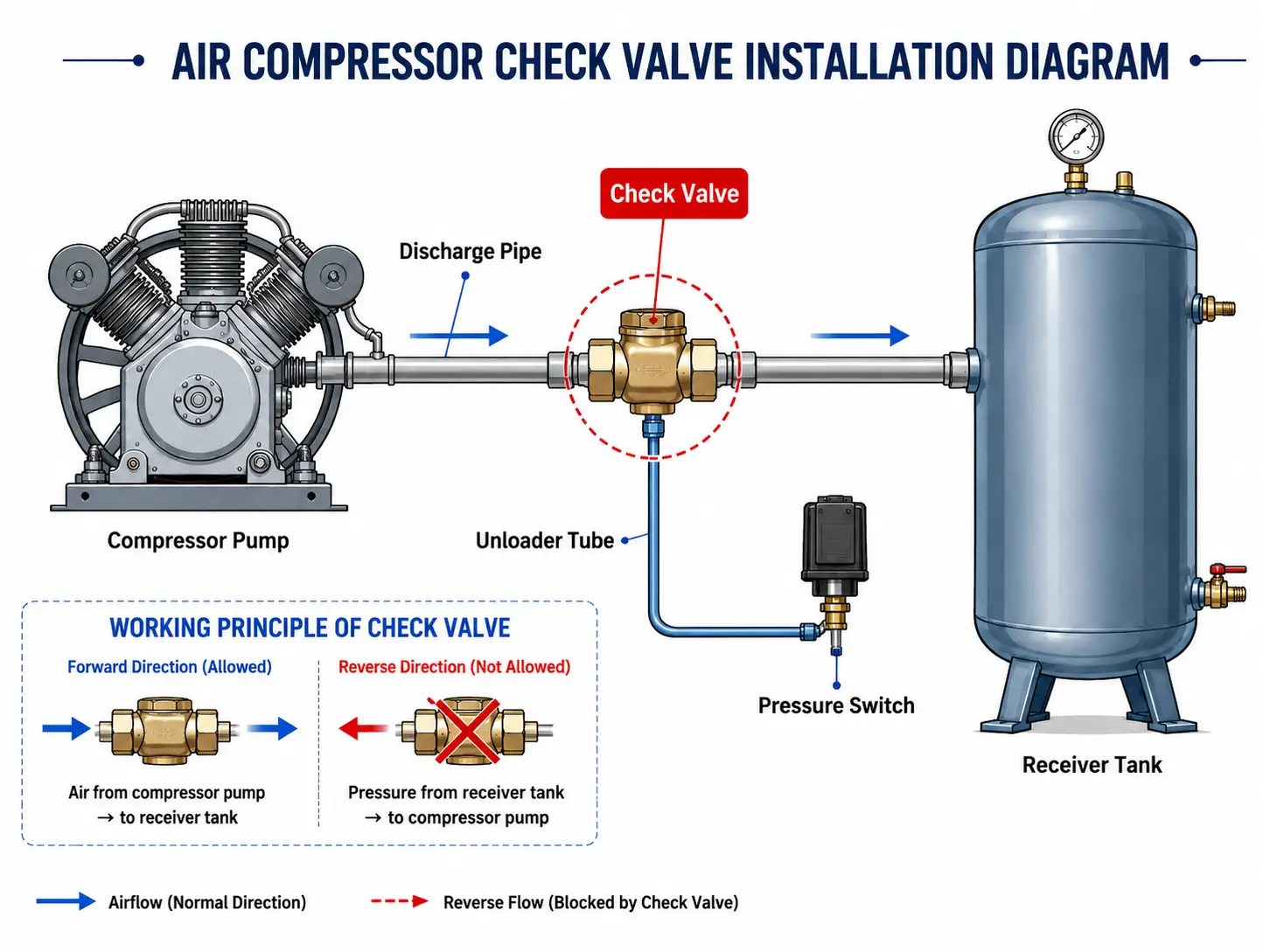
Where can a check valve for air compressor be installed? The most common installation location is at the receiver tank inlet, where the compressor discharge line connects.
In certain designs, a Check valve for air compressor is installed at the pump head outlet or near the exhaust pipe to prevent air backflow into the compression chamber during shutdown. In systems with multiple parallel-operating air compressors, check valves may also be installed on the piping to prevent compressed air from one unit from flowing back into another.
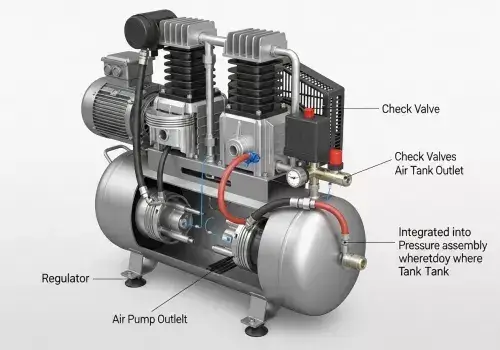
Once installed at the inlet of the air tank, the check valve serves as a critical control point for airflow direction. How does it work? Specifically, when compressed air flows from the pump head to the tank, the valve opens.when internal pressure attempts to reverse flow, the valve closes.
If the shut-off valve fails to function, how can a malfunction be identified? Common symptoms of air compressor shut-off valve failures include persistent air leakage after shutdown. Brief exhaust flow after shutdown is normal, but sustained leakage usually indicates a faulty air receiver check valve—the most common failure mode.
If air receiver pressure drops significantly after shutdown, possible causes include leaks in the check valve, piping, drain valve, or safety valve, but the check valve should be checked first.
If air receiver pressure drops significantly after shutdown, possible causes include leaks in the check valve, piping, drain valve, or safety valve, but the check valve should be checked first.
If your air compressor is leaking at the pressure switch, don’t worry too much. Often, the pressure switch isn’t faulty; the real issue may be that the check valve fails to prevent backflow of tank pressure.
The analysis of common fault causes is as follows:
| Failure Cause | Embody |
|---|---|
| Seal ring aging | After shutdown, reverse air leakage occurs. |
| Valve core wear | Not closed properly |
| Spring fatigue | The valve core cannot reset quickly |
| Impurities are stuck | The valve cannot close completely |
| High-temperature damage | The sealing material has hardened or deformed. |
| Water vapor corrosion | The valve core, spring, or valve seat is damaged. |
| The thread seal is poor | Gas leakage at the interface |
| Incorrect installation direction | Air cannot flow unidirectionally properly. |
| Incorrect specification selected | Pressure, flow rate, or interface mismatch |
| Low-quality processing | The valve seat sealing surface is rough with inconsistent batch consistency. |
How can you verify that the check valve of your air compressor is still functioning? After shutdown, check the pressure switch or unloader valve; brief air release is normal, but continuous leakage or pressure drop indicates a possible check valve fault requiring step-by-step diagnosis.
You can also use soapy water to detect leaks by applying it to the joints and suspected leakage points; continuous bubbles indicate a leak at those locations. If you remain concerned, remove the check valve for inspection to check for issues such as a stuck valve core, damaged or worn springs, deformed seals, impurities on the valve seat, or damaged threads.
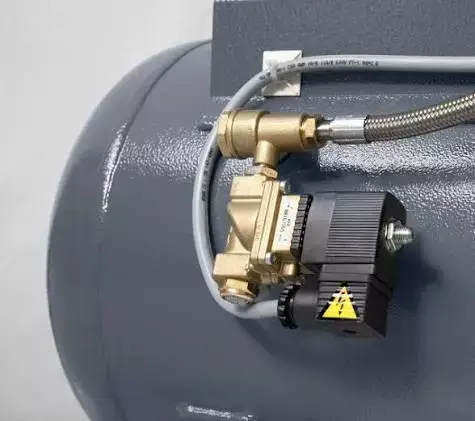
The most critical question arises: how should you select a check valve for an air compressor?
You need to confirm the air compressor type, as different models have varying requirements for check valves:
| Types of Air Compressors | Selection Considerations |
|---|---|
| Small piston air compressor | Thread dimensions, installation space, maintenance and replacement |
| Industrial piston-type air compressor | Pressure rating, service life, sealing stability |
| Screw Air Compressor | System pressure, flow rate, temperature resistance, and rear pipeline |
| High-pressure Air Compressor | High-pressure valve body, sealing materials, safety clearance |
| OEM Air compressor | Custom interfaces, batch consistency, test reports |
You also need to confirm the installation locations, including the gas storage tank inlet, exhaust piping, compressed air main lines, multi-unit systems, and OEM internal structures.
| Installation Site | Recommended Focus Areas |
|---|---|
| Gas storage tank inlet | Thread, side interface, sealing performance |
| Gas exhaust piping | Heat-resistant, pressure-resistant, flow rate |
| Main pipeline for compressed air | Diameter, pressure drop, flow rate |
| Multi-machine Parallel System | Reverse sealing, closing speed |
| OEM inner structure | Size, assembly efficiency, customization |
When selecting an air compressor, you need to consider the following aspects of its check valve:
You must confirm the thread dimensions, including NPT, BSP, G, metric threads, internal or external threads. Additionally, verify the pipe fitting dimensions and side port requirements. You may also provide your thread specifications to us, and we will assist in recommending the appropriate air compressor check valve.
If the check valve’s bore diameter is too small, it will cause excessive pressure drop. Therefore, ensure the following when selecting a model:
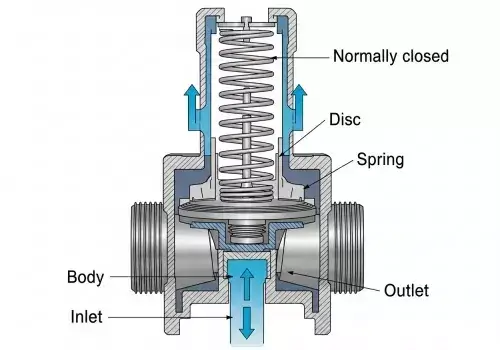
When customizing one-way valves for air compressors, we focus on the following aspects:
We also place great emphasis on seal assembly to minimize reverse leakage and enhance temperature and oil resistance. After assembly, tests include visual inspection, thread evaluation, opening performance, reverse sealing, pressure retention, and leakage detection, with attention to installation dimensions.
Although small, the air compressor check valve is critical for preventing backflow, maintaining tank pressure, assisting the unloader valve, and reducing startup issues.Wear, improper selection, or poor sealing of the valve may cause air leakage after shutdown, reduced tank pressure, frequent cycling, and unstable compressor operation.
If you’re looking for replacement parts, OEM assemblies, or wholesale supplies of air compressor check valves, please provide your specification details. Our team can recommend suitable valve configurations or customize check valves tailored to your compressor system requirements.
—— We Will Provide You With Professional OEM Solutions.
Whether you require pump bearings, pump valves, mechanical seals, or other custom-engineered components, we support production based on your drawings as well as rapid prototyping.
Please complete the form on the right and upload your technical drawings or specifications. Our engineering team will review your requirements within 24 hours and provide a detailed quotation, application recommendations, and delivery schedule.
Copyright © 2025 Sakowit, Todos los derechos reservados.
 Spanish
  English
  Portuguese
  Russian
  Arabic