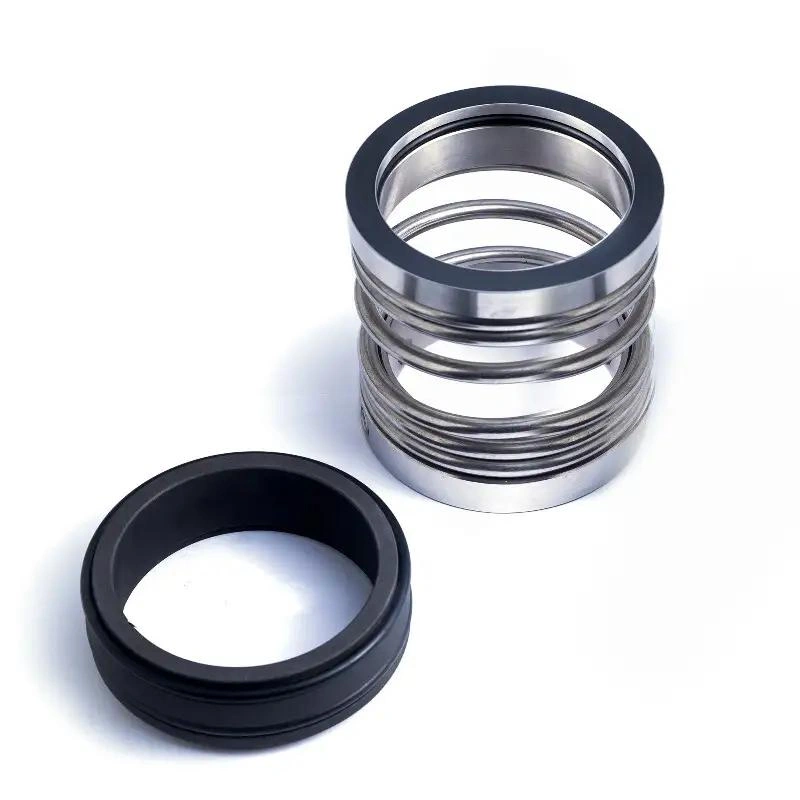

Mechanical seals are widely used in water pumps, chemical pumps, and various rotating equipment. They mainly prevent liquids or gases from leaking through the gap between the rotating shaft and the equipment housing. They reduce media loss. They improve the safety and reliability of equipment operation. They also minimize maintenance requirements.
This article first discusses the primary uses and operating principles of mechanical seals. It then introduces their key components. It explains where they are installed in pumps and rotating equipment. It also covers typical industrial applications. This helps you determine whether mechanical seals are suitable for your specific equipment needs.
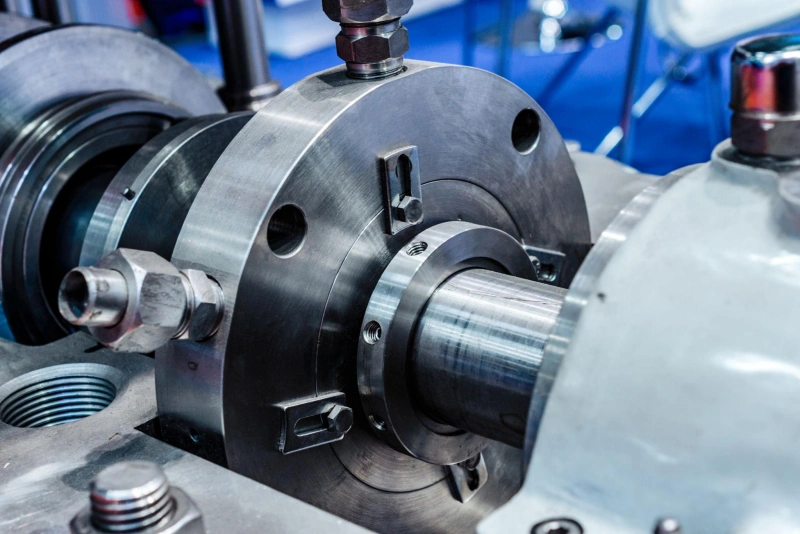
The primary purpose of mechanical seals is to control media leakage between a rotating shaft and the equipment housing. They are widely used in centrifugal pumps, chemical pumps, and other rotating equipment to prevent liquids or gases inside the equipment from leaking axially outward, while also reducing the ingress of external contaminants into the equipment under appropriate design and operating conditions.
Mechanical seals primarily rely on two precisely matched sealing faces to keep fluid leakage to a very low level while allowing the pump shaft to rotate. Rather than simply sealing the gap between the shaft and the pump casing completely, they control leakage through a combination of the contact between the sealing faces, fluid lubrication, and auxiliary seals.
At the heart of a mechanical seal are two precision-machined rings: the rotating ring, which rotates with the shaft, and the stationary ring, which is fixed to the seal housing. The faces of these two rings fit tightly together, forming a sealing interface under the combined action of spring force and hydrostatic pressure, thereby preventing medium leakage.
The liquid film trapped between the two faces serves two purposes: lubrication (to reduce frictional wear) and cooling (to dissipate frictional heat). However, if the fluid film is too thin, it can lead to dry friction; if it is too thick, it increases leakage. Therefore, the seal must strike a balance between “lubrication” and “sealing.”
Mechanical seals have primary sealing faces. They also use auxiliary sealing components. These include O-rings and bellows. They seal the gap between the rotating ring and the shaft sleeve. They also seal the gap between the stationary ring and the seal seat. This prevents fluid from leaking around the primary sealing faces from the sides. Auxiliary seal failure is a common cause of leakage. This failure can result from aging, corrosion, or improper installation.
Consider three factors:
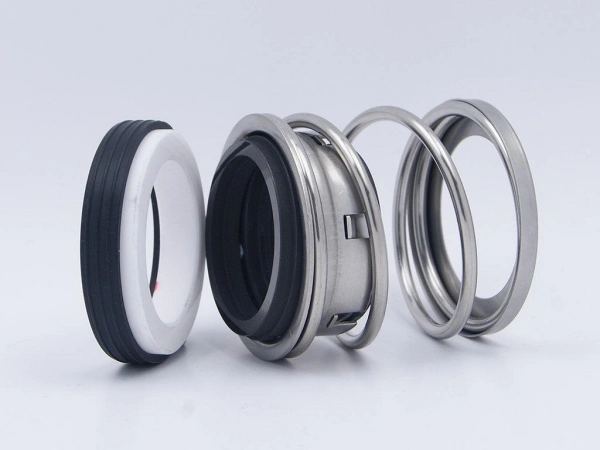
Mechanical seals do not rely on a single component to prevent leakage; instead, they achieve a seal through the coordinated interaction of multiple components. These primarily include the rotating ring, stationary ring, spring, auxiliary seal ring, as well as support and drive components.
Tip: A higher face-to-face closing force is not necessarily better. Excessive closing force may increase friction and heat generation, while insufficient closing force may lead to increased leakage.
The shaft sleeve is mounted on the outside of the pump shaft to support the sealing components and, in applicable designs, also protect the surface of the pump shaft. The gland secures the sealing assembly and connects it to the equipment’s seal chamber.
The drive components transmit the rotational motion of the pump shaft to the rotating ring assembly via drive pins, set screws, or other mechanical connections.
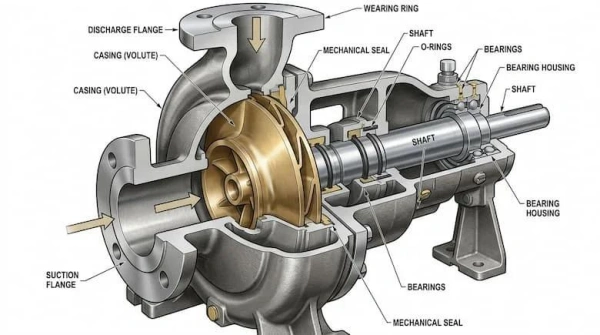
Mechanical seals are installed where the rotating shaft passes through the stationary housing of a piece of equipment; their primary function is to prevent the axial leakage of liquids or gases from inside the equipment. You can find mechanical seals in centrifugal pumps, chemical pumps, mixers, agitators, and some compressors.
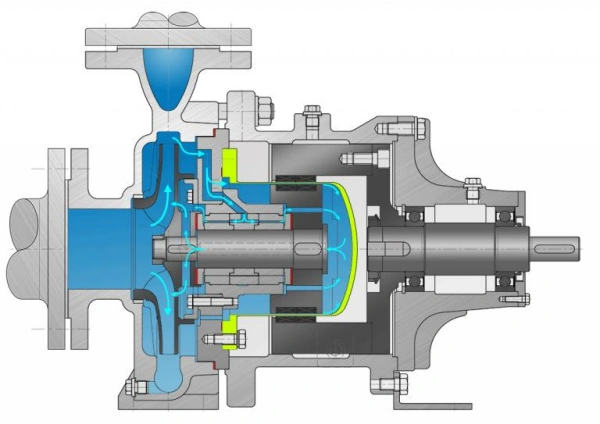
In common horizontal end-suction centrifugal pumps, the mechanical seal is installed behind the impeller, near where the pump shaft exits the pump casing. The space specifically designed to house the sealing assembly is called the seal chamber.
If you need to replace the mechanical seal in a centrifugal pump, you should verify the shaft diameter, seal chamber dimensions, installation length, and seal configuration.
Mechanical seals in chemical and process pumps are also located where the pump shaft passes through the pump casing, but the requirements for controlling medium leakage are often more stringent.
For example, when pumping corrosive, flammable, or toxic liquids, in addition to preventing liquid leakage, you must also consider the corrosion resistance of the seal materials and the safety risks that leakage may pose.
In mixers and agitators, the mechanical seal is installed at the point where the agitator shaft passes through the vessel wall—for example, at the shaft entry point at the top, side, or bottom of a reactor.
Its function is to prevent leakage of liquids or gases from the vessel and, when necessary, to minimize the ingress of outside air or contaminants.
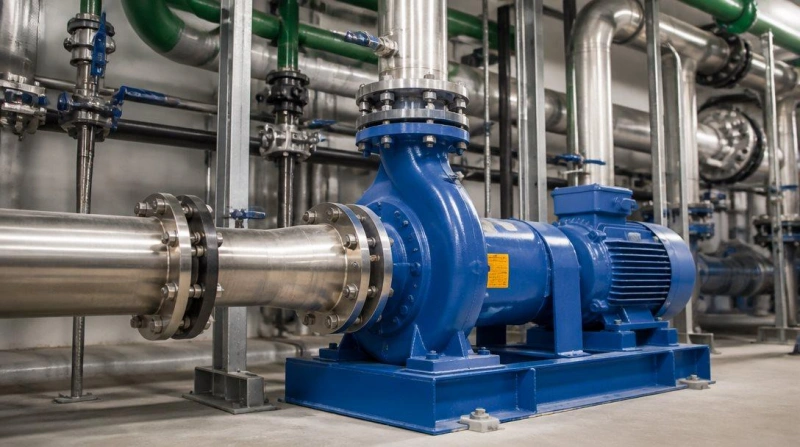
Mechanical seals are widely used in industries such as water treatment, chemical processing, oil and gas, food processing, pharmaceuticals, and mining, primarily to control media leakage in pumps and other rotating equipment. They can handle clean water, oils, chemical liquids, and certain fluids containing solid particles.
Tip: Whether a mechanical seal is suitable depends not only on the industry but also on the characteristics of the fluid itself. Even for the same centrifugal pump, the seal design required for pumping clean water may be completely different from that needed for pumping wastewater containing sand.
| Industry | Common Fluids | Main Seal Function | Selection Focus |
|---|---|---|---|
| Water Treatment & HVAC | Clean water, cooling water, wastewater. | Reduces shaft leakage and supports stable pump operation. | Single seals suit clean water; abrasive or corrosive water needs suitable materials. |
| Chemical & Petrochemical | Acids, alkalis, solvents, oils. | Controls hazardous leakage and reduces safety risks. | Check corrosion, temperature, and volatility; high-risk fluids may need dual seals. |
| Food, Beverage & Pharmaceutical | Water, syrup, food fluids, pharmaceutical liquids. | Controls leakage and reduces contamination risk. | Use hygienic materials and verify CIP/SIP compatibility. |
| Mining, Pulp & Wastewater | Slurry, pulp, sludge, sandy wastewater. | Controls leakage from abrasive fluids. | Consider solids, abrasion, clogging, and flush requirements. |
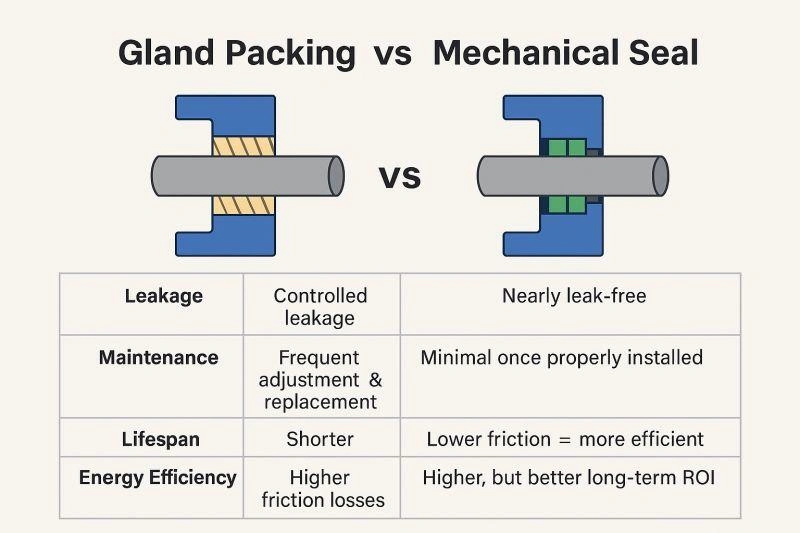
Both mechanical seals and packing seals are used to control fluid leakage between the rotating shaft and the pump casing, but they operate differently.
Packing seals limit fluid leakage by compressing packing rings so that they come into contact with the pump shaft or shaft sleeve. Mechanical seals, on the other hand, rely on the precise face-to-face contact between the rotating ring and the stationary ring to control leakage.
In many pump applications, traditional compression-type packing seals require a certain amount of visible leakage to lubricate and cool the contact surface between the packing and the shaft sleeve. If the packing is compressed too tightly, it can actually cause overheating and wear.
Mechanical seals control leakage using precision sealing faces and an extremely thin lubricating film. Under appropriate operating conditions, leakage is very low—even invisible to the naked eye—but this does not mean absolutely zero leakage.
Packing seals wear down gradually with use, requiring regular checks for leakage and adjustment of the packing gland according to the manufacturer’s specifications. After prolonged operation, it may also be necessary to replace the packing or repair worn shaft sleeves.
Mechanical seals maintain the closure of the sealing faces through compensating mechanisms such as springs; during normal operation, they do not require repeated adjustments to the compression level, unlike packing seals.
Packing seals require radial pressure to be applied to the rotating shaft or sleeve, which generates frictional resistance. If the pressure is too high, it may not only increase the motor load but also accelerate wear on the sleeve.
Mechanical seals can reduce friction losses through proper face load and fluid film lubrication. For equipment operating continuously over the long term, this can offer advantages in terms of energy and maintenance costs.
Tip: It is incorrect to assume that mechanical seals are more energy-efficient in all situations. Actual energy consumption also depends on the seal design, operating pressure, rotational speed, and auxiliary systems.
When selecting a mechanical seal, the decision should not be based solely on the pump model or shaft diameter. Operating pressure, temperature, rotational speed, the characteristics of the medium, and the equipment’s operating mode all directly affect the performance and service life of the mechanical seal.
| Operating Factor | Impact on Mechanical Seal | Selection Notes |
|---|---|---|
| Operating Pressure | Affects face load, friction, heat, wear, and leakage. | Check actual seal chamber pressure; consider balanced seals for high pressure. |
| Operating Temperature | May affect O-rings, fluid film stability, vaporization, and wear. | Use suitable materials and consider cooling, flushing, or metal bellows seals. |
| Shaft Speed | Higher face speed increases friction heat and wear. | Check speed limits, face materials, lubrication, and vibration. |
| Fluid Properties | Corrosion, solids, viscosity, and crystallization may damage or block the seal. | Select corrosion- and wear-resistant materials; add flushing if needed. |
| Operating Cycles & Dry Running | Frequent starts or loss of liquid may cause overheating and seal failure. | Assess start-stop cycles and dry-running risk; use protection when needed. |
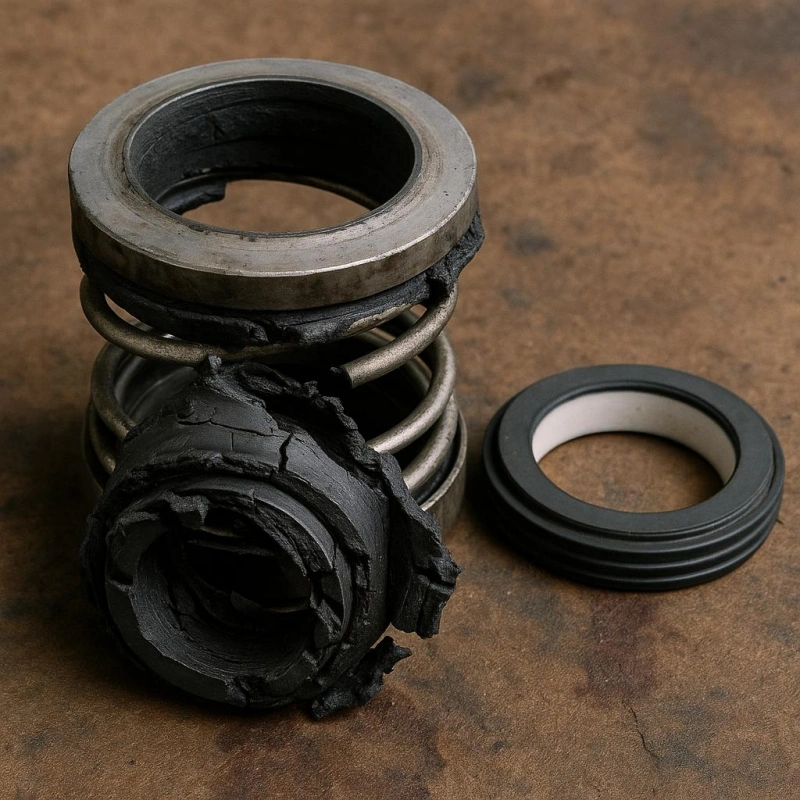
When a mechanical seal fails, the most immediate sign is an increase in leakage, making it impossible to continue keeping the liquid or gas within the design-allowed limits. In severe cases, this can lead to equipment contamination, bearing damage, unplanned downtime, and even safety and environmental risks.
This is the most common indication of failure. If you notice persistent dripping or spraying near the seal gland, or if the previously stable leakage rate suddenly increases, you should inspect the seal’s condition. For some double-face seals, problems may also be detected through abnormalities in barrier fluid pressure, fluid level, or consumption.
These symptoms also warrant attention. Mechanical seals rely on stable face-to-face contact and lubrication conditions to function properly. If the sealing faces lack lubrication, experience friction-induced overheating, or if pump shaft vibration exceeds permissible limits, seal performance may deteriorate.
A common cause is dry running, meaning the sealing faces do not receive sufficient lubricant. For mechanical seals lubricated by the fluid itself, this can cause the sealing faces to heat up rapidly, leading to wear, thermal cracking, or other damage.
Another cause is media contamination. If the fluid contains sand, crystals, or other solid particles, they may scratch the sealing faces or cause the springs and compensation mechanisms to seize.
The impact of mechanical seal failure depends on the properties of the medium, the extent of the leak, and the equipment’s operating environment.
For standard water pumps, leaks may result in wasted water, water accumulation around the equipment, and subsequent corrosion or maintenance issues.
For chemical pumps, leaks of flammable, toxic, corrosive, or high-temperature media may pose a hazard to personnel, equipment, and the environment.
Tip: If you detect a suspected abnormal leak of hazardous media, you should follow on-site safety procedures to isolate the system and shut down the equipment. Do not directly handle or disassemble seal components while the equipment is running.
Mechanical seals can effectively reduce media leakage in rotating equipment, but they are not suitable for all pumps and operating conditions.
You need to make a decision based on the properties of the media, the equipment’s operating conditions, the allowable leakage rate, and maintenance costs—rather than assuming that mechanical seals are necessarily more advanced or reliable than other sealing methods.
| Operating Condition | Mechanical Seal Limitation | Alternative | Selection Notes |
|---|---|---|---|
| Highly Abrasive / Particle-Laden Fluids | Particles can damage faces or jam seal components. | Packing or slurry-specific mechanical seals. | Check solids, abrasion, and flushing conditions. |
| Frequent Dry Running | Poor lubrication can cause overheating, wear, or cracking. | Dry-running seals or protection systems. | First address loss-of-liquid risk. |
| High Shaft Misalignment / Vibration | Unstable face contact may increase leakage. | Packing or special seal designs. | Check bearings, alignment, and vibration first. |
| Applications Unsuitable for Shaft Seals | Dynamic shaft seals still carry leakage risk. | Magnetic-drive or canned-motor pumps. | Check lubrication, solids, temperature, and containment reliability. |
| Low-Cost / Non-Critical Service | Higher initial purchase and installation cost. | Traditional packing. | Suitable where controlled leakage is acceptable. |
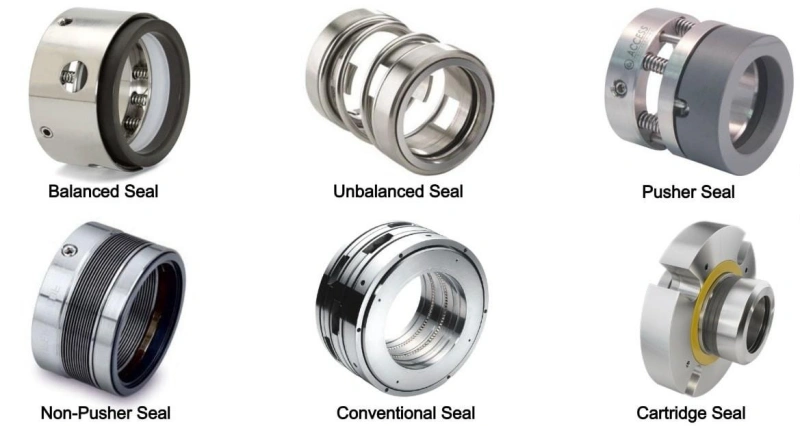
There is no single classification system for mechanical seals. Based on common designs, they can be divided into thrust-ring seals, non-thrust-ring seals, and cartridge seals.
Not necessarily. Many mechanical seals can be lubricated and cooled by the medium inside the pump, without the need for an additional flush fluid. However, for high-temperature media, media containing particles, or media prone to crystallization, an external flush fluid or a specialized auxiliary system may be required.
Standard liquid-lubricated mechanical seals generally cannot run dry continuously; otherwise, they may overheat, wear out, or even crack due to insufficient lubrication. Some specially designed seals can withstand specific dry-running conditions, but the manufacturer’s permitted operating limits must be confirmed.
Mechanical seals do not have a fixed service life. When properly selected, installed, and operated under stable conditions, some seals can last for several years. However, actual service life depends on the medium, pressure, temperature, lubrication conditions, and equipment condition, so a specific number of years cannot be guaranteed.
Mechanical seals generally do not need to be replaced at fixed intervals. You should base your decision on the manufacturer’s recommendations, the equipment maintenance schedule, and the operating condition of the seal. If abnormal leakage, severe wear, or other signs of failure occur, inspect the seal promptly and repair or replace it based on the results.
Common signs include increased leakage, abnormal heat in the sealing area, and the presence of crystals or deposits near the seal. Vibration and unusual noise may also be related to seal failure, but further inspection of the bearings, alignment, and pump operating condition is required.
The price of mechanical seals varies widely, depending on size, design, face materials, brand, and operating conditions. Standard mechanical seals are generally less expensive than complex cartridge-type or double-face seals. When purchasing, you should also consider installation, auxiliary systems, and maintenance costs—not just the price of the seal itself.
Yes, but it depends on the extent of the damage. Some mechanical seals can be restored to service by replacing O-rings, springs, or sealing rings, as well as through professional face repair. If the seal components are severely damaged or the repair costs are too high, replacement is usually recommended. Before repairing, the cause of the leak should also be identified to prevent the failure from recurring.
Mechanical seals play a crucial role in pumps and rotating equipment. They effectively control media leakage. They also reduce equipment wear. They minimize maintenance requirements. In addition, they enhance operational safety and reliability.
As a provider of mechanical seal solutions, Sakowitz is committed to offering reliable sealing products and expert technical support for a wide range of industrial applications. Whether you need standard mechanical seals or customized solutions for specific operating conditions, Sakowitz can help you select the most suitable sealing solution to improve your equipment’s long-term operational efficiency.
—— We Will Provide You With Professional OEM Solutions.
Whether you require pump bearings, pump valves, mechanical seals, or other custom-engineered components, we support production based on your drawings as well as rapid prototyping.
Please complete the form on the right and upload your technical drawings or specifications. Our engineering team will review your requirements within 24 hours and provide a detailed quotation, application recommendations, and delivery schedule.
Copyright © 2025 Sakowit, All rights reserved.
WhatsApp us