
Labyrinth seals and mechanical seals are both common sealing technologies used in rotating equipment, but they differ significantly in their operating principles, leak control capabilities, and applicable operating conditions.
This article will provide a detailed comparison of labyrinth seals and mechanical seals in terms of structure, operating principles, gas and liquid leakage behavior, typical applications, and selection criteria, to help you assess the respective advantages and limitations of each type of seal.
A labyrinth seal is a non-contact sealing structure used in rotating equipment. It increases the resistance to fluid leakage through a series of narrow gaps, protruding teeth, and tortuous flow paths, thereby reducing the amount of gas or liquid that flows through the gap along the rotating shaft.

A labyrinth seal consists of a rotating component, a stationary component, and a tiny gap between them. The rotating component is mounted on the shaft, while the stationary component is mounted in the housing or seal seat. Depending on the specific design, the protruding teeth may be located on either the rotating side or the stationary side.
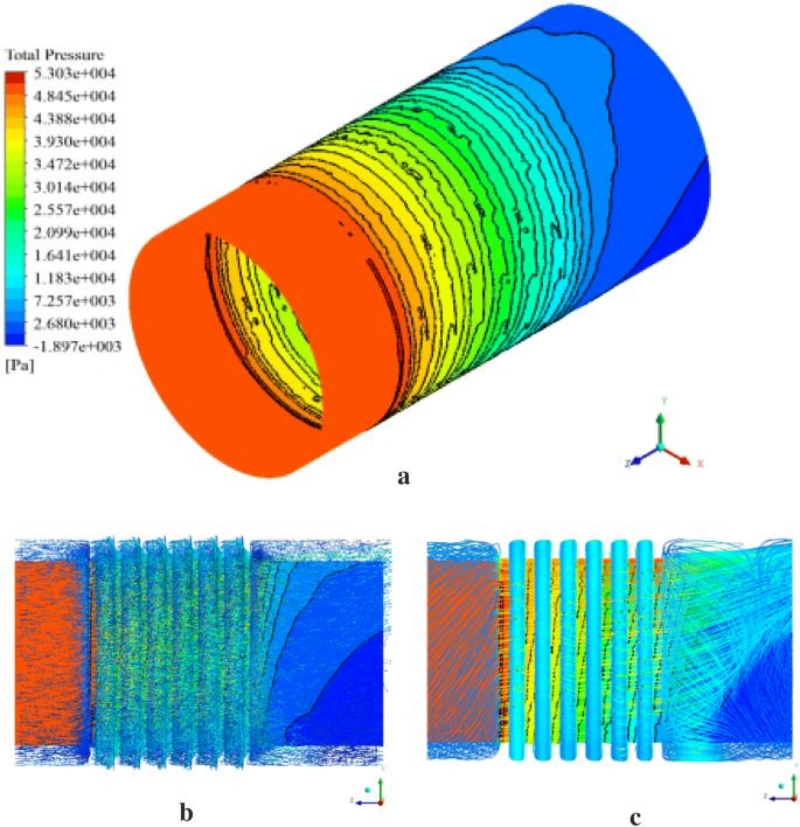
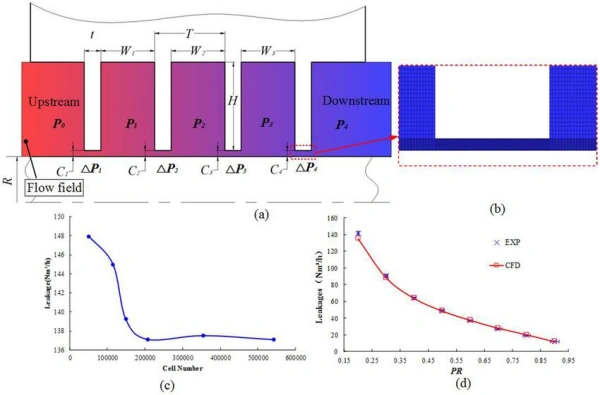
A labyrinth seal is a non-contact dynamic seal that controls leakage through “throttling—expansion—vortex energy dissipation” rather than completely blocking the fluid flow. Each time the fluid passes through a tooth gap, its pressure decreases and its velocity increases. Upon entering the chamber, the fluid suddenly expands, forming vortices that dissipate kinetic energy as heat. As the fluid passes through multiple sets of teeth, this process repeats, gradually reducing the pressure differential and thereby minimizing leakage.
Sealing performance is primarily influenced by the following factors:
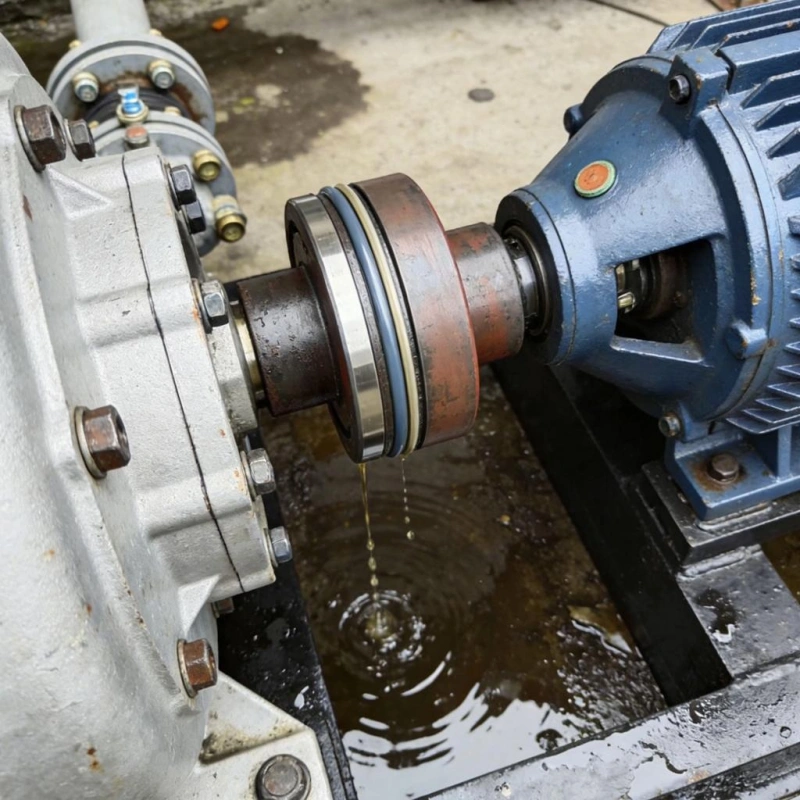
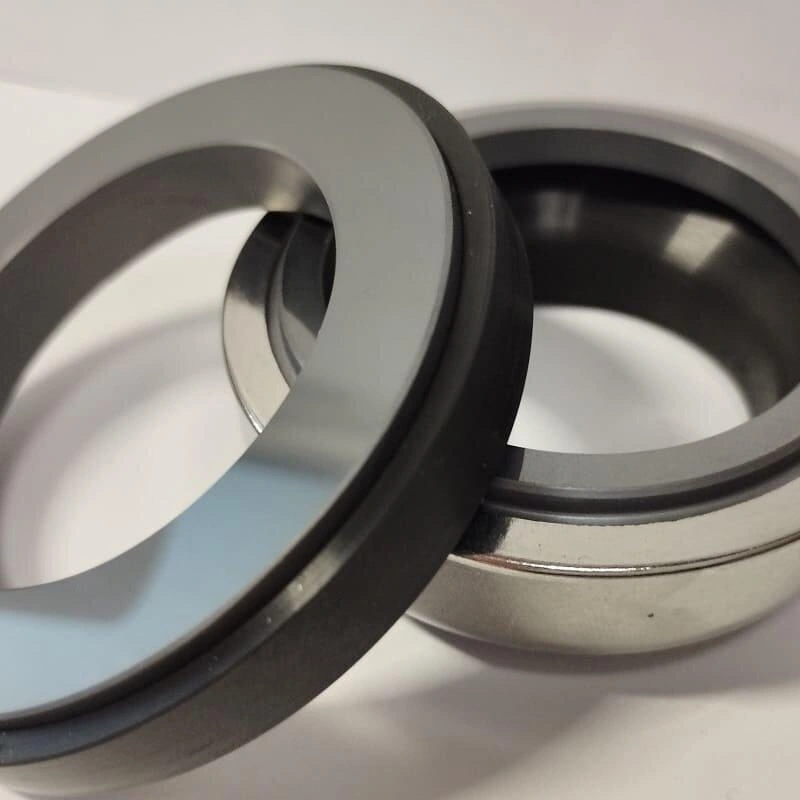
A face mechanical seal is a contact-type sealing device used in rotating equipment, primarily to prevent liquids or gases from leaking through the gap between the rotating shaft and the equipment housing. It forms the primary leak barrier through a set of mating sealing faces and is widely used in centrifugal pumps, chemical pumps, agitators, and other industrial rotating equipment.
A typical face mechanical seal consists mainly of the following components:
1. Rotating seal ring
2. Stationary seal ring
3. Spring assembly
4. Auxiliary seals
5. Metal structural components
Structure: Consists of a pair of precision-machined rotating and stationary rings, whose end faces come into contact to form the sealing interface.
Sealing: The combined action of spring force and fluid pressure maintains the necessary contact between the two faces, preventing axial leakage of the medium.
Lubrication: During normal operation, an extremely thin microscopic liquid film forms between the faces, which not only prevents dry friction and overheating but also controls the wear rate, achieving “controlled micro-leakage” rather than absolutely zero leakage.
The main advantage of face mechanical seals is their ability to keep leakage to a minimum through precise face-to-face mating. Unlike conventional clearance seals, they do not rely on large open flow channels to limit leakage; instead, they utilize a controlled face-to-face clearance to form the primary sealing barrier.
Tip: A mechanical seal does not guarantee absolutely zero leakage. For common liquid-lubricated mechanical seals, trace amounts of liquid leakage may occur between the sealing faces.
Preferred applications: Rotating equipment requiring strict control of liquid leakage, such as centrifugal pumps and chemical pumps.
Typical media: Clean water, hot water, oils, and chemical liquids.
Note on special media: For media containing solid particles, or those that are abrasive or prone to crystallization, the flushing scheme, face materials, and auxiliary sealing structures must be evaluated simultaneously; otherwise, the risk of face wear and hang-up will increase significantly.
| Comparison | Labyrinth Seal | End-Face Mechanical Seal |
|---|---|---|
| Working Principle | Uses multiple narrow gaps and tortuous paths to restrict leakage. | Uses precision rotating and stationary faces to control leakage. |
| Sealing Method | Non-contact sealing. | Close face clearance with a controlled fluid film in liquid-lubricated designs. |
| Main Components | Rotating and stationary parts, teeth, grooves, and clearances. | Rotating ring, stationary ring, springs, secondary seals, and metal parts. |
| Fluid Flow Path | Fluid passes through multiple narrow gaps and expansion chambers. | Fluid passes through the tiny gap between the seal faces. |
| Leakage Control | Uses throttling, turbulence, and energy dissipation to reduce leakage. | Uses precise face clearance and closing force to restrict leakage. |
| Pressure Changes | Fluid progressively loses pressure and energy through multiple restrictions. | Face pressure distribution and closing force determine sealing performance. |
| Fluid Film | Does not rely on a liquid film between sealing faces. | Liquid-lubricated designs use a thin fluid film for lubrication and cooling. |
| Mechanical Friction | Rotating and stationary parts normally do not contact. | Face contact varies with lubrication conditions and design. |
| Wear Characteristics | Minimal contact wear during normal operation, but rubbing may occur. | May experience face wear, thermal damage, and secondary seal aging. |
| Leakage Level | Allows some leakage through clearances; restricts rather than eliminates it. | Provides low leakage but does not guarantee zero leakage. |
| Key Design Parameters | Clearance, tooth count, chamber design, pressure differential, and rotor vibration. | Face flatness, closing force, materials, pressure, temperature, and speed. |
| Typical Applications | Centrifugal compressors, steam turbines, high-speed equipment, bearing housings, and internal pump clearances. | Centrifugal pumps, chemical pumps, oil pumps, mixers, and other rotating equipment. |
| Main Advantages | Non-contact operation, low friction, and suitability for high speeds. | Strong leakage control for applications requiring low fluid leakage. |
| Main Limitations | Cannot completely prevent fluid leakage through clearances. | Requires proper lubrication, precise installation, material compatibility, and suitable operating conditions. |

When selecting between a labyrinth seal and a mechanical seal, the fluid type is a very important factor.Gas, vapor, and liquid behave differently inside a seal, so they require different sealing solutions.Gas molecules are light and highly mobile.They can easily pass through small gaps, making leakage very sensitive to seal clearance.Even a small gap can cause noticeable leakage.
Therefore, gas applications are often more suitable for throttling seals like labyrinth seals.Steam applications often involve high temperatures.The fluid expands when heated and may also change from gas to liquid.Temperature changes can affect the seal condition.Therefore, steam sealing requires good heat resistance and careful control of thermal changes and condensation effects.
| Comparison | Gas | Vapor / Steam | Liquid |
|---|---|---|---|
| Main Physical Properties | Highly compressible. | Compressible; may condense. | Nearly incompressible under typical conditions. |
| Pressure Changes | Affect gas density and volume. | May cause expansion or condensation. | Mainly change pressure; density varies little. |
| Labyrinth Seal Operation | Multi-stage throttling, expansion, and energy dissipation. | Multi-stage throttling with condensation considerations. | Multi-stage throttling to restrict liquid flow. |
| Mechanical Seal Operation | Requires specialized gas seal designs. | Requires attention to lubrication, temperature, and phase changes. | Uses a thin liquid film for lubrication and leakage control. |
| Main Operating Risks | Gas leakage, pressure changes, and clearance variation. | Condensation, thermal stress, and film instability. | Face wear, particle contamination, vaporization, and dry running. |
| Labyrinth Seal Applications | Centrifugal compressors. | Steam turbines. | Internal pump clearances. |
| Mechanical Seal Applications | Specialized dry gas seals. | Specially designed high-temperature or steam seals. | Centrifugal pumps, chemical pumps, and oil pumps. |
Although labyrinth seals and mechanical face seals are both used to control fluid leakage in rotating equipment, there are significant differences between the two in terms of structural design, sealing methods, leakage control capabilities, and operational requirements.
| Comparison | Labyrinth Seal | End-Face Mechanical Seal |
|---|---|---|
| Seal Type | Non-contact seal. | Common liquid-lubricated designs use closely fitted faces with a thin fluid film. |
| Main Components | Rotating parts, stationary parts, teeth, grooves, and clearances. | Rotating ring, stationary ring, springs, secondary seals, and metal parts. |
| Contact Condition | Rotating and stationary parts remain separated during normal operation. | Faces maintain controlled proximity; local contact may occur. |
| Leakage Control | Restricts leakage but cannot eliminate it completely. | Provides better leakage control, but is not completely leak-free. |
| Gas Applications | Widely used for gas leakage control in compressors. | Specialized dry gas seal designs control gas leakage. |
| Steam Applications | Commonly used in steam turbines. | Requires design based on temperature, pressure, lubrication, and condensation. |
| Liquid Applications | Used for internal pump clearances and bearing protection. | Widely used for pump shaft leakage control. |
| Friction & Heat | Low friction during normal non-contact operation. | Face friction generates heat; closing force and lubrication must be controlled. |
| Wear Characteristics | Minimal contact wear, but rubbing may occur. | May experience face wear, thermal damage, and secondary seal aging. |
| Lubrication | Does not rely on a fluid film between sealing faces. | Liquid-lubricated designs require a stable fluid film. |
| Clearance Requirements | Clearance must account for thermal expansion, vibration, and shaft runout. | Requires proper face flatness, positioning, and closing conditions. |
| Maintenance | Inspect clearances, tooth wear, rotor vibration, and rubbing. | Inspect seal faces, secondary seals, springs, and lubrication. |
| Typical Equipment | Centrifugal compressors, steam turbines, high-speed equipment, and some pumps. | Centrifugal pumps, chemical pumps, oil pumps, and mixers. |
| Main Advantages | Non-contact operation, low friction, and suitability for high speeds. | Strong leakage control for demanding sealing applications. |
| Main Limitations | Allows clearance leakage and cannot replace all shaft-end liquid seals. | Requires proper lubrication, installation, material compatibility, and operating conditions. |
| Key Selection Factors | Clearance, pressure differential, speed, fluid properties, and leakage limits. | Fluid compatibility, pressure, temperature, speed, face materials, and lubrication. |

Centrifugal Compressors: Shaft-end/inter-stage seals; multi-stage throttling for pressure reduction; non-contact, low-friction design suitable for high-speed operation.
Steam Turbines: Shaft seals/inter-stage seals; critical verification of high temperatures, thermal expansion, vibration, and changes in operating clearances.
Gas Turbines/Turbochargers: Limit air, fuel gas, or lubricating oil leakage; significant low-friction advantages; verification of shaft radial movement, pressure, and oil circuit conditions is required.
Bearing housings/gearboxes: Function as bearing isolators/oil seals to retain oil and prevent dust and water ingress; not completely airtight—reinforced protection is required in high-pressure flushing or submerged environments.
Pumps/multistage pumps: Used for interstage sealing, wear rings, or internal recirculation control; for controlling external shaft-end leakage, face mechanical seals should still be prioritized for evaluation.

Labyrinth seals can also be used in mixers, agitators, and certain types of liquid processing equipment; however, their effectiveness must be evaluated based on the equipment’s design and the seal’s location.
Tip: Standard labyrinth seals generally cannot directly replace face mechanical seals on agitators or liquid processing equipment.
Installation Location: Where the rotating shaft passes through the housing or bearing housing; primarily serves to protect the bearing and prevent contamination, rather than functioning as the primary process shaft seal.
Function: Multi-stage, zigzagged clearances block liquid splashes, dust, and external contaminants from entering the bearing area, while maintaining the internal lubrication environment.
Application Limits: A non-contact, leak-limiting design suitable for low-pressure, non-hazardous media, and splash environments; if the mixer is pressurized internally or strict control of media leakage is required, a labyrinth seal alone is insufficient, and a dedicated shaft seal should be evaluated separately.
The shaft seal area of a mixer is frequently exposed to liquid splashes, foam, and pressure fluctuations. Labyrinth seals are primarily used for the following three purposes:
Bearing protection: Installed between the bearing housing/casing and the rotating shaft, they block dust, moisture, and process media from entering the bearing area while preventing the leakage of lubricating oil or grease.
Splash Protection: Utilizing centrifugal force and a zigzag flow path, it directs splashing droplets and foam toward the exterior or the drainage area, preventing liquid from directly entering the bearing housing.
Supplementary Protection: It serves as a secondary layer of protection in addition to the primary seal, enhancing bearing reliability. However, it cannot replace a pressure-rated shaft seal; specialized shaft seals are still required when the equipment is under pressure or when strict leak control is necessary.
Liquid handling equipment includes centrifugal pumps, circulation pumps, transfer pumps, and other rotating machinery used for liquid transfer and circulation.
In this equipment, the application of labyrinth seals primarily depends on their installation location. It is important to distinguish between bearing area seals and process fluid shaft end seals, as they serve entirely different functions.
In centrifugal pumps, a labyrinth bearing seal can be installed at the shaft end of the bearing housing. It is primarily used to help retain lubricating oil and reduce the ingress of moisture, dust, and other external contaminants into the bearing housing.
Some pump equipment utilizes a labyrinth clearance structure to prevent high-pressure liquid from flowing back into low-pressure areas.
If your goal is to prevent fluid from leaking out of the pump along the shaft end, a face mechanical seal is the solution that should be prioritized for evaluation. It controls leakage through the precise fit between the rotating ring and the stationary ring, and different materials and designs can be selected based on the properties of the medium, as well as pressure and temperature.

Labyrinth seals can provide sealing in certain rotating equipment, but they cannot directly replace mechanical face seals.
Although a labyrinth seal may not be a direct substitute for a mechanical seal, you can evaluate it as an alternative under certain specific operating conditions.
If the equipment handles non-hazardous media and the process allows for a certain level of leakage, then a labyrinth seal may be a viable option.
If your primary requirement is not to prevent process fluid from leaking from the pump shaft end, but rather to prevent lubricating oil from escaping or external contaminants from entering the bearing housing, then a labyrinth-type bearing isolator may be more suitable.
Some specialized pumps can utilize engineered labyrinth shaft seals and incorporate a buffer gas system to control the migration of process fluids.
For example, in specialized equipment such as liquid oxygen pumps, the migration of liquid oxygen outward can be limited by controlling the buffer gas pressure to ensure it remains higher than the liquid pressure at the seal location.
If your equipment requires strict control of liquid leakage—especially when handling hazardous or high-value media—you should prioritize evaluating face-to-face mechanical seals.
Particular caution is required in the following situations:
1. Pumping toxic or flammable liquids
2. High operating pressures
3. Strict product contamination control requirements
| Selection Factor | Labyrinth Seal | End-Face Mechanical Seal |
|---|---|---|
| Sealing Method | Non-contact, multi-stage throttling. | Precision face sealing. |
| Leakage Control | Restricts leakage but allows some fluid to pass. | Generally provides lower leakage. |
| High-Speed Operation | Suitable for many high-speed, non-contact applications. | Requires evaluation of face speed and heat load. |
| Liquid Handling | Suitable for internal clearances and similar applications. | Widely used for pump shaft sealing. |
| Hazardous Fluids | Standard designs are not suitable as primary seals for strict leakage control. | Specialized seal arrangements can be selected based on risk. |
| Bearing Protection | Suitable for lubricant retention and contamination prevention. | Not its primary application. |
| Lubrication | Does not rely on a lubricating film between seal faces. | Standard liquid-lubricated designs require a stable face film. |
| Maintenance Focus | Clearances, rubbing, contamination, and wear. | Seal faces, secondary seals, and lubrication systems. |
| Replacement Conditions | Can replace a mechanical seal when leakage is acceptable and the design is fully validated. | Preferred when lower leakage is required. |
| Check Item | Key Questions | Labyrinth Seal | Mechanical Seal |
|---|---|---|---|
| 1. Sealing Purpose | What needs to be sealed? | Restricts clearance leakage, protects bearings, and reduces internal recirculation. | Controls liquid or gas leakage at the shaft end. |
| 2. Fluid Type | Is the fluid gas, steam, or liquid? | Suitable for various fluids; clearance leakage must be considered. | Suitable for liquids and specialized gas seal designs. |
| 3. Fluid Properties | Is the fluid corrosive, viscous, or particle-laden? | Consider particle wear, deposits, and clearance blockage. | Consider face wear, corrosion, and material compatibility. |
| 4. Operating Pressure | What are the normal pressure and maximum differential pressure? | Pressure differential affects clearance leakage. | Affects face loading and seal design. |
| 5. Operating Temperature | Are there high temperatures or fluctuations? | Check thermal expansion and operating clearance. | Check face temperature and secondary seal limits. |
| 6. Shaft Speed | What are the normal and maximum speeds? | Suitable for many high-speed, non-contact applications. | Check face speed and friction heat. |
| 7. Shaft Movement | Is there runout, vibration, or axial movement? | Prevent clearance changes and rotor contact. | Prevent uneven face loading and seal failure. |
| 8. Leakage Requirements | How much leakage is acceptable? | Allows some clearance leakage. | Generally provides lower leakage. |
| 9. Lubrication | Can stable lubrication be maintained? | Does not rely on a liquid film between seal faces. | Standard liquid-lubricated designs require a stable face film. |
| 10. Installation Space | Is sufficient installation space available? | Check shaft diameter, housing, and operating clearance. | Check shaft sleeve, seal chamber, and gland dimensions. |
| 11. Material Selection | Are materials compatible with the fluid and temperature? | Focus on corrosion, wear, and dimensional stability. | Check face, elastomer, and metal materials. |
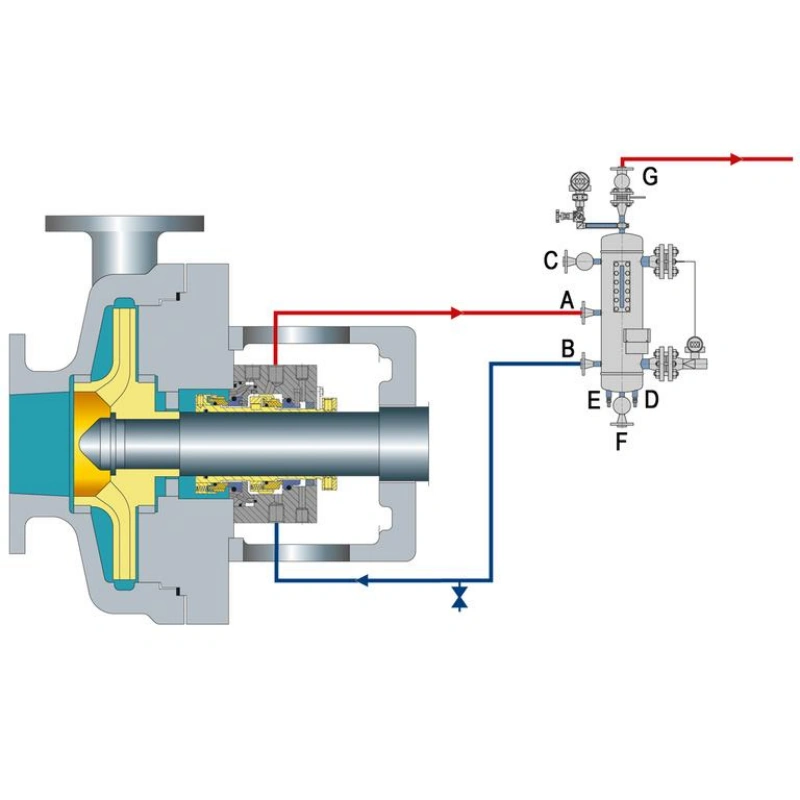
| 12. Support Systems | Are flushing, cooling, or buffer fluids required? | Special designs may require purge gas or leakage collection. | May require Flush, Buffer, or Barrier systems. |
| 13. Maintenance | Which components require routine inspection? | Check clearances, teeth, and contamination. | Check seal faces, springs, and secondary seals. |
| 14. Safety Requirements | Does the fluid involve toxic, flammable, or hazardous substances? | Standard labyrinth seals are unsuitable for strict hazardous-fluid containment. | Select suitable single or dual seal arrangements based on risk. |
| 15. Lifecycle Cost | Are purchase, maintenance, and downtime costs considered? | Consider leakage losses, clearance maintenance, and support systems. | Consider seal replacement, support systems, and maintenance costs. |
| 16. Performance Verification | Are manufacturer data and test results available? | Verify design clearance and expected leakage. | Verify face materials, operating limits, and leakage performance. |
No, it is not. A labyrinth seal is a non-contact seal that limits fluid leakage through narrow gaps and winding flow paths. A mechanical seal controls leakage through the sealing faces between a rotating ring and a stationary ring. The two differ in structure, operating principles, and applicable operating conditions.
Labyrinth seals generally have lower friction because they do not require direct contact between sealing components, resulting in virtually no face-to-face contact friction. Mechanical seals, on the other hand, typically involve face-to-face friction, which generates some frictional heat and energy loss. However, labyrinth seals may still experience fluid friction and air resistance losses.
Yes. It is commonly used for internal backflow control and bearing protection in pumps, but is generally not suitable as a replacement for a mechanical seal at the pump shaft end.
In many cases, yes. It features a non-contact design with low friction losses, but factors such as vibration, thermal expansion, and operating clearances must still be considered.
Generally, it cannot be used as a direct replacement. Mechanical seals should typically be the preferred choice for controlling liquid leakage at the pump shaft end.
A labyrinth seal limits leakage through multi-stage gap throttling; a dry gas seal forms a gas film via special face grooves to achieve a non-contact face seal.
Labyrinth seals themselves do not require face lubrication, but when installed in a bearing housing, the bearings still need to be properly lubricated.
If it is necessary to control liquid leakage at the pump shaft end, mechanical seals that have been verified through pressure design testing are typically evaluated first.
Both labyrinth seals and mechanical seals are important sealing technologies in industrial rotating equipment, but they address different leakage control challenges.
At Sakowitz, we prioritize matching the seal design to actual operating conditions. Selecting the right seal is not only critical for leakage control but also affects equipment reliability, maintenance costs, and long-term service life. Only by thoroughly evaluating the characteristics of the process medium and the equipment’s operating conditions can you choose a sealing solution that truly meets your application’s needs.
—— We Will Provide You With Professional OEM Solutions.
Whether you require pump bearings, pump valves, mechanical seals, or other custom-engineered components, we support production based on your drawings as well as rapid prototyping.
Please complete the form on the right and upload your technical drawings or specifications. Our engineering team will review your requirements within 24 hours and provide a detailed quotation, application recommendations, and delivery schedule.
Copyright © 2025 Sakowit, All rights reserved.
WhatsApp us