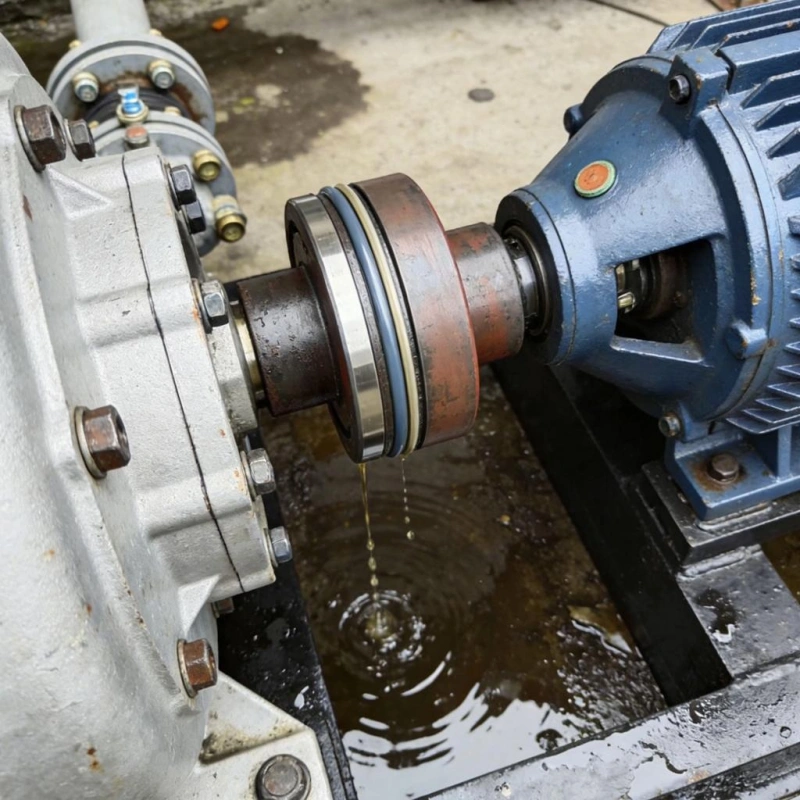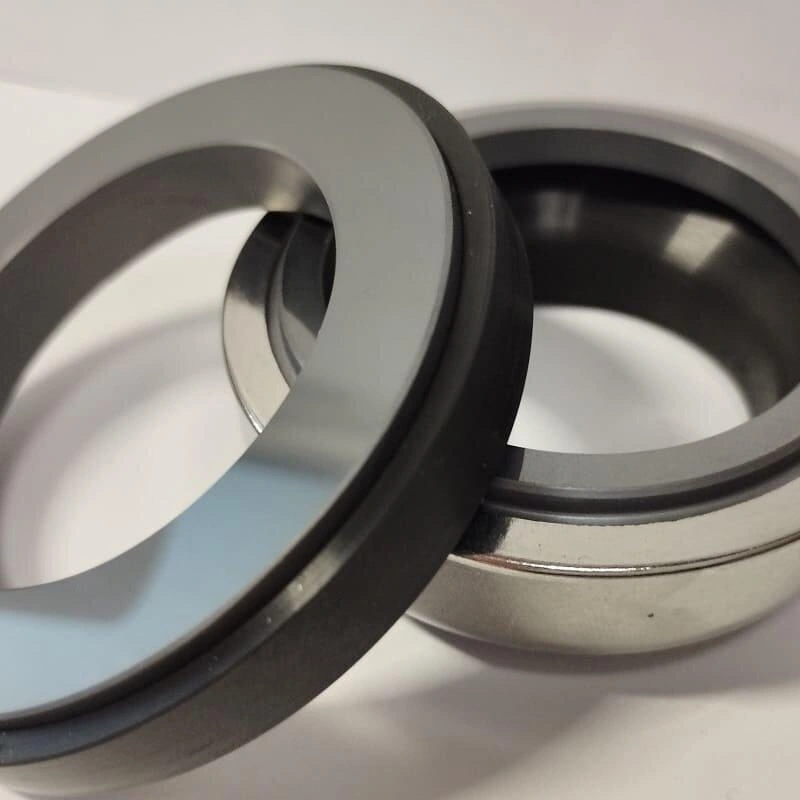

Have you ever encountered this problem? Mechanical seal leakage is a common operational failure in water pumps, chemical pumps, and other rotating equipment. The causes are complex and varied; they may stem from dry running or be related to factors such as shaft vibration and improper installation.
This article begins by distinguishing between normal leakage and seal failure, then provides a detailed analysis of the common causes of mechanical seal leakage and their typical manifestations. It explains how to systematically pinpoint the source of the leak by inspecting the seal faces, operating conditions, the condition of the shaft assembly, and auxiliary seals.

During normal operation, a mechanical seal does not mean there is absolutely no leakage. It relies on an extremely thin film of lubricating fluid between the rotating ring and the stationary ring to reduce friction and control leakage.
Tip: A mechanical seal allows for a very small amount of normal leakage. However, if you notice persistent dripping, obvious spraying, or a sudden increase in leakage, you need to determine whether the seal has failed.
Normal leakage refers to trace amounts of fluid leaking through the sealing faces of a mechanical seal within the design tolerance range. For standard mechanical seals used with volatile media such as water, these trace amounts of liquid may evaporate on the outside of the seal, so you may not see any visible droplets.
However, normal leakage does not mean that all visible dripping is acceptable. You need to make a judgment based on the seal type, the properties of the medium, the equipment operating conditions, and the leakage limits specified by the manufacturer.
Mechanical seal failure manifests as a significant increase in leakage or a leakage pattern that differs from the equipment’s original normal operating conditions.
| Check Item | Normal Condition | Warning Signs |
|---|---|---|
| Leakage Amount | Small, stable, and within equipment limits. | Increasing leakage or continuous dripping. |
| Leakage Trend | Remains stable over time. | Sudden increase or continuous worsening. |
| Leakage Form | No visible liquid droplets. | Continuous dripping, flowing, or spraying. |
| Seal Temperature | Within the normal operating range. | Abnormal temperature rise or local overheating. |
| Operating Condition | Normal vibration and noise. | Abnormal vibration or rubbing noise. |
| Around the Seal | No abnormal liquid buildup or residue. | Pooling, crystallization, or heavy deposits. |
Tip: The presence of liquid droplets alone is not sufficient to determine whether a mechanical seal has failed. Certain media may evaporate rapidly, leaving behind crystals or residue. Some sealing systems may also exhibit visible leakage or auxiliary fluid discharge that is permitted by their design.
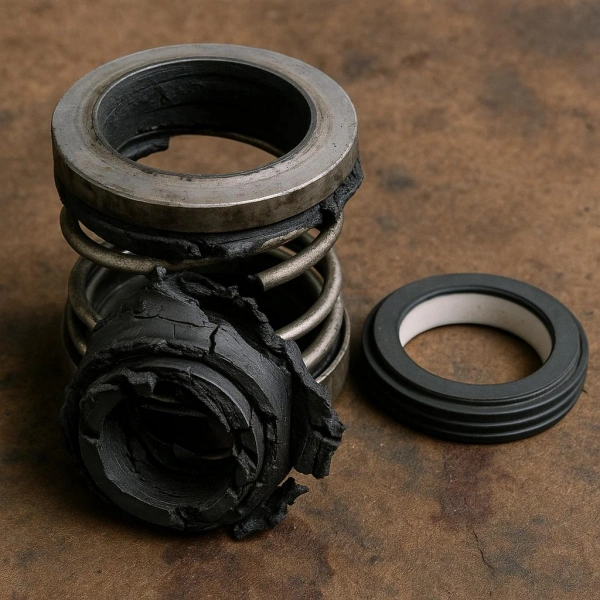
Dry running is one of the major causes of mechanical seal leakage and premature failure. For a mechanical seal to operate properly, an extremely thin film of lubricating fluid is required between the rotating ring and the stationary ring to reduce friction and help dissipate heat.
When the lubricating film disappears, direct contact between the rotating ring and the stationary ring may increase, generating more frictional heat. If the heat cannot be dissipated in a timely manner, the sealing faces may experience excessive wear, thermal deformation, or thermal cracking.
In designs using carbon seal rings, insufficient lubrication may accelerate face wear. For hard face materials such as silicon carbide, severe thermal stress may also lead to cracking or chipping.
This damage compromises the flatness of the sealing faces, making it easier for fluid to leak through the seal gap.
You can make this determination by combining operating records, on-site performance, and shutdown inspections.
| Check Item | Possible Sign | What to Check |
|---|---|---|
| Leakage | Sudden leakage after startup. | Check pump priming and venting. |
| Seal Temperature | Abnormal temperature rise. | Check lubrication and cooling. |
| Operating Noise | Abnormal rubbing noise. | Inspect seal face contact and mechanical faults. |
| Seal Faces | Wear, discoloration, or thermal cracks. | Check for overheating or poor lubrication. |
| Suction Conditions | Low liquid level or interrupted supply. | Confirm stable liquid supply. |
| Flush System | Low flow or blockage. | Confirm sufficient flow to the seal chamber. |
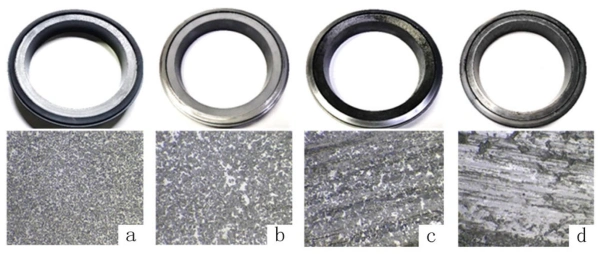
Mechanical seals rely on the precise fit between the rotating ring and the stationary ring to prevent fluid leakage. If the sealing faces become worn or scratched, or if solid particles enter the seal gap, the flatness of the faces may be compromised, causing fluid to leak along the damaged areas.
Tip: Slight wear may occur during normal operation of a mechanical seal; this does not necessarily indicate failure. What truly warrants concern is abnormal wear, visible grooves, and a decline in sealing performance caused by contaminants.
Seal face wear refers to the gradual loss of material from the sealing surfaces of the rotating and stationary rings due to prolonged contact and friction.
Under normal conditions, an extremely thin lubricating film exists between the sealing faces, which reduces direct friction. If you notice obvious wear grooves on the sealing faces, uneven contact surfaces, or a persistent increase in leakage, you should check whether the seal has failed.
Scoring refers to the appearance of distinct linear scratches or grooves on the seal faces. It is associated with hard particles entering the seal gap, insufficient lubrication, or abnormal friction.
When a pump handles liquids containing silt and sand, fine particles may enter the space between the two seal faces. Some particles may become embedded in the softer carbon-graphite seal ring and repeatedly scrape against the opposite seal face during rotation.
Contamination refers to the entry of solid particles, crystals, deposits, or other impurities into the seal faces and surrounding areas, which impairs normal sealing performance.
Common sources of contamination include silt and sand in the pumped medium, metal abrasion particles, residual impurities in the piping, as well as crystals or deposits formed in the medium due to temperature changes.

“Heat Checking” refers to the formation of fine cracks on the sealing face due to thermal stress.
“Thermal Distortion” refers to a change in the original shape of the sealing face caused by uneven heating.
“Overheating” refers to the temperature of a sealing component exceeding its normal or permissible operating range. These three phenomena are interrelated but not entirely the same.
Thermal cracking manifests as fine cracks on the sealing face; some cracks may extend radially—that is, from the inner side of the seal ring toward the outer side.
When the sealing face is insufficiently lubricated, friction is excessive, or temperatures fluctuate drastically, significant thermal stress may develop within the sealing material. If this stress exceeds the material’s tolerance limit, cracks may form.
Thermal distortion refers to slight warping or shape changes in the sealing face caused by uneven temperature distribution.
When the temperatures on the inner and outer sides of the seal ring differ, the degree of thermal expansion of the material may also vary. A sealing face that was originally flat may develop a slight conical deformation, causing contact pressure to concentrate on the inner or outer side.
Mechanical seal overheating is not caused by a single factor but results from an imbalance between heat generated by friction and heat dissipation conditions.
Common causes include an insufficient lubricant film, inadequate cooling of the seal chamber, a clogged flushing system, excessive contact load on the sealing faces, and vaporization of the fluid near the seal.
Overheating not only damages the sealing faces but can also cause elastic seals, such as O-rings, to harden and lose their elasticity, ultimately leading to leakage.
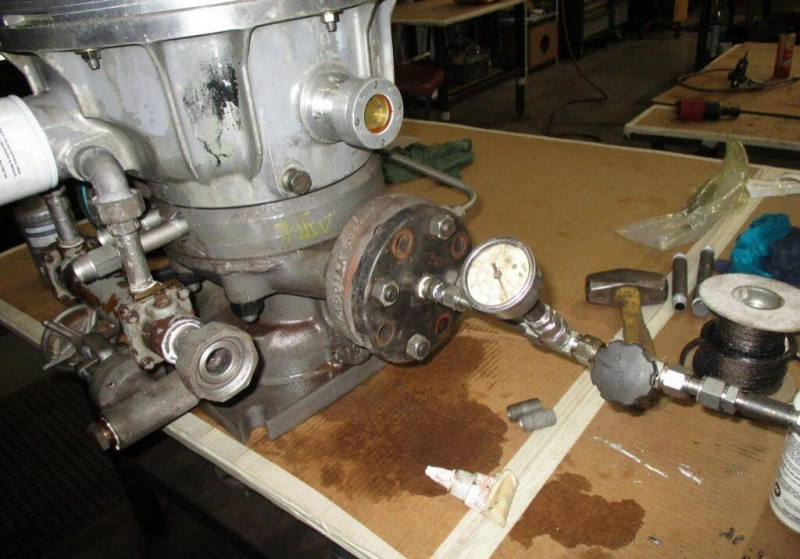
Pressure overload refers to a situation where the pressure or pressure differential acting on a seal exceeds the design limits. Unstable operating conditions refer to frequent fluctuations in pressure, flow rate, temperature, or rotational speed, which make it difficult for the seal to maintain stable operation. Both of these conditions can shorten the service life of a mechanical seal.
The rotating and stationary rings of a mechanical seal must maintain an appropriate contact load. Seal chamber pressure refers to the fluid pressure within the chamber housing the seal, which affects the force distribution on the sealing faces.
For common contact-type mechanical seals, excessive pressure can cause the sealing faces to be pressed too tightly together, leading to increased friction and heat generation, which accelerates face wear. In severe cases, it may also cause deformation or damage to the seal rings.
Pressure fluctuation refers to continuous changes in fluid pressure during equipment operation. Common causes include rapid valve opening and closing, frequent pump starts and stops, unstable flow rates, and pressure surges in the piping system.
When pressure changes suddenly, the forces acting on the sealing faces and the lubricating fluid film may also change accordingly. Repeated fluctuations can cause temporary intensified contact between the faces, increased wear, and even transient leakage.
If a mechanical seal is leaking, you can make a preliminary assessment by considering pressure records, equipment operating conditions, and the extent of seal damage.
| Observed Condition | Possible Cause | What to Check |
|---|---|---|
| Leakage Increases at High Pressure | Excessive face load or pressure above seal limits. | Check seal chamber pressure and seal rating. |
| Sudden Leakage During Start / Stop | Pressure shock or transient pressure changes. | Review startup, shutdown, and pressure records. |
| Leakage Changes with Pressure | Unstable fluid film or face loading. | Check valve operation and flow changes. |
| Abnormal Face Wear / Overheating | Excessive contact load. | Check pressure, speed, and lubrication. |
| Cracked or Broken Seal Ring | Pressure shock or reverse differential pressure. | Check pressure direction and damage pattern. |
Tip: These symptoms alone do not prove that pressure is the root cause of the leak. For example, face wear may also be caused by insufficient lubrication or particle contamination. you should make your determination based on a combination of operating records and disassembly inspection results, rather than relying solely on the visible signs of a leak to identify the fault.

Mechanical seals require not only proper lubrication and pressure conditions, but also stable rotation of the pump shaft. If the pump shaft is misaligned, has excessive runout, exhibits abnormal vibration, or has damaged bearings, the rotating ring and stationary ring may be unable to maintain a stable fit, resulting in face wear, an unstable lubricating film, and ultimately leakage.
| Failure Type | Main Cause | Effect on Mechanical Seal | How to Check |
|---|---|---|---|
| Shaft Misalignment | Pump and motor shafts are not correctly aligned. | Increases vibration, wear, and leakage risk. | Check alignment with a laser tool or dial indicator. |
| Shaft Runout | Bent shaft, eccentric mounting, or rotating-part deviation. | Causes unstable face contact and accelerated wear. | Measure shaft runout with a dial indicator. |
| Vibration | Imbalance, misalignment, bearing wear, or cavitation. | Disturbs face contact and increases leakage risk. | Measure vibration and compare with speed and operating records. |
| Bearing Problems | Wear, poor lubrication, or incorrect installation. | Causes excessive radial or axial shaft movement. | Check bearing temperature, noise, clearance, and lubrication. |

Even when the correct model and materials are selected, mechanical seals may still leak due to improper installation.
Secondary seals refer to components such as O-rings and gaskets used to seal non-face leakage paths. They primarily prevent fluid from leaking from the mating surfaces between the seal rings and the shaft sleeve, gland, and pump casing.
The installation accuracy of a mechanical seal directly affects the contact condition of the sealing faces. If the installation position is incorrect, the seal rings may be subjected to excessive or insufficient spring load, resulting in increased friction or inadequate sealing.
Common installation issues include:
O-rings and gaskets in mechanical seals are primarily used to prevent fluid leakage from static or low-relative-motion mating surfaces.
During installation, if the shaft sleeve surface has burrs, sharp edges, or grooves, the O-ring may be scratched as it slides into place. Seal failure may also result from incorrect O-ring sizing, distortion during assembly, or the use of incompatible lubricants.
Tip: Damage to O-rings does not necessarily result in visible wear on the sealing faces. When the contact marks on the sealing faces appear normal but the equipment continues to drip whether it is running or stopped, damage to the secondary seals is one of the key causes that should be investigated.
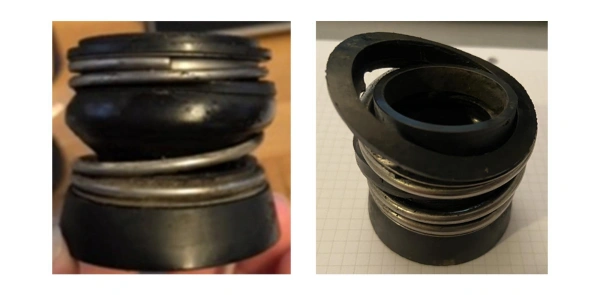
Leaks in mechanical seals are not only related to wear, temperature, and pressure, but may also be caused by chemical erosion or incorrect material selection. When the seal materials are incompatible with the pumped medium, corrosion, swelling, hardening, or a decline in material performance may occur, ultimately leading to leaks.
Tip: Mechanical seals are not made entirely of a single material. The sealing faces, O-rings, springs, and metal components may be made of different materials; therefore, their chemical resistance must be verified individually during selection.
Chemical attack can damage various components of a mechanical seal. Common scenarios include:
Different materials have different levels of chemical resistance; mechanical seals should not be selected based solely on hardness, price, or temperature resistance ratings.
| Seal Material | Main Features | Selection Notes |
|---|---|---|
| Carbon Graphite | Good friction performance; widely used for seal faces. | Verify impregnation material compatibility. |
| Silicon Carbide (SiC) | Hard, wear-resistant, and chemically resistant. | Check the specific grade for highly corrosive fluids. |
| Tungsten Carbide (WC) | Good wear resistance and mechanical strength. | Check binder corrosion risk. |
| NBR | Common for compatible oils. | Not suitable for all solvents or high temperatures. |
| EPDM | Common for water and compatible chemicals. | Generally unsuitable for mineral oils and petroleum-based fluids. |
| FKM | Good resistance to many oils, fuels, and chemicals. | May be unsuitable for some amines and ketones. |
| FFKM | Broad chemical resistance. | High cost; grade and operating limits still apply. |
When a mechanical seal leaks, you should not immediately disassemble or replace the seal.
The correct troubleshooting sequence is: Confirm the leakage symptoms → Locate the leak → Check operating conditions → Shut down the equipment and disassemble for inspection → Identify the root cause.
First, you need to determine whether the mechanical seal leaks while the equipment is running, after shutdown, or in both states.
If leakage occurs only during operation, focus on shaft runout, vibration, face deformation, or changes in operating pressure. If leakage persists both during operation and after shutdown, inspect the seal faces and secondary seals.
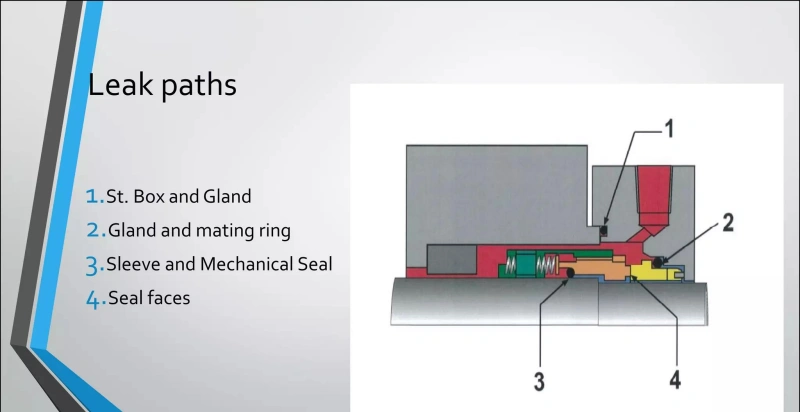
Second, you need to determine exactly where the fluid is coming from. Common leakage paths for mechanical seals include:
In Step 3, you also need to check the pump’s pressure, temperature, flow rate, rotational speed, and the status of the flushing system.
If leakage suddenly increases after startup, you need to check the lubrication and pressure changes during the startup process. If leakage is accompanied by an abnormal rise in seal temperature, you should investigate insufficient cooling, liquid vaporization, or abnormal face-to-face friction.
If a visual inspection fails to identify the cause, shut down the equipment in accordance with maintenance procedures. Complete power isolation, pressure relief, fluid drainage, and necessary decontamination before having qualified personnel disassemble and inspect the mechanical seal.
During the inspection, pay close attention to the rotating ring, stationary ring, O-rings, springs, and shaft sleeve to check for any abnormal damage.
| Component | Abnormal Signs | Possible Causes |
|---|---|---|
| Seal Faces | Scratches, grooves, or abnormal wear. | Particle contamination or poor lubrication. |
| Seal Rings | Cracks, chips, or deformation. | Thermal stress or abnormal mechanical load. |
| O-Rings | Cuts, swelling, or hardening. | Installation damage or material incompatibility. |
| Springs / Compensation Parts | Corrosion, sticking, or damage. | Corrosion, deposits, or mechanical damage. |
| Shaft Sleeve / Gland | Scratches, wear, or damaged mating surfaces. | Installation issues or shaft problems. |
In Step 5, you need to combine the external leak symptoms, operating records, and disassembly inspection results to identify the true cause of the failure.
If there are obvious scratches on the sealing face and abrasive particles are present in the medium, you should further investigate the source of the particles and determine whether the seal design is suitable for that medium. If the O-ring is noticeably swollen, you need to verify the chemical compatibility between the material and the medium.
Tip: You should determine repair measures based on the inspection results and, after the equipment is put back into service, verify whether the leakage status and operating parameters have returned to normal in accordance with equipment requirements.
If a mechanical seal leaks again after repair, it is not merely a matter of seal quality; it may also indicate that the root cause of the initial leak has not been resolved.
Before performing repairs, you should conduct a Root Cause Analysis—that is, by examining the failure symptoms and operating records, identify the true cause of the leak rather than simply replacing damaged parts.
When replacing a mechanical seal, you need to reconfirm the seal model, face materials, O-ring materials, and the permissible pressure, temperature, and speed ranges.
During installation, check the installation dimensions, cleanliness of the sealing faces, tightness of the gland, and integrity of the O-rings in accordance with the manufacturer’s specifications.
During normal operation, mechanical seals require stable lubrication and heat dissipation conditions. After maintenance is complete, you should check that the seal chamber is filled with fluid and perform venting in accordance with the equipment requirements to prevent dry running during startup.
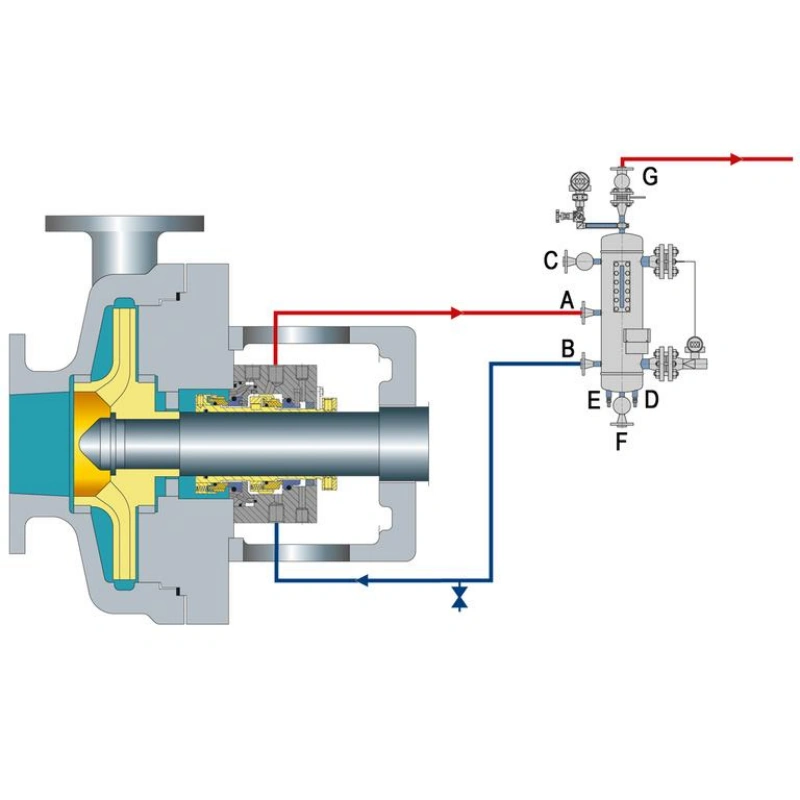
If the equipment is equipped with a flushing system, you must also confirm that the flushing lines are unobstructed, the fluid supply is normal, and the pressure, temperature, and flow rate requirements for the corresponding seal configuration are met.
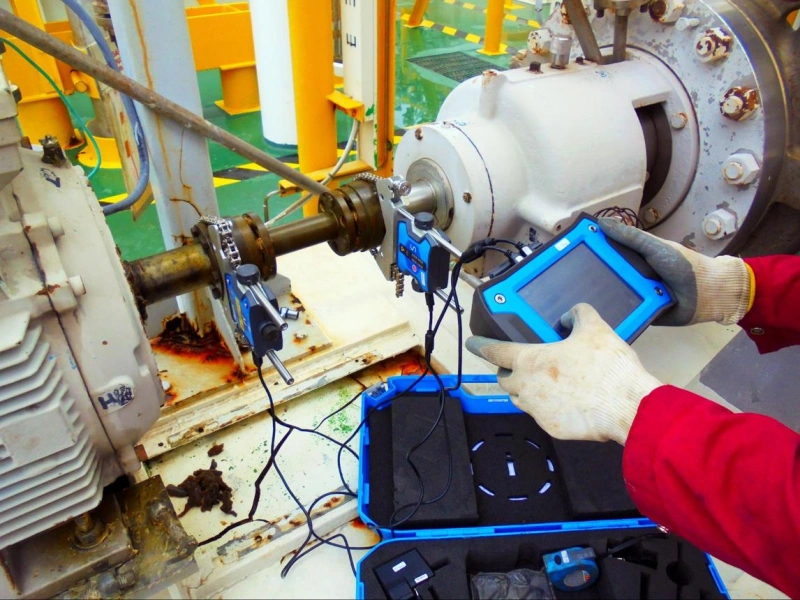
If a mechanical seal has ever failed due to vibration or abnormal wear, you should also check the pump shaft alignment, shaft runout, and bearing condition.
Misalignment between the pump shaft and the motor shaft can increase bearing loads and equipment vibration. Excessive shaft runout or bearing clearance can lead to unstable contact between the seal faces, accelerating wear.
Once repairs are complete, do not immediately assume that the problem has been completely resolved. You must perform pre-startup checks, test runs, and operational monitoring in accordance with the equipment and seal manufacturers’ requirements.
| Check Item | What to Confirm | Purpose |
|---|---|---|
| Installation | Correct dimensions, fastening, and connections. | Prevent installation errors. |
| Lubrication & Flush | Seal chamber is filled and vented; flush system works properly. | Prevent dry running and overheating. |
| Leakage | Leakage remains within allowed limits. | Verify sealing performance. |
| Pressure & Temperature | Remain within specified operating limits. | Prevent overload and thermal damage. |
| Vibration & Bearings | No abnormal vibration, noise, or temperature rise. | Confirm stable shaft operation. |
| Operating Records | Leakage and key parameters remain stable. | Detect recurring problems early. |
Preventive maintenance refers to reducing the risk of failure through regular inspections and maintenance before equipment experiences a serious malfunction.
You can create a mechanical seal maintenance log to record the seal model, material configuration, reason for repair, replacement date, and operating parameters. By comparing records from different maintenance cycles, you can determine whether recurring failures exist.
Insufficient lubrication, dry running, wear on the sealing faces, and improper installation are all common causes. However, there is no single “most common cause” that applies to all operating conditions; the cause must be determined based on actual operating conditions.
Yes. Even a brand-new mechanical seal may leak due to incorrect installation dimensions, damaged O-rings, contaminated sealing faces, or insufficient venting prior to startup. If significant leakage occurs immediately after installation, the installation status and operating conditions should be checked.
There is no uniform leakage limit applicable to all mechanical seals. Minor, controlled leakage may occur during normal operation; the specific acceptable limit depends on the seal design, the medium, and the manufacturer’s requirements. For hazardous media such as toxic or flammable substances, even a small amount of leakage may require immediate attention.
Yes, but not all cases of low suction pressure will cause damage. If the pressure is too low and causes cavitation, insufficient fluid supply, or vaporization of the fluid in the seal chamber, it may disrupt the lubricating fluid film, leading to overheating and wear of the sealing faces. The suction conditions and the actual pressure and temperature in the seal chamber should be checked.
This may be related to pressure fluctuations at the moment of startup, air trapped in the seal chamber, insufficient lubrication, or transient shaft vibrations. If leakage occurs only during startup, the focus should be on checking the pump priming and venting, the flushing system, and startup/shutdown conditions, rather than immediately assuming that the seal faces are damaged.
Yes. An inappropriate flush plan may result in insufficient lubrication, inadequate cooling, or abnormal pressure at the seal faces, leading to overheating, wear, and leakage. A suitable flush plan should be selected based on the properties of the medium, the seal design, and the actual operating conditions.
There is no fixed service life for mechanical seals that applies to all equipment. Under appropriate operating conditions and with proper maintenance, some mechanical seals can operate reliably for several years, but harsh operating conditions may cause them to fail prematurely. Actual service life depends on the medium, pressure, temperature, lubrication conditions, and the equipment’s operating status.
If leakage exceeds acceptable limits, continues to increase, or an inspection reveals issues such as cracks in the sealing faces, severe wear, or damage to the auxiliary seals, the seal should be evaluated for repair or replacement. For leaks involving hazardous media, safety measures should take priority. The root cause of the leak must be identified before replacement; otherwise, the new seal may fail again.
In fact, when a mechanical seal leaks, you really can’t blame the seal itself. Inadequate lubrication, wear on the sealing faces, excessive temperature, pressure fluctuations, shaft system abnormalities, and even improper material selection can all be blamed on the seal. By understanding these common causes and typical symptoms, you can pinpoint the source of the leak more accurately, rather than blindly replacing parts every time a leak occurs.
As a mechanical seal and pump component solutions provider, Sakowitz has always been dedicated to helping customers find sealing products that are truly suited to their specific operating conditions. If you’re looking for reliable mechanical seals or need assistance with selection, please contact Sakowitz—we’ll help you find a sealing solution that best meets your equipment’s needs.
—— We Will Provide You With Professional OEM Solutions.
Whether you require pump bearings, pump valves, mechanical seals, or other custom-engineered components, we support production based on your drawings as well as rapid prototyping.
Please complete the form on the right and upload your technical drawings or specifications. Our engineering team will review your requirements within 24 hours and provide a detailed quotation, application recommendations, and delivery schedule.
Copyright © 2025 Sakowit, All rights reserved.
WhatsApp us