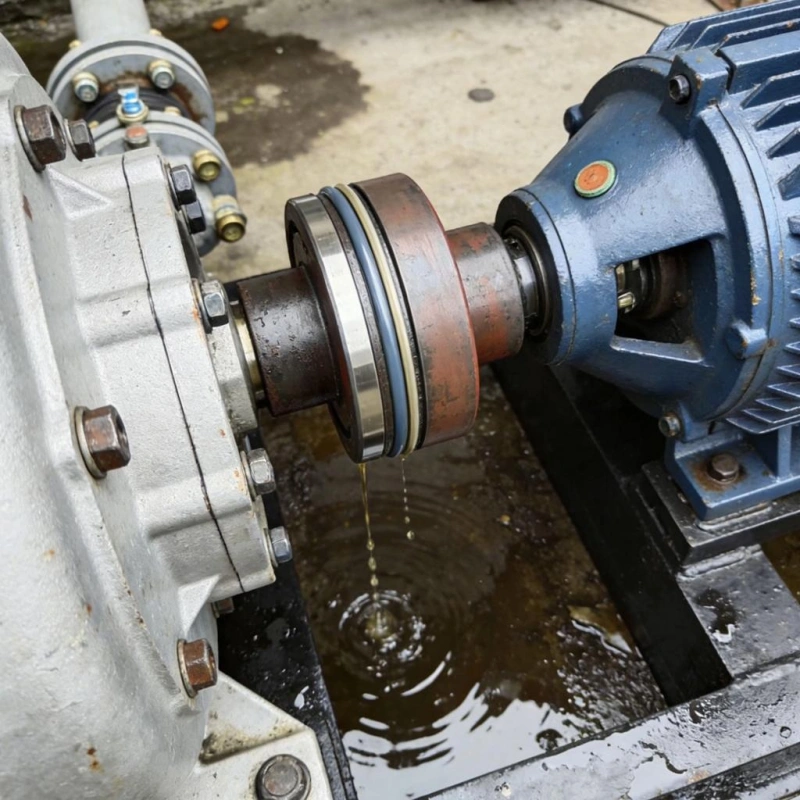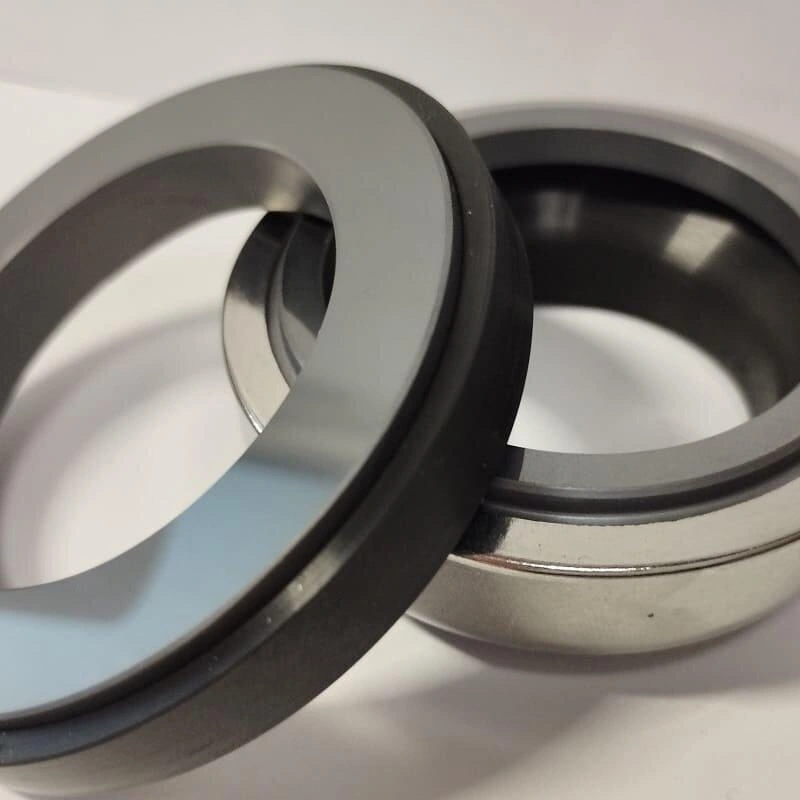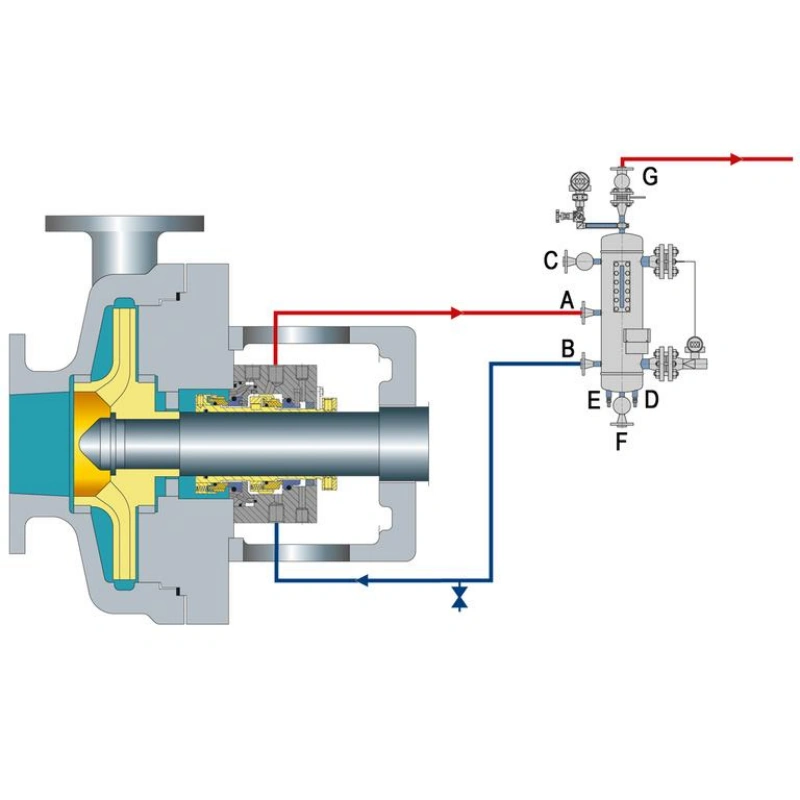

Shaft seals and mechanical seals are both commonly used sealing methods in rotating equipment, primarily designed to prevent fluid from leaking out through the gap between the rotating shaft and the housing. Shaft seals constitute a broader category, while mechanical seals are just one specific type of seal within that category.
Next, we’ll begin by discussing the main types of shaft seals and their operating principles, then provide a detailed comparison of mechanical seals with lip seals and packing seals in terms of pressure, rotational speed, temperature, leakage control, friction loss, and installation and maintenance. We’ll also show you how to identify which type of seal is used in your existing equipment.
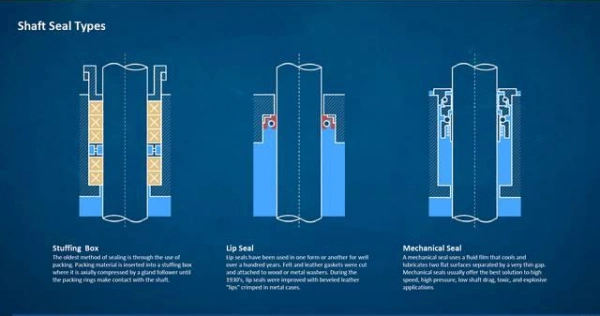
Shaft seals and mechanical seals are often compared, but they are not entirely distinct types of sealing products. A shaft seal is a broad concept, while a mechanical seal is a specific type of shaft seal.
A shaft seal is a sealing device used to control fluid leakage through the gap between the shaft and the equipment housing. In centrifugal pumps, agitators, and other rotating equipment, the shaft rotates while the housing remains stationary. A certain amount of space must be maintained between the two, so a sealing device is required to control leakage.
Depending on their structure and operating principles, shaft seals can take various forms, such as:
A mechanical seal is classified as a shaft seal because it is also used to control leakage at the point where the shaft passes through the equipment housing. The distinction lies in the fact that a mechanical seal employs a specific face seal structure, whereas the term “shaft seal” does not specify a particular operating principle.
“Shaft Seal” is a general category, and “Mechanical Seal” is one type of implementation within that category.
When you need to replace seals on a water pump, you should first determine what type of seal configuration the equipment uses.
If the equipment uses a mechanical seal, you need to verify the seal configuration, installation dimensions, shaft diameter, working medium, and operating conditions. If the equipment uses a lip seal or packing seal, you should select the appropriate type based on the corresponding configuration and technical requirements.
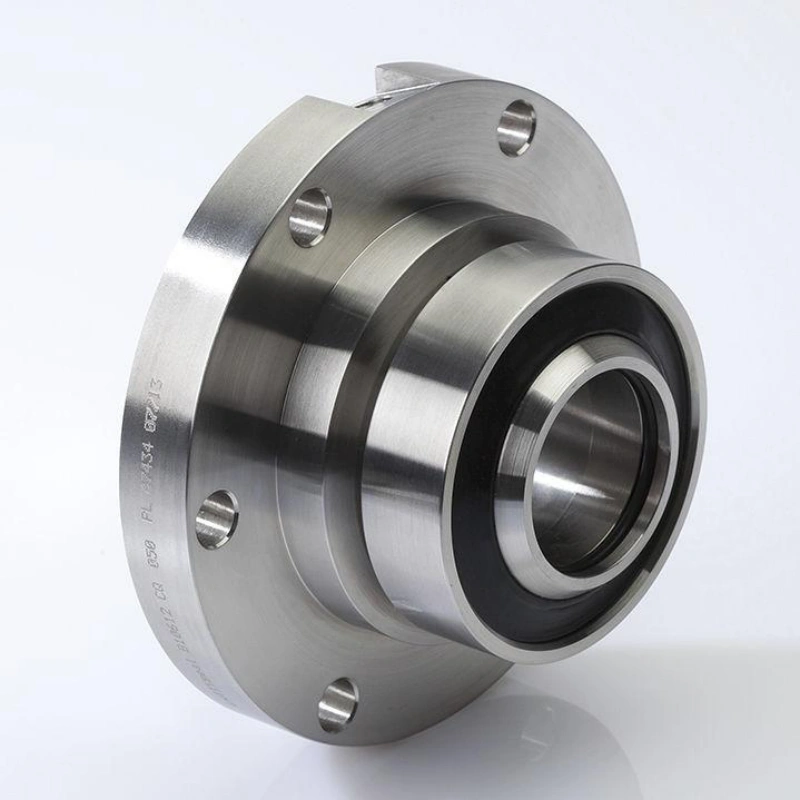
Shaft seal systems are used to control leakage of liquids or gases through the gap between a rotating shaft and the equipment housing. Common types include mechanical seals, lip seals, packing seals, and labyrinth seals.
| Shaft Seal Type | How It Works | Typical Applications | Main Advantages | Limitations / Notes |
|---|---|---|---|---|
| Mechanical Face Seals | Use rotating and stationary faces with a thin lubricating film. | Centrifugal pumps, chemical pumps, industrial fluid systems. | Good leakage control for varied pressure and demanding service. | Requires proper installation and lubrication; dry running and particles may damage faces. |
| Lip / Radial Shaft Seals | A flexible lip contacts the rotating shaft to retain lubricant and block contaminants. | Motors, gearboxes, bearing housings. | Compact, low cost, and easy to install. | Standard types have limited pressure capability. |
| Packing Seals | Packing rings are compressed around the shaft or sleeve to limit leakage. | Industrial pumps, process pumps, slurry pumps. | Simple, adjustable, and easy to maintain. | Needs controlled leakage for lubrication and cooling; overtightening causes heat and wear. |
| Labyrinth Seals | Use narrow gaps and tortuous paths to restrict leakage and contamination. | Pump bearing housings, gearboxes, lubrication systems. | Non-contact design with low friction and wear. | Not suitable for directly sealing high-pressure pump chambers. |
The core principle of a mechanical face seal is to use two sealing faces in contact with each other to prevent fluid leakage outward along the rotating shaft. Unlike methods that rely directly on sealing material to compress the shaft surface, this seal is achieved primarily through the face-to-face contact between the two sealing rings.
A mechanical seal consists of a rotating ring and a stationary ring. The rotating ring rotates with the pump shaft, while the stationary ring is secured in the seal housing. The sealing faces of the two rings press against each other, forming the primary sealing area.
To maintain proper contact between the sealing faces, a mechanical seal utilizes the combined action of spring force and fluid pressure. The spring provides the initial closing force, while the fluid pressure influences the force distribution on the sealing faces depending on the seal’s design.
During mechanical seal operation, an extremely thin fluid film typically exists between the two sealing faces. It provides lubrication, reducing friction and heat generated by direct contact between the faces.
This fluid film is crucial. Insufficient lubrication between the faces can lead to increased temperatures, material wear, and even cracking of the seal rings.
Tip: The presence of a fluid film also means that a mechanical seal is not necessarily completely leak-free. A small amount of fluid may pass through the minute gaps between the sealing faces; the goal of a mechanical seal is to control leakage within the limits permitted by operating conditions, rather than simply striving for absolute zero leakage.
Mechanical seals do not rely solely on two sealing rings; they also require the cooperation of springs and secondary seals.
Springs are used to provide initial closing force and help the sealing faces compensate for a certain degree of wear and axial displacement. O-rings or other secondary seals are used to prevent fluid leakage from behind the sealing rings and between the shaft sleeve and the seal seat.
Tip: Tighter is not necessarily better when it comes to springs. If the face-to-face sealing force is too high, it may increase friction and heat generation; if the sealing force is insufficient, face separation and leakage may occur.

Both mechanical seals and lip seals are used to control fluid leakage around rotating shafts, but there are significant differences in their sealing principles and applicable operating conditions.
A radial shaft seal refers to a device installed around a rotating shaft that provides a radial seal; a common type is the radial lip seal.
A mechanical seal consists of a rotating ring, a stationary ring, springs, and auxiliary seals. It is suitable for pumping applications that require good leak control.
Lip seals use rubber or polymer sealing lips that rely on the material’s elasticity—sometimes in conjunction with springs—to keep the sealing lips in constant contact with the rotating shaft.
Mechanical seals are suitable for centrifugal pumps, chemical pumps, and other rotating equipment that must withstand pressure within the pump chamber. Depending on the specific design, they can meet various pressure, temperature, and speed requirements, provided that the sealing faces are adequately lubricated and cooled.
Standard radial lip seals are more commonly used in gearboxes, motors, and pump bearing housings, where they primarily serve to retain lubricating oil or grease and prevent external contaminants from entering.
| Comparison | Mechanical Seal | Lip / Radial Shaft Seal |
|---|---|---|
| Sealing Principle | Rotating and stationary faces work together. | A flexible lip contacts the shaft surface. |
| Typical Applications | Centrifugal pumps, chemical pumps, process pumps. | Bearing housings, gearboxes, motors. |
| Pressure Capability | Can handle higher pressure depending on design. | Standard types suit low pressure; special types handle limited pressure. |
| Leakage Control | Suitable for pump applications requiring low leakage. | Best for lubricant retention and contamination protection. |
| Lubrication | Seal faces require proper lubrication. | Lip and shaft contact need proper lubrication. |
| Installation | Focus on face cleanliness, dimensions, and alignment. | Focus on shaft surface, lip direction, and concentricity. |
| Cost & Maintenance | Higher cost and stricter installation requirements. | Lower cost and easier replacement. |
| Main Limitations | Dry running, particles, or poor installation may cause failure. | Standard types are unsuitable for high pressure or poor lubrication. |
If you need to seal pressurized liquids in a pump chamber—such as water or chemical media transported by a centrifugal pump—you should prioritize mechanical seals.
If you need to seal lubricating oil in a bearing housing or gearbox, standard radial lip seals are typically more cost-effective and have a simpler design.
When selecting a seal, you need to confirm the operating pressure, temperature, rotational speed, type of medium, shaft diameter, and installation space.

Mechanical seals and packing seals are both common types of shaft seals used in water pumps, primarily to control fluid leakage through the gap between the rotating shaft and the pump casing.
Mechanical seals utilize the precision-machined faces of the rotating ring and stationary ring to form a seal. The closing of these faces is influenced by both spring force and fluid pressure, and an extremely thin lubricating film exists between the faces to reduce friction and wear.
Packing seals, on the other hand, achieve sealing through multiple layers of packing rings inside the stuffing box. The gland compresses the packing, forcing it into contact with the rotating shaft or shaft sleeve, thereby limiting fluid leakage.
During normal operation, mechanical seals typically show no visible leakage, but this does not mean there is absolutely no leakage. A small amount of fluid flows between the sealing faces, forming a lubricating film; therefore, minor leakage may still occur.
Traditional wet packing seals require a certain amount of controlled leakage for lubrication and cooling. If the gland is tightened too much, it increases friction in the packing, raises the temperature, and accelerates wear on the shaft sleeve.
In terms of maintenance, mechanical seals do not require periodic gland adjustment like packing seals do. However, once they fail, they usually require a shutdown for repair or replacement.
| Comparison | Mechanical Seal | Packing Seal |
|---|---|---|
| Sealing Principle | Uses rotating and stationary seal faces. | Compressed packing contacts the shaft or sleeve. |
| Leakage Control | Normally no visible leakage. | Traditional wet packing requires controlled leakage. |
| Friction & Energy | Lower with proper design. | Overtightening increases friction and energy use. |
| Initial Cost | Higher. | Lower. |
| Routine Maintenance | No regular face adjustment required. | Leakage and gland adjustment require monitoring. |
| Repair | Usually requires shutdown for repair or replacement. | Some adjustment can be done during operation; replacement requires shutdown. |
| Typical Applications | Centrifugal pumps, chemical pumps, process pumps. | Industrial pumps and some slurry pumps. |
| Main Limitations | Requires proper lubrication, installation, and operating conditions. | More leakage, sleeve wear, and maintenance. |
If you are using chemical pumps, continuously operating industrial pumps, or equipment with stringent leakage control requirements, mechanical seals should generally be the preferred choice.
If the equipment allows for a certain degree of controlled leakage and you wish to reduce initial purchase costs, packing seals may be more suitable.
Tip: Packing seals typically have a lower initial cost, but leakage losses, flushing water consumption, shaft sleeve wear, and periodic maintenance can all increase the total cost. Mechanical seals require a higher initial investment, but under the right operating conditions, they can reduce these long-term costs.
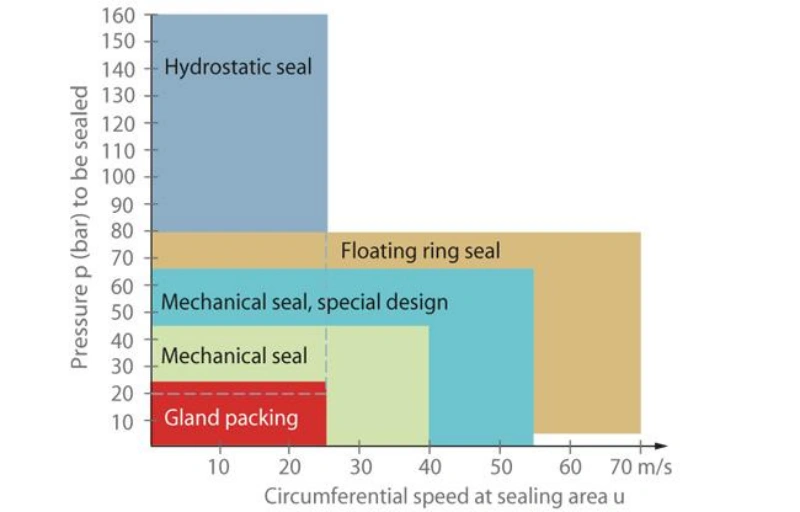
When selecting a shaft seal, operating pressure, rotational speed, temperature, and fluid characteristics are key factors that determine sealing performance and service life.
Different types of shaft seals—including mechanical seals, lip seals, and packing seals—vary in their ability to adapt to these conditions.
Operating pressure directly affects the loads on the sealing components and the tendency of the fluid to pass through the sealing gap. Mechanical seals can handle pumping conditions with higher pressures, but the appropriate design must be selected based on the pressure within the seal chamber.
Standard lip seals are better suited for lubrication systems with low pressure or small pressure differentials. Packing seals require adjustments to the packing configuration and compression level based on pressure; specialized designs may be necessary for higher pressures.
Tip: You cannot select a seal based solely on the pump’s discharge pressure. What you really need to confirm is the actual pressure within the seal chamber and the pressure differential across the seal.
Shaft speed affects friction, heat generation, and wear at the sealing contact points. The higher the speed, the greater the need to pay attention to lubrication and heat dissipation conditions.
In addition to revolutions per minute (RPM), you also need to understand the shaft surface speed—that is, the linear velocity at which the shaft surface moves relative to the seal. At the same rotational speed, the larger the shaft diameter, the higher the surface speed.
Fluid compatibility refers to the ability of sealing materials to maintain the required performance when exposed to specific media, without suffering unacceptable corrosion, swelling, softening, or other damage. Different fluids have varying effects:
| Evaluation Factor | Mechanical Seal | Lip Seal | Packing Seal |
|---|---|---|---|
| Pressure | Can handle higher pressure depending on design. | Standard types suit low pressure. | Depends on packing and stuffing box design. |
| Shaft Speed | Wide operating range; face heat must be controlled. | Limited by lip friction and material. | High speed requires careful heat control. |
| Temperature | Depends on face materials, secondary seals, and cooling. | Mainly limited by lip material and lubrication. | Depends on packing material and lubrication. |
| Fluid Compatibility | Match faces, elastomers, and metal parts. | Match lip material with the fluid. | Match packing material with the fluid. |
| Main Risks | Dry running, vaporization, and particle wear. | Lip wear, aging, and excessive pressure. | Friction heat, sleeve wear, and leakage. |
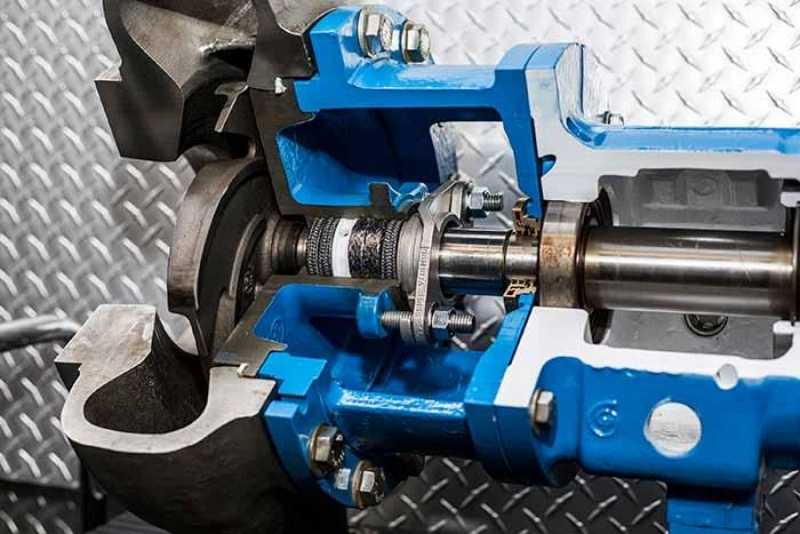
Mechanical seals, lip seals, and packing seals use different sealing methods, resulting in significant differences in terms of leakage control, friction loss, and energy consumption.
| Comparison | Mechanical Seal | Lip Seal | Packing Seal |
|---|---|---|---|
| Leakage Control | Controls leakage through precision seal faces; visible leakage is minimal in normal operation. | Retains lubricant through lip-to-shaft contact with minimal visible leakage. | Wet packing requires controlled leakage for lubrication and cooling. |
| Friction & Wear | Occurs mainly between seal faces; poor lubrication can cause heat and wear. | Occurs between the lip and shaft; affected by speed, contact force, and lubrication. | Occurs between packing and shaft/sleeve; overtightening increases heat and wear. |
| Energy Consumption | Low friction loss with proper design, but support systems may consume energy. | Mainly depends on lip friction and shaft speed. | Can have higher friction loss plus flushing and leakage-related costs. |
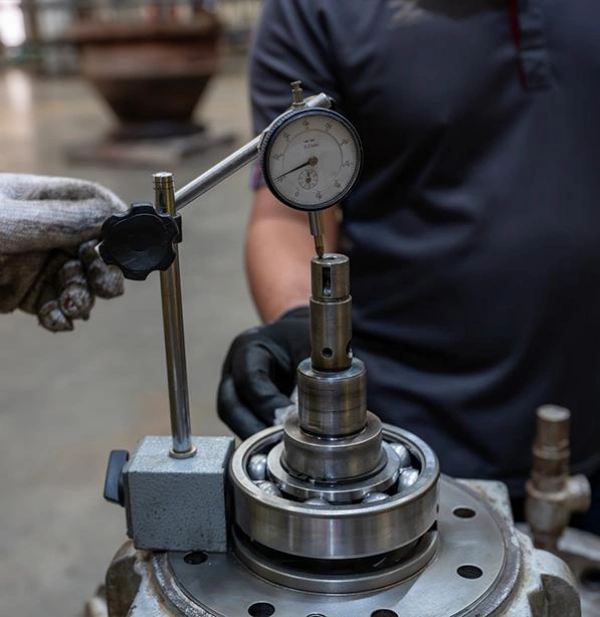
Mechanical seals place greater emphasis on precise installation and face protection, while lip seals focus more on the condition of the shaft surface and the installation orientation; packing seals, on the other hand, require proper compression and regular adjustment.
Mechanical seals have more stringent installation requirements. Before installation, you must inspect the surfaces of the shaft and shaft sleeve, verify the dimensions of the seal chamber, and check the sealing faces for scratches or contamination.
The installation of lip seals is relatively simple, but attention must be paid to the orientation of the sealing lip and the condition of the shaft surface. For common oil-retaining radial lip seals, the primary sealing lip may face the lubricant side.
Tip: A seal leak does not necessarily indicate a quality issue with the seal itself. Bearing damage, sleeve wear, insufficient lubrication, or improper installation can all cause recurring leaks.
| Comparison | Mechanical Seal | Lip Seal | Packing Seal |
|---|---|---|---|
| Installation Complexity | Higher; cartridge seals can simplify installation. | Relatively simple. | Requires correct packing and adjustment. |
| Installation Focus | Clean faces, correct dimensions, even tightening. | Lip direction, shaft surface, installation protection. | Stagger joints and tighten the gland evenly. |
| Alignment | Sensitive to shaft runout and axial movement. | Requires controlled shaft eccentricity and runout. | Can tolerate some deviation but still needs good alignment. |
| Routine Maintenance | No regular face adjustment. | Mainly check leakage and wear. | Regular leakage checks and adjustment required. |
| Replacement | Usually requires shutdown and component replacement. | Usually replaced as a complete seal. | Requires shutdown to replace packing rings. |
| Common Installation Errors | Face contamination or incorrect dimensions. | Reversed lip or installation damage. | Incorrect packing or overtightened gland. |

When selecting the appropriate shaft sealing method, one should not simply compare the price or sealing performance of mechanical seals, lip seals, and packing seals. Different sealing designs are suitable for different operating conditions, and selecting the wrong type can lead to leaks, overheating, wear on the shaft sleeve, or even equipment shutdown.
The first step in selecting a seal is to determine where it will be installed and what problem it needs to solve:
Tip: Pump chamber seals and bearing protection seals are generally not directly interchangeable. Even when installed on the same shaft, their sealing functions may be completely different.
Once the seal location is determined, check the medium, pressure, temperature, and shaft speed.
For industrial pumps handling clean water with stable lubrication, conventional wet mechanical seals are usually suitable.
For lip seals, check lip material compatibility, allowable pressure, temperature, and shaft surface speed. For packing seals, check the packing material, gland design, and lubrication and cooling conditions.
If the equipment has strict leakage control requirements, mechanical seals should be given priority.
If the equipment allows for a certain degree of controlled leakage and regular maintenance is possible, packing seals may also be a suitable option.
For lubricating oil seals in bearing housings, lip seals typically offer the advantages of a compact design and relatively simple installation.
| Application | Preferred Seal | Why | Key Notes |
|---|---|---|---|
| Clean Water Centrifugal Pumps | Mechanical Seal | Good leakage control with less routine adjustment. | Ensure proper face lubrication and cooling. |
| Chemical Pumps / Hazardous Fluids | Properly Configured Mechanical Seal System | Supports tighter leakage control. | Check fluid compatibility, safety requirements, and support systems. |
| Traditional Industrial Pumps | Mechanical Seal or Packing Seal | Select based on leakage limits and maintenance needs. | Packing normally requires controlled leakage. |
| Slurry Pumps | Special Mechanical Seal or Packing Seal | Better suited to abrasive particles and contamination. | Consider flushing, wear-resistant materials, and sleeve protection. |
| Bearing Housings / Gearboxes | Lip Seal | Retains lubricant and blocks contaminants. | Check lip material, direction, and shaft surface. |
| Bearing Dust / Contamination Protection | Labyrinth Seal or Bearing Isolator | Low-friction, non-contact protection. | Standard labyrinth seals are not for pressurized pump chambers. |
The purchase price of seals is only a portion of the total cost. Total cost of ownership also includes installation, energy consumption, media loss, maintenance, replacement, and downtime costs.
For example, packing seals have a lower initial cost but may require periodic gland adjustment, packing replacement, and sleeve maintenance. Mechanical seals typically have a higher initial cost, but under the right operating conditions, they can reduce visible leakage and the need for routine adjustments.
In pumps and rotating equipment, mechanical seals are a type of shaft seal. “Shaft seal” is a broad term that includes mechanical seals, lip seals, and packing seals, among others. However, not all mechanical seals are used on rotating shafts; this depends on the specific application.
No. “Shaft seal” is a broad term, and an oil seal is one common type of shaft seal. An oil seal typically refers to a radial lip seal, primarily used to retain lubricating oil and prevent external contaminants from entering.
Generally, they cannot be directly substituted. Standard lip seals differ from mechanical seals in terms of pressure-bearing capacity, installation structure, and operating principles. If replacement is necessary, it is essential to verify that the pressure, rotational speed, media compatibility, and installation dimensions meet the requirements.
There is no definitive answer. For high-pressure pumping applications, specially designed mechanical seals are generally more suitable, but the specific pressure-handling capacity depends on the seal design, materials, and auxiliary systems—it cannot be determined solely by the seal type.
Mechanical seals typically consist of precision-machined sealing rings, springs, and auxiliary sealing components. They place high demands on materials, machining precision, and assembly quality; therefore, their initial cost is generally higher than that of standard lip seals and packing seals.
It depends on the type of seal. Standard wet mechanical seals require a lubrication film to protect the sealing faces; lip seals typically require lubrication of the sealing lips; and traditional pump packing also requires adequate lubrication and cooling. However, some specialized dry or non-contact seals have different requirements.
It can withstand a certain amount of axial displacement and radial runout within the limits allowed by its design, but its capacity is limited. Excessive shaft runout, vibration, or axial play may cause the sealing faces to become unstable, leading to wear or leakage.
Common causes include insufficient lubrication, dry running, excessive shaft runout, vibration, improper installation, abrasion from media particles, and material incompatibility. Additionally, operating pressures, temperatures, or speeds that exceed the seal’s permissible limits may also accelerate wear.
Simply put, shaft seals are a broad category, and mechanical seals are just one specific type. In addition to mechanical seals, common types of shaft seals include lip seals, packing seals, and labyrinth seals. Each has its own characteristics in terms of sealing principles, leak control, friction loss, and maintenance requirements; there is no absolute “best” or “worst” option—it all depends on whether the seal is suitable for the specific operating conditions.
As a professional pump components supplier, Sakowitz specializes in providing customers with reliable pump parts and sealing solutions. If you are looking for the right shaft seal or mechanical seal product, please feel free to contact Sakowitz; we can provide product information and selection support.
—— We Will Provide You With Professional OEM Solutions.
Whether you require pump bearings, pump valves, mechanical seals, or other custom-engineered components, we support production based on your drawings as well as rapid prototyping.
Please complete the form on the right and upload your technical drawings or specifications. Our engineering team will review your requirements within 24 hours and provide a detailed quotation, application recommendations, and delivery schedule.
Copyright © 2025 Sakowit, All rights reserved.
WhatsApp us