
When the pump stops operating or pipeline pressure changes, fluid may flow back, potentially causing pump damage, sewage back flow, pressure loss, or system shutdown. How does a check valve work?It works automatically by fluid pressure: forward flow opens the disc, ball, or core; stopped or reverse flow returns components to the seat to close and prevent back flow. For optimal anti-back flow performance, selecting the appropriate check valve is essential.
This guide explains check valve basics, working principles, industrial applications, missing-valve risks, failure causes, selection methods, and proper sizing for specific applications.
How much do you really know about check valves? In fact, a check valve—also known as a one-way valve or back flow valve—is an automatic valve designed to allow fluid to flow in only one direction. It opens under forward flow pressure and automatically closes when flow reverses, effectively preventing back flow and protecting pumps, pipelines, compressors, and fluid systems.

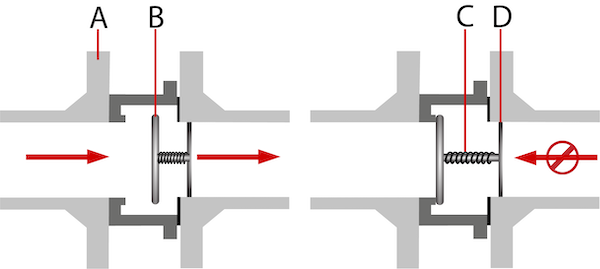
Do you know how a check valve works? Simply put, the internal pressure differential drives the valve disc, ball, valve core, diaphragm, or valve plate away from the seat to allow fluid to flow in the forward direction. When flow stops or reverses, reverse pressure, spring force, gravity, or component weight returns the closure member to the seat, closing the valve and preventing backflow.. The following explains this mechanism in detail from several perspectives.
The check valve operates internally by responding to the pressure difference between the inlet and outlet sides. When inlet pressure exceeds outlet pressure, forward flow pushes the closure member away from the valve seat, opening the flow path. As the forward pressure decreases, the pressure balance changes: if the outlet pressure rises above the inlet pressure or backflow begins, the internal component is pushed back against the valve seat.
This pressure-controlled movement is the primary reason why the check valve can operate automatically without a handle, actuator, or external power source. The valve opens only when the system experiences sufficient forward pressure.
Do you realize how critical the internal components of a check valve are? These components determine how the valve opens, closes, seals, and responds to flow variations. The valve body forms the fluid passage and withstands system pressure, while the valve seat provides the sealing surface. The valve disc, ball, valve core, or diaphragm controls whether the flow path is open or closed.
In a swing check valve, when fluid flows in the forward direction, the hinged disc swings away from the seat; when flow reverses, it returns to the seat. In a spring-loaded check valve, forward pressure compresses the spring to open the valve; when pressure decreases, the spring pushes the valve core or disc back to the seat. The sealing components, spring, hinge mechanism, guide system, and seat material all influence the valve’s internal performance. Damage to these elements may cause leakage or failure to prevent backflow.
So why does a check valve close automatically? Let me explain. The automatic closing mechanism works because its internal closure components are designed to return to the seat when forward flow becomes insufficient to maintain opening. This closing action is triggered by reverse pressure, spring force, gravity, or the weight of internal components.
The automatic closing function is the key distinction between a check valve and a manual shut-off valve. It directly responds to changes in flow direction and pressure within the pipeline. Once this component contacts the valve seat, the flow path is sealed, preventing backflow.
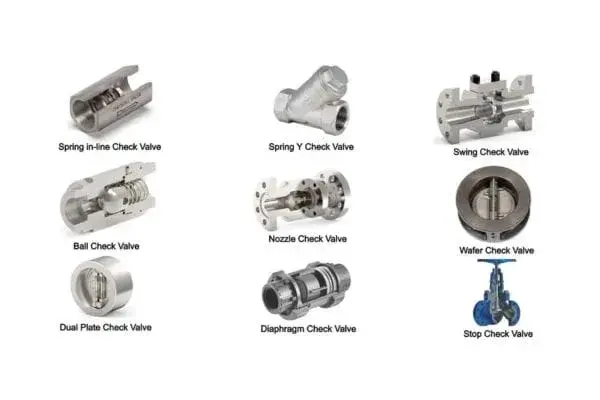
While all check valves in the market share the fundamental goal of preventing backflow, their internal mechanisms vary significantly. Selecting the appropriate type is crucial for ensuring system efficiency. Below, we’ll illustrate common types through examples to enhance your understanding of check valves.
A spring check valve suits this application, controlling one-way flow with a spring-assisted disc, core, or piston that opens when forward pressure overcomes spring force.
When the flow rate decreases, stops, or reverses, the spring returns the valve disc or core to the seat, enabling rapid closure and minimizing backflow duration. Opening pressure is critical when selecting spring-loaded check valves, widely used in compact systems, air lines, water systems, compressors, pumps, and flexible installations.
The rotary check valve is a classic type of check valve that uses a hinged disc to open and close the flow passage. During forward flow, fluid pressure pushes the disc away from the seat, allowing the medium to pass through with relatively low resistance. When flow stops or reverses, the disc returns to the seat under gravity and counter-pressure, sealing the valve and preventing backflow.
The rotary check valve is commonly used in large-diameter pipelines, water supply systems, drainage systems, pump outlet lines, and industrial fluid systems with relatively stable flow rates. However, this type of valve may not be suitable for systems involving frequent pump startups/stopdowns, unstable flow rates, or significant reverse pressure surges.
The ball check valve is undoubtedly familiar to you; it serves as an excellent internal sealing component. When fluid flows in the correct direction, forward pressure pushes the ball away from the valve seat, thereby opening the flow path. Upon cessation of flow or reverse flow, the ball returns to the valve seat under the action of gravity, reverse pressure, or spring force, preventing backflow.
The advantages of the ball check valve lie in its simple and reliable sealing mechanism, making it widely used in wastewater, sewage, slurries, chemical fluids, and small pump systems. Due to its spherical structure’s superior ability to handle suspended solids compared to narrow internal mechanisms, it is typically selected for applications where the medium may contain particles or debris.
In industrial fluid systems, check valves ensure one-way flow and prevent backflow that could damage equipment or disrupt processes. Below, you will gain an in-depth understanding of how check valves operate efficiently across various industrial applications.
In pump systems, check valves serve not only to control flow direction but also to protect the pump from backflow after shutdown. At startup, discharge pressure opens the valve and sends fluid into the pipeline; when the pump stops, pressure drops and discharge-line fluid may reverse.The check valve automatically closes to prevent this backflow.
For you, the primary concern extends beyond merely whether the valve can open and close. You are concerned with its ability to prevent pump backflow, minimize pressure loss, avoid water hammer, and protect the pump from premature wear. If a check valve is oversized, the disc may not fully open under actual flow conditions, leading to vibration and flutter.
In sewage pump systems, check valves operate in challenging environments as the fluid may contain solids, debris, sludge, or suspended particles.During operation, the valve lets wastewater flow from pits, tanks, or chambers into the discharge pipe; when the pump stops, it closes to prevent backflow.
The primary challenges for you include wastewater backflow, foul odors, contamination, clogging, and frequent pump startups and shutdowns. If wastewater reflux occurs after each pumping cycle, the pump may require more frequent restarts, leading to increased energy consumption and reduced service life.
For wastewater applications, selection should consider not only pipe size but also flow path design, clogging risk, materials, sealing performance, and maintenance convenience under actual conditions.
In air compressor systems, a check valve is typically installed between the compressor pump and the air receiver tank.During operation, compressed air passes into the tank; when the compressor stops, the valve closes automatically to prevent tank air from flowing back.
The key consideration for you is pressure maintenance. A leaking or poorly closing check valve may send air back into the compressor, causing pressure loss, restart difficulty, abnormal discharge, or added component stress. Spring-loaded check valves are commonly used in air compressor systems as they close rapidly and provide reliable sealing under pressure. Careful selection is essential, as even minor leakage issues can directly impact compressor efficiency and equipment reliability.
In HVAC systems, check valves are commonly used in chilled water, hot water, condensate, and circulation pump circuits. Their function is not only to prevent backflow but also to maintain stable circulation in multi-pump systems, parallel pipelines, or systems with varying flow rates.
For your system, backflow may lead to pump interference, pressure instability, reduced heat exchange efficiency, unnecessary bypass flow, and increased energy consumption. In HVAC systems, the optimal check valve is not necessarily the largest in size but rather one that can fully open under actual flow conditions and reliably close when flow ceases.
When your system encounters issues, you may find yourself at a loss; this is where the check valve plays a critical role. A check valve addresses these problems by allowing one-way flow and closing automatically when flow stops or reverses, but it requires proper selection for actual operating conditions.
A properly selected check valve also helps reduce the risks of water hammer, valve impact, noise, leakage, and system pressure instability.
Backflow valve failures typically result from incorrect sizing, installation errors, debris, worn sealing surfaces, spring failure, corrosion, or valve designs unsuitable for the application.
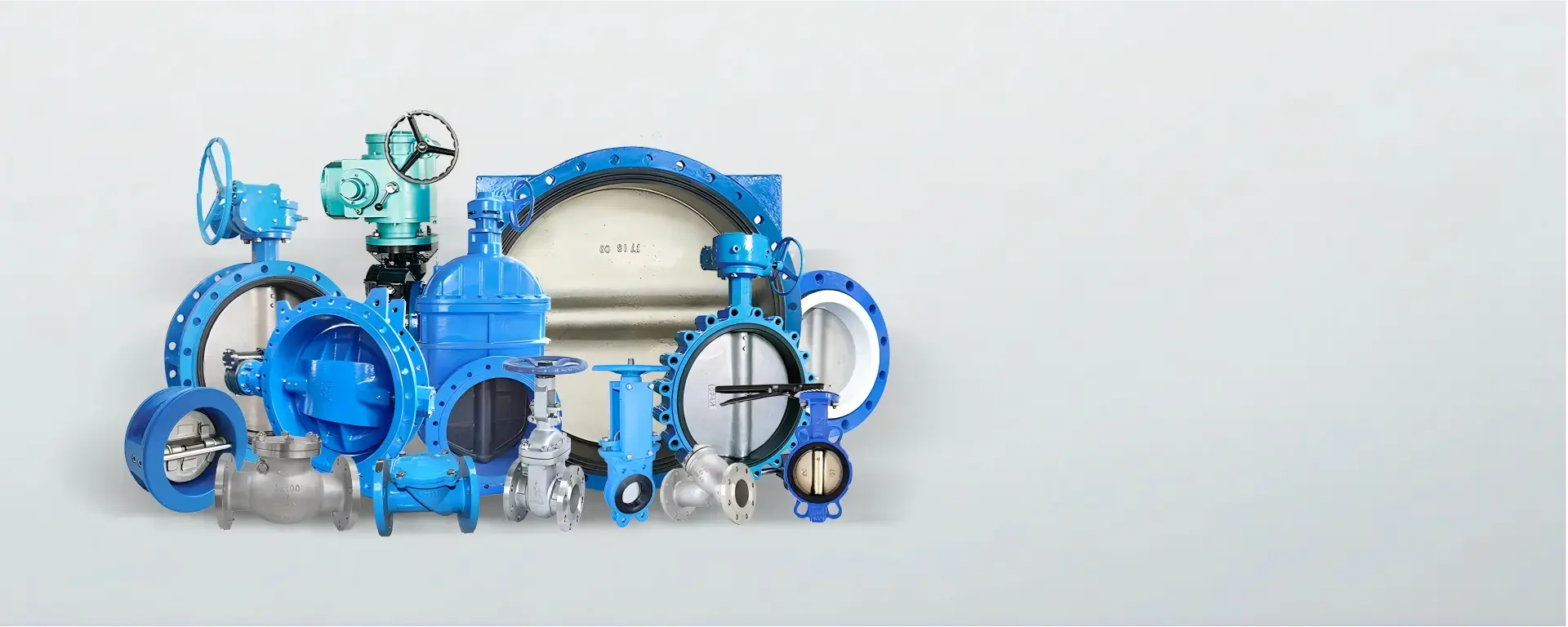
While check valves can address many backflow issues, their performance depends on proper selection. The same valve type may not be suitable for every system. Sewage pumps, air compressors, HVAC, irrigation, and chemical pipelines need different valve structures, materials, seals, and pressures; so how can the right valve be selected?
Unlike most other types of valves, the primary consideration when selecting a check valve should be the system’s intended use. Below is a comparison between check valves and other valve types:
| Valve Type | Main Function | Как это работает | Operation Method | Best Used For | Difference from a Check Valve |
|---|---|---|---|---|---|
| Check Valve | Prevents reverse flow. | Opens under forward pressure and closes automatically when the flow stops or reverses. | Automatic | Pump systems, sewage systems, air compressors, HVAC loops, water treatment systems, and industrial pipelines. | Controls the flow direction and automatically prevents backflow. |
| Ball Valve | Starts or stops fluid flow. | A rotating ball with a hole opens or blocks the flow passage. | Manual or actuated | Pipeline shut-off, equipment isolation, and maintenance control. | A ball valve controls on-and-off flow, while a check valve automatically prevents reverse flow. |
| Gate Valve | Opens or closes a pipeline. | A gate moves up or down to open or block the flow passage. | Manual or actuated | Large pipelines, water-supply systems, and pipeline isolation services. | A gate valve is designed for pipeline isolation, not automatic backflow prevention. |
| Globe Valve | Regulates or throttles fluid flow. | A plug or disc moves against a valve seat to adjust the flow volume. | Manual or actuated | Flow control, pressure regulation, and throttling applications. | A globe valve regulates the flow rate, while a check valve controls the permitted flow direction. |
| Butterfly Valve | Controls or isolates fluid flow. | A disc rotates inside the valve body to open, close, or regulate the flow. | Manual, electric, or pneumatic | Large-diameter pipelines, HVAC systems, water treatment, and industrial systems. | A butterfly valve is used for shut-off or flow control, not automatic reverse-flow protection. |
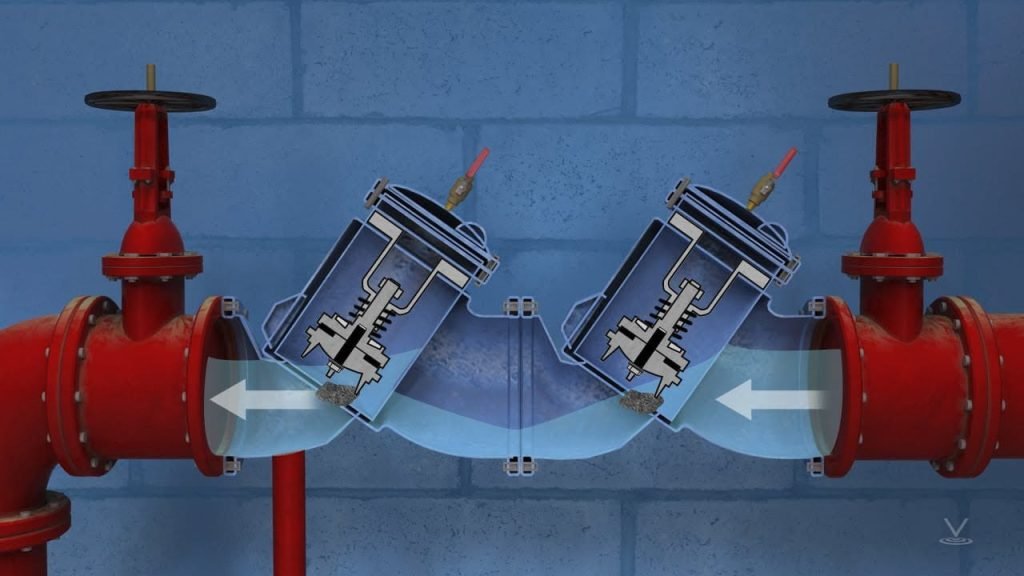
| Backflow Preventer | Prevents contaminated water from flowing backward. | Usually uses multiple check mechanisms, relief valves, or test ports. | Automatic safety device | Potable-water systems, irrigation systems, and municipal water supplies. | A backflow preventer provides a higher level of contamination protection than a standard check valve. |
| Pressure Relief Valve | Releases excessive system pressure. | Opens when system pressure exceeds a predetermined set point. | Automatic pressure response | Boilers, pressure vessels, hydraulic systems, and air compressors. | A pressure relief valve protects against overpressure, while a check valve protects against backflow. |
A check valve prevents backflow by opening under forward pressure and closing automatically when flow stops or reverses. The internal disc, ball, or poppet returns to the valve seat and blocks reverse flow.
No. A check valve does not need electricity, manual operation, or an actuator. It works automatically by responding to pressure differences and flow direction inside the pipeline.
Common causes include debris inside the valve, worn seals, damaged valve seats, corrosion, spring failure, incorrect installation direction, oversized valves, or unsuitable valve selection for the application.
Yes, some check valves can be installed vertically, but it depends on the valve type and flow direction. Spring check valves are usually more flexible, while swing check valves often require horizontal installation or vertical upward flow.
In most pump systems, a check valve is installed on the pump discharge line. This prevents fluid from flowing back through the pump after shutdown and helps protect the pump from reverse rotation and pressure loss.
Choose the check valve size based on the pipe size, actual flow rate, working pressure, pressure drop, medium, valve type, and installation direction. Pipe size is only the starting point; the valve must open fully under normal flow conditions.
Selecting the appropriate check valve involves more than merely choosing a valve suitable for the pipeline. More importantly, the valve must open smoothly, close reliably, prevent backflow, and maintain stable performance under actual operating conditions.
We support a wide range of application scenarios. Based on your medium, pipe size, flow rate, pressure, temperature, installation direction, and connection type, we can recommend the right check valve solution. No matter what type of check valve you need, we provide comprehensive support.
—— We Will Provide You With Professional OEM Solutions.
Whether you require pump bearings, pump valves, mechanical seals, or other custom-engineered components, we support production based on your drawings as well as rapid prototyping.
Please complete the form on the right and upload your technical drawings or specifications. Our engineering team will review your requirements within 24 hours and provide a detailed quotation, application recommendations, and delivery schedule.
Copyright © 2025 Sakowit, все права защищены.
Сообщите нам по WhatsApp
 Russian
  English
  Portuguese
  Arabic
  Spanish