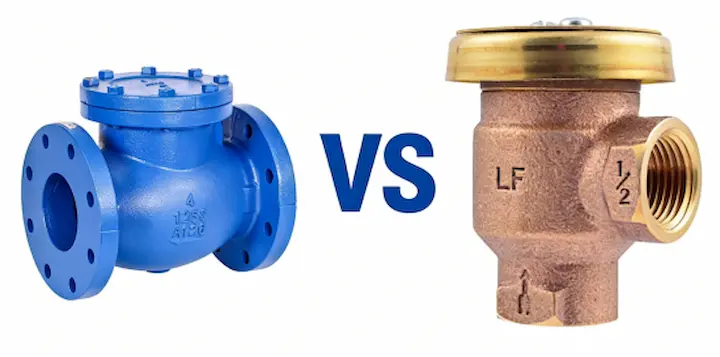

In the design of industrial piping and pump systems, selecting the right type of check valve is often more critical than one might imagine. The choice between a swing check valve and a spring check valve not only affects the system’s flow efficiency but also directly impacts the risk of water hammer, equipment protection, and long-term operational stability. Choosing the wrong type can result in higher maintenance costs and an increased risk of system failure.
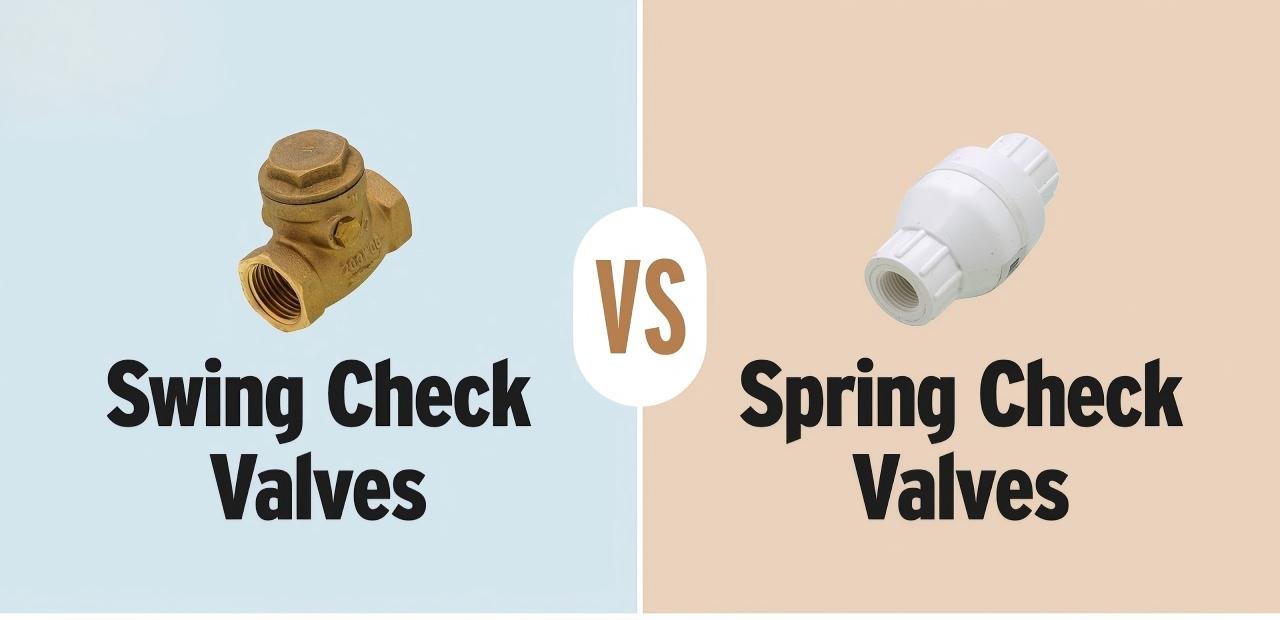
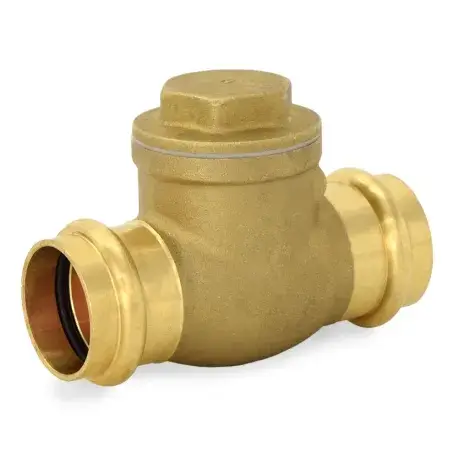
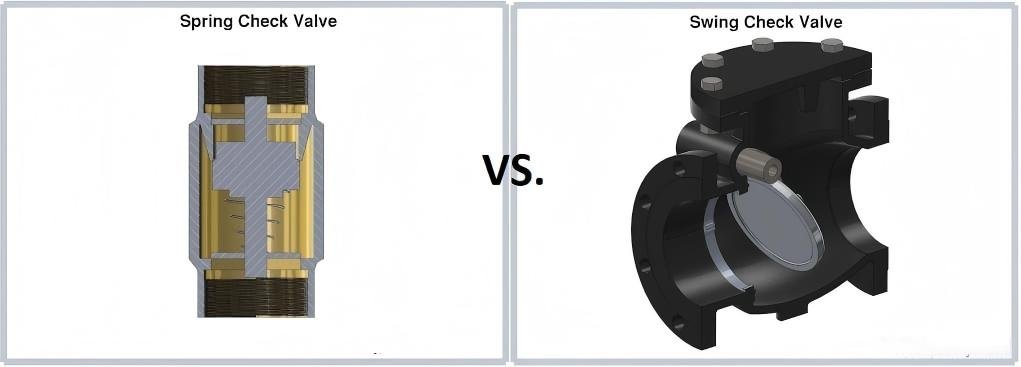
A swing check valve is a type of one-way fluid control valve. It features a hinged disc that “swings open” under fluid pressure and automatically snaps shut when flow stops or reverses, thereby preventing backflow of the medium.
During forward flow, the disc opens easily with minimal resistance; when the flow direction changes, the disc rapidly returns to its closed position under the combined action of gravity and back pressure, sealing the pipeline.
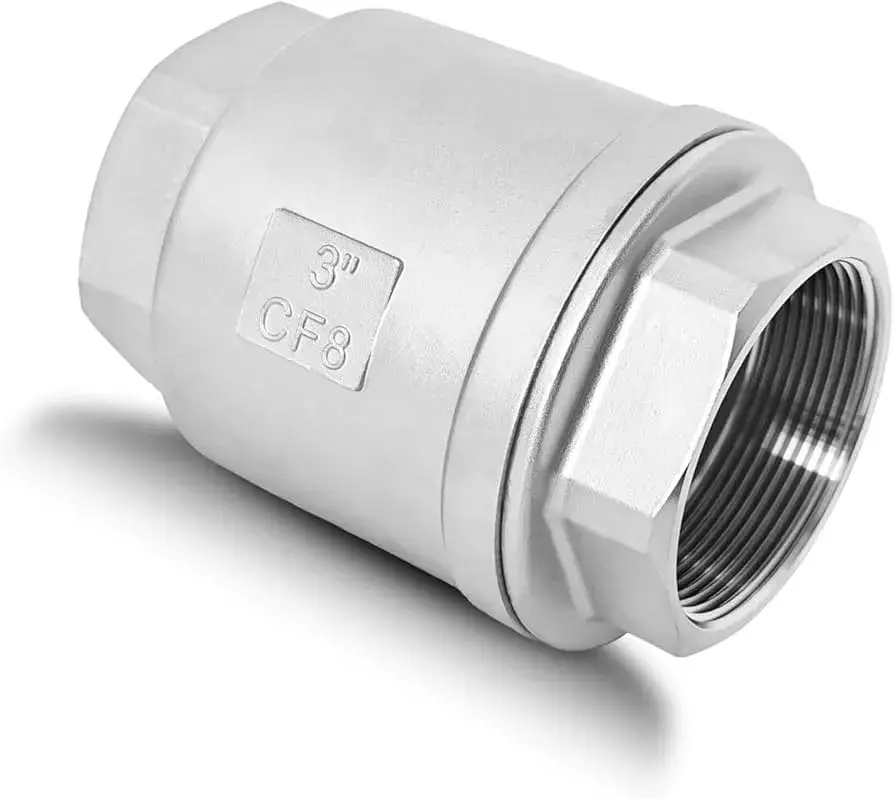
A spring check valve is a one-way valve that uses spring force to control the opening and closing of the valve disc. When the forward fluid pressure exceeds the spring’s preload, the valve automatically opens to allow the medium to pass through; when flow stops or a reverse flow attempt occurs, the spring rapidly pushes the valve disc back into position to seal the seat, thereby effectively preventing backflow.
Spring check valves feature fast response times, more stable closure, and greater resistance to water hammer. Compared to swing check valves, they offer better control performance and higher safety under dynamic operating conditions.
| Comparison Item | Swing Check Valve | Spring Check Valve |
|---|---|---|
| Working Principle | Disc swings open and closed based on flow pressure and gravity | Spring-loaded disc opens under pressure and closes by spring force |
| Closing Speed | Relatively slow | Fast and immediate |
| Water Hammer Risk | Higher risk due to slower closure | Lower risk due to quick response |
| Pressure Drop | Lower pressure loss | Slightly higher pressure loss |
| Ориентация установки | Usually requires horizontal installation | Can be installed in multiple orientations |
| Flow Capacity | Better for large flow and large diameter pipelines | Suitable for controlled and stable flow systems |
| Maintenance | Simpler structure, lower maintenance | More components, slightly higher maintenance |
| Typical Applications | Water supply systems, large pipelines, low-pressure systems | Pump discharge, HVAC systems, high-pressure pipelines |
| Cost | More economical | Slightly higher cost |
A swing check valve “opens naturally” as the disc swings under the force of the fluid; once flow stops, it gradually returns to the closed position due to gravity and back pressure. Therefore, the overall closing process is relatively slow and involves some inertial delay.
In contrast, a spring check valve relies on a built-in spring to provide continuous return force. When the flow rate decreases or reverse flow occurs, the disc is rapidly pushed back to the sealing position by the spring, resulting in a quick and decisive closing action.
Because swing check valves close relatively slowly, they are prone to backflow shock when fluid flow suddenly stops or the pump shuts down, causing water hammer that generates vibration and shock pressure in pipes and equipment.
Spring check valves close rapidly, effectively shortening the backflow time window and reducing fluid backflow and pressure fluctuations at the source. As a result, they offer greater stability and safety under dynamic operating conditions.
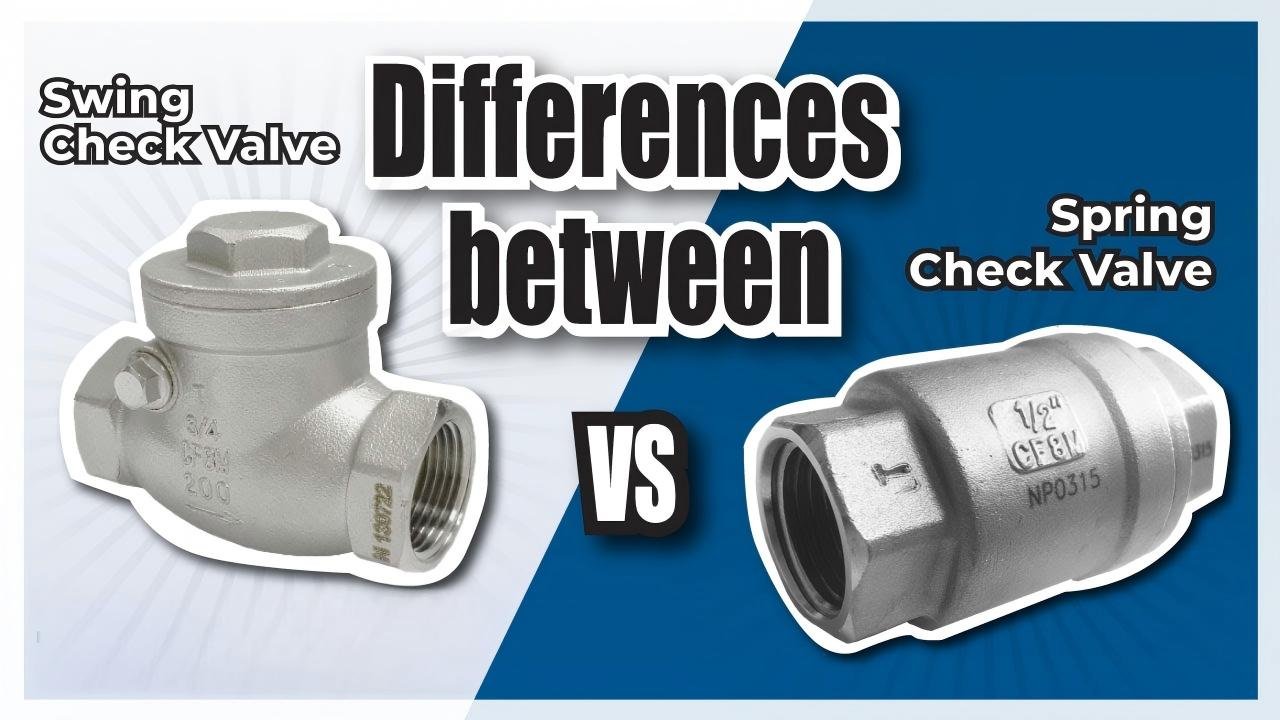
The internal structure of a swing check valve is relatively open, resulting in low resistance to fluid flow. Therefore, pressure drop is low, making it more suitable for energy-sensitive or high-flow systems.
Spring check valves create some resistance to fluid flow due to the presence of springs and guide structures. Consequently, pressure drop is slightly higher, but this is offset by greater control capability and safety.
Swing check valves require a specific installation orientation. They are primarily used in horizontal piping systems; otherwise, the disc may fail to close properly or compromise the seal, imposing certain installation requirements.
Spring check valves do not rely on gravity and can be installed in a variety of orientations, including horizontal or vertical. They offer greater flexibility in projects with limited space or complex systems.
Swing check valves are best suited for:
Spring check valves are best suited for:
| Real System Scenario | Swing Check Valve Performance | Spring Check Valve Performance |
|---|---|---|
| Pump Discharge System | Good flow efficiency but higher risk of reverse flow shock when pump stops | Faster closure provides better pump protection and reduces backflow impact |
| HVAC Circulation System | Suitable for stable, low fluctuation flow conditions with low pressure loss | Performs better in dynamic flow conditions with frequent start-stop cycles |
| Water Supply Pipeline | Efficient for large-diameter and steady flow distribution systems | Provides stronger control in pressure fluctuation and surge conditions |
| Industrial Process System | Reliable for continuous, low-pressure industrial fluid transport | Better suited for systems requiring precise backflow control and safety response |
| Water Hammer Conditions | Higher risk due to slower closing response | Significantly reduces water hammer due to rapid shut-off mechanism |
| Energy Efficiency | Lower pressure drop contributes to better energy efficiency | Slightly higher pressure drop but improved system protection |
Yes. Spring check valves close more quickly, effectively reducing or suppressing fluid backflow impacts, thereby lowering the risk of water hammer.
Because swing check valves have a simple structure and low flow resistance, making them more suitable for large-diameter pipelines and applications with continuous, stable flow.
Most spring check valves support horizontal or vertical installation, offering greater flexibility in space-constrained or complex piping systems.
Common causes include jamming due to debris, wear on the sealing surfaces, improper valve selection, and prolonged overpressure or frequent pressure surges.
Spring check valves are generally recommended for pump discharge systems because they close faster, providing better protection for the pump and reducing backflow surges.
As a professional manufacturer of industrial check valves, we not only provide standardized swing check valves and spring check valves, but also place a strong emphasis on offering our customers selection guidance and system optimization solutions tailored to their specific operating conditions. Different application scenarios have varying requirements in terms of flow rate, pressure, water hammer control, and installation space; selecting the correct valve model directly impacts the system’s safety and long-term operational stability.
We provide customized valve solutions and technical recommendations tailored to the specific needs of various applications, including water treatment, HVAC, industrial piping, and pump systems. We help you make more reliable decisions during the design and procurement phases to achieve more efficient and safer fluid control and long-term operational performance.
—— We Will Provide You With Professional OEM Solutions.
Whether you require pump bearings, pump valves, mechanical seals, or other custom-engineered components, we support production based on your drawings as well as rapid prototyping.
Please complete the form on the right and upload your technical drawings or specifications. Our engineering team will review your requirements within 24 hours and provide a detailed quotation, application recommendations, and delivery schedule.
Copyright © 2025 Sakowit, все права защищены.
Сообщите нам по WhatsApp
 Russian
  English
  Portuguese
  Arabic
  Spanish