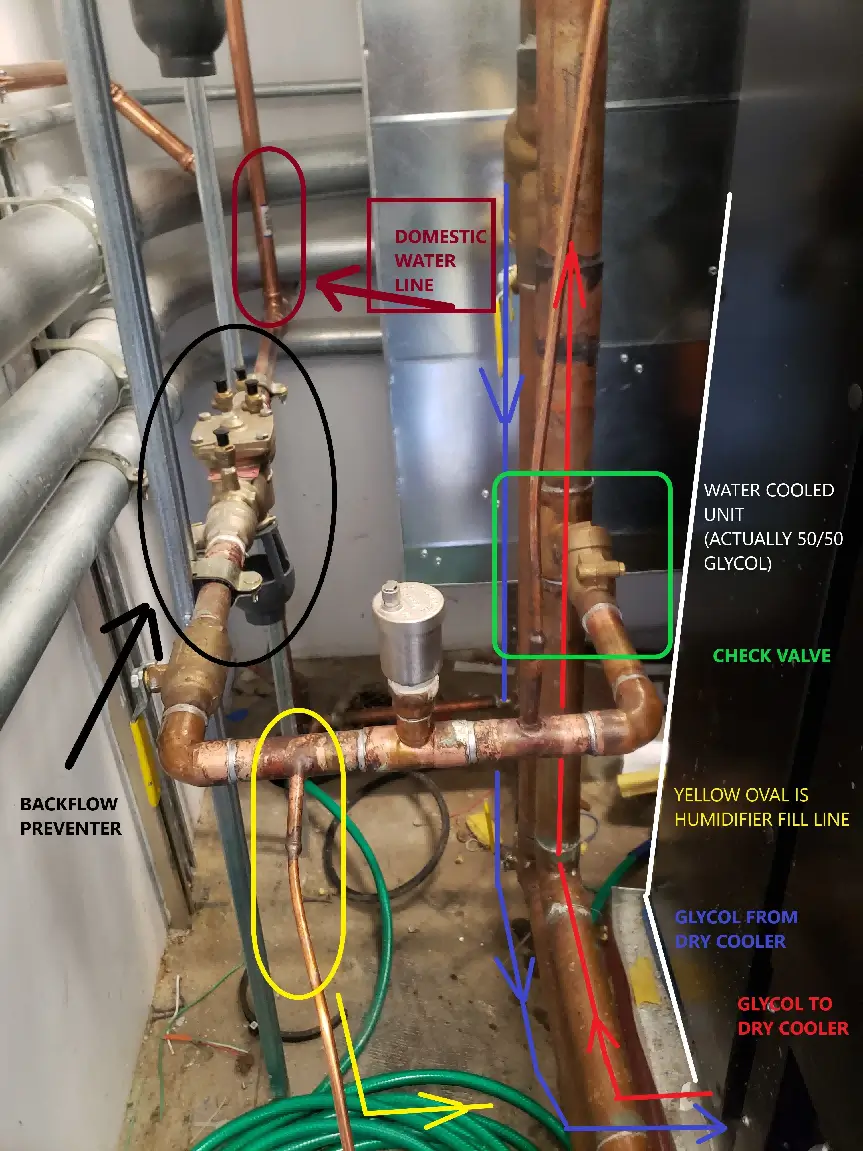

Do you know what a check valve is in an HVAC system? It is a one-way valve that lets refrigerant, water, or condensate flow in only one direction.When the fluid tries to flow backward, the valve closes quickly. This stops backflow and protects the equipment.
Next, I will explain common facts about HVAC check valves and the problems you may face.
What role does a check valve play in an HVAC system?Simply put, a check valve provides one-way protection.Its main job is to prevent water, refrigerant, or condensate from flowing backward.
It allows the fluid to move in the correct direction. When the flow reverses, the valve closes automatically.A check valve also performs several other important functions:
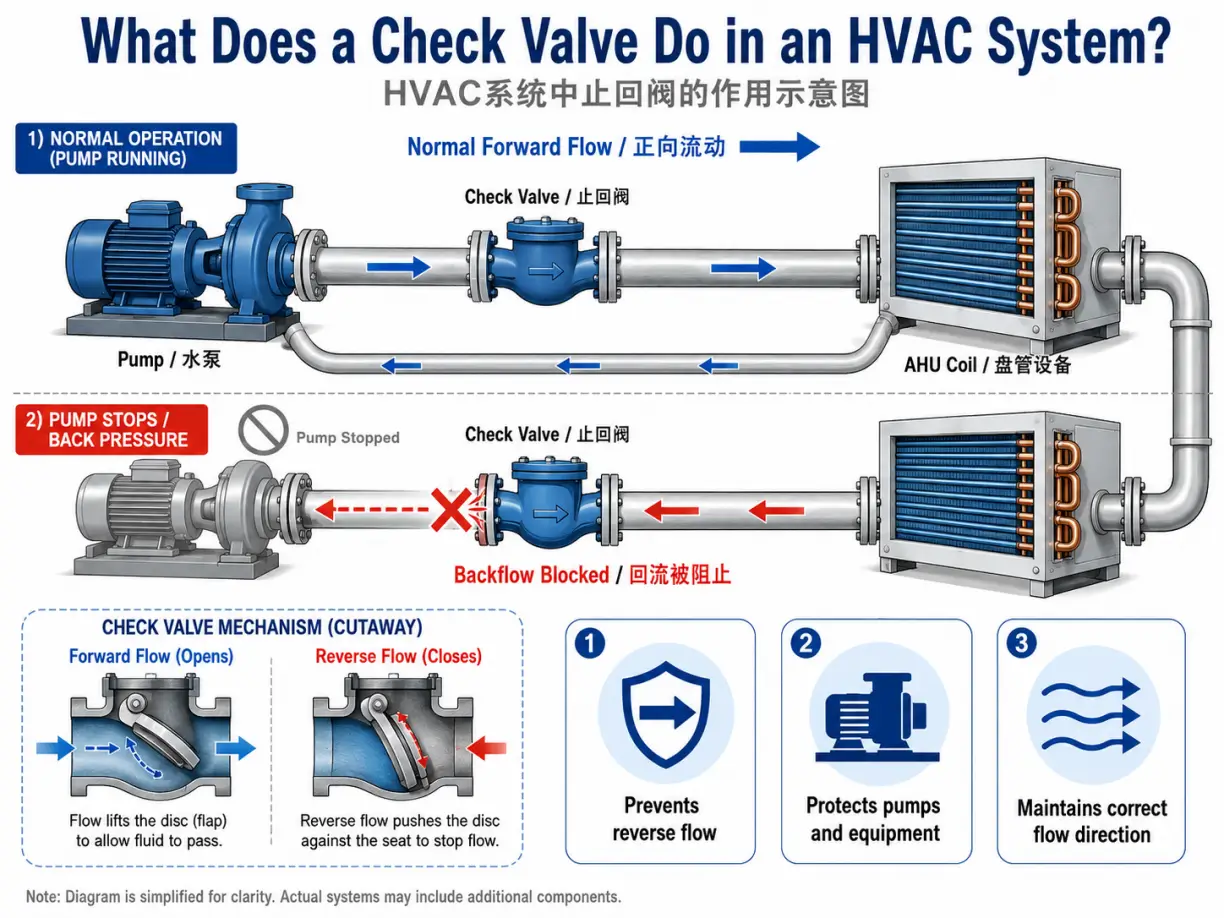
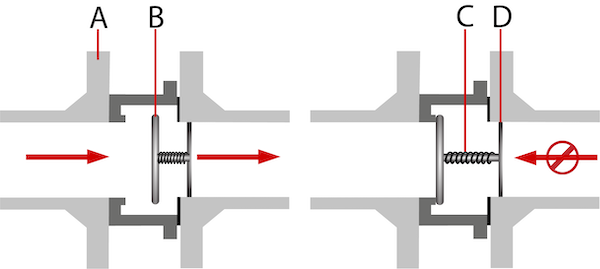
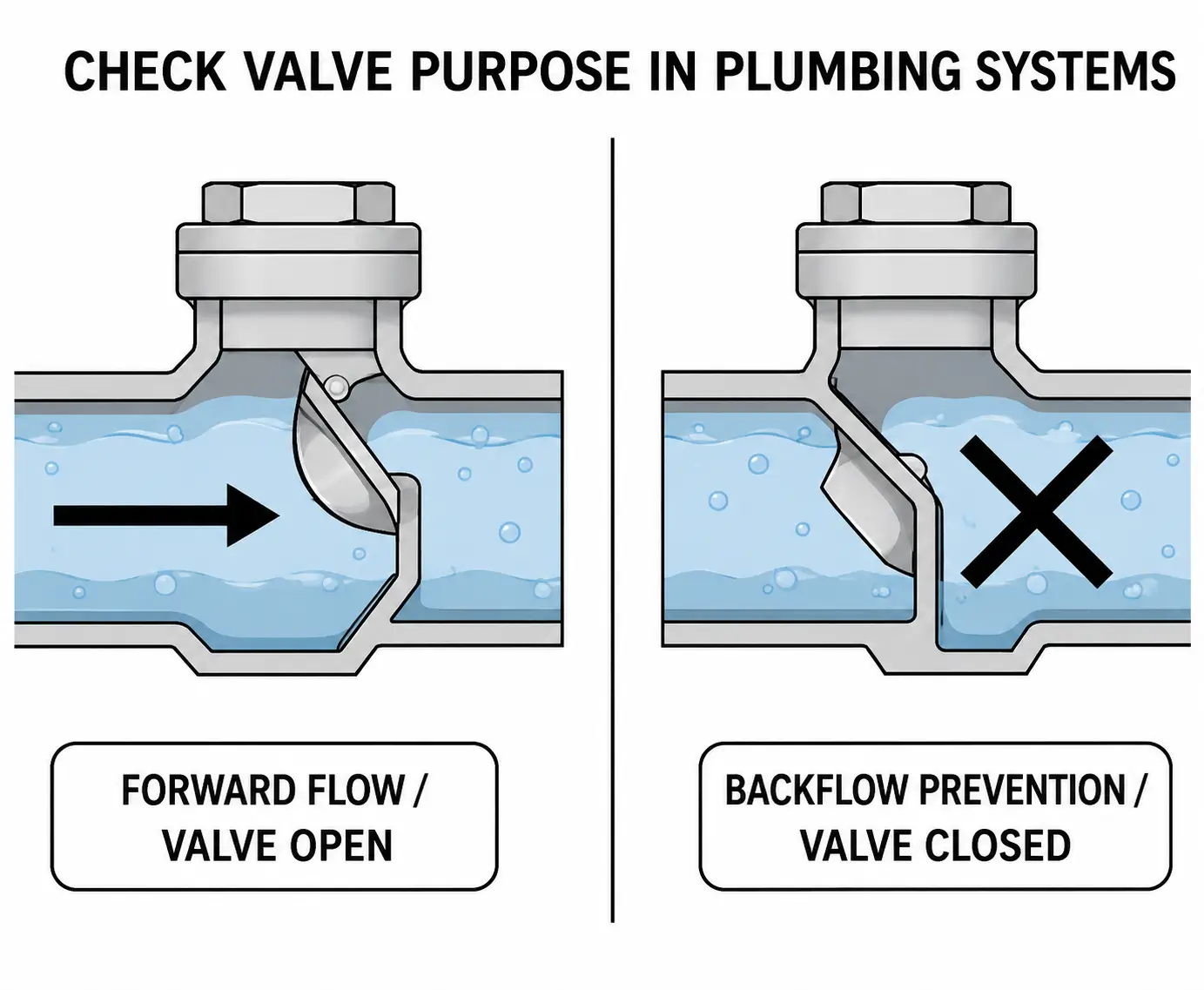
Do you know how a check valve works in an HVAC system?A check valve acts like a gatekeeper. It opens and closes automatically by using the pressure difference created by the moving fluid.During forward flow, the valve opens automatically. As the flow slows, it begins to close. When back pressure appears, it closes completely.
When water or gas moves in the correct direction, its force pushes the valve open. This allows the fluid to flow smoothly through the system.The valve does not block normal forward flow. However, it stops fluid from flowing backward when needed and helps keep the entire HVAC system safe.
Do you know where check valves should be installed in an HVAC system?Check valves should not be placed randomly in HVAC piping. They must be installed at key points where backflow may occur.
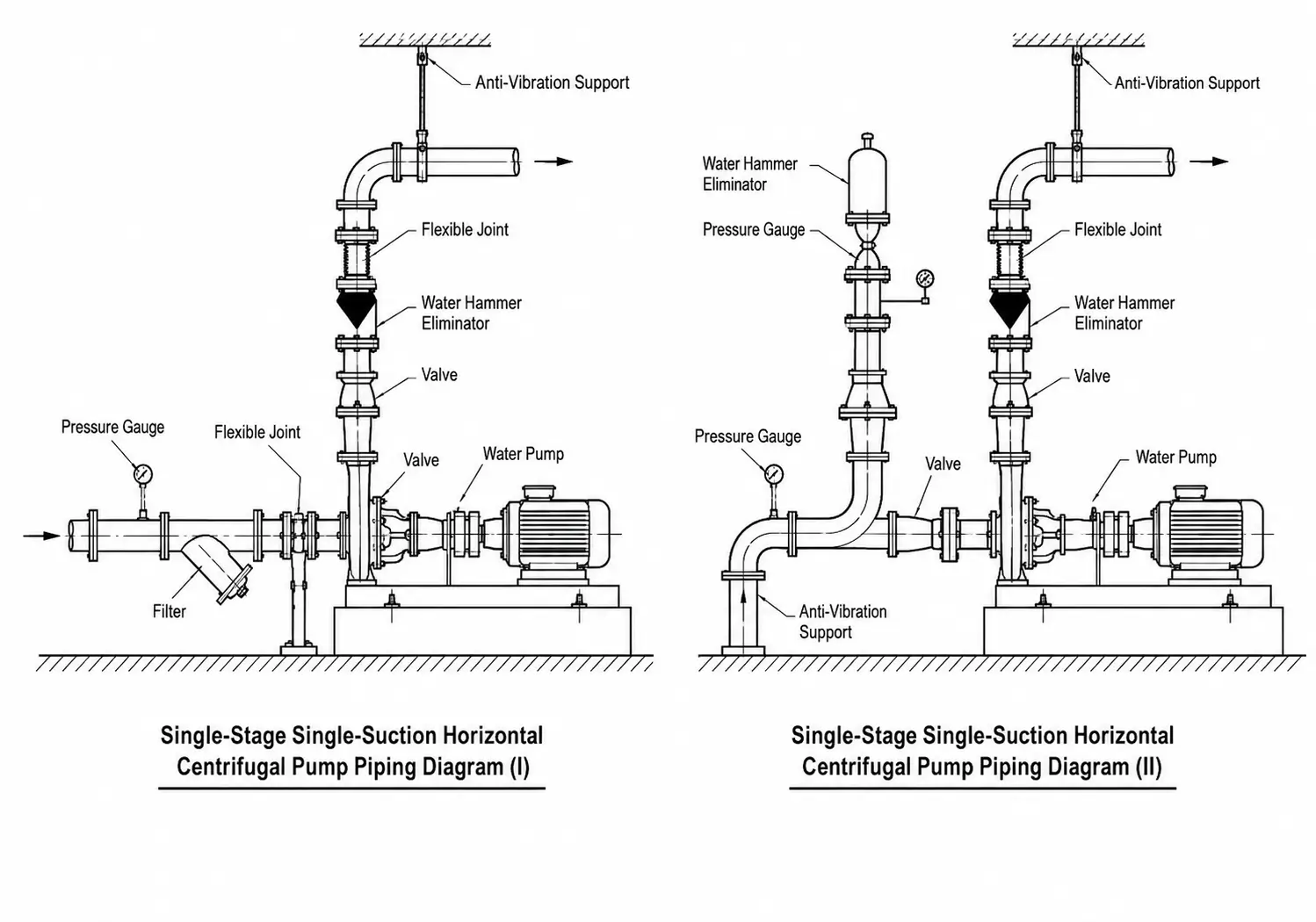
They are commonly used where water, refrigerant, or condensate must be prevented from flowing backward.The most common location is the pump outlet. Here, the valve prevents fluid from flowing backward after the pump stops.Other common installation locations include:
You should also check the flow arrow on the valve body. It must point in the same direction as the normal fluid flow.Leave enough space around the valve for inspection, maintenance, and future replacement.
You may wonder whether HVAC check valves are designed for water, refrigerant, or air.
HVAC check valves can be used in all three systems.
However, each medium requires a different valve design, sealing material, pressure rating, and installation method.
In HVAC water systems, cast iron or stainless steel check valves are commonly installed in chilled-water and cooling-water pipes.
They prevent water from flowing backward after the pump stops. This helps protect the pump impeller.
In ventilation systems, galvanized steel backdraft dampers control the direction of airflow.
When the fan stops, they prevent cold air and unpleasant smells from flowing back into the room.
In refrigerant lines, small copper check valves control refrigerant flow.
They are commonly used in heat pumps to prevent refrigerant backflow after shutdown and keep heating and cooling modes working properly.
The following table explains the differences between water, refrigerant, and air systems.
| HVAC Medium | Common Applications | Main Function | Common Check Device |
|---|---|---|---|
| Water | Chilled water, cooling water, hot water, and pump systems | Prevents water backflow and protects pumps | Swing, spring-loaded, and dual-plate check valves |
| Refrigerant | Air conditioners, heat pumps, and refrigeration systems | Controls refrigerant direction and protects compressors | Refrigerant check valves |
| Air | Supply air, exhaust air, and fresh-air systems | Prevents reverse airflow and airflow between branches | Backdraft dampers or non-return air dampers |
HVAC systems use several types of check valves for different operating conditions.Water systems commonly use swing, lift, and silent check valves.Ventilation ducts normally use louvered backdraft dampers.
Refrigerant lines usually use small copper check valves.The following table compares the main HVAC check valve types.
| Check Valve Type | Common Applications | Main Advantages | Main Limitations |
|---|---|---|---|
| Swing Check Valve | Large chilled-water and cooling-water pipes | Low flow resistance and simple design | Closes slowly and may cause impact |
| Spring-Loaded Check Valve | Pump outlets, small water pipes, and refrigerant lines | Closes quickly and allows flexible installation | Higher opening pressure and pressure loss |
| Lift Check Valve | High-pressure pipes with steady flow | Provides good sealing | Higher flow resistance and sensitive to dirt |
| Dual-Plate Check Valve | Large central HVAC water systems | Short body and low weight | May not open fully at low flow rates |
| Silent Check Valve | Pump outlets and high-rise building systems | Low noise and reduced water hammer | Higher cost |
| Ball Check Valve | Condensate and small drainage systems | Simple design and handles small amounts of dirt | Not suitable for every main-pipe application |
| Axial Flow Check Valve | High-flow and critical circulation systems | Fast response and smooth operation | Higher price and careful sizing required |
| Refrigerant Check Valve | Air-conditioning and heat-pump refrigerant lines | Handles high pressure and provides low leakage | Must be compatible with the refrigerant |
| Backdraft Damper | Fresh-air and exhaust systems | Prevents reverse airflow | Not suitable for liquid pipes |
You should also consider the following factors when choosing an HVAC check valve:
A failed check valve in an HVAC system can cause several problems.If the valve stays open, fluid may flow backward and hit pumps or fans. This can damage the equipment.If the valve becomes stuck partly open, it may create noise and increase energy use.
If the valve becomes stuck closed, it blocks fluid flow and reduces the heating or cooling performance.When you notice a problem, first stop the related equipment and release the system pressure.Then check the following items:
Do you know the common signs of a failed check valve?When an HVAC check valve fails, common signs include unusual noise, backflow, low system flow, abnormal pressure, reduced equipment performance, and valve leakage.
The following table explains the possible check valve problems behind each sign.
| Observed Sign | Possible Check Valve Problem |
|---|---|
| A loud banging sound occurs when the pump stops | The valve closes too slowly or causes check valve slam |
| The valve body keeps vibrating or shaking | The flow is too low, the valve is oversized, or internal parts are worn |
| Fluid still flows backward after shutdown | The valve is stuck open or does not close tightly |
| The pump rotates backward | The check valve cannot stop backflow |
| The pressure difference across the valve is too high | The valve is blocked, stuck, or requires too much pressure to open |
| Cooling or heating at the system end is insufficient | The valve is limiting system flow |
| The pump starts too often | Backflow occurs, or the system cannot maintain pressure |
| The valve body or connection leaks | The seal, valve body, or connection is damaged |
| Condensate flows back into the tank | The check valve at the condensate pump outlet has failed |
| The heat pump does not switch modes properly | The refrigerant check valve is stuck or leaking |
HVAC check valve failure is often caused by several factors.Scale, sand, welding slag, and other dirt can build up inside the pipe.These materials may block the valve disc and prevent the valve from closing properly.
Long-term fluid flow can wear and age the sealing surface.Over time, the valve may not close tightly. This can cause leakage and backflow.Choosing the wrong valve is another common cause of failure.
If the valve size or type does not match the working conditions, it may remain overloaded and fail much sooner.Incorrect installation can also damage the valve.Installing the valve against the designed flow direction or exposing it to strong water hammer can gradually damage the valve body.
You should remember that HVAC check valve failure is often linked to poor selection, unstable flow, dirt, and installation problems.For you, correct valve selection and installation are usually more important than repairing the valve after it fails.
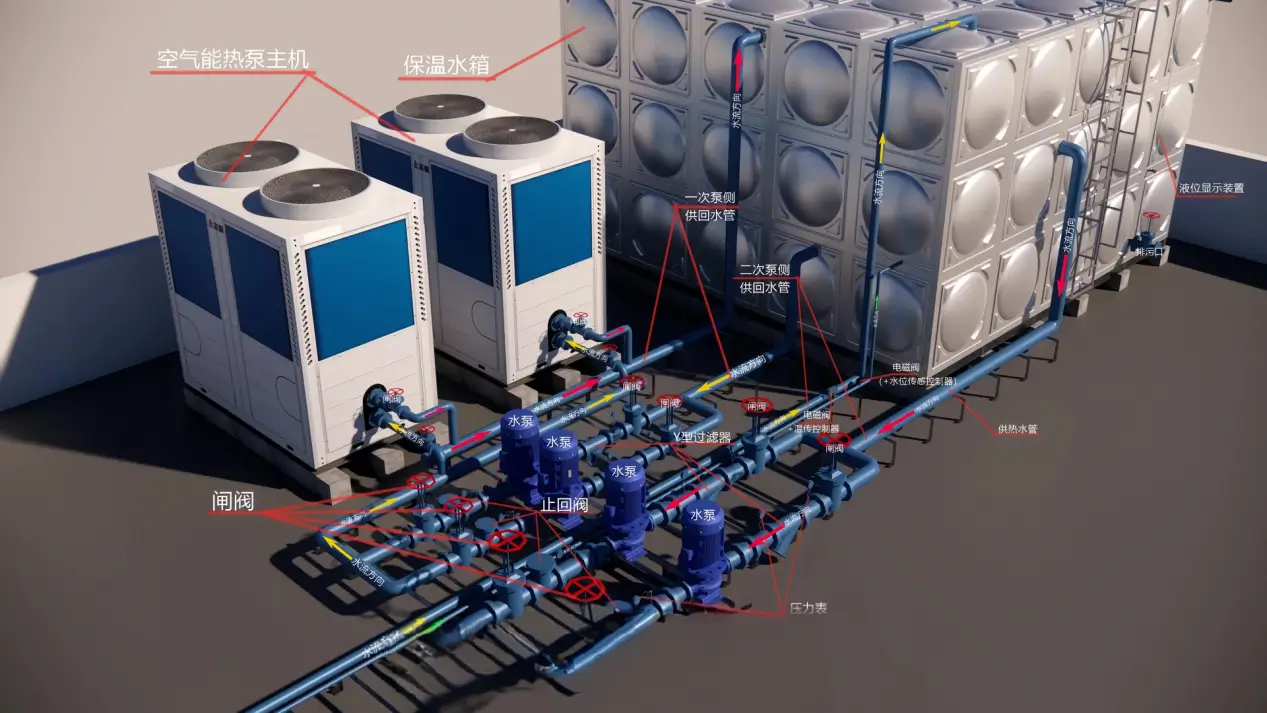
How should you choose the correct check valve? Here are two basic steps.First, identify the medium flowing through the system.For water systems, you should use a pipeline check valve.For ventilation ducts, you should use a non-return air damper.For copper refrigerant lines, you should use a special copper refrigerant check valve。
Different media require different valve body materials and sealing designs. You should never mix valves designed for different media.Second, choose the valve type based on pipe size and flow conditions.Swing check valves are commonly used for high-flow water pumps in large mechanical rooms.
To reduce water hammer and noise, you can choose a silent check valve.Lift check valves may be suitable for vertical pipes where installation space is limited.You should also consider the working pressure and temperature.
Check the installation position and make sure the valve arrow points in the same direction as the normal fluid flow.Before purchasing, you should provide at least the following information:
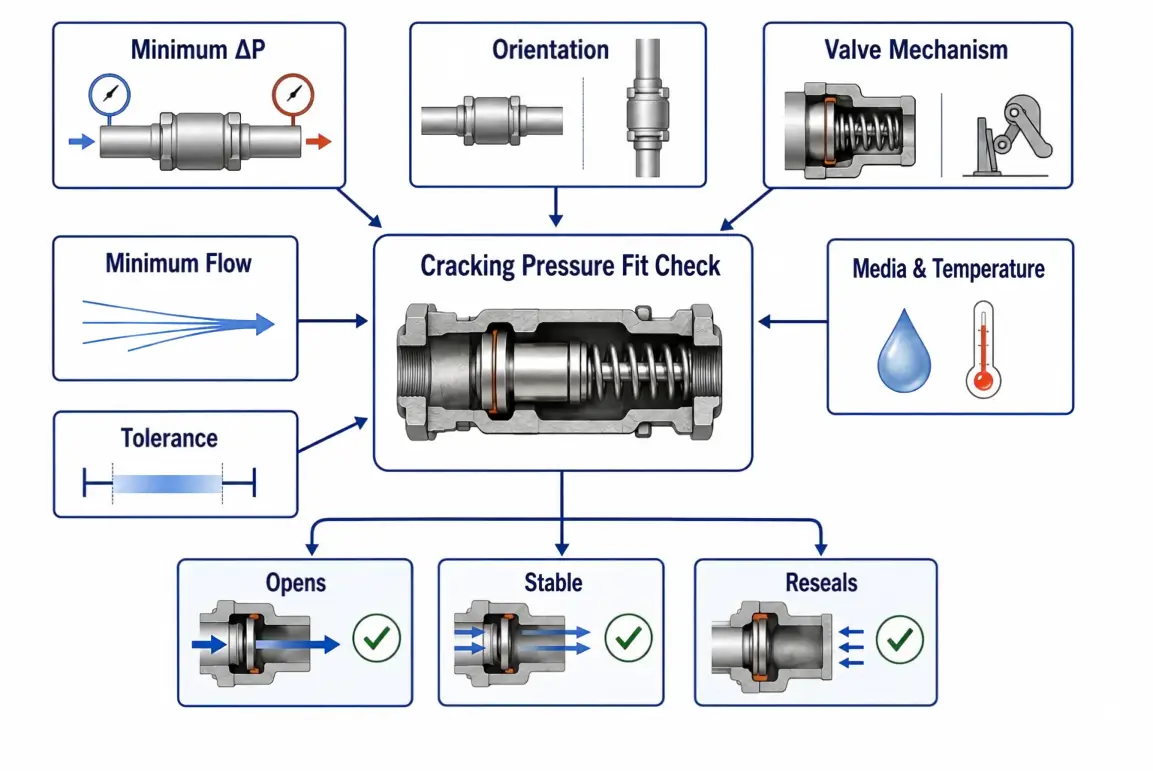
Many check valves fail because of poor sizing, long-term low flow, incorrect installation, or dirt in the system, rather than simply because they are old.You should follow these steps to help prevent check valve failure:
Step 1: Choose the check valve based on the actual flow rate.
Step 2: Select a valve type that matches the system’s working conditions.
Step 3: Make sure the valve materials are compatible with the fluid.
Step 4: Install the valve in the correct flow direction.
Step 5: Avoid installing the valve in areas with severe flow turbulence.
Step 6: Flush the pipes thoroughly before you install the valve.
Step 7: Install a filter in systems with a high risk of dirt or contamination.
Step 8: Avoid operating the system at low flow for long periods.
Step 9: Control water hammer and sudden pressure changes.
Step 10: Avoid starting and stopping the pump too often.
Step 11: Keep the system pressure and temperature within the correct limits.
Step 12: Regularly check for unusual noise, vibration, and pressure differences.
Step 13: Replace any check valve that does not match the system requirements.
No. Whether you need a check valve depends on the system’s risk of backflow, equipment reverse rotation, crossflow between branches, or reverse pressure transfer.
Yes. When fluid passes through a check valve, it must overcome the disc weight, spring force, and resistance inside the valve.This creates some pressure loss.However, a correctly selected check valve normally does not greatly reduce system flow.
Yes. A failed or incorrectly selected check valve may cause banging, chattering, vibration, or clear water hammer noise.Common causes include:
When a check valve is installed backward, the arrow on the valve body points against the system’s designed flow direction.The forward-moving fluid pushes the valve toward the closed position instead of opening it.Possible results include:
There is no fixed service life for every HVAC check valve.Its actual lifespan depends on several factors:
You may wonder whether a check valve is necessary in an HVAC system.The answer depends on the system’s operating conditions.A check valve is not required in every HVAC system or every pipe.
However, it is usually important where backflow, reverse equipment rotation, crossflow between branches, or reverse pressure transfer may occur.Therefore, you should not simply ask, “Does an HVAC system need a check valve?”Instead, you should consider the following questions:
—— We Will Provide You With Professional OEM Solutions.
Whether you require pump bearings, pump valves, mechanical seals, or other custom-engineered components, we support production based on your drawings as well as rapid prototyping.
Please complete the form on the right and upload your technical drawings or specifications. Our engineering team will review your requirements within 24 hours and provide a detailed quotation, application recommendations, and delivery schedule.
Copyright © 2025 Sakowit, Todos los derechos reservados.
 Spanish
  English
  Portuguese
  Russian
  Arabic