
In pump systems and piping engineering, selecting the wrong valve can have serious consequences. At best, this can result in the pump failing to deliver water, frequent pressure drops, and increased maintenance costs; at worst, it can lead to backflow surges, equipment damage, or even system shutdowns.
Both foot valves and check valves “prevent backflow,” but their installation locations, functional logic, and roles within the system are entirely different. Without a clear understanding of their differences, it is easy to make an inappropriate selection during the design or procurement phase, thereby creating long-term operational risks.
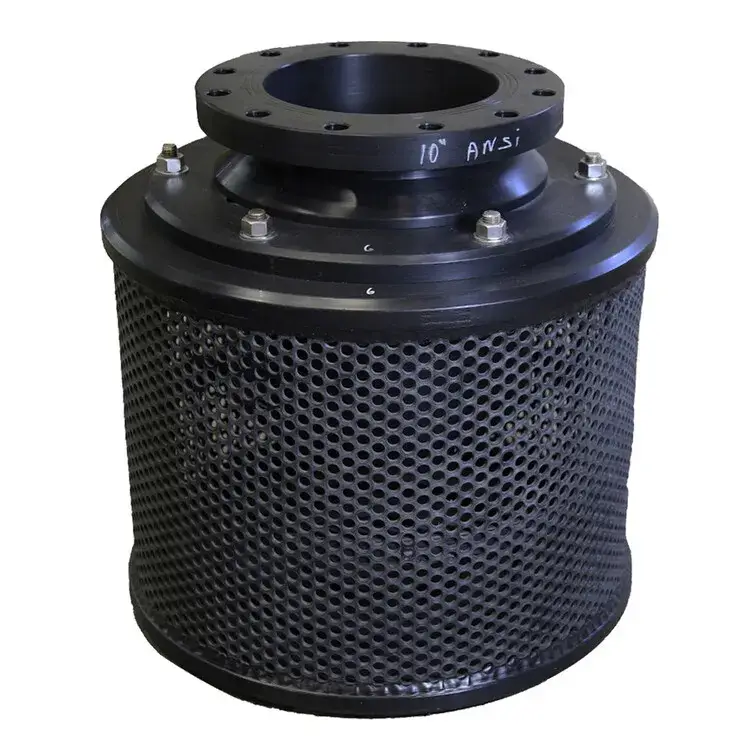
A foot valve is a special check valve installed at the suction end of a pump; it combines a one-way check function with a strainer. Its primary function is to help the pump “maintain priming” before startup, ensuring that the system can draw water and operate smoothly every time it starts.
In practical engineering applications, many pump system issues do not stem from the pump itself, but rather from the suction end—such as the pump frequently “running dry,” repeatedly losing priming, experiencing startup difficulties, or even suffering damage from dry running. The foot valve is specifically designed to address these types of problems. By being installed at the end of the suction pipe, it prevents liquid from flowing back toward the water source, thereby keeping the pump constantly primed and eliminating the hassle of repeatedly priming the pump.

A check valve (also known as a non-return valve) is an automatic protective valve used in piping systems. It allows fluid to flow steadily in only one direction and automatically closes immediately upon any attempt at reverse flow, thereby effectively preventing backflow of the medium.
In actual industrial systems, it plays a critical role in system safety. Whether it’s backflow surges after a pump shuts down or the risk of backflow caused by pressure fluctuations in the pipeline, the check valve works quietly behind the scenes to protect the stable operation of equipment and piping, preventing contamination, damage, or system instability caused by backflow.
Furthermore, it operates automatically based on fluid pressure alone, without the need for external control.
| Comparison Item | Foot Valve | Check Valve |
|---|---|---|
| Definition | A suction-side valve installed at the bottom of a pump intake, usually with a strainer | A one-way flow control valve used in piping systems |
| Installation Location | Only at the end of the suction line (pump inlet bottom) | Can be installed anywhere in the pipeline |
| Main Function | Prevents backflow and maintains pump priming | Prevents reverse flow in the system |
| Strainer (Filter) | ✔ Usually includes a strainer | ✘ Typically does not include a strainer |
| Priming Function | ✔ Essential for maintaining pump priming | ✘ Does not maintain priming |
| Typical Applications | Pump suction systems, wells, irrigation systems | Industrial pipelines, HVAC, water treatment, oil & gas |
| Orientación de la instalación | Must be installed at suction intake (often vertical) | Depends on type (horizontal or vertical possible) |
| Maintenance Requirement | Higher (strainer can clog) | Relatively lower |
| Common Issues | Clogging, loss of suction, priming failure | Leakage, water hammer, sticking |
| System Role | Pump suction-side dedicated component | General-purpose backflow prevention component |
A foot valve can only be installed at the very bottom of the pump’s suction side, typically at the intake point of a well or water tank, serving as the “first entry point” of the entire suction system. It directly determines whether the pump can successfully draw water and start.
A check valve, on the other hand, is completely different; it can be installed at any location in the piping system—whether at the pump outlet, the main pipe, or a branch line—and functions as a point of protection against backflow.
The core value of a foot valve is not only to prevent backflow but, more importantly, to keep the pump chamber constantly filled with liquid (maintaining priming). This ensures that the pump can immediately draw water the next time it starts, preventing issues such as dry running or failure to draw water.
In contrast, the core function of a check valve is more straightforward—to prevent the medium from flowing backward in the pipeline, with the primary focus on maintaining the unidirectional stability of the piping system.
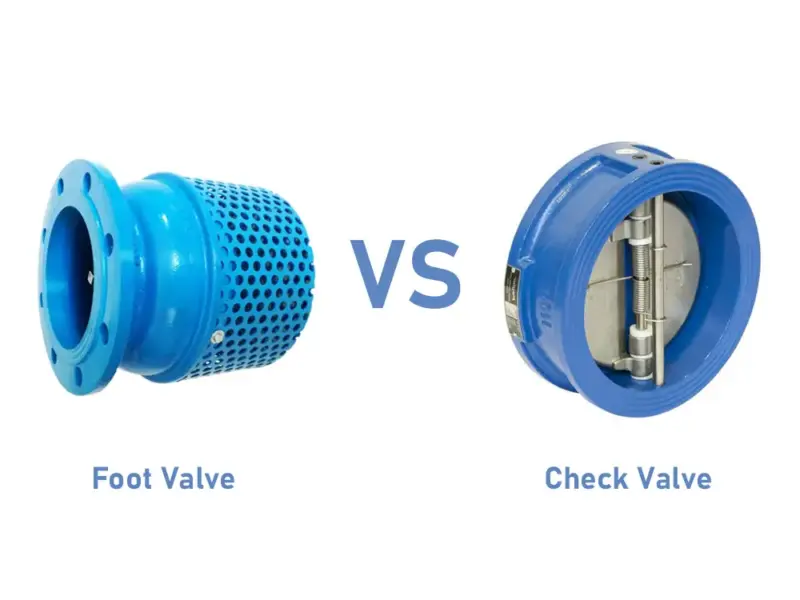
A foot valve comes equipped with a strainer that filters out silt, impurities, and particulate matter at the suction inlet. This prevents these substances from entering the pump, protecting the equipment at the source.
In contrast, a check valve generally lacks a filtering function; it is solely responsible for controlling flow direction and has no pre-treatment capability regarding the cleanliness of the fluid.
The impact of a foot valve on the pump system is “critical.” If it fails or is improperly selected, the pump is likely to experience frequent loss of priming, failure to start, or even severe issues such as damage from dry running.
A check valve, on the other hand, plays more of a “protective role,” primarily preventing backflow in the system, but it does not directly affect the pump’s suction capacity.
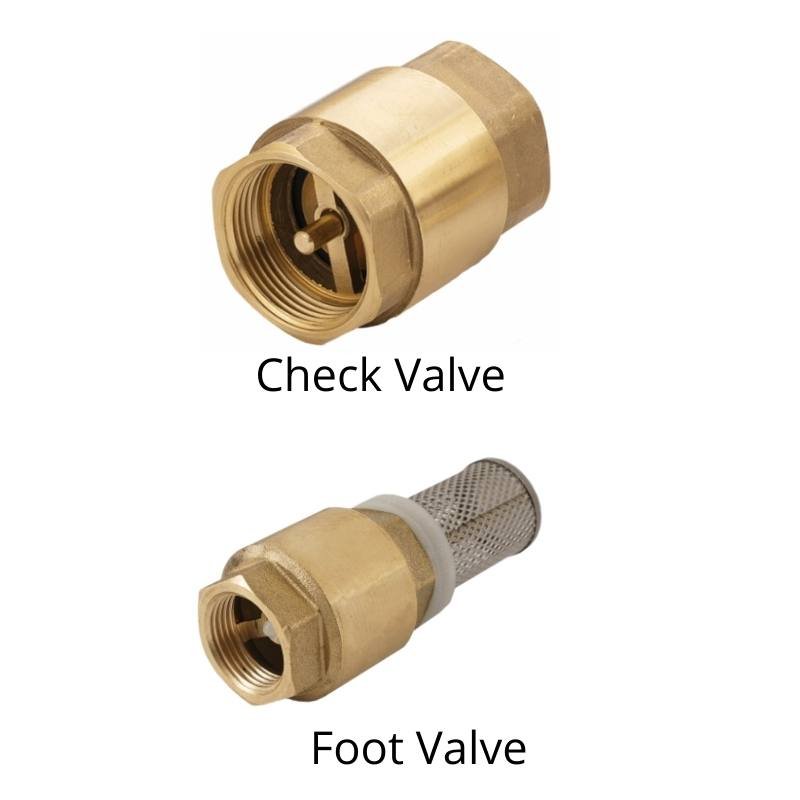
Foot valves have a very specific range of applications and are found almost exclusively in:
Check valves, on the other hand, have a much broader scope of application, covering virtually all industrial fluid systems:
From an engineering perspective: Check valves can replace foot valves in certain situations, but they are not completely equivalent substitutes. Although both serve to “prevent backflow,” their roles in pump systems differ significantly, which directly determines whether they can be used interchangeably.
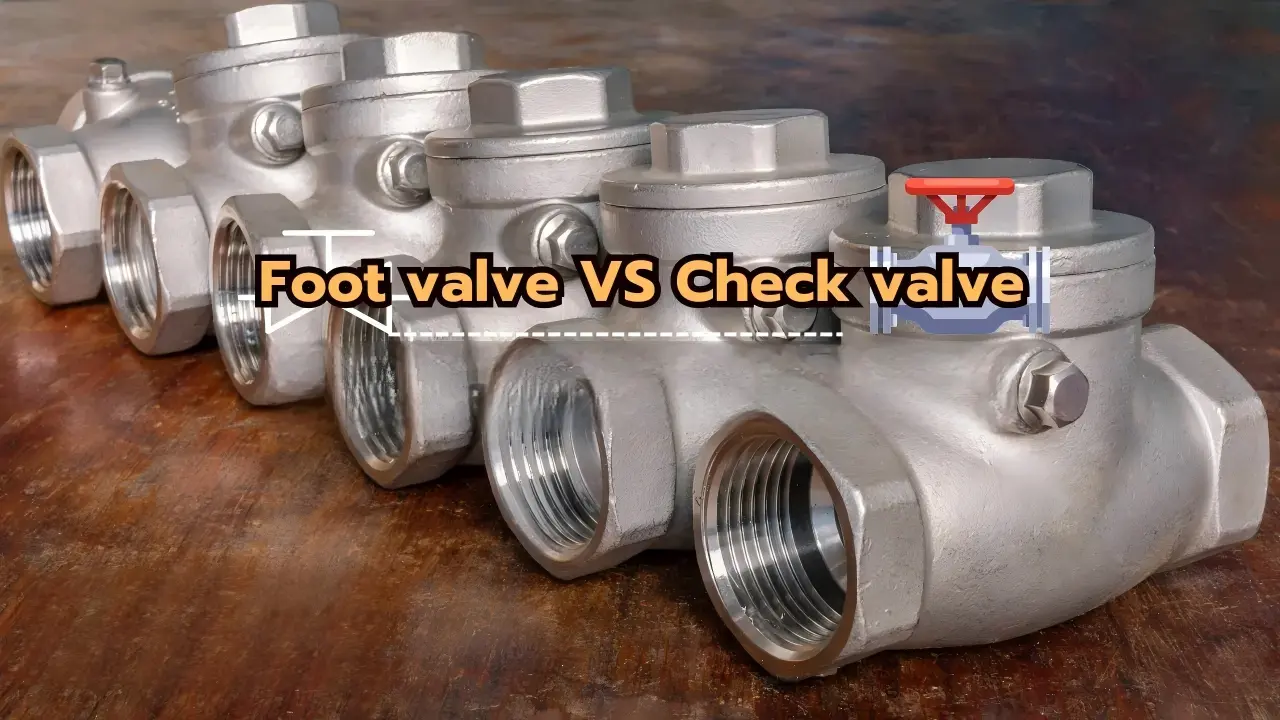
In some systems that do not involve deep wells or long suction runs and have low requirements for priming, check valves can be used as an alternative. For example:
In these situations, check valves can provide basic backflow prevention and meet the system’s operational requirements.
The core value of a foot valve lies not only in its “check” function but also in its ability to maintain the pump’s priming state and provide filtration at the suction end—features that a check valve cannot offer.
If only a check valve is used, the following issues may occur in the suction system:
❌ Backflow of water after the pump stops, resulting in loss of priming
❌ The need to repeatedly prime the pump upon restart
❌ Increased risk of the pump running dry
❌ Inability to start normally in deep well or long suction head systems
If your system requires the pump to continuously draw water to prevent water loss and ensure a steady water supply—such as in deep well or suction pump systems—you should choose a foot valve. It is better suited for use at the pump’s suction end and can simultaneously prevent backflow and maintain a stable water level.
If your system simply needs to prevent backflow of the fluid in the pipeline—such as at a pump discharge or in an industrial piping system—then a check valve is the more appropriate choice. It has a wider range of applications, offers greater installation flexibility, and serves as a general-purpose one-way protection valve.
Yes, but this is only suitable for systems that already have a stable water supply or a short suction lift; otherwise, it may cause the pump to lose prime or fail to start properly.
Common causes include the absence of a foot valve, a poorly sealed foot valve, or leaks in the suction line that cause backflow in the system.
Yes, most foot valves are equipped with strainers to prevent debris from entering the pump and to protect the system.
If you are looking for a more stable and efficient one-way fluid control solution for your pump system or industrial piping, choosing the right foot valve or check valve will directly impact the system’s operational reliability and maintenance costs. As a professional valve manufacturer, we offer both standard and customized solutions tailored to different operating conditions, helping you avoid system risks during the selection phase and achieve more stable long-term performance. Please feel free to contact us at any time for technical support and product selection advice.
—— We Will Provide You With Professional OEM Solutions.
Whether you require pump bearings, pump valves, mechanical seals, or other custom-engineered components, we support production based on your drawings as well as rapid prototyping.
Please complete the form on the right and upload your technical drawings or specifications. Our engineering team will review your requirements within 24 hours and provide a detailed quotation, application recommendations, and delivery schedule.
Copyright © 2025 Sakowit, Todos los derechos reservados.
 Spanish
  English
  Portuguese
  Russian
  Arabic