
Centrifugal Pump Manufacturer in China for Reliable Industrial Fluid Transfer Solutions
When you need a centrifugal pump for water supply, industrial processes, or demanding fluid handling applications, we help you select the right pump based on your flow rate, pressure requirements, medium characteristics, and operating conditions.
With professional manufacturing capabilities and engineering support, we provide centrifugal pumps with stable performance, customized configurations, and reliable supply for global distributors and industrial users.
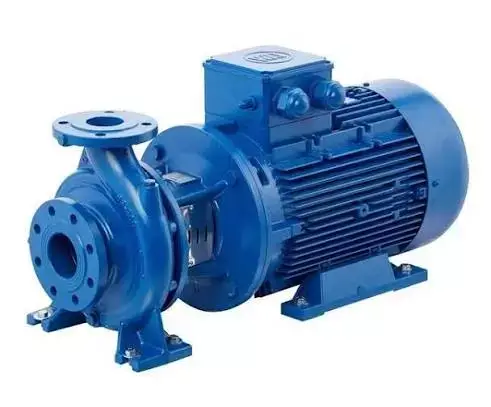
Centrifugal Pump Types We Manufacture
As a professional centrifugal pump manufacturer in China, we offer a wide range of centrifugal pump solutions tailored to the needs of various industrial applications.
Single Stage Centrifugal Pump
Multistage Centrifugal Pump
End Suction Centrifugal Pump
Horizontal Split Case Centrifugal Pump
Vertical Centrifugal Pump
Self Priming Centrifugal Pump
Stainless Steel Centrifugal Pump
How to Select a Centrifugal Pump?
Selecting the right centrifugal pump is not simply a matter of considering power or price. If the parameters of the centrifugal pump you choose do not match your actual system, you may encounter issues such as insufficient flow, unstable pressure, increased energy consumption, and accelerated wear on the pump body.
As a professional centrifugal pump manufacturer in China, we recommend that you evaluate the following key factors before purchasing a centrifugal pump:
- Confirm Your Required Flow Rate
- Calculate the Required Head Pressure
- Understand the Pumped Medium
- Check Material and Construction
- Consider Operating Conditions

Compare Centrifugal Pump Types
Different types of centrifugal pumps vary significantly in terms of structural design, pressure capacity, flow rate range, installation methods, and applicable scenarios.
When purchasing a centrifugal pump, you cannot simply assume that one type is necessarily better than another. The truly appropriate choice depends on your specific operating conditions. The following comparison of the characteristics of different types of centrifugal pumps will help you better understand the differences between them.
| Centrifugal Pump Type | Main Features | Typical Applications | Advantages | Selection Considerations |
|---|---|---|---|---|
|
Single Stage Centrifugal Pump |
Uses one impeller to generate pressure and is suitable for general fluid transfer applications. | Water supply, cooling systems, industrial circulation, general liquid transfer. | Simple structure, easy maintenance, cost-effective solution. | Not suitable for applications requiring very high pressure or high head. |
|
Multistage Centrifugal Pump |
Uses multiple impellers in series to achieve higher pressure output. | High-pressure water supply, boiler feed systems, building boosting, long-distance transfer. | Provides higher head capability and stable pressure performance. | Requires accurate pressure calculation to avoid unnecessary energy consumption. |
|
End Suction Centrifugal Pump |
A widely used design with liquid entering from the pump end and discharged through the outlet. | HVAC systems, industrial water circulation, manufacturing facilities. | Compact structure, easy installation, broad application range. | Large flow applications require careful performance evaluation. |
|
Horizontal Split Case Centrifugal Pump |
Features a split casing design with double suction structure for large flow applications. | Municipal water systems, large industrial plants, cooling water projects. | High flow capacity, reliable continuous operation, convenient maintenance. | Requires sufficient installation space and proper alignment. |
|
Vertical Centrifugal Pump |
Uses a vertical shaft design to reduce installation space requirements. | Water treatment systems, cooling towers, compact equipment layouts. | Space-saving design and flexible installation options. | Maintenance access should be considered during system design. |
|
Self Priming Centrifugal Pump |
Designed to remove air from suction lines and simplify pump startup. | Drainage systems, wastewater transfer, irrigation equipment. | Convenient operation and reduced manual priming requirements. | Self-priming performance depends on suction conditions and liquid properties. |
|
Stainless Steel Centrifugal Pump |
Manufactured with corrosion-resistant materials for demanding fluid applications. | Food processing, pharmaceutical systems, chemical transfer, clean water applications. | Better corrosion resistance and easier cleaning performance. | Material selection should match the chemical characteristics of the fluid. |
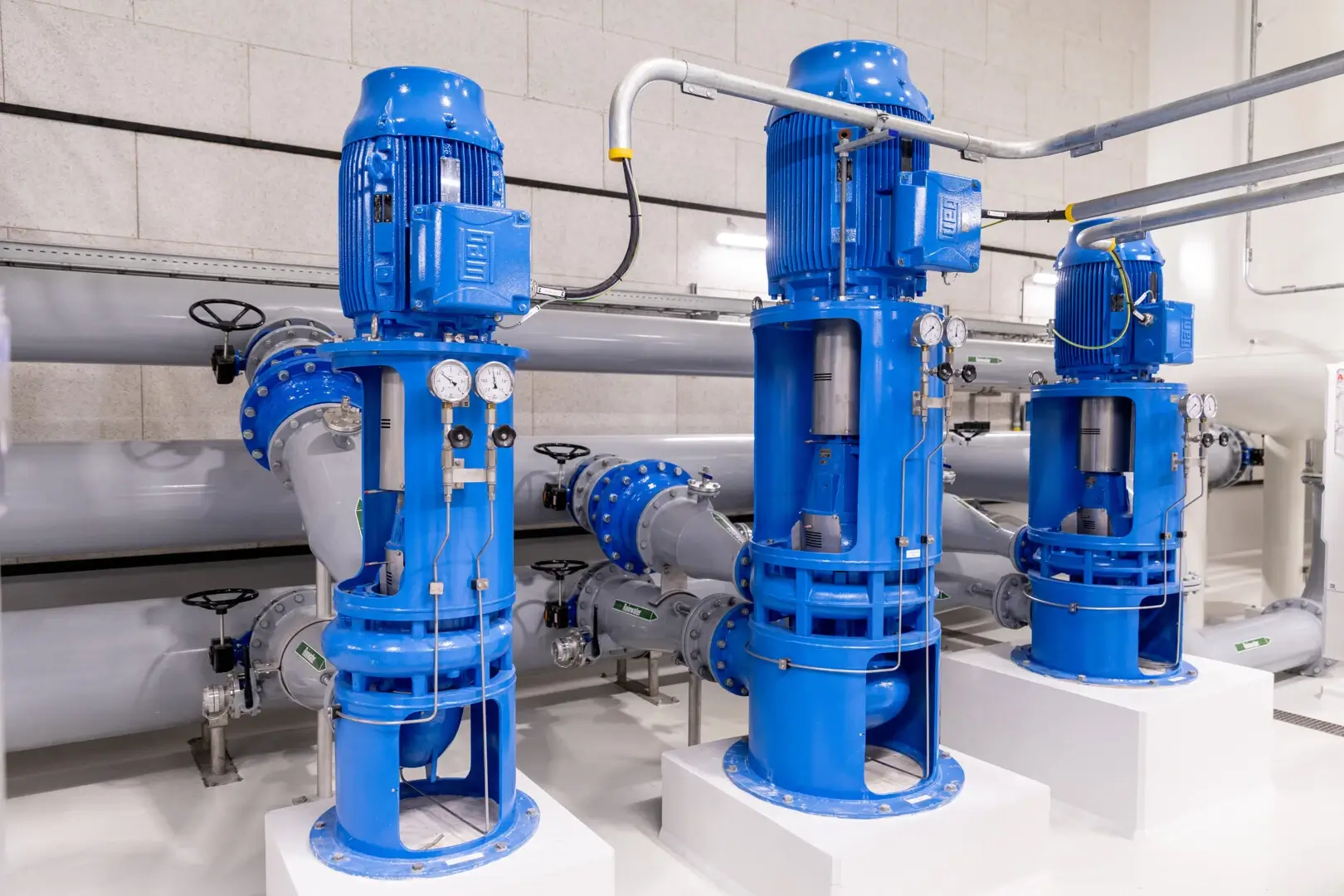
Water Supply Systems
Centrifugal pumps are widely used in building water supply, industrial water supply, and municipal water treatment systems.
If your project requires the stable delivery of clean water while maintaining a consistent supply pressure, a centrifugal pump is a reliable choice. You’ll need to select the appropriate flow rate and head based on the building’s height, water consumption, pipe length, and pressure requirements. Common applications include:
- Building water pressure boosting
- Industrial process water
- Municipal water supply systems
- Water tank transfer

Industrial Process Applications
In industrial production processes, centrifugal pumps are used to transport process fluids, circulating media, and auxiliary fluids.
Since industrial environments require equipment to operate for extended periods, the reliability of the pumps, the suitability of their materials, and ease of maintenance are of utmost importance. Common applications include:
- Manufacturing plants
- Industrial circulation systems
- Equipment cooling systems
- Production process transportation

HVAC and Cooling Systems
Centrifugal pumps are essential components in HVAC systems and industrial cooling systems, primarily used to circulate cooling water or heating and cooling media.
If your system requires a stable circulation flow rate, the centrifugal pump must be properly matched to the piping resistance, heat exchange equipment, and control system. Common applications include:
- Air conditioning water circulation systems
- Cooling tower circulation
- HVAC systems in commercial buildings
- Industrial cooling equipment
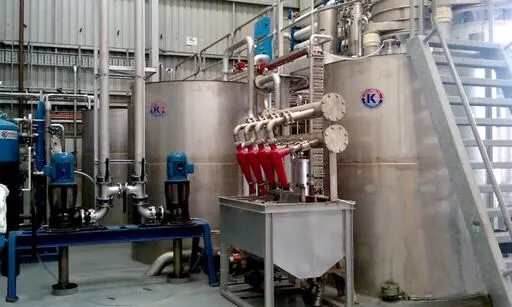
Water Treatment Applications
In water treatment systems, centrifugal pumps are used for raw water conveyance, filtration circulation, and the conveyance of treated water.
Medium conditions may vary across different water treatment projects, so you need to select appropriate materials and designs based on water quality. Common applications include:
- Wastewater treatment systems
- Filtration equipment
- Water purification projects
- Circulating water treatment
Get An Instant Quote Now
1. What is a centrifugal pump and how does it work?
A centrifugal pump is a type of power equipment that uses the rotation of an impeller to generate centrifugal force, thereby conveying liquid from the inlet to the outlet. During operation, the motor drives the impeller to rotate at high speed. When liquid enters the center of the impeller, it moves toward the outer edge under the action of centrifugal force and is converted into pressure by the pump casing, thereby enabling liquid conveyance.
You can evaluate its performance based on two key parameters:
- Flow Rate: Indicates the capacity to convey liquid per unit of time;
- Head: Indicates the pump’s ability to overcome resistance and lift the liquid.
When selecting a centrifugal pump, you need to determine the flow rate and head based on the actual system requirements, rather than focusing solely on motor power or pump size.
2. What information should I provide when ordering a centrifugal pump?
To help us provide you with an accurate centrifugal pump solution, please provide the following information:
- Name of the fluid to be pumped
- Required flow rate
- Required head
- Operating temperature
- Is the fluid corrosive?
- Does it contain particles?
- Voltage and frequency requirements
- Mounting configuration
- Quantity to be purchased
3. How long does a centrifugal pump last?
The service life of a centrifugal pump is influenced by several factors, including:
- Pump design quality
- Material selection
- Pumped medium
- Installation method
- Operating conditions
- Routine maintenance
To extend the service life of a centrifugal pump, you should:
- Avoid prolonged dry running of the pump
- Regularly inspect the condition of the seals
- Ensure the pumped medium meets design requirements
- Regularly check for vibration and unusual noise
4. Can centrifugal pumps handle different liquids?
Yes, but you’ll need to select the appropriate configuration based on the properties of the liquid.
Standard centrifugal pumps are suitable for clean water and low-corrosive liquids. If you need to pump chemical liquids, high-temperature media, corrosive liquids, or liquids containing particles, you’ll need to consider the pump housing material, impeller material, seal type, and corrosion resistance.
Before purchasing, you should provide us with complete information about the medium to avoid equipment damage caused by material incompatibility.
5. Do centrifugal pumps require regular maintenance?
Yes.
Although centrifugal pumps have a relatively mature and reliable design, they still require inspection and maintenance during long-term operation.
 Arabic
  English
  Portuguese
  Russian
  Spanish