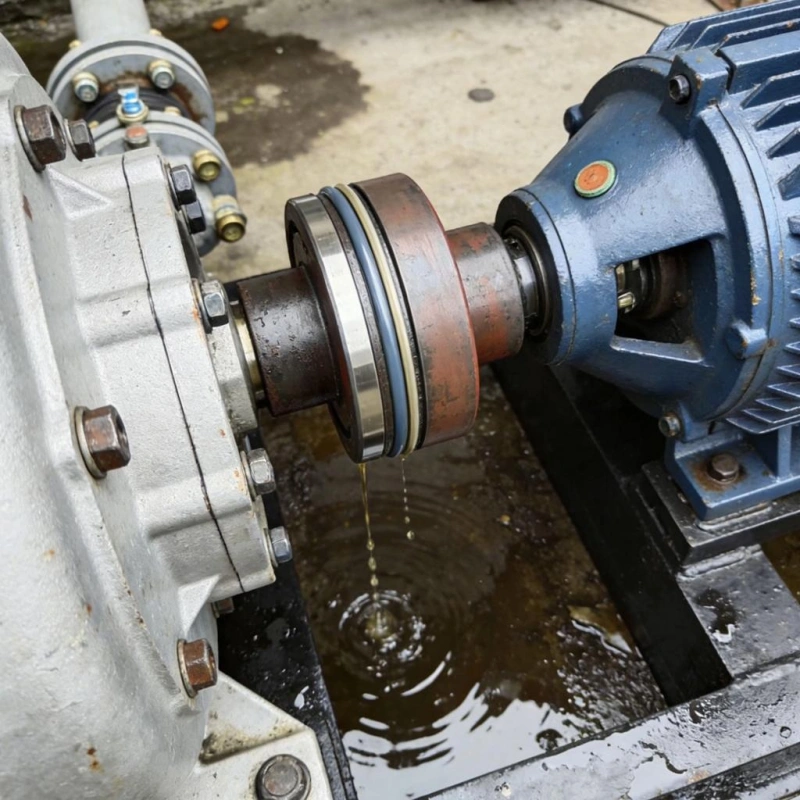
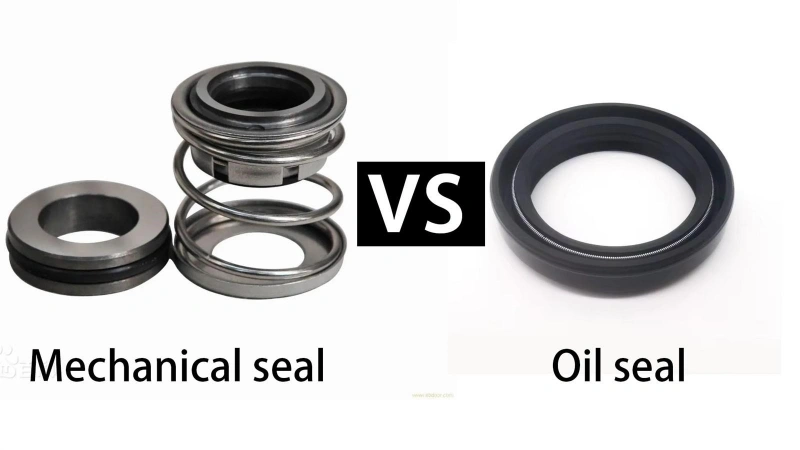
Both mechanical seals and oil seals can be used for shaft sealing, but the key difference lies in their sealing mechanisms.
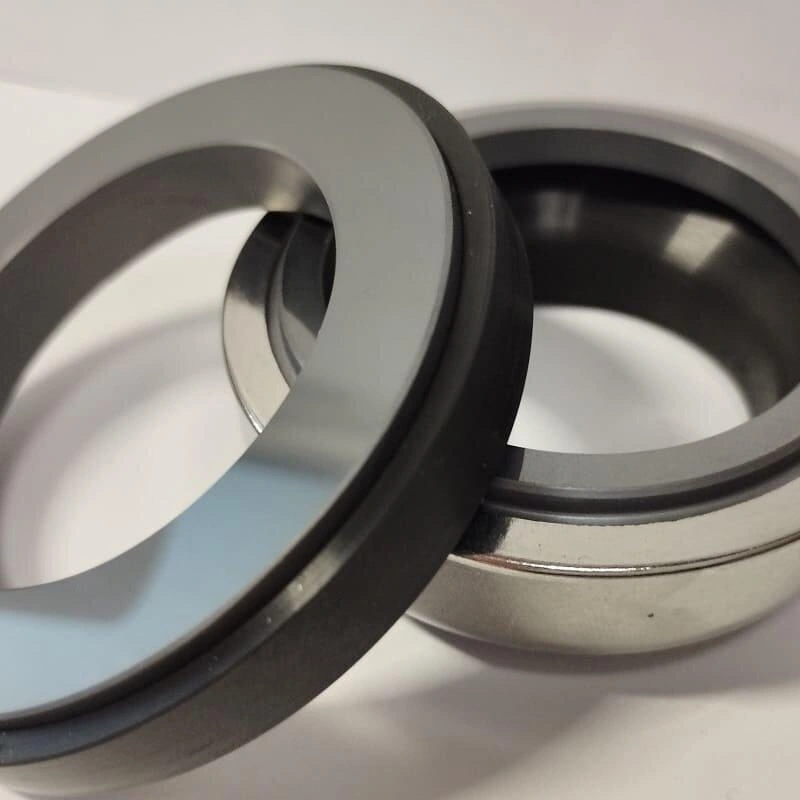
Definition: A mechanical seal primarily relies on two mating sealing faces to control leakage. One face rotates with the shaft, while the other remains stationary. Forces such as spring tension and fluid pressure maintain proper contact between the two faces and form a very thin lubricating film during operation.
Advantages:
Disadvantages:
Applications:
Definition: A lip-type seal for rotating shafts that primarily relies on the contact between a flexible sealing lip and the shaft surface to form a barrier against leakage. Some oil seals also include a spring to maintain contact force on the lip.
Advantages:
Disadvantages:
Applications:
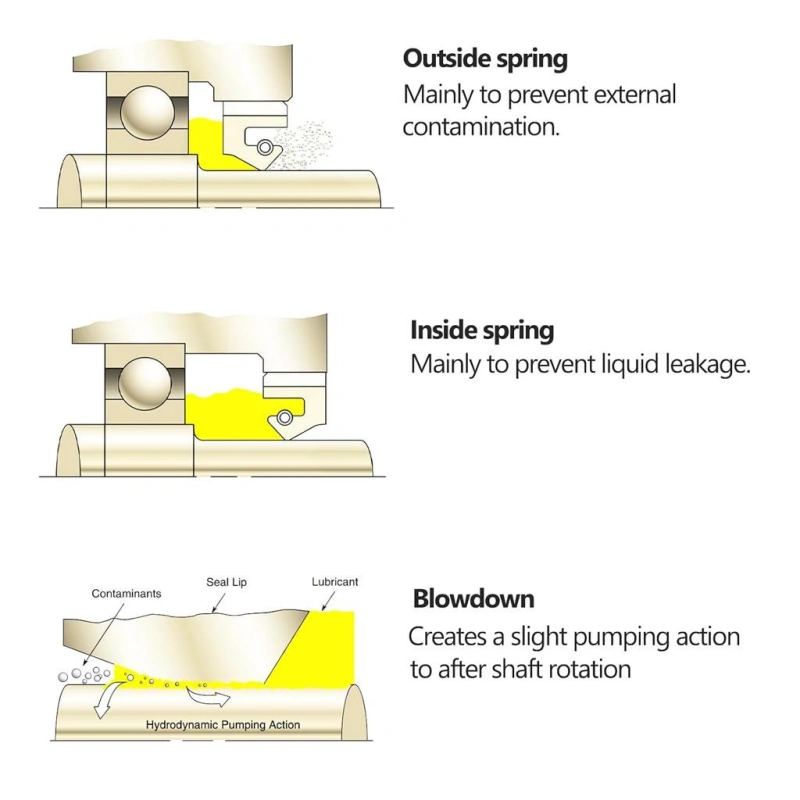
Although mechanical seals and oil seals both prevent liquids from leaking along a rotating shaft, they create a sealing barrier in different ways.
The key difference between the two lies not only in their contact points but also in how they maintain the seal.
Mechanical seals control leakage through a combination of precision-machined sealing faces, clamping force, and a lubricating oil film; their sealing performance depends on the flatness of the sealing faces, the stability of the oil film, and operating conditions.
Oil seals, on the other hand, rely on the elasticity of the lip, contact pressure, and the lubrication condition of the shaft surface to maintain the seal; some products also utilize a special lip design to direct lubricating oil back into the equipment.
Tip: Many people mistakenly believe that the tighter the sealing contact, the better the leak prevention. In reality, excessive contact force can increase friction, heat generation, and wear. Whether it is a mechanical seal or an oil seal, a balance must be struck between sealing performance and friction and lubrication.
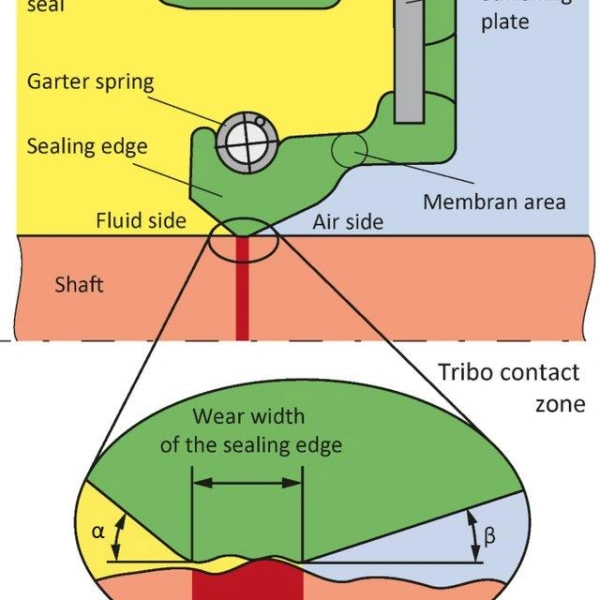
Mechanical seals primarily control leakage through face-to-face contact between two precision sealing rings, whereas oil seals achieve sealing primarily through contact between a flexible sealing lip and the surface of a rotating shaft. This structural difference directly affects their installation requirements, wear patterns, and applicable operating conditions.
A mechanical seal consists of a rotating ring, a stationary ring, springs, auxiliary seals, and drive or mounting components.
The rotating ring rotates with the shaft, while the stationary ring is mounted in the seal housing; their precision-machined end faces mate with each other to form the primary sealing area. Springs provide the closing force, while auxiliary seals—such as O-rings—seal other potential leakage gaps.
Tip: The primary point of friction in a mechanical seal is between the end faces of the two sealing rings, not between the sealing rings and the rotating shaft.
An oil seal consists of a sealing lip, a metal cage, and, in some models, a retaining spring.
The sealing lip is made of an elastic material such as rubber and comes into direct contact with the surface of the rotating shaft. The metal cage helps the oil seal maintain its shape and secure it in the mounting bore, while the retaining spring helps the lip maintain proper contact pressure.
| Comparison | Mechanical Seal | Oil Seal |
|---|---|---|
| Main Sealing Structure | Two precision seal rings. | Flexible sealing lip. |
| Main Components | Rotating ring, stationary ring, spring, secondary seals. | Sealing lip, metal case, garter spring. |
| Dynamic Contact Area | Seal faces between the two rings. | Outer surface of the rotating shaft. |
| Main Wear Area | Seal faces. | Lip and shaft contact area. |
| Shaft Requirements | Focus on sleeve fit, runout, and seal alignment. | Focus on shaft surface quality at the lip contact area. |
| Structure & Installation | More complex and may require more installation space. | Compact and easier to install. |
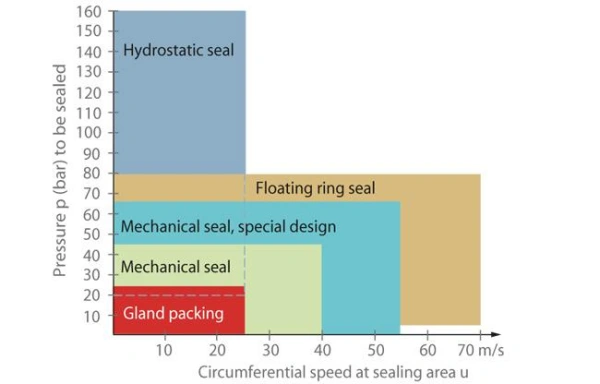
Mechanical seals are suitable for pump equipment operating under continuous fluid pressure, high rotational speeds, or complex temperature conditions, while standard oil seals are better suited for low-pressure rotating equipment with good lubrication conditions.
Mechanical seals control leakage through the precise contact between the rotating ring and the stationary ring. Their pressure capability depends on the seal design, the forces acting on the sealing faces, and the lubrication conditions.
Oil seals rely on a flexible lip in contact with the shaft surface and are primarily used in low-pressure or near-equilibrium pressure lubrication systems.
Tip: If subjected to excessive sustained pressure differentials, the lip may deform, leading to increased friction, elevated temperatures, or leakage. Although specialized high-pressure oil seals are available on the market, they must be selected based on the specific product’s pressure rating.
The higher the rotational speed, the greater the relative sliding speed at the sealing contact surfaces may become, making friction-induced heat and lubrication conditions even more critical to consider.
The primary friction points in a mechanical seal are the two sealing faces. By appropriately selecting the face materials, design, and lubrication conditions, the seal can accommodate higher rotational speeds.
The lip of an oil seal comes into direct contact with the surface of the rotating shaft. As rotational speed increases, friction and heat generation at the lip may increase, thereby accelerating material aging or wear.
Operating temperature not only affects the sealing materials but also alters friction, lubrication, and service life.
Mechanical seals use face materials such as carbon graphite and silicon carbide, but their overall temperature resistance also depends on O-rings, springs, and other components. For high-temperature liquids, it is also necessary to consider whether vaporization occurs near the sealing faces, as instability in the lubricating film may lead to overheating and wear of the faces.
Oil seals use elastic materials such as NBR and FKM for their sealing lips. Excessively high temperatures may cause the material to harden, reduce elasticity, or cause the lubricating film to fail. Conversely, excessively low temperatures may reduce the flexibility of the sealing lip, affecting sealing performance.
Tip: The temperature of the fluid inside the equipment does not necessarily equal the actual temperature at the sealing contact point. Heat generated by friction can also affect sealing performance. Therefore, you cannot determine the suitability of the entire seal based solely on the material’s maximum temperature rating.
| Comparison | Mechanical Seal | Standard Oil Seal |
|---|---|---|
| Pressure Capability | Can handle higher pressures with suitable design. | Best suited to low-pressure service. |
| High-Speed Operation | Can support high speeds with suitable face materials and design. | Limited by lip friction, lubrication, and shaft diameter. |
| High-Temperature Operation | Can use high-temperature materials and seal designs. | Mainly limited by lip material and lubrication. |
| Main Limitations | Face load, fluid film, heat removal, and materials. | Lip deformation, friction heat, and material aging. |
| Typical Applications | Centrifugal pumps, chemical pumps, process equipment. | Gearboxes, reducers, and bearing housings. |

Mechanical seals are suitable for pump equipment that requires strict control of process medium leakage, while oil seals are primarily used to prevent the loss of lubricating oil and grease. Fluid compatibility must be considered—that is, whether the sealing material can maintain stable performance after coming into contact with a specific liquid.
Mechanical seals control leakage through the precise contact between a rotating ring and a stationary ring. During normal operation, an extremely thin film of lubricant exists between the sealing faces to reduce friction and wear.
Oil seals, on the other hand, rely on the fit between an elastic lip and the surface of a rotating shaft to primarily prevent lubricating oil from leaking outward. Under low-pressure, well-lubricated conditions, standard oil seals can provide reliable sealing performance.
Fluid compatibility refers to the ability of sealing materials to withstand long-term contact with a specific liquid without significant corrosion, swelling, hardening, or other performance degradation.
For mechanical seals, you need to examine both the sealing face materials and the auxiliary sealing materials. For oil seals, fluid compatibility depends primarily on the lip material.
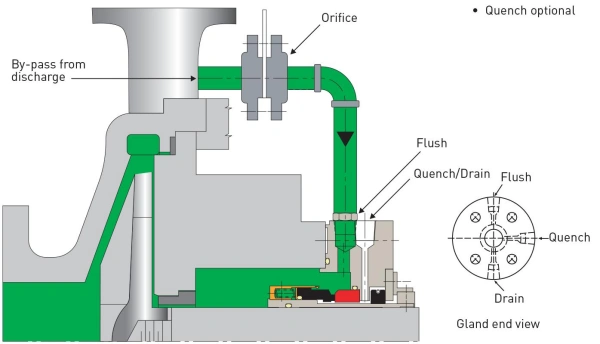
Mechanical seals require a more complex installation design and may rely on flushing or cooling systems. Standard oil seals have a more compact design and do not require separate auxiliary systems.
| Comparison | Mechanical Seal | Oil Seal |
|---|---|---|
| Installation Space | Requires a seal chamber, axial space, and gland mounting. | Compact and often press-fitted into the housing. |
| Mounting Requirements | Check shaft size, chamber depth, installation length, and gland dimensions. | Check shaft diameter, housing bore, seal width, and sharp edges. |
| Shaft Alignment | Proper alignment is required for stable face contact. | Shaft and housing must remain concentric. |
| Shaft Runout | Excessive runout may cause leakage and face wear. | Excessive runout may cause lip wear and leakage. |
| Auxiliary Systems | May require flushing, cooling, filtration, buffer, or barrier systems. | Standard oil seals rarely need separate support systems. |
| Lubrication & Cooling | Seal faces need proper fluid lubrication and heat control. | Relies mainly on internal lubricant at the sealing lip. |
| Key Considerations | Dimensions, face condition, runout, and support systems. | Seal lip, shaft surface, installation direction, and internal pressure. |
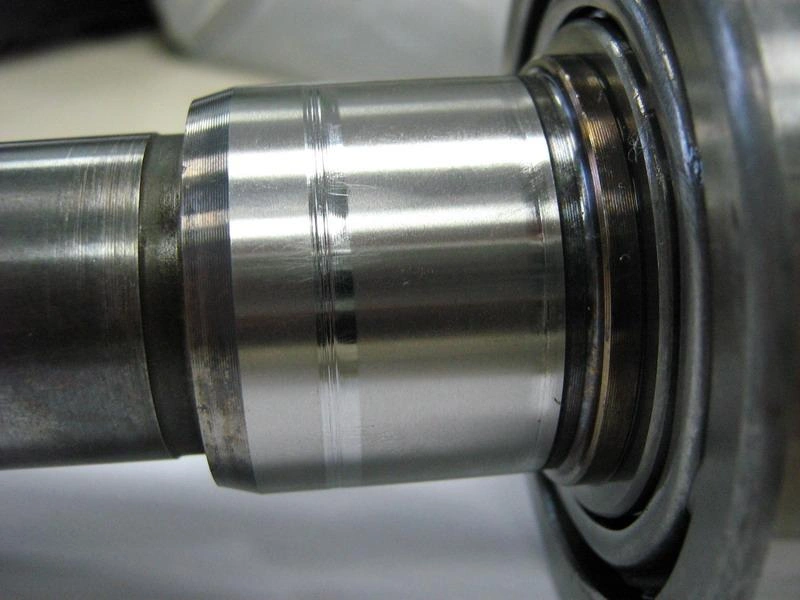
Both mechanical seals and oil seals gradually wear out as operating time increases, but the causes of failure and maintenance methods differ between the two.
Tip: Mechanical seals do not necessarily have a longer service life than oil seals. Actual service life depends on the seal design, materials, installation quality, and operating conditions. Even with high-quality seals, premature failure may occur if the equipment experiences vibration, insufficient lubrication, or improper installation.
| Comparison | Mechanical Seal | Standard Oil Seal |
|---|---|---|
| Main Wear Area | Rotating and stationary seal faces. | Sealing lip and shaft contact area. |
| Common Failure Causes | Poor lubrication, particles, vibration, or improper installation. | Lip wear, aging, shaft damage, or poor lubrication. |
| Typical Leakage | Increasing leakage, sometimes with abnormal heat. | Oil seepage, dripping, or lubricant loss around the shaft. |
| Maintenance Focus | Seal faces, secondary seals, shaft condition, and flush system. | Sealing lip, shaft surface, lubrication, and venting. |
| Replacement / Repair | Some designs can be repaired or rebuilt by specialists. | Usually replaced as a complete seal. |
| Service Life | Depends on operating conditions and maintenance. | Depends on operating conditions and maintenance. |
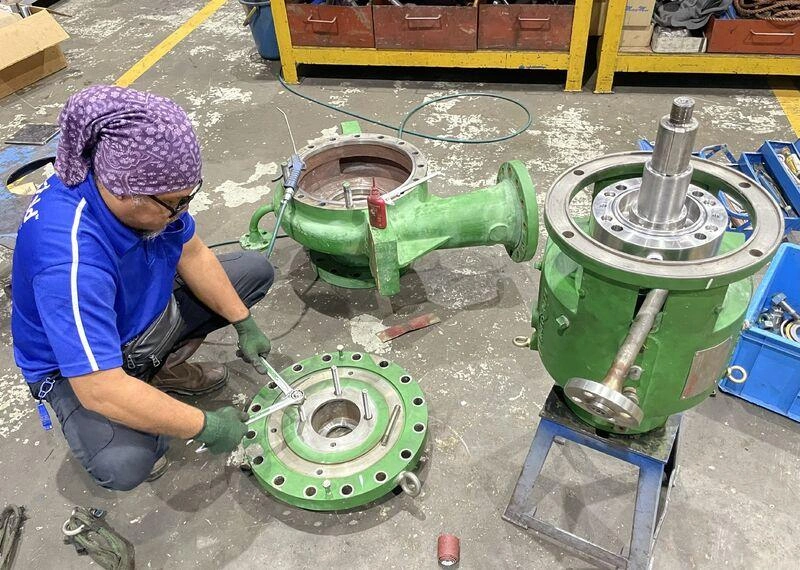
Cost differences are reflected not only in purchase prices but also in long-term expenses such as installation, maintenance, downtime, and replacement. While the initial cost of oil seals is typically lower, mechanical seals may offer better long-term cost-effectiveness under suitable operating conditions.
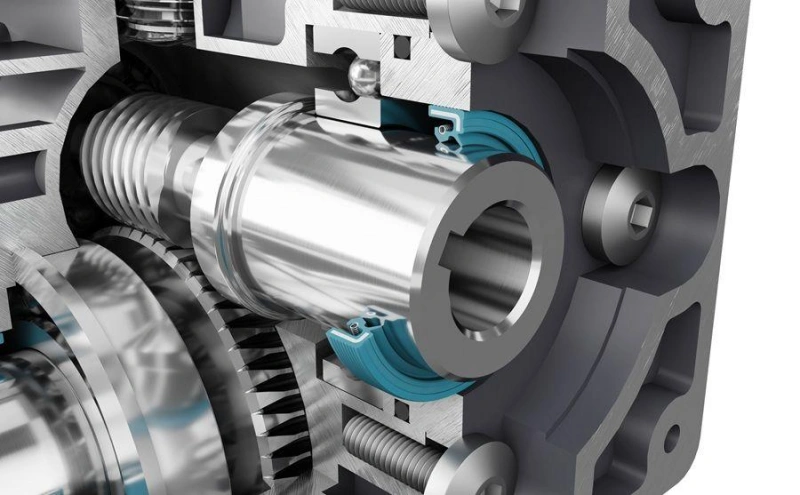
| Comparison | Suitable for Standard Oil Seals | Not Recommended / Key Notes |
|---|---|---|
| Low-Pressure Lubrication Systems | Gearboxes, reducers, and bearing housings with low pressure. | High pressure may deform the lip and increase wear; use pressure-rated seals if needed. |
| Compact Equipment & Simple Installation | Good for limited-space equipment and press-fit installation. | Check shaft size, housing bore, seal width, and shaft surface condition. |
| Suitable Lubricants & Conditions | Good lubrication with acceptable pressure, temperature, and shaft speed. | Poor compatibility, high heat, excessive speed, or low lubrication can accelerate wear. |
| When Oil Seals Are Not Recommended | Best for stable, low-pressure, well-lubricated systems. | Avoid for high-pressure, toxic, flammable, highly corrosive, or heavily contaminated service. |
| Comparison | When to Choose a Mechanical Seal | Key Notes / Limitations |
|---|---|---|
| Pressurized Pump Liquids | Suitable for centrifugal and chemical pumps handling pressurized fluids. | Check actual seal chamber pressure and pressure fluctuations. |
| Strict Leakage Control | Suitable for flammable, toxic, or hazardous fluids; dual seals may be used. | Mechanical seals are not zero-leakage. Select based on safety and leakage limits. |
| High Temperature / Demanding Service | Can use suitable face materials, seal designs, flushing, or cooling systems. | Particles, crystallization, or poor lubrication may require special designs. |
| When It Is Not the Best Choice | Best for applications requiring controlled process-fluid leakage. | Oil seals may be more economical for low-pressure lubrication; standard wet seals are unsuitable for prolonged dry running. |
Not exactly. An oil seal typically refers to a radial shaft lip seal used to prevent lubricant leakage, which is a type of lip seal. However, lip seals also include other designs and applications, so the two cannot be considered completely equivalent.
They cannot be directly substituted. The two differ in sealing principles, pressure-bearing capacity, and installation structures. Standard oil seals are primarily suitable for low-pressure lubrication systems, while mechanical seals are better suited for controlling leaks of process media within pumps. Replacement should only be considered after a comprehensive evaluation of operating conditions and structural requirements.
Mechanical seals. Mechanical seals can withstand higher pressures through balanced designs, appropriate face materials, and auxiliary systems. Standard oil seals are generally not suitable for withstanding high, sustained liquid pressure differentials, though specific pressure-bearing capacity must still be determined by referring to product specifications.
During normal operation, mechanical seals may exhibit a very small amount of leakage at the sealing faces to maintain the necessary lubricating film; however, this does not necessarily result in droplets visible to the naked eye. Persistent dripping or a significant increase in leakage requires inspection, which should be determined based on the specific seal type and the manufacturer’s specifications.
Standard oil seals. They have a simple design, are relatively inexpensive, and can usually be replaced as a complete unit. Mechanical seals have a relatively complex structure and may require professional installation, adjustment, or inspection of auxiliary systems, so replacement costs are typically higher.
Standard oil seals are not suitable for directly sealing fluids containing abrasive particles. The particles may wear down the sealing lips and shaft surfaces, leading to leaks. For media containing sand, slurries, and similar substances, a proven, specialized sealing solution should be selected.
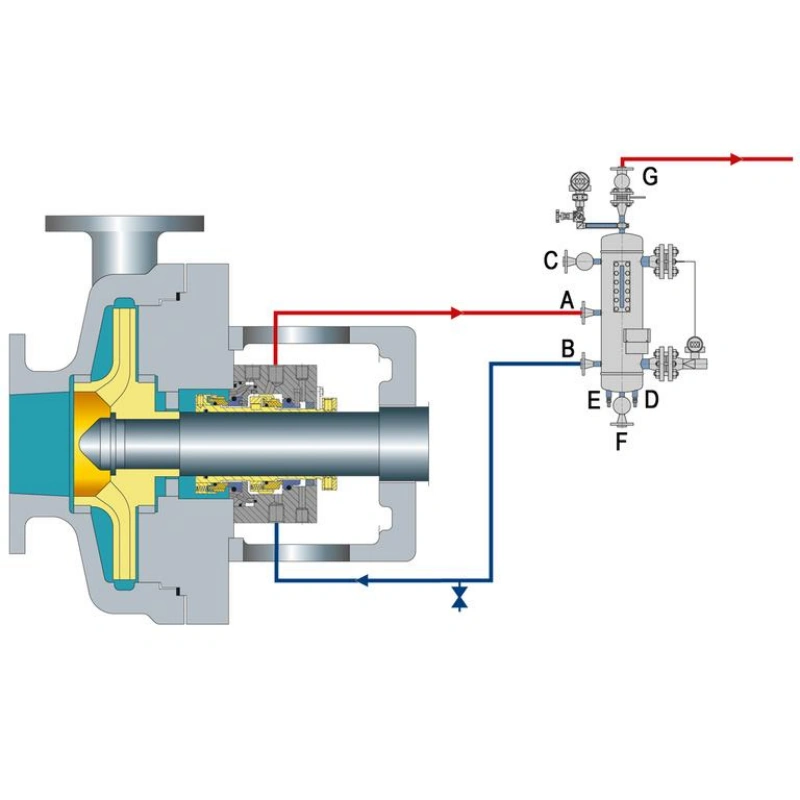
Mechanical seals require proper lubrication but do not necessarily require external flushing. Many mechanical seals can utilize the pumped medium to form a lubricating film. For high-temperature, particulate-laden, or crystallizing media, additional flushing, cooling, or isolation fluid systems may be required.
Yes, but they are used in different sealing locations. For example, the same pump can use a mechanical seal to prevent process fluid leakage while using an oil seal to prevent lubricating oil from leaking out of the bearing housing. Each serves a distinct function and is not simply stacked on top of the other in the same location.
Simply put, while mechanical seals and oil seals can both prevent leaks in rotating equipment, there are significant differences between them. Their sealing principles, structures, pressure-bearing capacities, applicable operating conditions, and maintenance costs all vary.
When selecting a seal, don’t focus solely on price and dimensions. You must also consider operating pressure, temperature, rotational speed, media compatibility, installation space, and long-term maintenance costs.
As a professional pump components supplier , Sakowitz is dedicated to providing customers with reliable sealing products and solutions tailored to various applications. If you’re looking for the right mechanical seal or other pump seals, please feel free to contact Sakowitz.
—— We Will Provide You With Professional OEM Solutions.
Whether you require pump bearings, pump valves, mechanical seals, or other custom-engineered components, we support production based on your drawings as well as rapid prototyping.
Please complete the form on the right and upload your technical drawings or specifications. Our engineering team will review your requirements within 24 hours and provide a detailed quotation, application recommendations, and delivery schedule.
Copyright © 2025 Sakowit, All rights reserved.
WhatsApp us