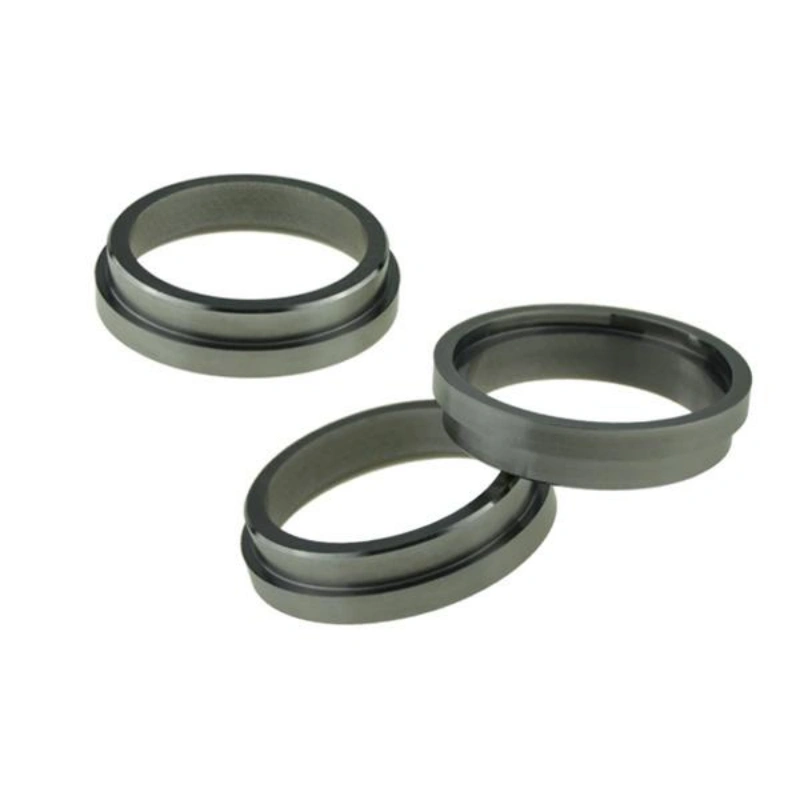

Mechanical seals and oil seals are both common sealing devices used in rotating equipment, primarily to prevent fluid leakage and block external contaminants from entering the equipment. Although both can provide shaft sealing, there are significant differences between them in terms of operating principles, structural materials, pressure-bearing capacity, applicable operating conditions, and maintenance costs.
This article will provide a detailed comparison of mechanical seals and oil seals in terms of sealing principles, structural materials, pressure and speed limitations, leakage performance, installation and maintenance, and lifecycle costs. By drawing on real-world application scenarios, it will help you determine when to choose an oil seal and when a mechanical seal is more appropriate.
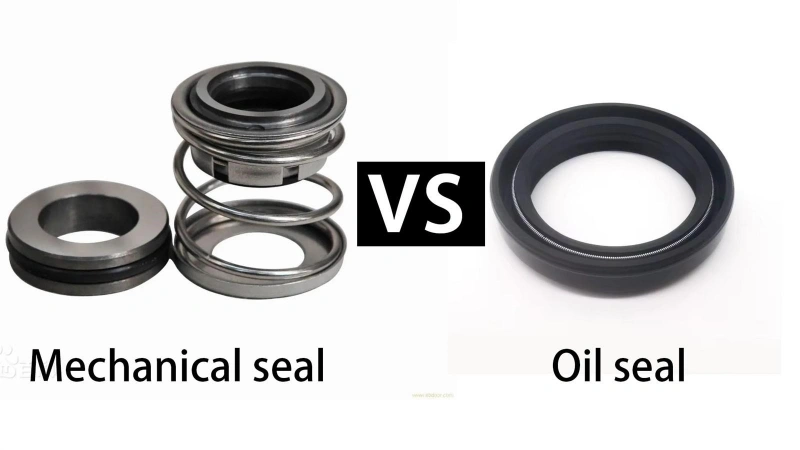
Both mechanical seals and oil seals are used to prevent fluid leakage along a rotating shaft, but there are significant differences in their sealing mechanisms and the operating conditions for which they are suitable.
Mechanical seals primarily rely on two sealing faces in contact with each other to control leakage, while oil seals primarily rely on a flexible sealing lip in contact with the surface of the rotating shaft to limit leakage.
| Comparison | Mechanical Seal | Oil Seal |
|---|---|---|
| Sealing Principle | Uses precision rotating and stationary seal faces. | Uses an elastic lip contacting the shaft. |
| Main Purpose | Controls process fluid leakage along rotating shafts. | Retains oil or grease and blocks contaminants. |
| Pressure Capability | Can handle higher pressures with suitable design. | Best suited to low-pressure applications. |
| Speed Capability | Suitable for high speeds with proper lubrication and cooling. | Limited by lip material, shaft speed, and friction heat. |
| Leakage Control | Better for strict process leakage control. | Suitable for general oil-retention needs. |
| Complexity | More complex with precision faces and auxiliary parts. | Simple and compact. |
| Installation | Requires accurate installation and clean seal faces. | Easier to install; shaft finish and lip direction matter. |
| Cost | Higher. | Lower. |
| Typical Applications | Centrifugal pumps, chemical pumps, process pumps. | Gearboxes, reducers, bearing housings, lubrication systems. |
Mechanical seals control fluid leakage through two precision-machined sealing faces, while oil seals limit leakage through contact between an elastic lip and the shaft surface.
A mechanical seal primarily relies on two sealing rings: the rotating ring rotates with the pump shaft, while the stationary ring is mounted on the seal housing. The end faces of the two rings are precision-machined to fit tightly together, forming the primary barrier against fluid leakage.
Tip: A mechanical seal does not guarantee absolutely zero leakage. During normal operation, slight leakage may still occur at the sealing faces.
An oil seal refers to a radial shaft lip seal. It forms a barrier to prevent lubricating oil from leaking out by having a flexible rubber sealing lip press tightly against the surface of the rotating shaft.
Some oil seals have a retaining spring inside to help the lip maintain proper contact force. When the shaft rotates, a thin film of lubricating oil must also be maintained between the lip and the shaft surface to reduce friction and wear.
You can determine this by examining the leakage path through which the fluid must pass.
Mechanical seals primarily prevent fluid from escaping through the face gap between the rotating ring and the stationary ring, while auxiliary seals are required to prevent fluid from bypassing the sealing rings. Oil seals, on the other hand, primarily prevent fluid leakage through the contact area between the lip and the shaft surface.
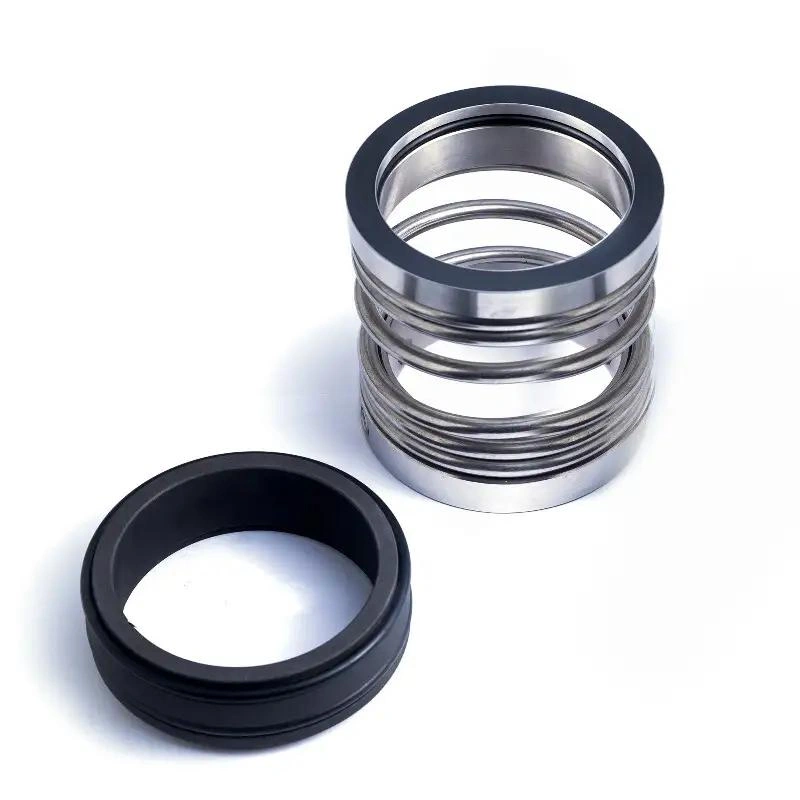
The structural differences between mechanical seals and oil seals are primarily reflected in the sealing components, material selection, and the manner in which they contact the rotating shaft.
Consists of a rotating ring, a stationary ring, a spring, and auxiliary seals. The rotating ring and stationary ring form the primary sealing faces; the spring helps maintain the proper sealing force between the faces; and auxiliary seals, such as O-rings, prevent fluid leakage through other clearance gaps.
The structure is relatively simple, consisting of a sealing lip, a metal cage, and a retaining spring. The lip forms a sealing contact with the shaft surface, the metal cage provides support and stability, and the retaining spring helps maintain the radial contact force between the lip and the shaft. Some oil seals also feature a dust lip to reduce the ingress of external contaminants.
Different materials vary in terms of wear resistance, temperature resistance, and chemical compatibility, so they should not be selected based solely on price.
| Seal Type | Common Material | Key Features |
|---|---|---|
| Mechanical Seal Face | Carbon Graphite | Good self-lubrication; often paired with a hard face. |
| Mechanical Seal Face | Silicon Carbide (SiC) | Hard, wear-resistant, and corrosion-resistant. |
| Mechanical Seal Face | Tungsten Carbide (WC) | High hardness and good wear resistance. |
| Oil Seal Lip | NBR | Common for mineral oils and grease. |
| Oil Seal Lip | FKM | Good heat and chemical resistance. |
| Oil Seal Lip | PTFE | Low friction; suitable for special fluids and conditions. |
For mechanical seals, you need to consider the material combination of both sealing faces. For example, carbon/SiC is a common combination, while media containing abrasive particles may require evaluation of hard-face combinations such as SiC/SiC.
For oil seals, if the equipment primarily seals standard mineral lubricating oil, NBR is an economical and practical choice.
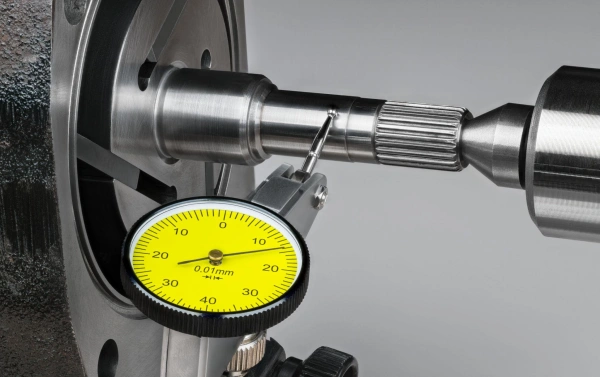
Both mechanical seals and oil seals can be used to seal rotating shafts, but they have different capabilities in adapting to operating conditions.
It is incorrect to simply assume that mechanical seals can withstand all high-temperature, high-pressure operating conditions. When selecting a seal, you must consider pressure, rotational speed, temperature, and shaft runout simultaneously, as these factors influence one another.
Pressure is a key distinction between the two types of seals.
Mechanical seals control leakage through the precise contact between the rotating ring and the stationary ring; depending on the seal configuration, face materials, and balancing design, they can adapt to different pressure conditions. They are widely used in centrifugal pumps, chemical pumps, and process pumps.
Rotational speed affects friction. It affects temperature rise. It also affects wear in the sealing contact area.
The primary friction point in a mechanical seal is between the two sealing faces. An appropriate fluid film helps reduce friction. It also helps dissipate heat. This allows a properly designed mechanical seal to work at higher speeds.
In oil seals, the lip makes direct contact with the shaft surface. As speed increases, friction becomes more pronounced. Heat generation at the lip contact point also increases. This can affect seal life.
Tip: Do not rely solely on the equipment’s RPM; also consider the shaft diameter, contact linear velocity, materials, and lubrication conditions when verifying the manufacturer’s permitted operating range.
Temperature affects sealing materials. It also changes lubrication conditions. It alters friction characteristics too.
Mechanical seals can handle a wide temperature range. This is achieved by using different face materials. Different auxiliary sealing materials help as well. Cooling designs also play a role.
The temperature resistance of oil seals is mainly limited by the lip material. Lubrication conditions matter too. For example, NBR is commonly used for standard mineral oil. FKM is better suited for certain high-temperature environments.
Shaft runout refers to the periodic deviation of the shaft. It deviates from its ideal center during rotation.
For oil seals, excessive runout is problematic. The lip cannot keep pace with the shaft’s movement. This leads to poor contact. It can cause leakage or abnormal wear. The higher the rotational speed, the more critical this issue becomes.
Mechanical seals rely on compensating structures. These include springs and bellows. They accommodate a certain degree of axial or radial movement. However, the permissible range depends on the specific design. Excessive runout can still cause problems. It can lead to uneven force distribution on the sealing faces. It may also cause vibration and leakage.
| Factor | Mechanical Seal | Oil Seal |
|---|---|---|
| Pressure | Better suited to pressurized pump fluids. | Standard types are mainly for low-pressure service. |
| Speed | Handles higher speeds with proper face lubrication and cooling. | Limited by lip friction, shaft speed, and lubrication. |
| Temperature | Can cover wider temperatures through materials and support systems. | Mainly limited by lip material and lubrication. |
| Shaft Runout | Allows limited shaft movement but requires stable face contact. | Excessive runout can cause poor lip contact and leakage. |
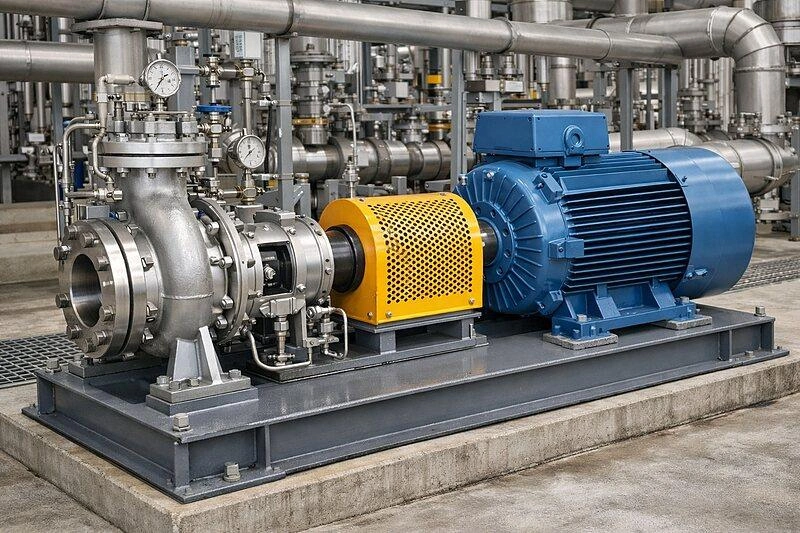
Both mechanical seals and oil seals are used to control fluid leakage, but there are significant differences in their leakage control capabilities and the media for which they are suitable.
Mechanical seals are better suited for equipment with stringent leakage control requirements for process fluids, while oil seals are primarily used to retain lubricating oil or grease and prevent it from leaking around the shaft.
Mechanical seals rely on precise contact. The rotating ring contacts the stationary ring. This controls leakage. In common liquid-lubricated mechanical seals, an extremely thin liquid film exists between the sealing faces. It reduces friction. It also dissipates heat. So even during normal operation, trace amounts of leakage may occur.
Oil seals work differently. A flexible lip contacts the rotating shaft. It prevents lubricating oil from leaking outward. During normal operation, the lip needs adequate lubrication.
Significant oil leakage can still happen. The shaft surface may be worn. The lip may be aged. Internal pressure may be too high.
Fluid compatibility refers to the ability of a sealing material to maintain the necessary physical and chemical properties when in contact with a specific fluid, without significant swelling, hardening, corrosion, or performance degradation.
Different fluids affect sealing materials differently; therefore, suitability cannot be determined based solely on the type of seal.
| Fluid Type | Preferred Seal | Key Considerations |
|---|---|---|
| Clean Water / Cooling Water | Mechanical Seal | Check face materials, lubrication, and operating temperature. |
| Mineral Oil / Grease | Oil Seal | Verify lip material compatibility with oil and additives. |
| Acids / Alkalis | Specially Selected Mechanical Seal | Check concentration, temperature, and all wetted materials. |
| Fluids with Solids | Wear-Resistant Mechanical Seal | Evaluate abrasion, clogging, and flush requirements. |
| Flammable / Toxic Fluids | Mechanical Seal + Support System | Focus on leakage control, collection, and safety requirements. |
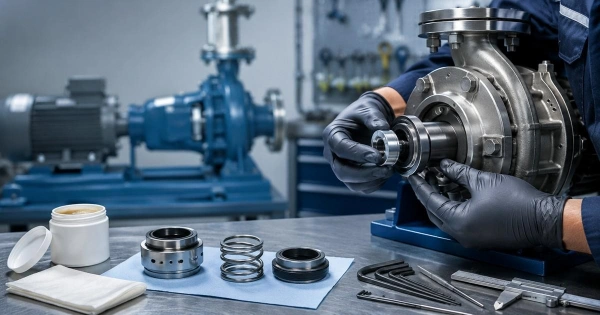
Mechanical seals may have higher requirements for installation accuracy, face cleanliness, and operating conditions, while oil seals have a simple structure and are relatively easy to replace, but are highly sensitive to shaft surface quality and installation orientation.
Installing mechanical seals requires special care. You must protect the precision sealing faces. This applies to both the rotating ring and the stationary ring.
Some mechanical seals use a cartridge design. This reduces the need for on-site adjustments. But you still need to inspect the installation location. Check the shaft assembly condition. And check the auxiliary piping.
Oil seals are simpler to install. But correct orientation is essential. The primary sealing lip must face the fluid side. Before installation, check the shaft surface. Look for burrs. Look for scratches. Look for wear grooves.
Tip: Replacing the seals does not necessarily resolve the cause of the leak. If bearings are loose, shaft runout is excessive, or lubrication conditions have not improved, new seals may still fail prematurely.
| Seal Type | Failure Mode | Possible Cause | Key Checks |
|---|---|---|---|
| Mechanical Seal | Abnormal face wear | Poor lubrication or particle contamination. | Check fluid film and fluid cleanliness. |
| Mechanical Seal | Face cracking / thermal damage | Dry running, overheating, or thermal shock. | Check startup conditions and temperature changes. |
| Mechanical Seal | O-ring leakage | Installation damage, incompatibility, or aging. | Inspect secondary seals and contact surfaces. |
| Mechanical Seal | Uneven face contact | Misalignment, vibration, or installation distortion. | Check bearings, shaft runout, and installation. |
| Oil Seal | Lip wear / hardening | Poor lubrication, high temperature, or aging. | Check lubrication and temperature. |
| Oil Seal | Lip scratches | Poor installation tools or shaft burrs. | Inspect the lip and shaft surface. |
| Oil Seal | Shaft wear groove | Long-term wear or contamination. | Inspect the seal contact area. |
| Oil Seal | Oil leakage / lip deformation | Excess pressure, incorrect installation, or shaft runout. | Check venting, installation, and shaft condition. |
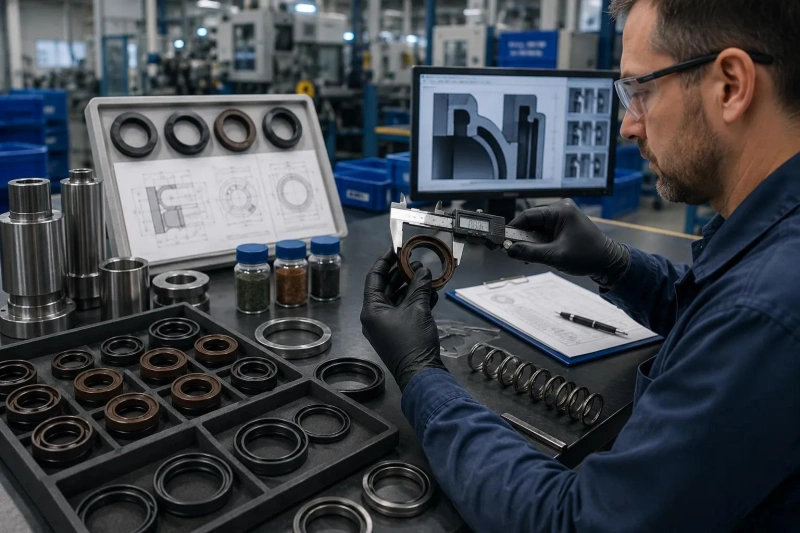
Oil seals are inexpensive to purchase and easy to install, making them suitable for low-pressure lubrication systems; mechanical seals require a higher initial investment but may offer better long-term cost-effectiveness in applications involving pressurized pumped media or where strict leak control is required.
Standard oil seals have a relatively simple structure, consisting of a rubber lip, a metal cage, and a spring, and their manufacturing and procurement costs are generally low. For low-pressure lubrication systems such as gearboxes, reducers, and bearing housings, oil seals are often an economical and practical choice.
Mechanical seals consist of precision sealing faces, springs, and auxiliary sealing components. They require higher standards for machining and assembly, resulting in higher procurement costs than standard oil seals.
Service life refers to the operating time during which a seal can maintain the required sealing performance under specified operating conditions.
The service life of an oil seal is primarily affected by lip wear, shaft surface condition, lubrication conditions, and operating temperature.
The service life of a mechanical seal, on the other hand, is closely related to the face materials, fluid film lubrication, the properties of the medium, vibration, and temperature.
Life cycle cost refers to the total expenses incurred throughout the seal’s lifecycle, from procurement and installation through operation, maintenance, and eventual replacement.
In addition to the purchase price of the seal, you must also consider maintenance labor, spare parts, lubrication or cooling consumables, and losses due to equipment downtime.
| Cost Item | Mechanical Seal | Oil Seal |
|---|---|---|
| Purchase Cost | Higher. | Lower. |
| Installation Cost | Higher; some designs require support systems. | Lower and easier to replace. |
| Maintenance Cost | May include seal faces, secondary seals, and support systems. | Mainly lip condition, shaft surface, and lubrication. |
| Replacement Frequency | Depends on operating conditions and seal design. | Depends on wear, lubrication, and shaft condition. |
| Downtime Cost | Higher reliability may reduce unplanned downtime. | Easy to replace, but frequent failures increase downtime. |
| Long-Term Value | Better for demanding service and high downtime costs. | Better for low-pressure, easy-maintenance systems. |
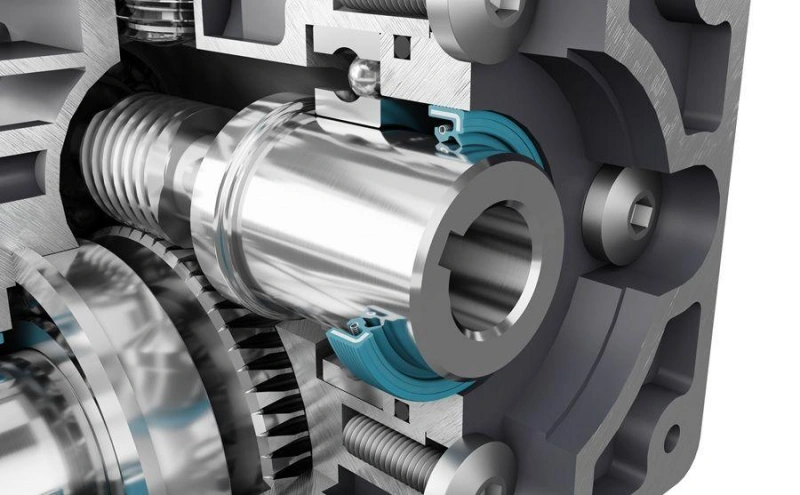
An oil seal refers to a radial shaft lip seal, primarily used to prevent lubricating oil or grease from leaking along a rotating shaft, while also reducing the ingress of external contaminants such as dust and moisture into the equipment.
When equipment operates under low-pressure conditions with good lubrication, limited sealing space, and cost-sensitive requirements, oil seals are typically the more economical and practical choice.
Oil seals are suitable for the following equipment:
When selecting oil seals, you should focus on confirming the following conditions.
| Selection Factor | Suitable for Oil Seals | Key Notes |
|---|---|---|
| Pressure | Low pressure or small pressure differential. | Standard oil seals are not designed for high pressure. |
| Speed | Within the rated shaft surface speed. | Speed and shaft diameter affect friction heat. |
| Temperature | Within the lip material temperature range. | High heat can harden rubber and reduce lubrication. |
| Fluid | Compatible oil or grease. | Oil type and additives may affect the seal material. |
| Shaft Condition | Smooth surface, no major grooves, controlled runout. | Scratches, wear, or runout may cause leakage. |
If you need to seal pumped liquids under high pressure—especially chemical media, hazardous liquids, or applications with strict leakage requirements—it is not recommended to use standard oil seals directly. For such applications, it is more important to evaluate suitable mechanical seals or other specialized sealing solutions.
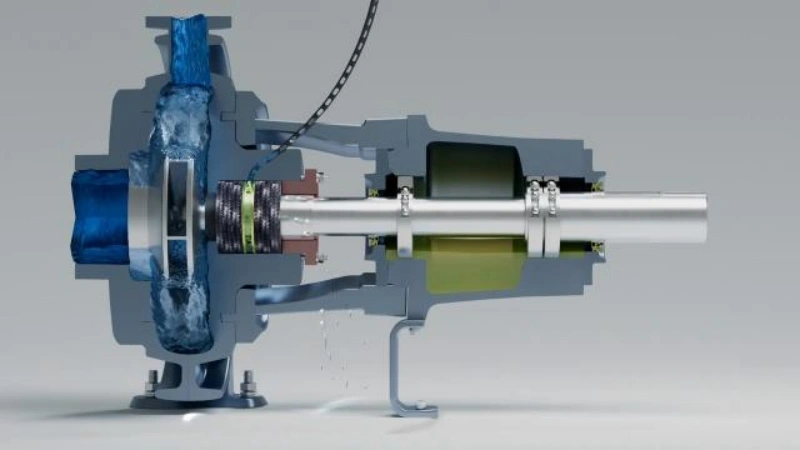
Mechanical seals are primarily used to control liquid leakage along rotating shafts and are widely used in centrifugal pumps, chemical pumps, and industrial process pumps. Compared to standard oil seals, mechanical seals are generally better suited to withstand certain media pressures and operating environments with stringent leakage control requirements.
Mechanical seals are suitable for the following equipment and operating conditions:
| Selection Factor | Suitable for Mechanical Seals | Key Notes |
|---|---|---|
| Pressure | Pressurized pump fluids. | Check pressure rating and pressure fluctuations. |
| Speed | Medium- to high-speed rotating equipment. | Check face speed, lubrication, and cooling. |
| Temperature | Wide temperature ranges with suitable materials and support systems. | Prevent face overheating and fluid vaporization. |
| Fluid | Water, coolant, and compatible process fluids. | Consider corrosion, particles, and crystallization. |
| Leakage Control | Applications requiring tighter leakage control. | Consider dual seals and support systems when needed. |
Mechanical seals are not the best choice for every application.
If your equipment simply needs to prevent low-pressure lubricant leaks from gearboxes or bearing housings, standard oil seals are usually simpler and more cost-effective. Using mechanical seals may increase structural complexity and maintenance costs.
Not necessarily. Oil seals commonly found in industrial equipment are typically radial shaft lip seals, which rely on an elastic lip in contact with a rotating shaft to prevent oil leakage. However, in a broader sense, oil seals also include other designs, so not all oil seals can be equated with lip seals.
Yes, but you need to select a model specifically designed for the medium in question. Standard NBR oil seals are primarily used in lubricating oil environments and may not be suitable for water or chemicals. You must verify the chemical compatibility of the lip material, as well as the lubrication conditions, pressure, and temperature; standard oil seals cannot be used as direct replacements for mechanical seals in chemical pumps.
Mechanical seals consist of precision-machined rotating rings, stationary rings, springs, and auxiliary seals, which place higher demands on materials, machining precision, and assembly quality. Some models also require flushing or cooling systems, so procurement and installation costs are typically higher than those of standard oil seals.
Generally, it’s the oil seal. Oil seals have a simple structure and require relatively few steps to replace. Mechanical seals, on the other hand, require protecting the precision sealing faces and verifying the installation position and auxiliary systems. However, cartridge-type mechanical seals can simplify installation; the actual difficulty still depends on the equipment’s design.
Yes, some oil seals specifically designed for high speeds can accommodate higher rotational speeds. However, you cannot rely solely on RPM; you must also consider the shaft diameter, linear speed of the shaft surface, lip material, lubrication conditions, and temperature. Ultimately, you should adhere to the speed limits specified by the manufacturer.
Minimal leakage may occur during normal operation of a mechanical seal, as the sealing faces of liquid-lubricated mechanical seals typically require an extremely thin liquid film. However, this does not mean visible dripping should occur. Whether leakage is permissible—and to what extent—should be determined based on the seal design, the medium, and the equipment requirements.
Yes. For example, the mechanical seal inside a pump is responsible for controlling process fluid leakage, while the oil seal in the bearing housing is responsible for retaining lubricating oil. Both can be installed in different locations on the same piece of equipment, but they typically perform different sealing functions and cannot be combined or substituted for one another at will.
For oil seals, it is primarily necessary to verify the shaft diameter, mounting bore diameter, and seal width, while also inspecting the surface quality of the shaft.
For mechanical seals, it is necessary to verify the shaft diameter, seal chamber dimensions, installation length, shaft sleeve, and fit dimensions. For both types, the original model, material, and operating parameters must be verified; they cannot be directly substituted simply because their outer diameters or shaft diameters match.
Through the comparison in this article, you should now understand the key differences between mechanical seals and oil seals in terms of operating principles, structural materials, pressure and speed compatibility, leak control, and maintenance costs. There is no absolute superiority or inferiority between the two; the key lies in whether they are suitable for the actual operating conditions of the equipment.
Sakowitz is committed to helping customers understand the characteristics and applicable conditions of different sealing solutions. If you are looking for a suitable mechanical seal or oil seal solution, please contact
Sakowitz to further confirm the appropriate selection based on your equipment parameters and specific application requirements.
—— We Will Provide You With Professional OEM Solutions.
Whether you require pump bearings, pump valves, mechanical seals, or other custom-engineered components, we support production based on your drawings as well as rapid prototyping.
Please complete the form on the right and upload your technical drawings or specifications. Our engineering team will review your requirements within 24 hours and provide a detailed quotation, application recommendations, and delivery schedule.
Copyright © 2025 Sakowit, All rights reserved.
WhatsApp us