
If wastewater water flows back into the collection pit after the sewage pump stops, or if the pump starts/stop too frequently, the check valve may be the critical component requiring inspection.
What is a sewage pump check valve? Simply put, it is a one-way valve installed on drainage pipes that prevents pumped water from flowing back into the collection pump. By blocking backflow, this valve reduces frequent start-stop cycles, improves drainage efficiency, minimizes water hammer noise, and protects the pump from unnecessary wear.
In this guide, we will explain the working principle of sewage pump check valves. their installation locations, omission risks, type selection, and key bulk procurement factors for distributors, contractors, and pump manufacturers.
How does a sewage pump check valve work? It operates by controlling the direction of water flow in the discharge pipe. When the pump starts, water pressure pushes the valve open, allowing water to flow through the pipe into the collecting pie. When the pump stops, water flow slows down, and the valve automatically closes to prevent residual water from flowing back into the collection pit.
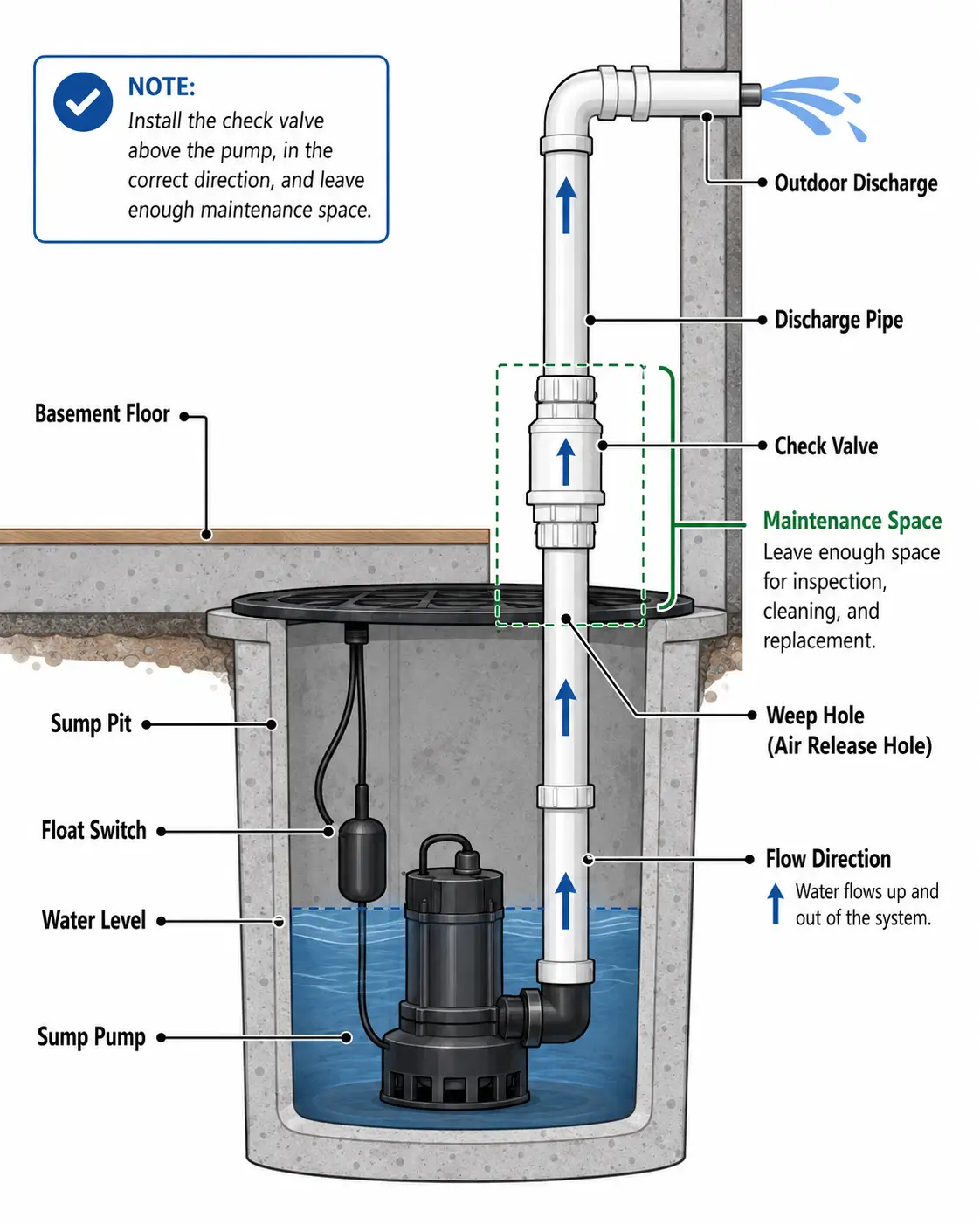
Do you know the recommended installation locations for a sewage pump? A check valve should typically be installed approximately 8 inches above the pump discharge and between 12 inches above ground level. When installed within a sump basin, ensure there is sufficient space to install an air release orweep hole.
Never install the sewage pump check valve too high, as elevated placement allows water from the drainage pipe downstream to flow back into the sump pit after the pump stops. This causes rapid water level rise, triggering the float valve to restart the pump and induce short cycles, ultimately accelerating wear on the pump.
Of course, you should also consider the maintenance clearance required for the sewage pump check valve.
| Maintenance Scenario | Why do I need space? |
|---|---|
| Check whether the valve is leaking. | The connections at the valve body, rubber coupling, and clamp require inspection. |
| Clear debris from the valve disc. | The valve disc may become lodged with sediment or debris. |
| Replace the worn rubber joint. | Rubber couplings may age and crack after prolonged use. |
| Tighten or replace the clamp. | The stainless steel clamp may become loose or corroded. |
| Replace the entire check valve. | The valve body must be disassembled when cracking or valve disc failure occurs. |
| Identify the source of the water hammer noise. | It needs to be determined whether the issue lies with the valve, the pipeline, or the installation location. |
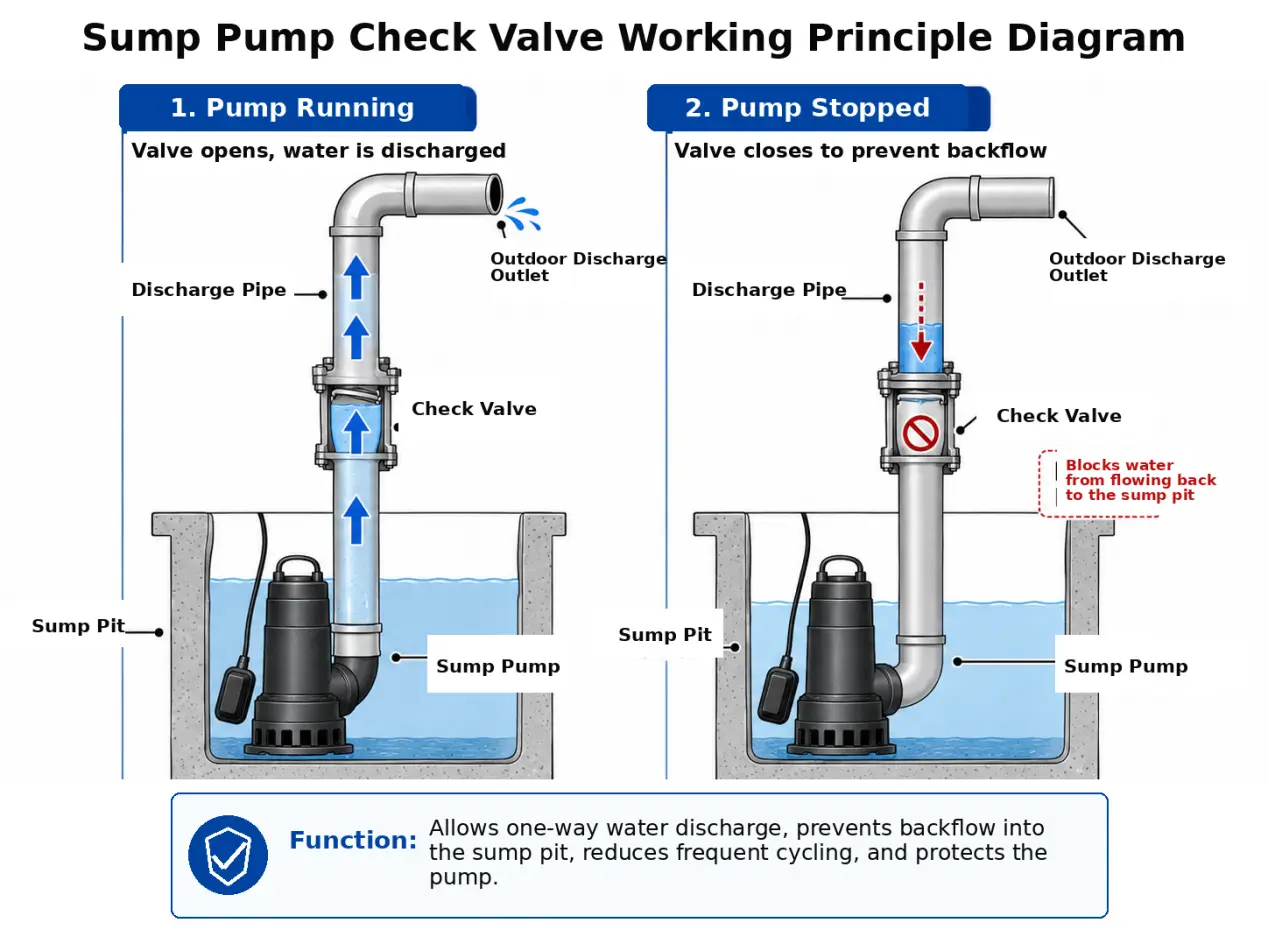
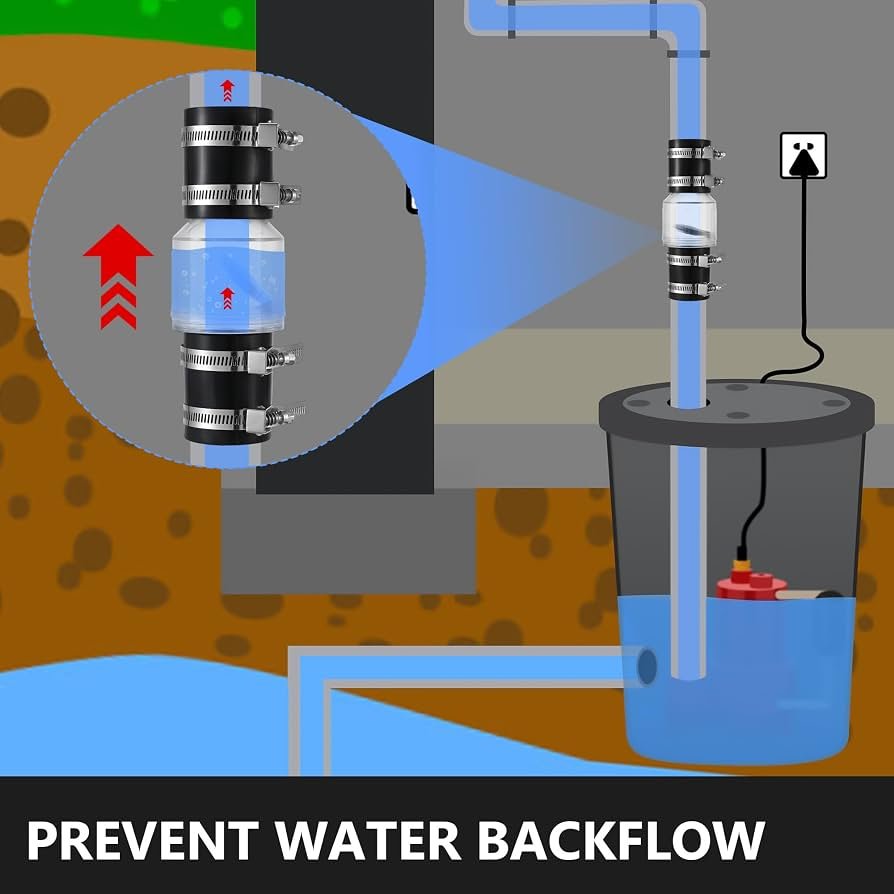
In your sewage pump drainage system, a check valve prevents water from flowing back into the collection pit after the pump stops. Failure to install a proper check valve for the sump pump may lead to reduced drainage efficiency, frequent pump startups, increased noise levels, and even heightened risk of basement flooding.
| Consequences of lacking a check valve | Specific Impact |
|---|---|
| The water flows back into the collection pit. | After the water pump stops, any remaining water in the drain pipe will flow back into the sump pit, causing the water level to rise again. |
| The water pump is started and stopped frequently. | Backflow will cause the float switch to trigger again, resulting in short cycling and increasing the pump's operating cycles. |
| The service life of the water pump has been shortened. | Frequent startup of the motor increases heat generation, wear, and mechanical stress; prolonged use may lead to premature damage. |
| The efficiency of drainage has decreased. | The water pump repeatedly draws from the same water source, resulting in decreased actual drainage efficiency. |
| Energy consumption has increased. | Frequent startup and repeated drainage operations may lead to unnecessary power consumption. |
| Noise increase | The backflow of water may produce pipeline impact sounds, flowing water noises, or vibration noises. |
| The risk of water accumulation in the basement has increased. | During heavy rainfall or significant groundwater inflow, backflow can consume the pumping capacity of water pumps, increasing the risk of water accumulation. |
| After-sales maintenance costs have increased. | For installation companies, distributors, or OEM customers, this can easily lead to complaints, repair requests, and replacement costs. |
Different types of sump pump check valves are suitable for various drainage systems, installation spaces, noise requirements, and procurement scenarios. So how should you make your choice?
If you frequently hear impact sounds such as “bang,” “clunk,” or “thud” after the sewage pump’s check valve stops operating, you should not opt for a standard check valve alone. Instead, consider silent models or spring-assisted closure types, as they are better suited for reducing water hammer noise.
When selecting a check valve for a sump pump, its dimensions must match both the sump pump’s discharge pipe and the pump outlet specifications. Incorrect dimensions can compromise drainage efficiency, installation sealing, noise levels, water hammer effects, and long-term maintenance. Do not purchase a new check valve based solely on the appearance of an existing one. The proper procedure requires verifying the following:
Common pipe sizes:
| Line Size | Common Application Scenarios | Selection Suggestions |
|---|---|---|
| 1-1/4 inch | Small sump pumps; outdated residential drainage systems | Suitable for systems with limited flow rate. Confirm compatibility with existing piping before purchase. |
| 1-1/2 inch | The most common basement sump pump system for residential buildings | It has a wide range of applications and represents the common dimension for discharge pipes of many household sump pumps. |
| 2 inch | High-flow sump pump, effluent pump, engineering drainage system | Suitable for larger displacements, but verify that the pump flow rate matches the pipeline design. |
| 3 inches or larger | Sewage pump or large drainage system | This typically does not fall under the category of a standard household sump pump and must be selected based on the specific operating conditions of the sewage system. |
When selecting a sump pump check valve, consider backflow prevention as well as long-term inspection, cleaning, disassembly, and replacement convenience.A check valve that is difficult to maintain will increase repair time and labor costs. Prioritize designs with easy disassembly, as different structural configurations vary in maintenance convenience.
When purchasing sump pump check valves, you shouldn’t focus solely on the unit price. You should also consider factors such as size range, sealing performance, and material durability.
Before purchasing, confirm common sizes are available to serve maintenance, replacement, residential drainage, and contractor markets while reducing incompatibility and missed sales opportunities.
Of course, you must also prioritize the sealing performance and anti-backflow capability of the sewage pump check valve—these are the core performance requirements for a sump pump check valve. During procurement, ensure to verify the following key aspects:
The material composition and durability of the check valve for sewage pumps are also critically important. The material directly affects the valve’s corrosion resistance, sealing stability, service life, aging resistance, installation reliability, as well as the post-sales complaint rate and long-term procurement costs.
Common Materials:
| Body Material | Characteristic | Suitable Scenarios |
|---|---|---|
| PVC | Corrosion-resistant, lightweight, and suitable for residential drainage systems | Household sump pump, quiet check valve |
| ABS | Lightweight and with good impact resistance, commonly used in drainage components | Maintenance market, replacement market |
| PP / Plastic | Low cost with excellent water resistance | Ordinary residential properties or products that are price-sensitive |
| Clear Plastic / Transparent Body | The water flow and valve action can be observed | DIY projects, maintenance inspections, and the high-end residential market |
| Cast Iron | High strength, making it more suitable for heavy-duty drainage applications | Sewage pump, effluent pump, high-flow system |
| Stainless Steel Components | Exhibits excellent corrosion resistance and is widely used in components such as springs and clamps | Moist environments; long-term use of the system |
The sewage pump check valve is a small yet critical component in basement drainage systems. By preventing backflow into the collection pit, it reduces frequent pump cycling, water hammer noise, energy waste, and premature pump wear.For reliable sewage pump check valves, share your size, valve type, packaging, and OEM needs, and we’ll recommend the right solution
—— We Will Provide You With Professional OEM Solutions.
Whether you require pump bearings, pump valves, mechanical seals, or other custom-engineered components, we support production based on your drawings as well as rapid prototyping.
Please complete the form on the right and upload your technical drawings or specifications. Our engineering team will review your requirements within 24 hours and provide a detailed quotation, application recommendations, and delivery schedule.
Copyright © 2025 Sakowit, All rights reserved.
WhatsApp us
 English
  Portuguese
  Russian
  Arabic
  Spanish