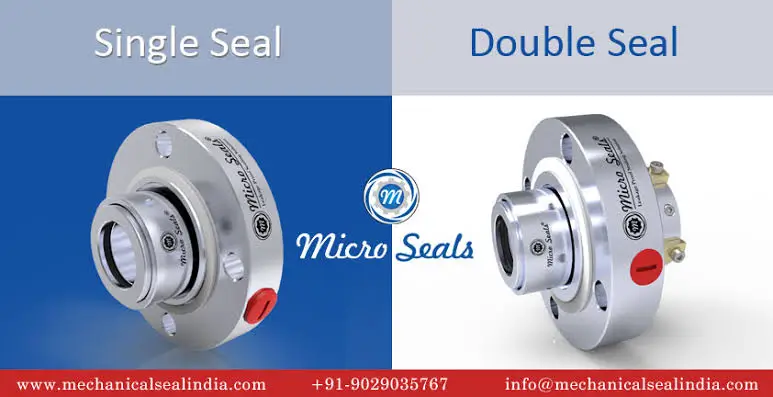

Do you know the main difference between dry gas seals and mechanical seals?Although both are used to protect rotating shafts from leakage, they work in different ways and are designed for different applications. Choosing the right seal based on actual operating conditions ensures reliable and long-lasting performance.
In this guide, we will compare dry gas seals and Mechanical Seal, and explain the common issues you may face during operation.
You may wonder: Is a dry gas seal a mechanical seal? From a technical view, a dry gas seal is a special type of mechanical seal.It has the same basic parts, including rotating rings, stationary rings, and flexible elements. It uses seal faces to prevent leakage.
However, it is different from common liquid-lubricated contact mechanical seals.Traditional mechanical seals rely on a liquid film for lubrication, and the seal faces usually contact each other.A dry gas seal uses a gas film to create non-contact operation. Therefore, the two types should not be considered the same.
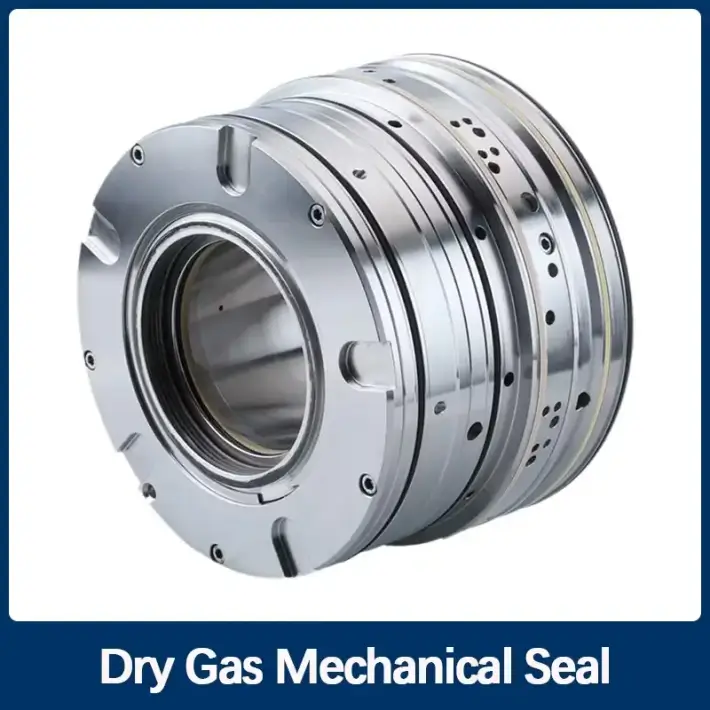
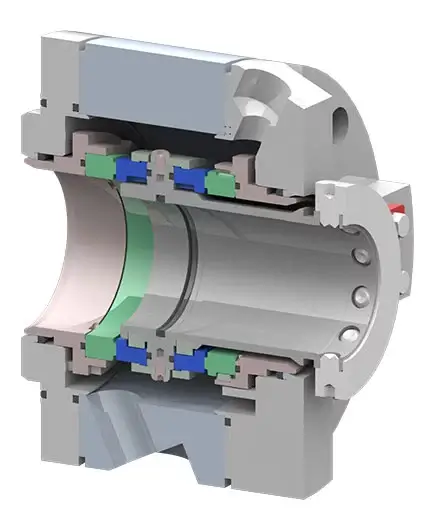
Do you know how a dry gas seal works? The basic principle is to use a gas film created by high-speed rotation to keep a small gap between the seal faces.When the shaft drives the rotating ring at high speed, the spiral grooves on the ring surface pull clean seal gas into the seal faces.
The gas forms a thin, high-pressure film between the rotating and stationary rings. This film creates a lifting force that keeps the two seal faces slightly separated.As a result, the seal faces do not directly touch or create friction during operation.The seal does not rely on liquid lubrication and has almost no face wear. It provides long-term stable operation, especially for high-speed equipment.
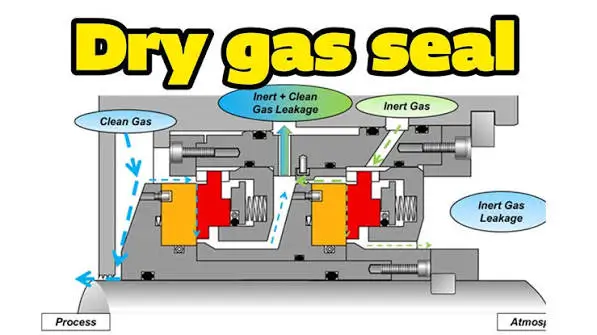
Do you know how a conventional wet mechanical seal works? It mainly uses a liquid film between two seal faces to reduce friction and control leakage.During operation, the spring and process pressure push the rotating and stationary rings together. A very thin liquid film forms between the faces.
This liquid film provides lubrication, removes heat, and helps prevent the process fluid from leaking along the shaft.The rotating ring turns with the shaft, while the stationary ring stays fixed. The spring also adjusts for changes caused by seal face wear.
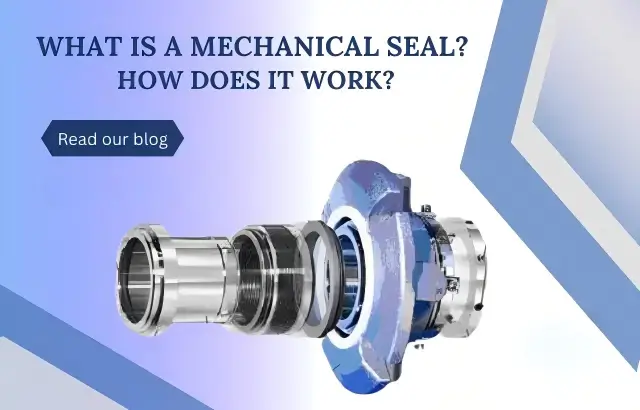
It is important to note that wet mechanical seals always have contact between the seal faces. Long-term operation causes wear and allows small amounts of leakage.
Do you know the difference between them? Dry gas seals and wet mechanical seals are not simply better or worse. They are designed for different operating conditions.The table below provides a clear comparison for your reference:
| Comparison Item | Dry Gas Seal | Wet Mechanical Seal |
|---|---|---|
| Working Principle | Uses a gas film to separate seal faces and achieve non-contact operation. | Uses a liquid film between seal faces for lubrication and sealing. |
| Seal Face Contact | Non-contact during normal operation. | Seal faces are in contact or near contact. |
| Lubrication Method | Clean seal gas. | Liquid from process fluid or external flush system. |
| Friction and Wear | Very low friction and minimal wear. | Higher friction and gradual face wear. |
| Leakage | Extremely low gas leakage when properly operated. | Allows small liquid leakage during operation. |
| Heat Generation | Low because there is almost no face contact. | Higher due to face contact and friction. |
| Operating Speed | Suitable for high-speed rotating equipment. | Suitable for a wide range of rotating equipment. |
| Maintenance Requirement | Requires clean gas supply and precise control. | Requires proper fluid conditions and regular inspection. |
| Initial Cost | Higher equipment and system cost. | Lower initial investment. |
| Typical Applications | Compressors, high-speed pumps, oil and gas equipment. | Pumps, mixers, reactors, water and chemical systems. |
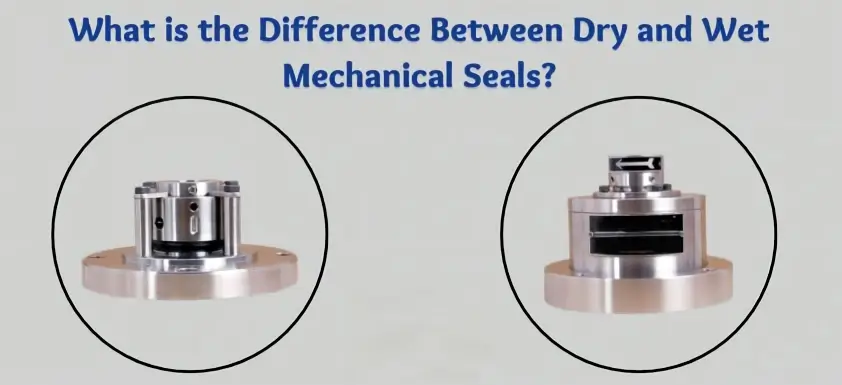
Wet mechanical seals use contact operation. The rotating and stationary faces press against each other and rely on a liquid film for lubrication and cooling.Dry gas seals use non-contact operation. Spiral grooves create a gas film that separates the seal faces with almost no friction.
Wet mechanical seals use the process fluid or barrier/buffer fluid to create a liquid film that protects the seal faces.Dry gas seals use clean seal gas as the lubrication medium and do not require liquid for face lubrication.
Wet mechanical seals have continuous face contact, which causes gradual wear. Regular inspection is needed to monitor seal condition.Dry gas seals have separated seal faces, resulting in very little wear and allowing longer continuous operation.
Wet mechanical seals allow small amounts of process fluid leakage, which is considered normal during operation.Dry gas seals use seal gas to prevent process fluid leakage, providing much lower leakage and better safety performance.
Wet mechanical seals have a simpler design and support system, making them more affordable for purchase, installation, and maintenance.Dry gas seals require cleaner gas, higher installation accuracy, and advanced control systems. They are more suitable for high-speed and high-pressure equipment.
You should know that in some operating conditions, traditional wet mechanical seals may not perform well. This is where dry gas seals can show their unique advantages.You should consider using a dry gas seal in the following situations:
However, it is important to understand that dry gas seals are not a universal solution.They require clean gas, accurate installation, and proper system design. Only with the right selection can their advantages be fully achieved.
In most standard industrial applications, wet mechanical seals are still a more practical, reliable, and cost-effective choice.For normal pumps with moderate speed and stable pressure, wet seals use the process fluid to lubricate the seal faces and provide reliable sealing performance.You can consider using a wet mechanical seal when the following conditions apply:
If you want to replace a wet mechanical seal with a dry gas seal, you need to check the following key points:
Please note that upgrading from a wet mechanical seal to a dry gas seal is not simply a direct seal replacement.A detailed inspection before the retrofit is essential to ensure safe and stable operation after the upgrade.
During seal selection, you often compare only the purchase price and ignore lifecycle cost and emissions performance.However, these two factors create the real difference between dry gas seals and wet mechanical seals.
| Comparison Item | Wet Mechanical Seal | Dry Gas Seal |
|---|---|---|
| Initial Purchase Cost | Simple design and support system, lower initial cost, and less financial pressure. | Requires seal unit, gas supply, filtration, and control systems, resulting in higher initial cost. |
| Operating Cost | Continuously consumes barrier fluid and flush fluid, creating ongoing operating expenses. | Uses almost no liquid fluid and only consumes a small amount of clean seal gas, reducing daily consumption. |
| Maintenance and Spare Parts Cost | Seal faces have contact friction, causing wear and requiring regular replacement of seal parts. | Seal faces run without contact, causing minimal wear and extending replacement intervals while reducing maintenance work. |
| Downtime Cost | Higher risk of seal failure, and unexpected shutdowns may cause significant production losses. | Stable operation and long service periods help reduce production losses caused by unexpected downtime. |
| Overall Lifecycle Cost | Lower short-term purchase cost, but maintenance, fluid consumption, and downtime costs increase over time. | Higher initial investment, but better overall lifecycle cost for long-term continuous operation. |
| Emissions and Leakage Performance | Allows normal small leakage. Hazardous fluids may cause liquid or gas emissions and material loss. | Seal gas creates a protective barrier, reducing process leakage to very low levels and improving safety and environmental performance. |
Therefore, seal selection should not focus only on the initial purchase price.You should also consider lifecycle cost, emissions, equipment service life, and fluid risk level.Only by balancing economy and safety can you choose the most suitable sealing solution for your application.
For buyers and engineers, understanding common seal failure modes in advance is the key to reducing costs and avoiding emergency repairs.If you use a dry gas seal or wet mechanical seal and experience the following conditions, you should ask maintenance professionals for inspection:
In short, you should focus on quality and suitability, while engineers focus on installation and operating conditions.By preventing these common failure modes early, seals can last longer, equipment can avoid downtime, and maintenance becomes easier.
Yes. A dry gas seal still has a very small amount of leakage during normal operation, but it is much lower than a traditional wet mechanical seal.A dry gas seal uses a thin gas film between the seal faces to control leakage. The goal is not zero leakage, but reducing process fluid leakage to a very low level.
When you have a stable seal gas system and good seal face condition, you can achieve excellent leakage control and long-term reliable operation.
A dry gas seal is not designed to handle large amounts of liquid carryover for long periods.A dry gas seal relies on a stable gas film to separate the seal faces. If liquid enters the seal area, it can disturb the gas film, increase friction, and damage the seal faces.
Small amounts of liquid may be acceptable in some designs, but you should avoid continuous liquid contamination.
A dry gas seal retrofit is usually more valuable for critical equipment that runs continuously and has high downtime costs.You can see better returns in applications such as:
For small equipment, low-cost equipment, or less demanding applications, the economic benefits may not be significant.
—— We Will Provide You With Professional OEM Solutions.
Whether you require pump bearings, pump valves, mechanical seals, or other custom-engineered components, we support production based on your drawings as well as rapid prototyping.
Please complete the form on the right and upload your technical drawings or specifications. Our engineering team will review your requirements within 24 hours and provide a detailed quotation, application recommendations, and delivery schedule.
Copyright © 2025 Sakowit, Todos os direitos reservados.
 Portuguese
  English
  Russian
  Arabic
  Spanish