
Introduction: Why Mechanical Seal Leakage Happens More Often Than You Think
Mechanical seal leakage is one of the most common problems in industrial pumps.
Even a small leak can lead to equipment downtime, safety risks, product loss, and higher maintenance costs.
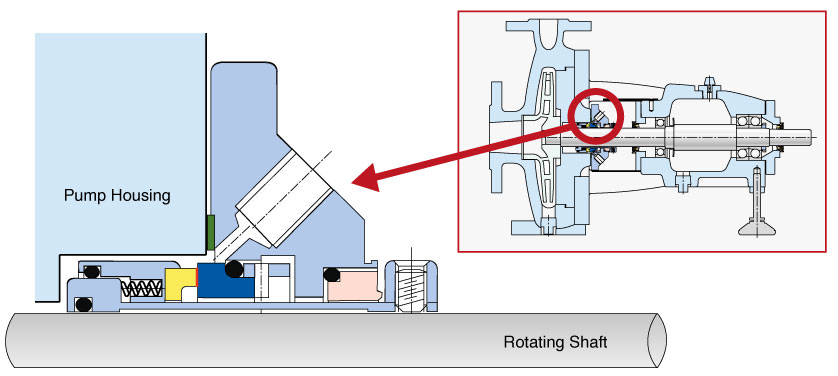
Many users assume leakage means “the seal quality is poor”, but in reality, most leaks are caused by operating conditions, installation issues, or system design problems.
This article explains:
-
The most common causes of mechanical seal leakage
-
How to diagnose leakage correctly
-
Practical solutions to stop leaks and extend seal life
Common Causes of Mechanical Seal Leakage
1. Improper Installation
Incorrect installation is the number one cause of early leakage.
Typical mistakes include:
-
Seal faces touched by hand or contaminated
-
Incorrect setting length or compression
-
Shaft runout or misalignment not corrected before installation
Result: Uneven seal face contact → leakage shortly after start-up.
2. Dry Running or Insufficient Lubrication
Mechanical seals rely on a thin fluid film for lubrication and cooling.
If the pump runs dry—even for a few seconds—the seal faces can overheat and crack.
Common scenarios:
-
Pump started without priming
-
Blocked flush line
-
Low process fluid level
3. Incorrect Seal Material Selection
Seal materials must match the process fluid, temperature, and pressure.
Examples:
-
Carbon faces wearing rapidly in abrasive fluids
-
Elastomers swelling due to chemical incompatibility
-
Ceramic faces cracking under thermal shock
4. Inadequate Seal Support or Flush System
In challenging applications, seals need external support systems.
Problems occur when:
-
Flush plans are missing or incorrectly selected
-
Barrier or buffer fluid pressure is unstable
-
Flush fluid temperature is too high
5. Excessive Pressure, Temperature, or Vibration
Operating outside design limits accelerates seal wear.
Typical issues:
-
Pressure spikes causing face separation
-
High temperature leading to elastomer hardening
-
Pump vibration damaging seal faces and springs
How to Diagnose Mechanical Seal Leakage
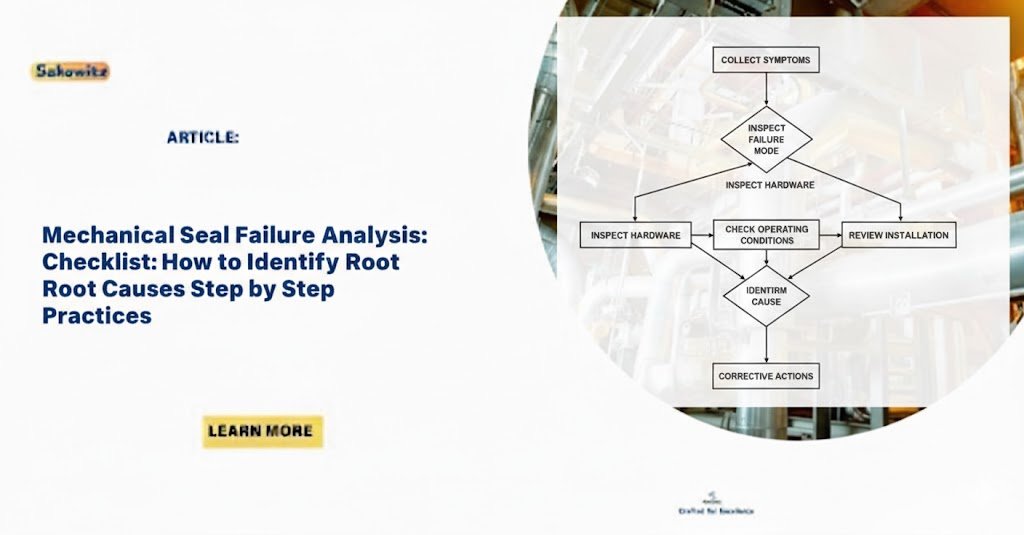
Before replacing a seal, identify the leak source.
Step 1: Identify the Leak Location
-
From seal faces → wear, dry running, or pressure issues
-
From gland gasket → installation or gasket damage
-
From shaft sleeve → corrosion or scoring
Step 2: Observe When Leakage Occurs
-
During start-up → installation or alignment issue
-
During operation → material or lubrication issue
-
After shutdown → thermal distortion or pressure reversal
Step 3: Check Operating Data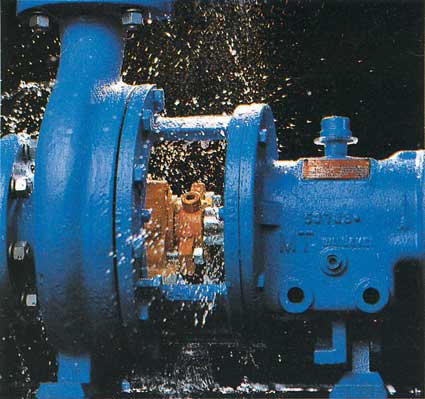
-
Pressure
-
Temperature
-
Speed
-
Flush system condition
This systematic approach avoids unnecessary seal replacements.
Practical Solutions to Stop Mechanical Seal Leakage
✔ Improve Installation Procedures
-
Use clean tools and gloves
-
Verify shaft runout and alignment
-
Follow manufacturer setting dimensions strictly
✔ Prevent Dry Running
-
Ensure pump priming
-
Install flow or pressure sensors if needed
-
Verify flush lines before start-up
✔ Select the Right Seal Design
-
Upgrade to double seals for hazardous or abrasive fluids
-
Use cartridge mechanical seals to reduce installation errors
✔ Optimize Seal Support Systems
-
Choose appropriate API flush plans
-
Maintain stable barrier or buffer pressure
-
Monitor flush fluid condition regularly
Conclusion: Leakage Is a System Problem, Not Just a Seal Problem
Mechanical seal leakage is rarely caused by a single factor.
It is usually the result of installation, operating conditions, material selection, and system design working together.
By understanding the real causes and applying the correct solutions, you can:
-
Reduce unplanned downtime
-
Extend seal service life
-
Improve pump reliability
👉 Need help selecting the right mechanical seal or troubleshooting leakage issues?
Contact our engineering team for application support and seal recommendations.
 English
  Portuguese
  Russian
  Arabic
  Spanish