
Mechanical seal leakage is one of the most common problems faced by industrial pump operators. While a small amount of vaporization or weepage may be normal during startup, continuous leakage is a clear warning sign that something is wrong.
Understanding the root cause of mechanical seal leakage is critical before replacing the seal or adjusting the pump. Otherwise, the same failure will repeat—sometimes even faster.
This article explains the most common leakage causes, how to diagnose them correctly, and how to prevent future failures.
1. Leakage Is a Symptom, Not the Problem
Many users treat leakage as a seal quality issue. In reality, over 70% of mechanical seal failures are caused by operating conditions or installation errors, not the seal itself.
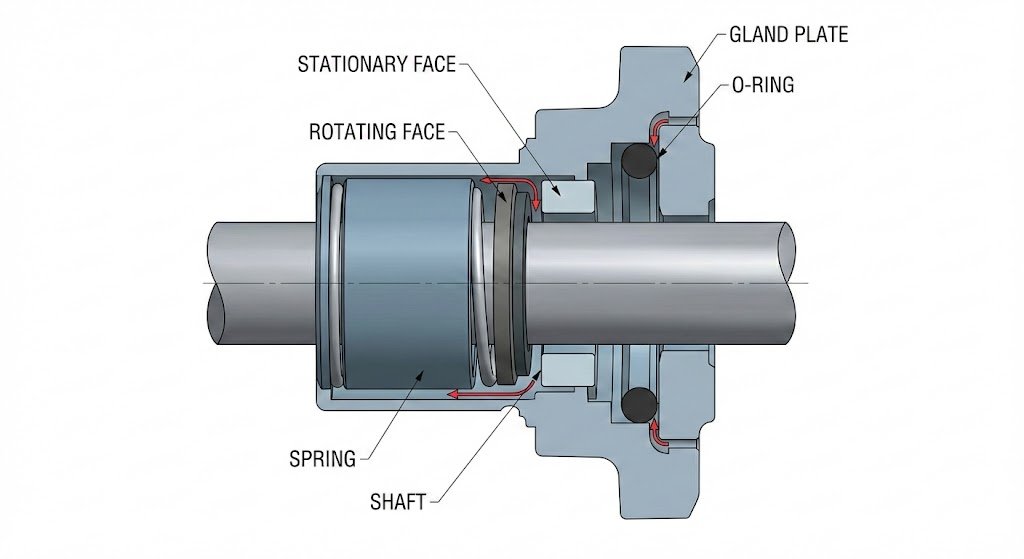
Before selecting a replacement, you should always ask:
-
When did the leakage start?
-
Did it happen immediately or after weeks/months?
-
Was there any change in operating conditions?
These answers determine the real cause.
2. Common Mechanical Seal Leakage Causes
2.1 Incorrect Installation or Misalignment
Improper installation remains the number one reason for early seal leakage.
Typical issues include:
-
Shaft runout exceeding tolerance
-
Improper axial setting
-
Uneven tightening of gland bolts
-
Contaminated seal faces during installation
Even a high-quality cartridge seal can fail if installed incorrectly.
2.2 Dry Running or Poor Lubrication
Mechanical seals rely on a thin fluid film between seal faces. If this film disappears—even for a few seconds—the seal faces can overheat and crack.
Common reasons:
-
Pump running dry during startup
-
Blocked flush line
-
Incorrect seal chamber design
Once thermal damage occurs, leakage is unavoidable.
2.3 Excessive Vibration
Vibration accelerates seal face wear and disturbs face alignment.
Possible sources:
-
Bearing wear
-
Cavitation
-
Shaft imbalance
-
Incorrect pump selection
If vibration is not controlled, replacing the seal alone will not solve the problem.
2.4 Incompatible Seal Materials
Seal material selection must match:
-
Process media
-
Temperatura
-
Presión
-
Chemical compatibility
For example:
-
FKM may harden under extreme heat
-
Carbon faces may wear rapidly in abrasive media
-
Elastomers may swell in certain solvents
Material mismatch often leads to gradual leakage rather than sudden failure.
3. How to Diagnose the Leakage Correctly
Before ordering a new mechanical seal, collect the following information:
✔ Leakage location (shaft side, gland, seal faces)
✔ Operating temperature and pressure
✔ Pump speed (RPM)
✔ Process fluid description
✔ Installation time and failure time
Photos or drawings are extremely helpful for accurate analysis.
4. Preventing Repeated Mechanical Seal Failures
To avoid repeated leakage problems:
-
Verify shaft and housing tolerances
-
Use proper installation tools and procedures
-
Confirm seal materials with the actual operating media
-
Consider upgrading to a cartridge mechanical seal for critical applications
-
Improve seal flushing and cooling systems
A systematic approach always costs less than repeated emergency replacements.
5. When to Consider a Customized Mechanical Seal Solution
Standard seals work well in many applications, but customized or application-specific seals are recommended when:
-
Temperature is extremely high or unstable
-
Media contains solids or crystals
-
Equipment operates under frequent start-stop conditions
-
Downtime cost is significant
In such cases, proper seal design matters more than seal price.
Reflexiones finales
Mechanical seal leakage is never accidental. It always has a cause.
Correct diagnosis saves time, money, and unnecessary downtime. If you are unsure about the leakage cause, providing photos, drawings, or operating data is the fastest way to find the right solution.
👉 https://sakowit.com/cartridge-mechanical-seal-failure-causes/


 Spanish
  English
  Portuguese
  Russian
  Arabic