
When selecting mechanical seals, many engineers and procurement professionals ask the same question: What exactly is the difference between cartridge mechanical seals and non-cartridge (component) mechanical seals? Which one should be chosen?
Simply put, these two types of mechanical seals operate on exactly the same sealing principle: both rely on a micron-level liquid film formed between the rotating and stationary rings to achieve a seal. However, in practical applications, their performance differs significantly—from installation difficulty and operational stability to maintenance costs and leakage risks, all are significantly influenced by their structural design.
A cartridge mechanical seal is a factory-preassembled, modular sealing system that requires virtually no adjustment during installation, effectively minimizing human error. In contrast, a non-cartridge mechanical seal features a split-type structure composed of multiple independent components. It requires on-site installation of each part and precise positioning, making it highly dependent on installation expertise.
This article will provide an in-depth comparison of these two mechanical seals from multiple perspectives, including structure, installation methods, performance, and practical application scenarios. This will help you quickly determine which solution to choose under different operating conditions, thereby reducing the risk of leakage and improving equipment operational reliability.
What is a cartridge mechanical seal and how does it work?
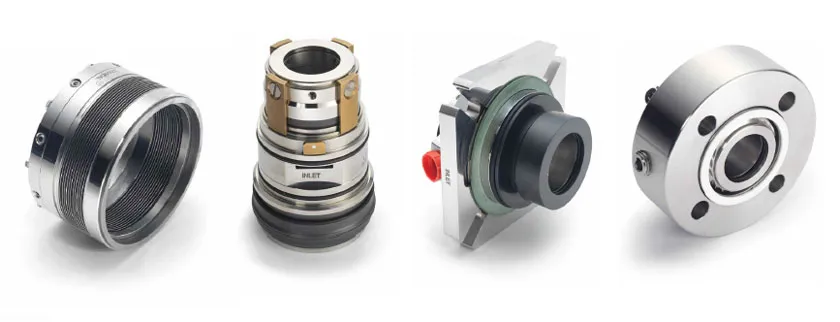
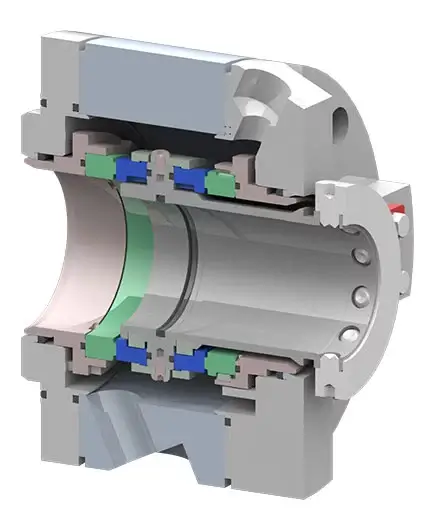
A cartridge mechanical seal is not actually a mechanical seal in the traditional sense, but rather a mechanical sealing system. Before it leaves the manufacturer’s facility, all key components—including the rotating ring, stationary ring, springs, sealing rings, shaft sleeve, and gland—are pre-assembled into a single integrated module. It is delivered as a complete unit, not as individual parts to be assembled, but as a “pre-assembled sealing assembly.”
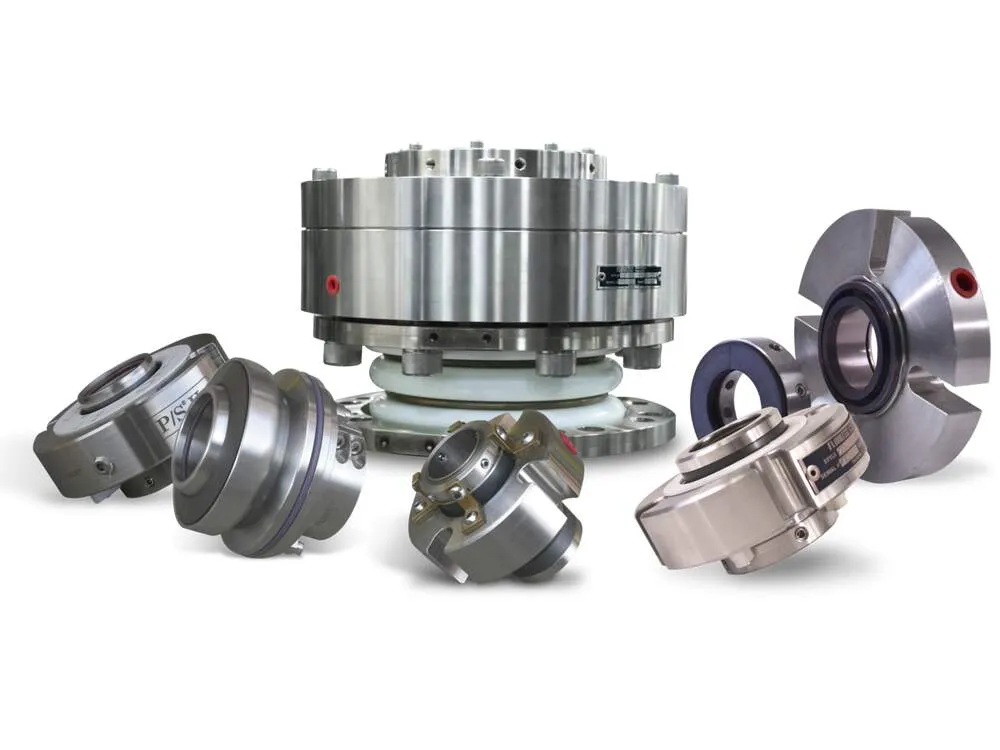
Cartridge Mechanical Seal Components
| Component | Function |
|---|---|
| Rotary Ring | Rotates with the shaft and forms one side of the sealing interface |
| Stationary Ring | Fixed in place and forms the mating sealing surface with the rotary ring |
| Caras de foca | The primary sealing interface where a thin fluid film prevents leakage |
| Spring System | Provides axial force to keep the seal faces in contact |
| O-rings / Elastomers | Provide secondary sealing between components to prevent leakage paths |
| Sleeve | Protects the shaft from wear, corrosion, and damage |
| Gland Plate | Secures the seal assembly to the equipment housing |
| Setting Device (Setting Clips) | Ensures correct installation length and positioning during installation |
how does Cartridge Mechanical Seal work?
Why does the cartridge mechanical seal provide such effective sealing?
Essentially, it achieves sealing through a pair of precisely matched sealing faces: the rotating ring rotates with the shaft, while the stationary ring remains fixed. Under the combined action of spring force and fluid pressure, the two are continuously pressed together, forming a tightly contacting sealing interface that prevents axial leakage of the fluid.
During operation, an extremely thin liquid film (on the micrometer scale) forms between the sealing surfaces. This liquid film serves a dual purpose: it acts as a lubricant to reduce friction and wear, while also maintaining dynamic equilibrium between the sealing surfaces, thereby keeping leakage to a minimum. Therefore, mechanical seals are not entirely “leak-free”; rather, they achieve highly efficient and stable sealing performance through this liquid film.
What is a non‑cartridge (component) mechanical seal?
A non-cartridge mechanical seal is a type of mechanical seal composed of multiple individual components that must be installed and precisely adjusted one by one on-site.
A component mechanical seal consists of separate parts such as the rotating ring, stationary ring, spring, and sealing ring. Upon receipt, the user must install each component onto the equipment and manually adjust their working positions. This type of mechanical seal is not a “pre-assembled unit,” but rather a “parts kit that requires self-assembly.”

The design of mechanical seals relies heavily on experienced engineers.
What is the difference between cartridge and non‑cartridge mechanical seals?
Cartridge seals and non-cartridge mechanical seals are two distinct types of mechanical seals. There is only one fundamental difference between them:
Whether they are pre-assembled + whether on-site adjustment is required
Cartridge seals are fully assembled at the factory and shipped as a complete unit. Non-cartridge (component) seals, on the other hand, require engineers to assemble them on-site and are more like a “parts kit.”
Difference 1: Structural Differences
Cartridge seals typically come with a sleeve.
In a cartridge seal, the sealing assembly is mounted on a sleeve. This sleeve acts as an intermediate carrier and serves several important functions:
- Function 1: Secures the entire sealing assembly into a single module
- Function 2: Protects the original equipment shaft
- Function 3: Facilitates factory-set installation dimensions
In contrast, a component seal is installed directly onto the equipment shaft or comes with only partial components; unlike a cartridge seal, it does not form a complete “sleeve-type assembly.”
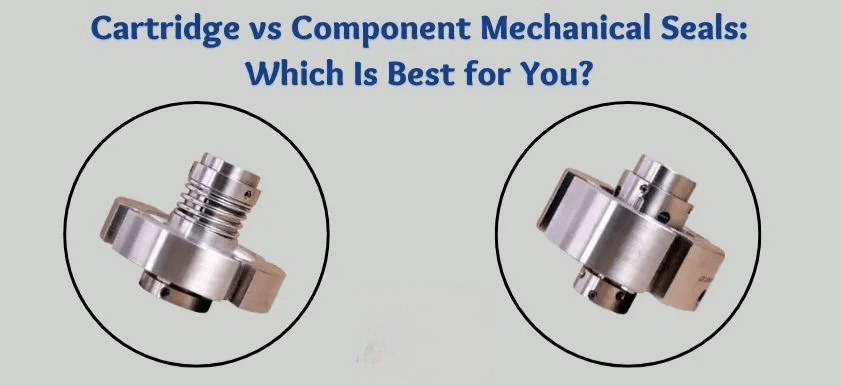
In addition to this difference, cartridge seals feature a common component called a positioning device. Its role is crucial:
It “locks” the mechanical seal into its operating position at the factory.
This way, during installation, engineers simply need to position the assembly correctly, secure it in place, and finally remove the positioning tab—at which point the seal automatically moves into the correct operating position.
What does this mean?
It means the mechanical seal manufacturer has already locked in the “dimensions, position, and compression” for you.
Component seals, on the other hand, do not have this “plug-and-play positioning mechanism.”
Difference 2: Installation Differences
Cartridge seals require minimal skill to install, while component seals require a high level of skill.
This is the fundamental difference between the two.
As long as the installation steps are followed correctly, cartridge seals can generally be installed in a stable condition. They require virtually no specific skills from the installer.
Component seals, on the other hand, are highly dependent on installation experience. An inexperienced installer may produce poor results even when using a high-quality component seal.
The installer must understand the following:
- Shaft dimensions
- Compression
- Fitting tolerances
- Installation orientation
- Face contact conditions
- The impact of shaft runout and concentricity on the equipment
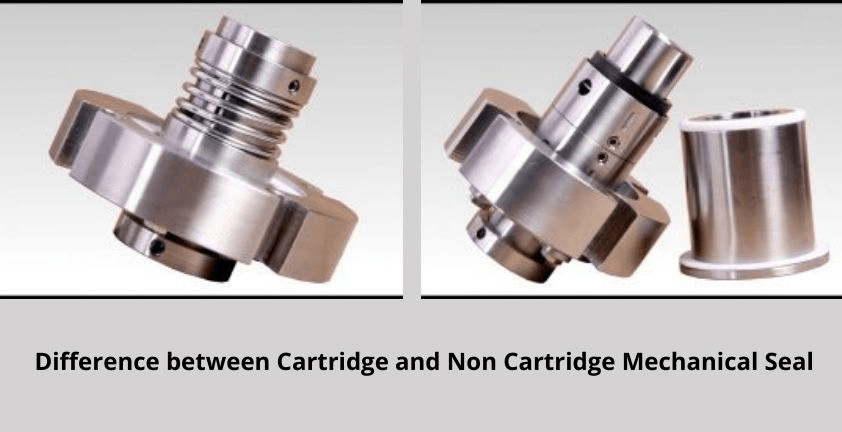
Quick Comparison Table: Cartridge vs Non-Cartridge Mechanical Seals
| Category | Cartridge Mechanical Seal | Non-Cartridge (Component) Mechanical Seal |
|---|---|---|
| Structure | Fully pre-assembled unit | Individual components assembled on-site |
| Tipo de diseño | Modular system | Discrete component system |
| Sleeve (Shaft Protection) | Included (integral sleeve) | Usually not included |
| Setting / Adjustment | Pre-set at factory | Must be manually set during installation |
| Installation Method | Install as a complete unit | Install piece by piece |
| Installation Time | Short (15–30 minutes) | Long (1–3 hours) |
| Skill Requirement | Low | High |
| Risk of Installation Error | Very low | High |
| Alignment Control | Factory-controlled | Depends on installer |
| Spring Compression | Pre-calibrated | Manually adjusted |
| Seal Face Positioning | Pre-defined | Must be set manually |
| Repeatability | High (consistent performance) | Low (varies by installation) |
| Reliability | High | Moderate to unstable |
| Maintenance Frequency | Low | Higher |
| Shaft Wear Protection | Yes (via sleeve) | Limited |
| Initial Cost | Higher | Lower |
| Total Cost of Ownership (TCO) | Lower (long-term) | Higher (due to failures/maintenance) |
| Leakage Risk | Minimal (if properly installed) | Higher (installation dependent) |
| Typical Applications | Chemical pumps, hazardous fluids, continuous operation | Water pumps, simple applications, cost-sensitive scenarios |
| Suitability for Critical Systems | Highly recommended | Not recommended |
| Standardization | High (industrial standard) | Low (experience-based) |
Cartridge Mechanical Seals: Main Advantages and Limitations
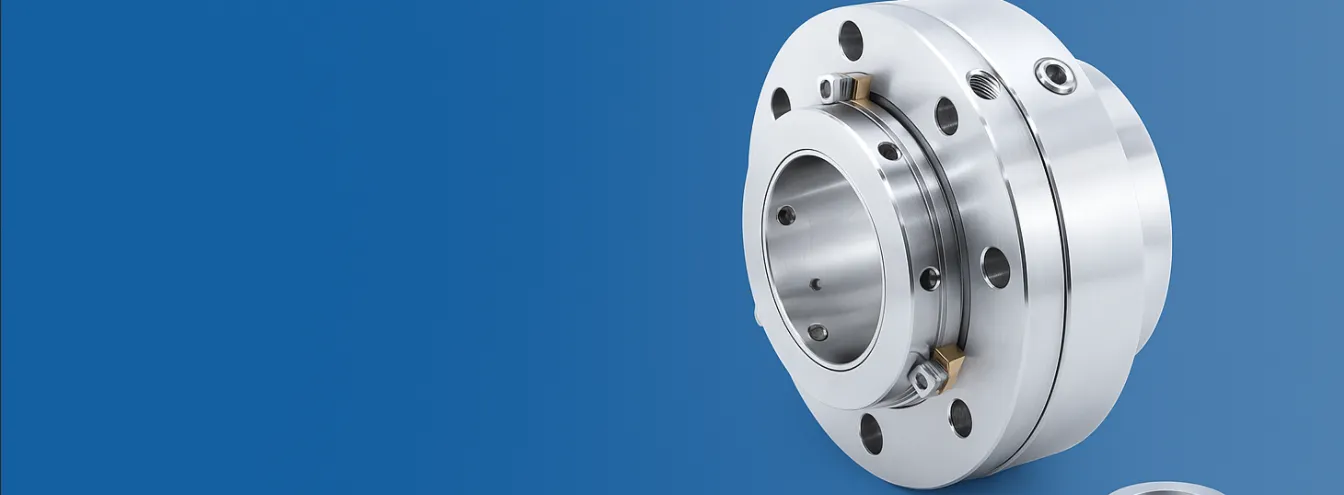
Advantages of Cartridge Mechanical Seals
- The biggest advantage of cartridge seals is their ease of installation. The manufacturer has already completed the spring compression setting, sealing face alignment, and concentricity control for you. All you need to do is perform a simple installation on-site.
- The core value of cartridge seals is their exceptional reliability. This is because they eliminate the primary source of risk: human installation errors. In industrial settings, 70%–80% of mechanical seal failures are caused by installation issues.
- Every cartridge seal is a “standardized product.” Therefore, it is highly suitable for industrial applications.
- Cartridge seals come with a built-in sleeve. This effectively prevents shaft wear and corrosion, thereby avoiding shaft failure.
- Cartridge seals are ideal for use in environments involving corrosive media, high temperatures, high pressures, and flammable or explosive liquids.
- Although the unit price of cartridge seals is higher, their total cost of ownership (TCO) is lower.
Limitations of Cartridge Mechanical Seals
- Prices are typically 30%–100% higher than those of component seals.
- They require more space and have larger dimensions, so they may not fit in older equipment.
- They offer less flexibility.
- Repair costs are higher (per instance). If damaged, the entire assembly generally needs to be replaced.
- They rely more heavily on the manufacturing quality of the mechanical seal manufacturer.
Non-Cartridge Mechanical Seals: Main Advantages and Limitations
Advantages of Non-Cartridge Mechanical Seals
- The most immediate advantage of non-cartridge mechanical seals is their low cost. This is because they do not have a sleeve, are pre-assembled, and feature a simple design.
- Simple construction. Fewer parts, a straightforward design, and no complex modules.
- Compact size. Ideal for small equipment, retrofitting older equipment, and space-constrained applications.
- High flexibility. The component seal allows for on-site adjustment of the installation position and spring compression.
This enables adaptation to different operating conditions. - Low maintenance costs. Localized repairs are possible.
- Suitable for simple operating conditions
Limitations of Non-Cartridge Mechanical Seals
- The biggest issue is the heavy reliance on installation. 70%–80% of seal failures are caused by installation errors.
- Poor stability. Due to human factors, each installation is different.
- High demands on installers.
- Not suitable for hazardous operating conditions.
- Does not protect the equipment shaft.
- Requires frequent maintenance.
When should I use a cartridge mechanical seal instead of a non‑cartridge seal?
When “0 tolerance for errors, leaks, or frequent downtime” is required, always prioritize cartridge seals.
Consider component seals only when operating conditions are simple, cost is a major concern, and experienced personnel are available.
Engineering Decision Table
| Decision Factor | Junta de cartucho | Component Seal |
|---|---|---|
| Complex Operating Conditions | ✅ | ❌ |
| Hazardous Media | ✅ | ❌ |
| No Leakage Allowed | ✅ | ❌ |
| Continuous Operation Required | ✅ | ❌ |
| Limited Installation Skill | ✅ | ❌ |
| Highly Cost-Sensitive | ❌ | ✅ |
| Limited Installation Space | ❌ | ✅ |
| Simple Operating Conditions | ❌ | ✅ |
5 Key Decision-Making Principles You Must Remember
✅ 1. “No room for error” → Always choose Cartridge
✅ 2. “Complex operating conditions” → Always choose Cartridge
✅ 3. “Unstable workforce” → Always choose Cartridge
✅ 4. “Extremely tight budget” → Only then consider Component
✅ 5. “Space constraints” → Must choose Component
PREGUNTAS FRECUENTES
Why are cartridge mechanical seals easier to install than non‑cartridge seals?
Cartridge mechanical seals are easier to install because they are pre-assembled and pre-set at the factory, eliminating the need for complex on-site adjustments and reducing installation errors.
Why are cartridge mechanical seals more expensive than non‑cartridge seals?
Key Reason: Cartridge mechanical seals are “pre-assembled, complete sealing systems,” whereas non-cartridge seals are merely “parts that require on-site assembly”; their manufacturing complexity and value are entirely different.
1️⃣ Factory Pre-assembly and Precision Adjustment
Cartridge seals are fully assembled at the factory:
- Spring compression adjustment
- Sealing face alignment
- Coaxiality control
👉 Reduces installation errors but increases manufacturing costs
2️⃣ More Integrated Components
Typically includes:
- Sleeve (to protect the shaft)
- Gland
- Locating device
- Complete sealing system
👉 Includes an entire additional assembly compared to a component seal
3️⃣ Higher Precision Manufacturing
Must ensure:
- Sealing surface precision
- Dynamic operational stability
- Batch consistency
👉 Requires stricter machining and quality control
4️⃣ Reliability Premium
Cartridge seals provide:
- Lower installation risk
- More stable operation
- Fewer leaks
👉 Essentially, you are paying for “stability and safety”
Do cartridge mechanical seals leak less than non‑cartridge seals?
That’s right; in practical applications, cartridge mechanical seals typically leak less than non-cartridge (component) seals.
Why Do They Leak Less?
- 1️⃣ Higher Installation Precision (Pre-set Accuracy)
- 2️⃣ Reduced Human Error
- 3️⃣ More Stable Face Loading
- 4️⃣ More Reliable Integrated Design
What does “pre‑assembled” mean for a cartridge mechanical seal?
“Pre-assembled” means that the entire mechanical seal has been fully assembled and precisely configured at the factory, eliminating the need for complex on-site installation or adjustment.
What does this mean specifically?
- 1️⃣ All critical components are fully assembled
- 2️⃣ Key parameters have been set at the factory
- 3️⃣ Includes a positioning device
- 4️⃣ Installation becomes a “direct fit”
Which type of mechanical seal is recommended by API 682 or similar standards?
API 682 strongly recommends the use of cartridge mechanical seals, particularly in critical and hazardous applications such as the petroleum and chemical industries.
Why Does API 682 Recommend Cartridge Seals?
- 1️⃣ Standardized Design. API 682 emphasizes standardized construction, uniform dimensions, and repeatable performance.
- 2️⃣ Reduced Installation Errors. One of the core objectives of API 682 is to minimize human installation errors, a requirement that cartridge seals effectively address.
- 3️⃣ Higher Reliability. In industries covered by API 682 (such as petroleum and refining), leaks and frequent downtime are unacceptable.
- 4️⃣ Suitable for double-face and complex sealing systems
API 682 does not completely prohibit component seals. However, in actual engineering practice, the vast majority of sealing solutions compliant with API 682 are of the cartridge type.
Are cartridge mechanical seals available for all pump brands and sizes?
Cartridge mechanical seals are not available as off-the-shelf standard models for all pump brands and sizes, but the vast majority of industrial pumps can be matched using standard or custom solutions.
In practical engineering applications, mainstream centrifugal pumps and chemical pumps all have corresponding cartridge mechanical seal solutions. For special sizes, older equipment, or non-standard configurations, custom adaptations can be achieved by adjusting the shaft sleeve, gland, and mounting dimensions. Only in cases involving extremely small equipment or severely limited installation space might cartridge seals be unsuitable, requiring the use of component seals instead.
For a small chemical process pump, is a cartridge mechanical seal overkill
For small chemical pumps, cartridge mechanical seals are generally not “overkill”; rather, they are the safer and more reliable choice in most cases.
Although component seals may seem like a viable option for small equipment from a size and cost perspective, whenever chemical media—such as corrosive, toxic, or volatile liquids—are involved, seal stability and the risk of leakage take precedence over cost. Because cartridge seals are pre-assembled and pre-set, they significantly reduce installation errors and enhance operational reliability, making them particularly suitable for applications requiring long-term stable operation or where leakage is not permitted. Component seals offer better cost-effectiveness only under very simple operating conditions (such as clean water or low pressure) and when cost sensitivity is extremely high.
 Spanish
  English
  Portuguese
  Russian
  Arabic