
Cartridge mechanical seals are pre-assembled sealing units used in pumps and rotating equipment to simplify installation and reduce setting errors. The main types include single cartridge seals, double cartridge seals, tandem seals, split cartridge seals, balanced seals, metal bellows seals, and API 682 cartridge seals. Each type is designed for different operating conditions, such as clean water, corrosive chemicals, high temperature, hazardous fluids, or large industrial pumps.
What Is a Cartridge Mechanical Seal?
A cartridge mechanical seal is a pre-assembled mechanical seal assembly. It has already been assembled and adjusted by the manufacturer, so users can install it immediately upon receipt.
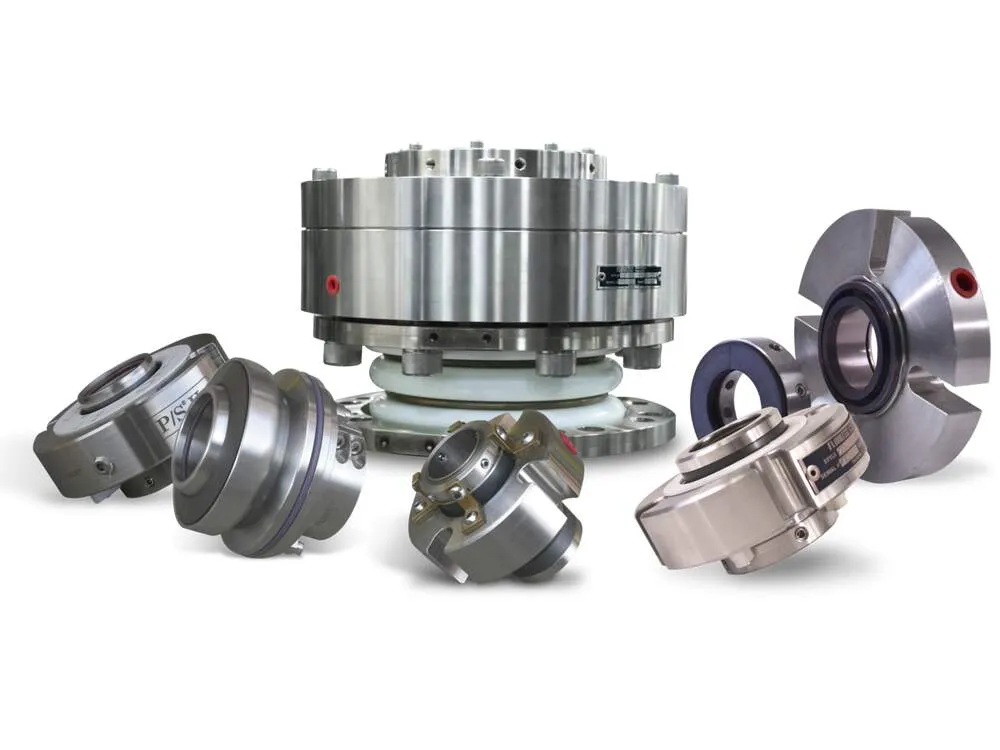
A mechanical seal is essentially a critical component designed to prevent liquids or gases from leaking from rotating equipment, such as pumps. It creates a sealing surface by bringing the rotating ring and stationary ring into contact, thereby ensuring a leak-free seal even during rotation.
Due to the irreplaceable advantages of cartridge seals, their use is increasingly recommended in the industry.
Main Types of Cartridge Mechanical Seals
Cartridge mechanical seals are primarily classified into four main types based on their “seal configuration” and “operating principle”: single-face, double-face, balanced, and unbalanced.
Once you understand these four categories, you’ll have mastered 80% of the basics of selecting cartridge mechanical seals.
Classified by “Number of Sealing Faces”
Type 1 : Single Cartridge Seal
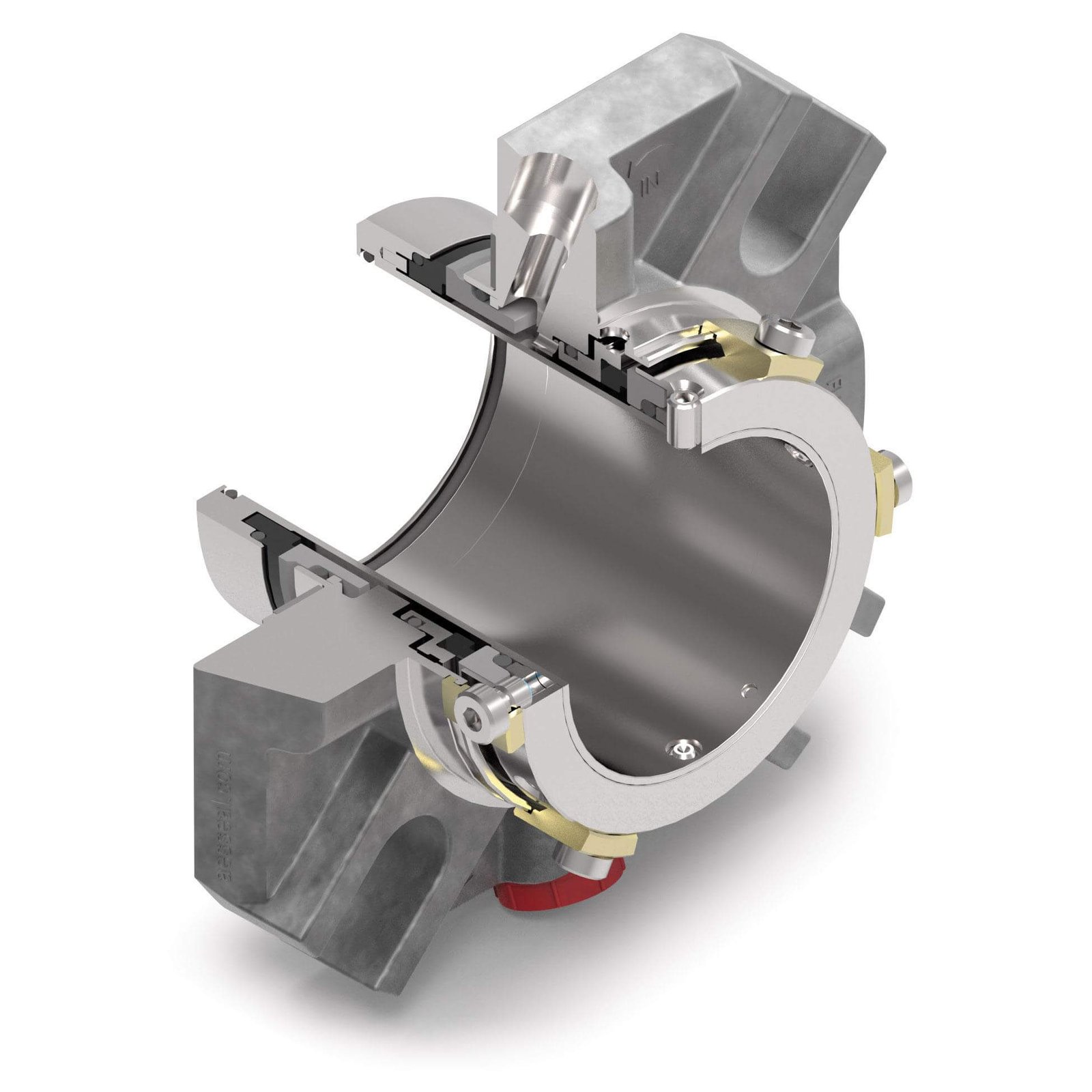
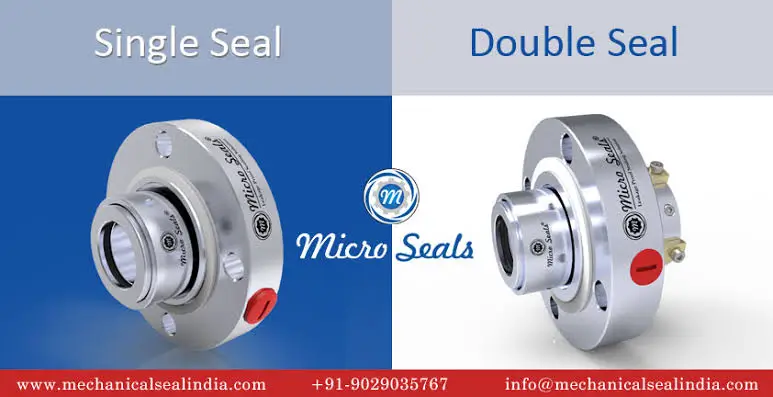
A single cartridge seal has only one pair of sealing surfaces (moving ring and stationary ring). It acts like a door blocking the fluid, with the fluid inside the pump and air outside, separated only by a single seal.
The main features of a single cartridge seal are its simple structure and low cost. It is primarily used in water pumps and standard oil pumps (handling non-hazardous fluids).
Type 2 : Double Cartridge Seal
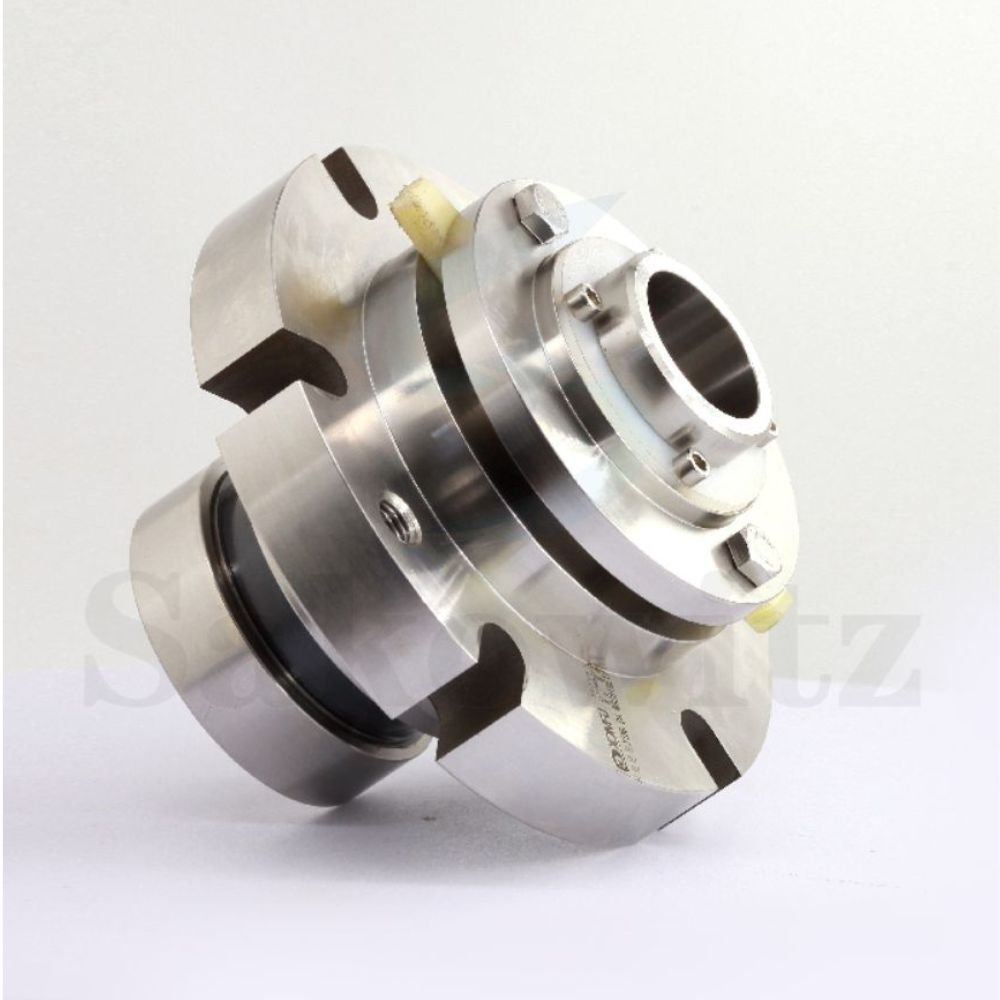
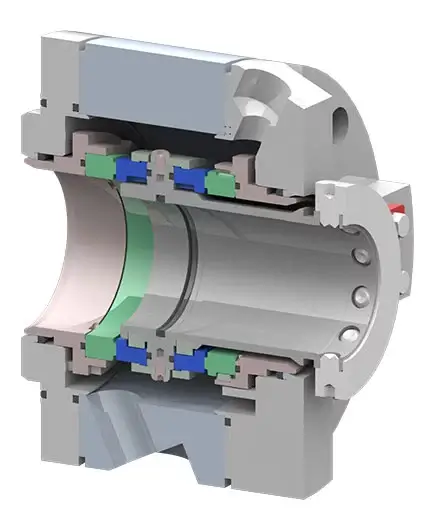
A double cartridge seal features two sets of sealing surfaces (two pairs of rotating and stationary rings). Unlike a single cartridge seal, it functions like two doors with a layer of barrier fluid in between.
Double cartridge seals are characterized by exceptional sealing performance and very high safety. However, they are relatively more expensive. They are primarily used in industries involving toxic media, flammable and explosive substances, and high-pollution risks (such as the chemical and pharmaceutical industries).
Classified by “pressure resistance”
Type 3 : Balanced Cartridge Seal
The sealing surface of an unbalanced cartridge seal bears the full force of the fluid pressure directly. What happens as a result?
The sealing surfaces are pressed tightly together
- Friction is high
- Heat is easily generated
- It is prone to failure under high pressure
Although the unbalanced cartridge seal has limited pressure-bearing capacity, it still offers many advantages. For example, it features a simple design and low cost. Therefore, the unbalanced cartridge seal is suitable for use in low-pressure systems and standard industrial pumps.
Type 4 : Unbalanced Cartridge Seal
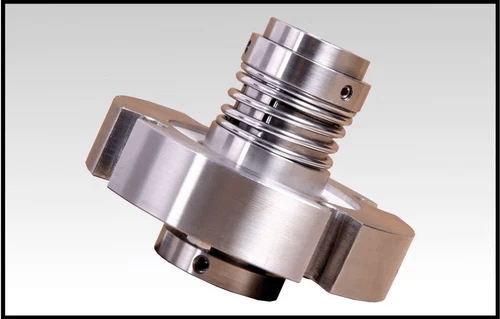
The engineers made some structural modifications to the balanced cartridge seal so that the pressure acts on only a portion of the sealing surface. How was this achieved? Primarily by altering two factors:
- Seal diameter
- Pressure-bearing area
This allows part of the pressure to bypass the “sealing surface.”
As a result, the balanced cartridge seal offers higher pressure resistance, lower friction, and a longer service life. This is why it is commonly used in high-pressure pumps, high-speed equipment, and high-temperature applications.
Single vs Double Cartridge Mechanical Seals
| Aspect | Single Cartridge Seal | Double Cartridge Seal |
|---|---|---|
| Seal Structure | One sealing face (1 set of faces) | Two sealing faces (2 sets of faces) |
| Structure Layout | Fluid → Seal → Atmosphere | Fluid → Seal 1 → Barrier Fluid → Seal 2 → Atmosphere |
| Barrier Fluid | ❌ Not required | ✅ Required |
| Leakage | Allows slight leakage | Near-zero leakage |
| Safety Level | Medium | High |
| Failure Result | Direct leakage to atmosphere | Secondary seal prevents direct leakage |
| Suitable Media | Water, oil, non-hazardous fluids | Toxic, flammable, or hazardous fluids |
| Typical Industries | Water treatment, general industry | Chemical, pharmaceutical, oil & gas |
| Cost | Low | High |
| Installation | Easy (pre-assembled cartridge) | More complex (with support system) |
| Maintenance | Simple | More complex (barrier system required) |
| Service Life | Moderate | More stable and longer |
| Auxiliary System | ❌ Not required | ✅ Required (e.g., API Plans) |
How do you choose?
Before making a choice, you need to ask yourself one question: “Is this liquid hazardous?”
- If it is not hazardous, a single-cartridge seal is sufficient.
- If it is hazardous,for example, if it is toxic, flammable, or highly corrosive—you must use a double-cartridge seal.
How to Choose the Right Cartridge Mechanical Seal Type?
When selecting a cartridge mechanical seal, there are essentially only 3 factors to consider: the medium, the pressure, and the operating conditions.
Factor 1 : Consider the medium (most important)
The most important thing is to examine the substance. Do you need to determine if this liquid is hazardous?
| Condition | Recommendation |
|---|---|
| Non-hazardous (water, oil) | 👉 Single Seal |
| Hazardous (toxic / flammable / corrosive) | 👉 Double Seal |
Remember this: “Could it leak?” That’s what determines whether you use Single or Double.
Factor 2 : Pressure
| Pressure Range | Recommendation |
|---|---|
| Low pressure (< 10 bar) | 👉 Unbalanced |
| High pressure (> 10 bar) | 👉 Balanced |
Remember this: “How much stress do you have?” determines whether you need a balanced approach.
Factor 3 : Operating Condition
| Condition | Recommendation |
|---|---|
| Clean fluid | 👉 Internal |
| Corrosive / Crystallizing / Slurry | 👉 External / Special Design |
NOTE: The actual selection process does not involve choosing a single type, but rather a combination of options.
- Scenario 1: Water pump, ambient temperature, low pressure. Select Single + Unbalanced + Internal.
- Scenario 2: Chemical pump (toxic liquids), medium to high pressure. Select Double + Balanced + Internal.
- Scenario 3: Crystallizable liquids, corrosive. Select Double + Balanced + External.
Common Mistakes When Selecting Cartridge Mechanical Seals
Mechanical seals are not simply a matter of “buying one and installing it”; rather, they must be “matched to the operating conditions.” Based on feedback from our customers, the most common issues encountered at project sites include the following:
- Mistake 1: Selecting a model based solely on price
- Mistake 2: Ignoring the hazards of the medium (using a single-seal when a double-seal is required)
- Mistake 3: Ignoring pressure (using an unbalanced seal when a balanced seal is required)
- Mistake 4: Ignoring the characteristics of the medium (crystallization, particulates, corrosion)
- Mistake 5: Ignoring auxiliary systems (especially for double seals)
- Mistake 6: Incorrect installation (even the right selection will fail)
| Mistake | Result | Correct Action |
|---|---|---|
| Choose by price only | Leakage / failure | Select by application first |
| Ignore media hazard | Safety risk | Use Double Seal |
| Ignore pressure | Overheating / damage | Use Balanced Seal |
| Ignore fluid condition | Clogging / wear | Use proper design/material |
| No support system (Double) | Dry running / failure | Use API Plan system |
| Wrong installation | Immediate failure | Follow installation standard |
Real-Life Case Study: Why Do Seals “Burn Out”? (On-Site Troubleshooting)
Seal “burnout” = Sealing surfaces not properly lubricated → Dry friction → High temperature → Failure
There is only one fundamental cause for a mechanical seal to “burn out”: the loss of lubrication at the sealing faces, resulting in dry friction that causes rapid temperature rise and subsequent damage. In actual field applications, common contributing factors include:
- Dry running due to failure to prime the pump during startup
- Excessive stress on the sealing faces caused by using an unbalanced seal in high-pressure conditions
- Wear or blockage caused by media containing particles or prone to crystallization, without a flushing system in place
- Failure to install a protective fluid system for double-face seals, or loss of such a system
- Improper installation resulting in uneven force distribution.
All of these issues ultimately lead to the same outcome—overheating, wear, or even burning of the sealing faces. Therefore, proper selection (Single/Double, Balanced), ensuring adequate lubrication, configuring necessary auxiliary systems, and performing standard installation are key to preventing seal failure.
Information Needed Before Ordering a Cartridge Mechanical Seal
When ordering mechanical seals, you need to provide the manufacturer with details about your equipment and operating conditions. The more complete the information you provide, the better the mechanical seals supplied by the manufacturer will meet your requirements.
6 Essential Pieces of Information:
- Equipment Information (Pump/Equipment Specifications)
- Fluid Information (Type of Liquid Being Pumped)
- Temperature
- Pressure
- Leakage Tolerance (Critical Decision Point)
- Site Conditions (Often Overlooked but Critical)
| Category | Required Information | Example |
|---|---|---|
| Equipment | Pump type / model | Centrifugal pump |
| Shaft | Shaft diameter | 50 mm |
| Speed | RPM | 2900 rpm |
| Medium | Fluid type | Water / Acid |
| Medium Condition | Corrosive / particles | Yes / No |
| Temperature | Operating temperature | 80°C |
| Pressure | Operating pressure | 8 bar |
| Leakage Requirement | Allowed or not | Not allowed |
| Working Condition | Vibration / dry run risk | No |
Technical specification: “We are a centrifugal pump with a shaft diameter of 50 mm, operating at 2,900 rpm, designed to handle corrosive liquids at 80°C and a pressure of 8 bar, with zero leakage permitted.”
FAQ About Cartridge Mechanical Seal Types
Which type of seal should be selected for high-pressure applications?
In high-pressure applications, balanced mechanical seals must be the first choice.
Under high pressure (e.g., >10 bar), the fluid pressure forces the sealing faces together very tightly. This results in:
- A sharp increase in friction
- A rapid rise in temperature
- Rapid burnout of the sealing faces
Balanced mechanical seals, however, are designed so that the sealing faces bear only a portion of the pressure.
Which type of seal is suitable for toxic or hazardous media?
For toxic or hazardous media, the Double Cartridge Mechanical Seal should be the preferred choice.
The Single Cartridge Mechanical Seal provides only a “single line of defense,” whereas the Double Cartridge Mechanical Seal offers “two lines of defense plus a protective layer.” Even if the first seal fails, the second seal remains intact, preventing direct leakage to the outside environment.
Which type of seal is suitable for media containing particles or slurry?
For media containing particles or slurry, the preferred choice is a mechanical seal with a Double + Balanced configuration (equipped with a flushing/protection system). When particles enter the sealing faces, they act like sandpaper, scratching the surfaces and causing unevenness, leakage, and overheating, which can ultimately lead to the seals “burning out.”
In contrast, a Double Cartridge Mechanical Seal keeps particles isolated from the sealing faces, preventing direct contact between the faces and the slurry. A Balanced Seal reduces pressure on the sealing faces, thereby minimizing friction and wear.
Selecting the wrong seal for slurry applications will cause it to fail faster than if no seal were used at all.
Why do seals fail even when the correct type is selected?
Choosing the right type of seal does not guarantee that it will never fail. In most cases of mechanical seal failure, the problem lies not in the “type” but in the “operating conditions.”
A seal is not a “static seal” but a “dynamic friction system.” It must simultaneously meet the following conditions:
- Proper lubrication
- Appropriate pressure
- Controllable temperature
- Good alignment
Failure can occur if even one of these conditions is missing.
Is it possible to convert a single-sided design to a double-sided one without modifying the equipment?
In most cases, it is not possible to directly replace a Single Seal with a Double Seal without modifying the equipment.
Why can’t they be replaced directly? A Double Seal is not simply “one more seal”; it has two key differences compared to a Single Seal:
- A more complex structural layout
- Required auxiliary systems (protective fluid systems)
These differences in structure mean that the seal chamber space in many existing devices is insufficient.
Which type of mechanical seal has a longer service life?
No seal is “inherently more durable”; its service life depends on whether it is used under the “right operating conditions.” However, when used correctly, there is a general rule:
Double (double-face) + Balanced (balanced-type) seals have a longer service life.
 English
  Portuguese
  Russian
  Arabic
  Spanish