
What Is a Cartridge Mechanical Seal?
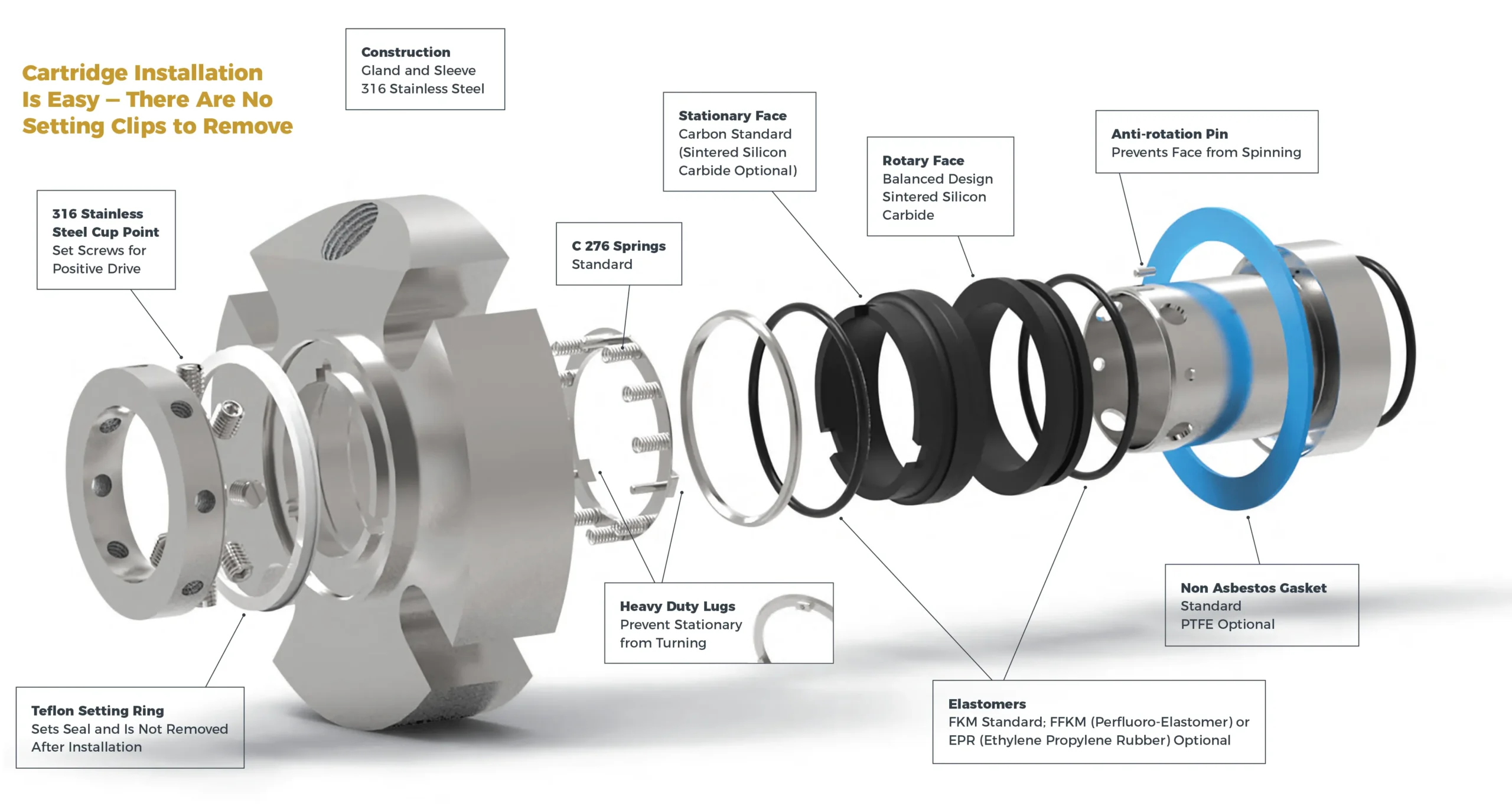
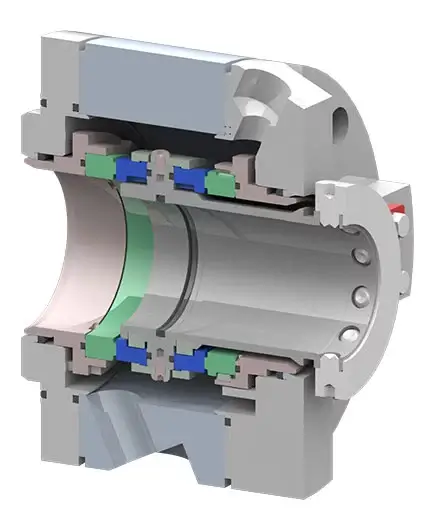
A cartridge mechanical seal is a sealing device used to prevent leakage in rotating equipment such as pumps, mixers, and compressors.
Its most notable feature is that:
- All sealing components are pre-assembled and pre-adjusted as a complete unit at the factory.
- During installation, users do not need to adjust the spring compression, sealing face position, or installation dimensions on-site.
Why do machines need mechanical seals?
Any equipment with a “rotating shaft” faces a common challenge: while the shaft rotates, the fluid must not leak.
These devices may handle acids, alkalis, high-temperature liquids, flammable substances, or toxic materials. A leak could have serious consequences, such as:
- Environmental contamination
- Equipment damage
- Hazards to personnel safety
- Production downtime
Therefore, a sealing mechanism is essential.
Why Chemical Industry Requires Proper Cartridge Seal Selection?
In the chemical industry, mechanical seals are not merely ordinary components, but rather “critical safety components.”
In the chemical industry, selecting the wrong cartridge seal can have extremely serious consequences. At best, this may result in fluid leaks, equipment downtime, or frequent maintenance. At worst, it can lead to major accidents such as chemical leaks, fires, explosions, environmental pollution, personal injury, or the shutdown of an entire production line.
Therefore, the chemical industry places extremely high demands on the selection of mechanical seals.
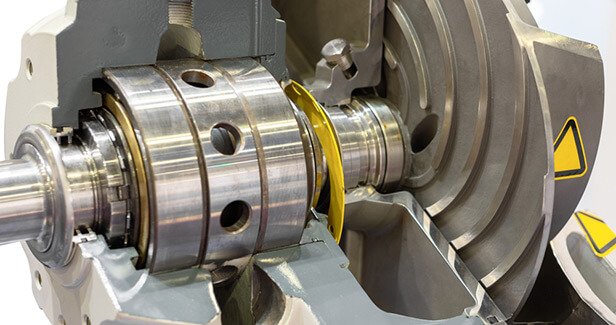
Operating conditions in the chemical industry are extremely complex. The fluids transported by chemical pumps are far more hazardous than those handled by ordinary water pumps. These may include:
| Operating Condition | Potential Risk |
|---|---|
| Strong Acids | Severe corrosion to metal components |
| Strong Alkalis | Damage to elastomers and sealing materials |
| High-Temperature Fluids | Thermal deformation of seal faces |
| Flammable Solvents | Fire and explosion hazards |
| Toxic Chemicals | Health and safety risks to personnel |
| High-Pressure Media | Leakage and seal failure under pressure |
| Crystallizing Fluids | Seal blockage and dry running |
| Abrasive Slurries | Rapid wear of seal faces |
| Volatile Liquids | Vaporization and lubrication loss |
Therefore, the chemical industry cannot choose seals at random.
Why are cartridge seals becoming increasingly important in the chemical industry?
Traditional mechanical seals rely too heavily on installation experience.
However, downtime costs in the chemical industry are extremely high, and there is very little tolerance for liquid leaks. Therefore, even a single installation error can result in significant losses. To avoid this situation, an increasing number of chemical plants are turning to cartridge mechanical seals.
Cartridge mechanical seals are pre-assembled, making them very easy to use. They have a lower error rate during installation and offer greater sealing stability, making them ideal for use in complex operating conditions and with hazardous media.
Key Factors to Consider When Choosing Cartridge Mechanical Seals
A common mistake users make when selecting cartridge mechanical seals is choosing a seal based solely on size. In reality, mechanical seals are never products that should be purchased “by model number.” Instead, they must be engineered and selected based on actual operating conditions.
In the chemical, petroleum, and pharmaceutical industries, as well as in high-temperature and high-pressure systems, incorrect selection can lead to serious consequences. Therefore, it is crucial to have a clear understanding of the factors involved in mechanical seal selection.
Below are the most critical factors to consider when selecting a cartridge mechanical seal.
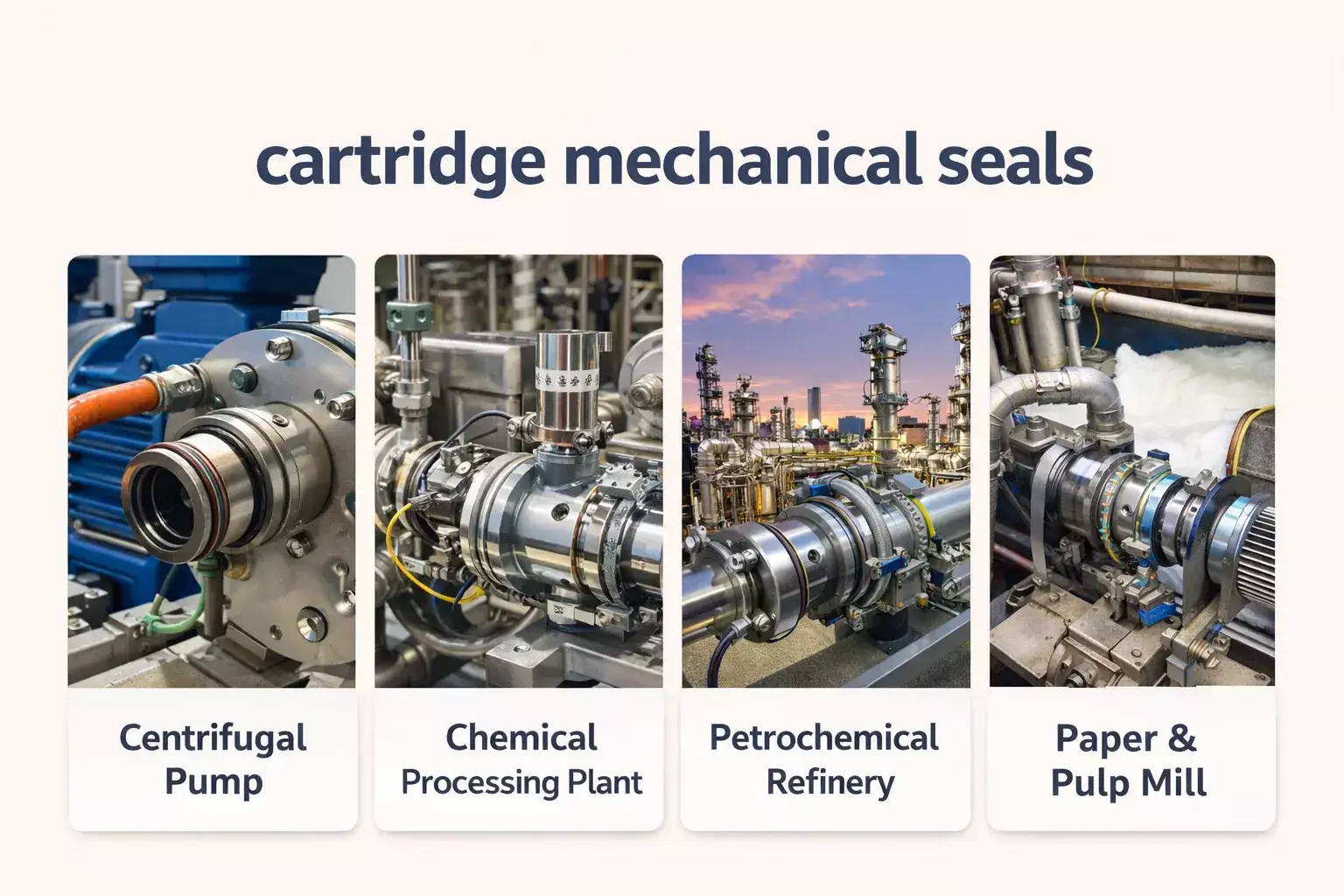
Key Factors 1 :Process Fluid Compatibility
This is the first step in selecting a mechanical seal.
Different chemical media have vastly different corrosive effects on sealing materials. Many seal failures are not caused by mechanical issues, but rather by incompatibility between the material and the medium.
You need to verify the following medium parameters:
- Chemical Name: Different chemicals have vastly different corrosive effects on metals and rubber.
- Concentration: The corrosiveness of the same chemical varies significantly depending on its concentration.
- pH Value: Extreme pH levels can rapidly damage components.
- Corrosiveness: You need to determine whether the medium is corrosive.
- Crystallization: Many chemical media crystallize when exposed to temperature changes.
Key Factors 2 :Operating Pressure and Temperature
Operating pressure and temperature are the key factors determining the design of a seal.
The higher the operating pressure, the greater the load on the seal faces. It is recommended to use a balanced seal for high-pressure applications. High-pressure chemical pumps are very common.
In addition, operating temperature is one of the greatest challenges for mechanical seals. High temperatures can lead to leakage, seal face damage, dry running, and reduced sealing force. Therefore, high-temperature conditions require the use of high-temperature materials.
Key Factors 3 :Shaft Speed and Pump Design
This is a factor that many people tend to overlook. Shaft speed has a significant impact on mechanical seals.
- Shaft Speed: Higher shaft speeds increase frictional heat and vibration, which can accelerate wear on the sealing faces.
- قطر العمود: The shaft diameter determines the basic dimensions of the mechanical seal. However, selection should not be based solely on the shaft diameter.
- Pump Design: Sealing conditions vary greatly among different pumps. Pump design influences the sealing design.
Key Factors 4 :Seal Chamber Dimensions
Many people believe that seals are interchangeable as long as the shaft diameter is the same. This is incorrect. This is because mechanical seals depend on more than just the shaft diameter; the seal chamber must also be considered.
The seal chamber determines the installation space, cooling space, flushing fluid flow, and the seal’s heat dissipation capacity.
If the seal chamber is too small, it may result in insufficient heat dissipation, excessive temperatures, and a shortened seal life. When selecting a seal, the following dimensions must be confirmed:
- Shaft Size
- Seal Chamber Bore
- Chamber Depth
- Bolt Pattern
- Sleeve Space
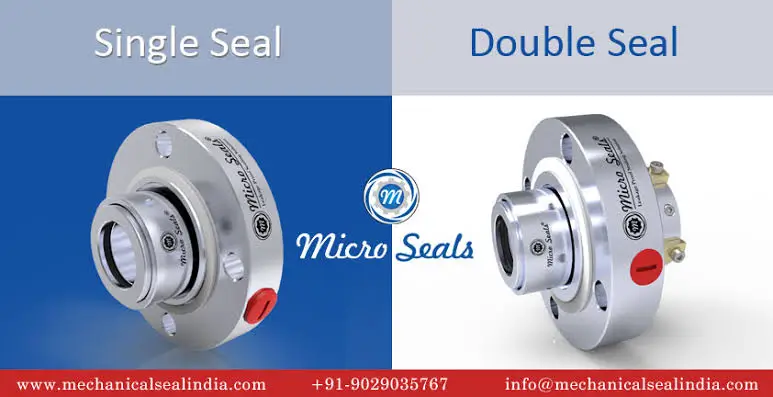
Single vs Double Cartridge Mechanical Seals for Chemical Pumps
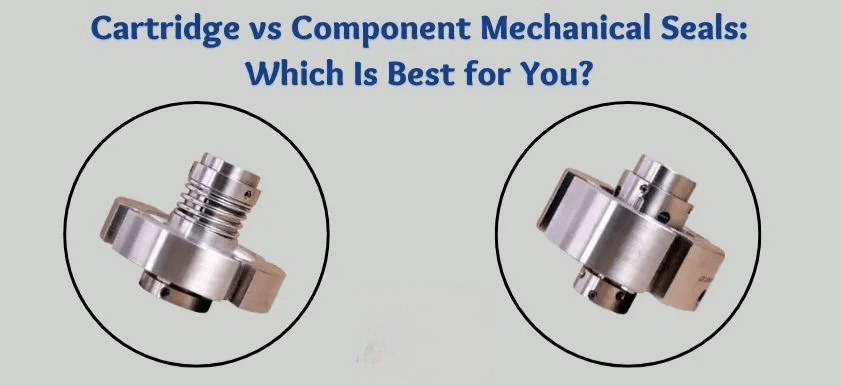
| Comparison Category | Single Cartridge Mechanical Seal | Double Cartridge Mechanical Seal |
|---|---|---|
| Seal Arrangement | One set of seal faces | Two sets of seal faces |
| Sealing Principle | Single sealing barrier | Dual sealing barriers |
| Leakage Protection Level | Standard | Advanced |
| Leakage Risk | Moderate | Very low |
| Safety Level | Moderate | High |
| Suitable Fluid Type | Clean, low-risk fluids | Hazardous, toxic, flammable, corrosive fluids |
| Suitable for Toxic Media | Not recommended | Highly recommended |
| Suitable for Flammable Liquids | Limited suitability | Excellent suitability |
| Suitable for Volatile Fluids | Limited | Excellent |
| Suitable for Corrosive Chemicals | Moderate | Excellent |
| Suitable for Abrasive Slurries | Limited | Better with support systems |
| Suitable for Crystallizing Fluids | Limited | Better protection against crystallization |
| Pressure Capability | Low to medium pressure | Medium to high pressure |
| Temperature Capability | Moderate | Better for high-temperature applications |
| Dry Running Resistance | Lower | Higher |
| Cooling Performance | Limited | Superior |
| Lubrication Method | Relies mainly on process fluid | Independent auxiliary lubrication |
| Emission Control | Basic emission control | Near-zero emission capability |
| Environmental Compliance | Standard industrial requirement | Strict environmental regulations |
| Reliability | Good | Excellent |
| Seal Life Expectancy | Moderate | Longer service life |
| Maintenance Complexity | Simple | More complex |
| Installation Difficulty | Easier | More complex |
| Required Installation Space | Smaller | Larger |
| Auxiliary Support System | Usually not required | Required |
| Buffer Fluid Requirement | Not required | May be required |
| Barrier Fluid Requirement | Not required | Often required |
| Operating Cost | Lower | Higher |
| Initial Purchase Cost | Lower | Higher |
| Downtime Risk | Higher under harsh conditions | Lower |
| Failure Consequence | Direct process leakage possible | Secondary seal protection available |
| Typical Chemical Pump Applications | Water, mild chemicals, utility pumps | Refinery pumps, acid pumps, solvent pumps, hazardous chemical systems |
| Common Industries | General industry, water treatment | Chemical processing, petrochemical, pharmaceutical, oil & gas |
| Best Application Scenario | Low-risk, clean process conditions | Critical, hazardous, high-value process systems |
Common Mistakes When Selecting Cartridge Seals for Chemical Industry
- Selecting Based Solely on Shaft Size: Mechanical seals must be selected not only based on shaft diameter but also in conjunction with other parameters and actual operating conditions.
- Ignoring Chemical Compatibility: The question of whether materials can withstand corrosion must not be overlooked.
- Choosing a Single Seal for Hazardous Media: This is a very serious issue in the chemical industry.
- Ignoring Temperature Limits: Many mechanical seals fail quickly under high-temperature conditions.
- Ignoring Pressure Conditions: High-pressure conditions require a balanced mechanical seal.
- Ignoring Solid Particles and Crystallization: Particles entering the sealing faces can cause scratches and a series of other problems.
- Ignoring Auxiliary Systems: The absence of auxiliary systems leads to a series of problems.
- Selecting Low Cost Instead of Proper Design: In the chemical industry, seal failure is what is truly costly.
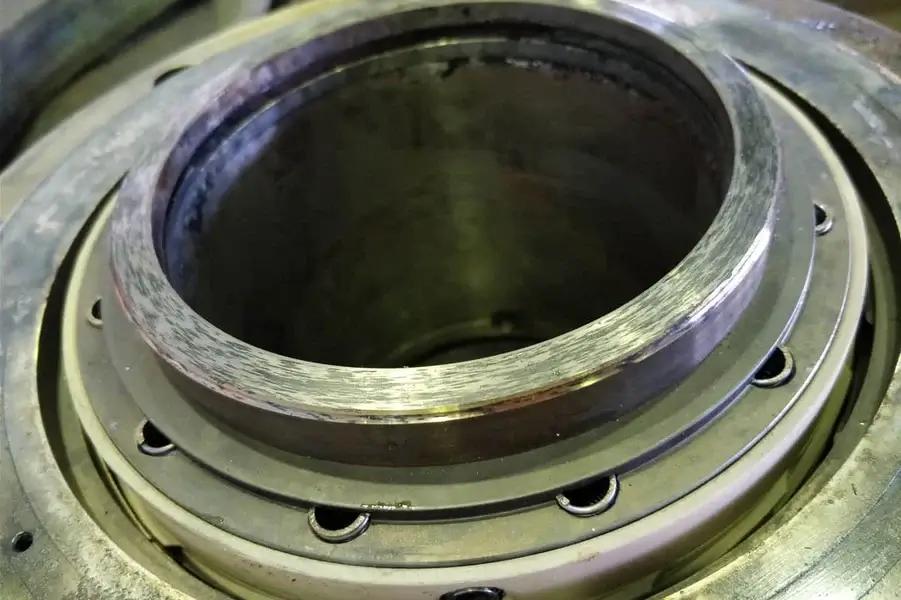
Information You Should Provide to a Cartridge Seal Manufacturer
When selecting a cartridge mechanical seal, it is not sufficient to simply provide the shaft diameter to the cartridge seal manufacturer. Mechanical seals are application-specific products; the manufacturer must be informed of the medium’s name, concentration, pH, corrosiveness, temperature, pressure, rotational speed, pump model, and whether the medium contains particles or is prone to crystallization. These parameters directly influence the seal design, material selection, and service life.
In the chemical industry, it is also necessary to specify leakage requirements and safety levels—for example, whether the medium is toxic, flammable, or volatile—to determine whether a single seal or a double seal should be used. Additionally, auxiliary systems, cooling conditions, and the installation environment can affect seal stability. The more complete the information provided, the more accurate and reliable the seal selection will be.
Conclusion: Choosing the Right Cartridge Seal for Chemical Pumps
For chemical pumps, the selection of cartridge mechanical seals not only affects equipment operational stability but also directly impacts production safety, environmental compliance, and maintenance costs. Given the significant variations in chemical media—including corrosion levels, temperature, pressure, volatility, and particle content—mechanical seals cannot be selected based solely on size or price; instead, they must be professionally matched to the actual operating conditions.
The correct cartridge seal solution can effectively reduce the risk of leakage, extend equipment lifespan, minimize downtime for maintenance, and enhance the safety and reliability of the entire chemical system. For ordinary, low-risk media, a single cartridge seal is usually sufficient; however, for toxic, flammable, highly corrosive, or high-risk operating conditions, it is recommended to use a double cartridge seal in conjunction with auxiliary systems to achieve a higher level of sealing protection. Selecting the appropriate mechanical seal is, in essence, a guarantee of stable equipment operation and long-term safe production.
 Arabic
  English
  Portuguese
  Russian
  Spanish