
Do you know when a double mechanical seal is worth the extra complexity?It is worth considering when leakage is dangerous, the fluid can crystallize or cause corrosion, or the process requires sterile or high-purity conditions.
A double mechanical seal is also useful for harsh conditions such as frequent dry running, sudden pressure changes, or other demanding operating conditions.In this guide, I will explain how to choose between a single and double mechanical seal and the common problems you may face.
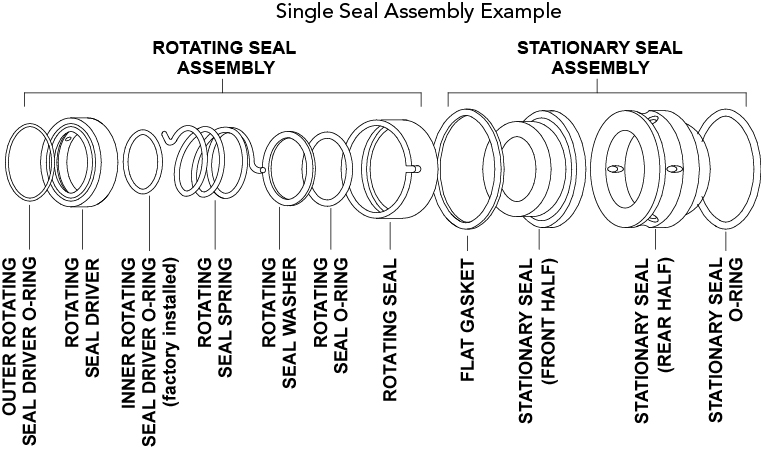
Do you know how a single mechanical seal works?A single mechanical seal controls fluid leakage between a rotating shaft and the equipment housing through one pair of sealing faces.During operation, the rotating face moves with the shaft, while the stationary face stays fixed.
Spring force and process pressure keep the two sealing faces closely together.A very thin liquid film forms between the faces. It lubricates the surfaces, reduces friction and wear, and helps control fluid leakage.
The seal has a simple structure, without a second sealing barrier or a complex support system.It is suitable for mild operating conditions where small leakage is acceptable and safety risks are relatively low.
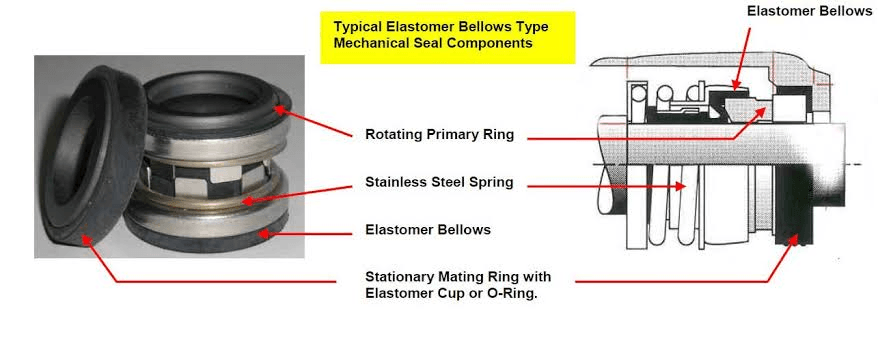
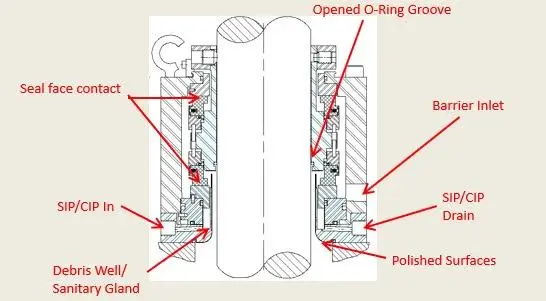
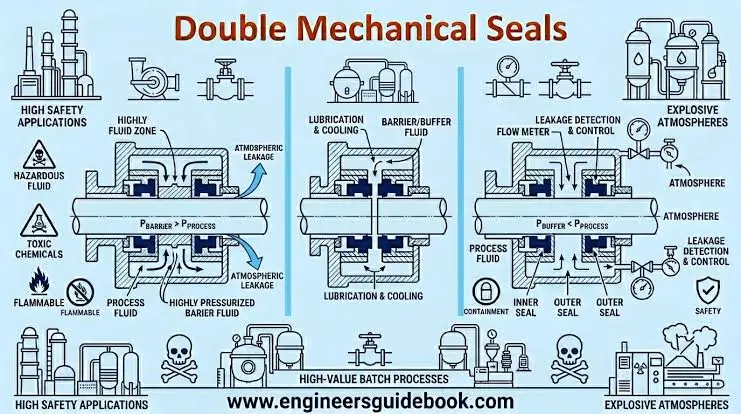
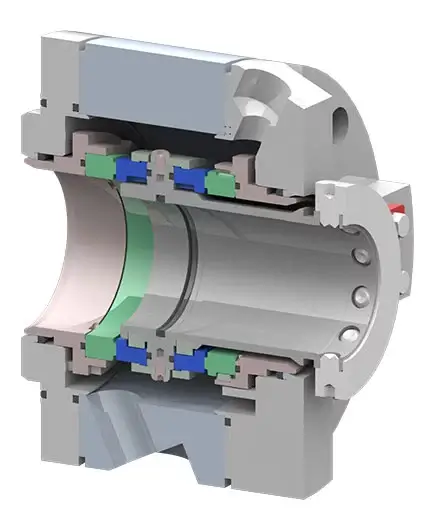
Have you ever wondered how a double mechanical seal works?A double mechanical seal uses two pairs of sealing faces to control process fluid leakage.Compared with a single mechanical seal, it adds a second sealing barrier for extra protection.
During operation, the inner seal first prevents the process fluid from leaking outward.The chamber between the seals contains pressurized barrier fluid or lower-pressure buffer fluid, which works with the outer seal to form a second barrier.
The two seals work together, while the spring system keeps the sealing faces in contact as they wear.Even if the inner seal develops slight leakage, the outer seal can still provide a second level of protection.
Do you know the main differences between single and double mechanical seals?The key difference is not only one sealing face pair versus two.They also differ in leakage control, safety, support systems, operating conditions, and total cost.You can use the table below as a quick reference:
| Comparison Item | Single Mechanical Seal | Double Mechanical Seal |
|---|---|---|
| Number of Seal Faces | One main pair of sealing faces | Two pairs of sealing faces |
| Leakage Control | Allows very controlled leakage | Provides stricter leakage control |
| Second Protection Barrier | Usually none | Has a second sealing barrier |
| Auxiliary Fluid System | Usually no complex auxiliary system | Requires buffer or barrier fluid |
| Safety | Suitable for low-risk fluids | Better for toxic, flammable, or hazardous fluids |
| Lubrication and Cooling | Mainly depends on process fluid | Auxiliary fluid can improve lubrication and cooling |
| Dry-Running Ability | Usually limited | Depends on design; some systems handle poor lubrication better |
| Crystallizing Fluids | More easily affected by process fluid | Barrier fluid can improve the sealing environment |
| System Complexity | Simple structure | More complex seal and support system |
| Installation Space | Requires less space | Usually needs more space |
| Maintenance | Relatively simple | Seal and support system both need maintenance |
| Initial Cost | Lower | Higher |
| Lifecycle Cost | Often lower in low-risk applications | May reduce leakage and shutdown losses in high-risk services |
| Typical Applications | Water, common oils, low-risk fluids | Toxic, flammable, corrosive, high-purity, or severe service |
A single mechanical seal has only one main sealing barrier and has a simple design.If the seal faces wear or operating conditions change suddenly, seal failure may cause process fluid to leak directly outside.
A double mechanical seal has two sealing barriers and provides extra protection.Even if the inner seal develops slight leakage, the outer seal can still help contain the fluid.
A single mechanical seal mainly depends on the process fluid to lubricate the seal faces.It normally does not need a barrier fluid or buffer fluid system.A double mechanical seal can use pressurized barrier fluid or unpressurized buffer fluid.
These fluids help cool, flush, and lubricate the seal faces during operation.They can also reduce crystal buildup, dry deposits, and wear caused by difficult process fluids.The auxiliary fluid can also separate the process fluid from the outside environment.
A single mechanical seal is better suited to mild and low-risk operating conditions.It works well with fluids that are non-toxic, not highly corrosive, and unlikely to crystallize.A double mechanical seal is designed for more demanding operating conditions.
It is better for toxic, flammable, highly corrosive, viscous, crystallizing, sterile, or high-purity applications.It can also handle larger pressure changes and stronger process disturbances when the system is correctly designed.
There is no absolute winner between single and double mechanical seals.They provide different levels of protection and should be selected according to the actual operating conditions.Choosing the right design helps the equipment operate safely, reliably, and for a longer service life.
When operating conditions are mild, the fluid is low-risk, and very small controlled leakage is acceptable, a single mechanical seal is usually simpler and more economical.It does not need a complex barrier or buffer fluid system, so installation, operation, and maintenance costs are usually lower.A single mechanical seal is often a good choice when your application has the following conditions:
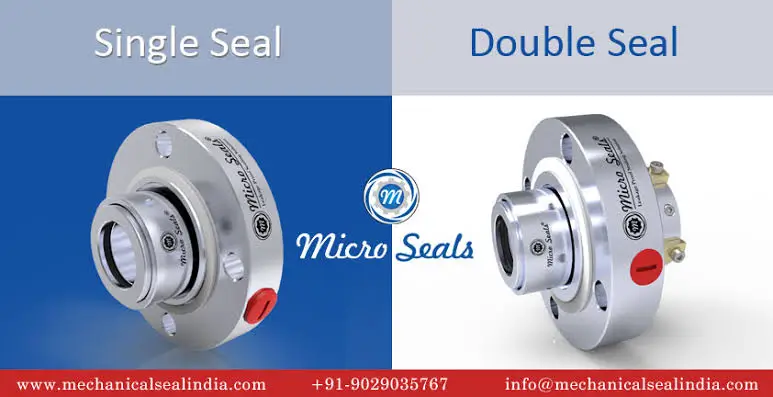
However, you should be careful when leakage could cause safety risks, environmental problems, product contamination, or serious production losses.In these cases, even if a single mechanical seal can operate, you should still evaluate whether a double mechanical seal is a safer choice.
When the fluid is hazardous, leakage could cause serious problems, or the seal needs better lubrication, cooling, and stability, a double mechanical seal is usually more suitable.You should consider a double mechanical seal first when your application has the following conditions:
Keep in mind that a double mechanical seal is not always the better choice for normal operating conditions.It usually requires more piping, fluid reservoirs, pressure control, and maintenance.The extra complexity is worthwhile only when leakage risks, difficult fluid conditions, or shutdown losses are greater than the added system cost.
You should know that for toxic, flammable, or valuable process fluids, a double mechanical seal is usually the safer and more reliable choice.If these fluids leak, you may face product loss, financial damage, fire, worker poisoning, or environmental penalties.These risks can be serious, so you should not ignore them.
A double mechanical seal uses two sealing barriers, giving you an extra level of protection if the inner seal develops a problem.A single mechanical seal gives you only one sealing barrier.If that seal fails, the process fluid can leak directly outside, with no second barrier to contain it.
For this reason, a single seal may not give you enough protection against the safety and financial risks of these applications.
When you handle abrasive, volatile, or poorly lubricating fluids, a single mechanical seal may struggle to provide reliable protection.A double mechanical seal is usually a safer and more reliable choice for these difficult fluids.Abrasive fluids often contain small particles that can easily scratch and wear the seal faces.
Volatile fluids may quickly vaporize during operation, causing the seal faces to suddenly lose their protective liquid film.Poorly lubricating fluids cannot form a smooth and stable lubrication layer between the sealing faces.In these conditions, a single seal directly faces the difficult process fluid.
This can easily cause dry friction, scratches, overheating, and rapid seal failure.A double mechanical seal can use a barrier or buffer fluid system to separate the sealing faces from the difficult process fluid.Clean auxiliary fluid can lubricate and cool the seal faces.This helps you reduce direct contact between abrasive particles, volatile fluids, and the sealing surfaces.
Do you know the difference between single and double mechanical seals in hygienic pumps?A single mechanical seal has a simpler design with fewer parts.Its seal chamber is easier to design with smooth surfaces and fewer dead areas, making cleaning and high-temperature sterilization easier.It also usually has lower purchase and maintenance costs.
You can consider it for clean processes with stable fluids, low contamination risk, and where very small product leakage is acceptable.A double mechanical seal provides two sealing barriers and can work with a pressurized barrier fluid system.This gives you protection in both directions.
It helps prevent process fluid from leaking out and stops outside cooling water or air from entering the chamber and contaminating the product.Even if the inner seal develops slight leakage, the outer seal can still provide backup protection.This makes it suitable for valuable sterile products and pharmaceutical or premium food processes where contamination must be strictly controlled.
However, the system is more complex, and you must properly clean and sanitize the related piping.The total investment is also usually higher.If your hygienic pump handles ordinary clean liquids under stable conditions, without strict sterile or zero-contamination requirements, a single seal is usually simpler and more economical.
If your product is valuable or requires sterile control, or the fluid can stick, crystallize, vaporize, or provide poor lubrication, a double seal is worth considering.
You should know that the right seal support plan works like a support team for your mechanical seal.The support it provides can directly affect whether you finally choose a single or double mechanical seal.For a single mechanical seal, the support plan is usually simpler.
A common method uses the process fluid itself for flushing and cooling.For example, cleaner process fluid can flow through a bypass into the seal chamber.This helps remove heat and reduce the buildup of dirt around the seal faces.
A double mechanical seal usually depends more on its seal support plan.It often needs a barrier fluid or buffer fluid system to keep a stable environment between the two seals.You must consider not only the seal itself, but also fluid pressure, temperature, circulation, and monitoring.
For example, a pressurized barrier fluid system keeps the barrier fluid pressure higher than the process pressure.This helps you reduce the risk of hazardous process fluid leaking outward.
So, when choosing a seal, you should not only ask whether you need a single or double mechanical seal.You should also consider what support system your site can provide.The seal and support system must work properly together to help you achieve safe, stable, and long-term equipment operation.
No. A double mechanical seal is designed to control leakage more strictly, not to guarantee zero leakage.During normal operation, very small controlled leakage may still occur at the seal faces.This small amount of fluid helps form a lubricating film and reduce friction.
If the seal faces are damaged, fluid pressure is wrong, piping fails, or installation is poor, leakage can still happen.You should design and maintain both the seal and its support system correctly.
Not always. A double mechanical seal provides a second sealing barrier and gives you more protection in difficult operating conditions.It is often safer for toxic, flammable, crystallizing, or poorly lubricating fluids.For clean, stable, and low-risk fluids, a well-designed single seal can still operate reliably.
It may also give you lower cost and easier maintenance than a more complex double seal system.Reliability depends on how well the seal matches the fluid, pressure, temperature, speed, and seal support plan.It does not depend only on how many seals you use.
Yes, but you need to evaluate the application very carefully.A single seal may work when pressure, temperature, and leakage risks are controlled and local safety requirements allow its use.
If the fluid is highly toxic, flammable, or corrosive, you should usually consider a double mechanical seal first.You should also consider a suitable barrier fluid system when leakage could harm people, equipment, or the environment.
Daily maintenance may include checking fluid level, pressure, temperature, circulation, and fluid condition.You should also check the piping, reservoir, and related instruments to make sure they are working properly.
If the support fluid becomes contaminated, or pressure and temperature change abnormally, you should inspect the inner seal.These signs may mean the inner seal has started to leak or wear.
—— We Will Provide You With Professional OEM Solutions.
Whether you require pump bearings, pump valves, mechanical seals, or other custom-engineered components, we support production based on your drawings as well as rapid prototyping.
Please complete the form on the right and upload your technical drawings or specifications. Our engineering team will review your requirements within 24 hours and provide a detailed quotation, application recommendations, and delivery schedule.
جميع الحقوق محفوظة © 2025 جميع الحقوق محفوظة.
واتساب لنا
 Arabic
  English
  Portuguese
  Russian
  Spanish