
In the design of water systems and industrial piping, the correct selection directly determines whether the system is safe and compliant, and whether it will face contamination risks or costly rework during later operation.
Both backflow preventers and check valves prevent backflow, but their safety ratings, application scenarios, and regulatory requirements are entirely different. Improper selection not only affects system efficiency but may also lead to serious compliance risks.
For this reason, understanding the core differences between backflow preventers and check valves is a critical step in every water system design and procurement decision.
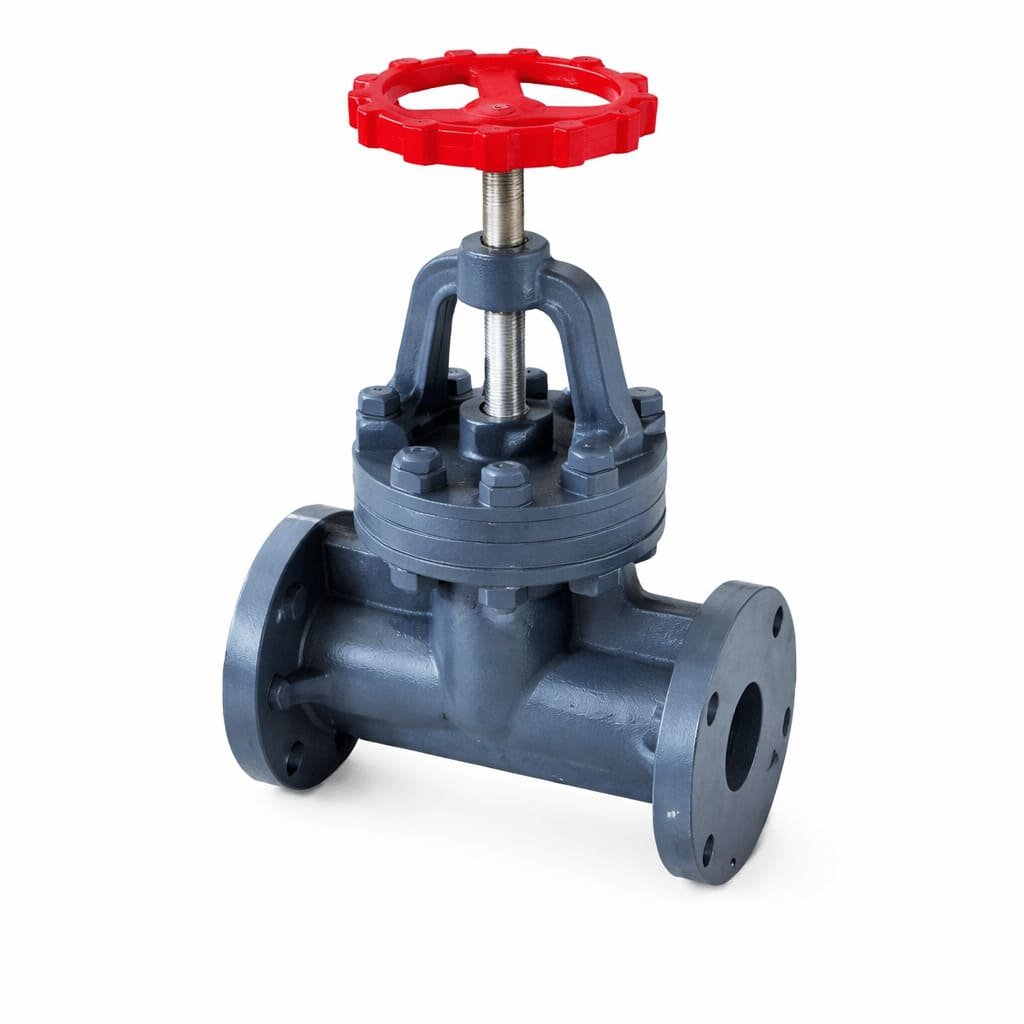
A check valve is an automatic, one-way fluid control valve used in piping systems. It allows the medium to flow in only one direction and automatically closes when flow stops or attempts to reverse, thereby effectively preventing backflow.
It requires no manual operation or external power source; instead, it opens and closes automatically based on the pressure differential of the medium or its internal mechanical structure (such as a disc, ball, or spring).
In industrial and piping systems, check valves are primarily used to protect pumps, compressors, and piping equipment from damage, contamination, or system pressure instability caused by fluid backflow.
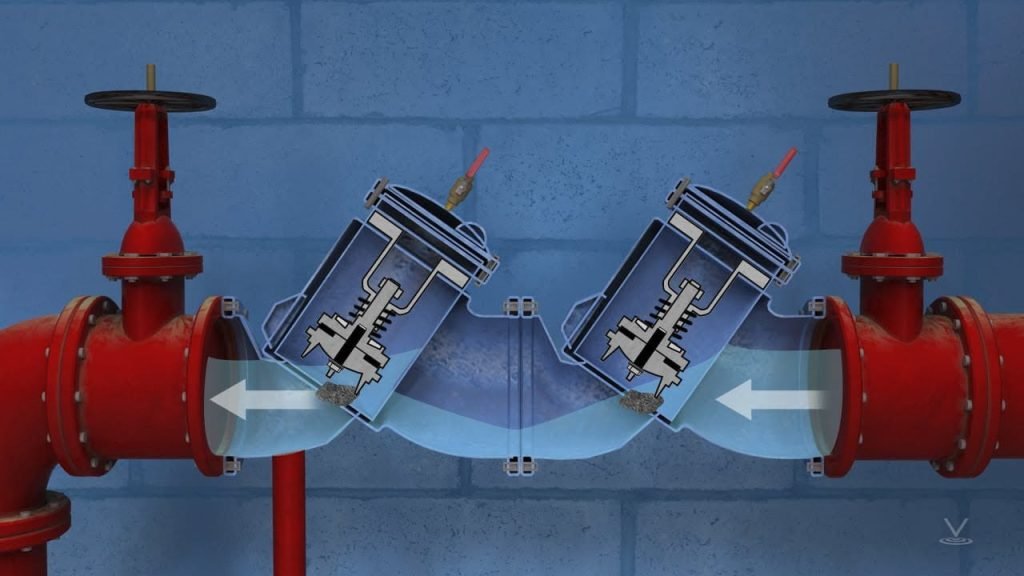
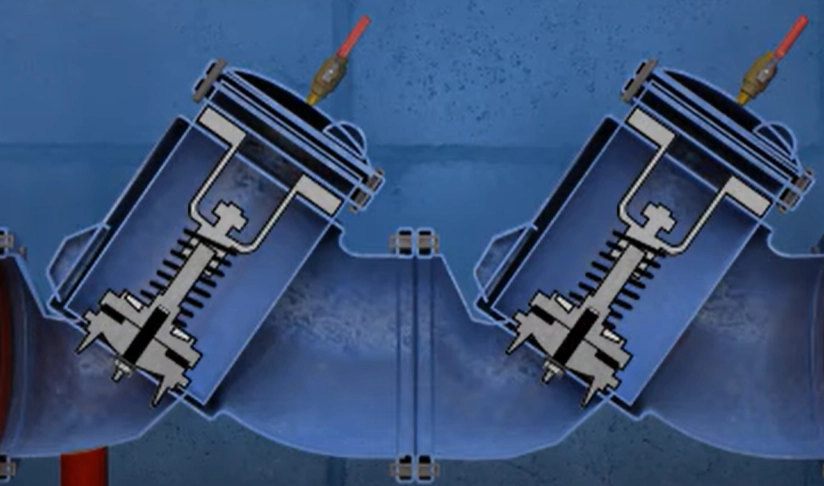
A backflow preventer is a safety device used in piping systems. Its primary function is to prevent contaminated fluids from flowing back into clean water systems due to pressure changes, thereby protecting drinking water or critical media from contamination. Unlike ordinary check valves, it consists of multiple check valve mechanisms, a pressure relief mechanism, and a testing port, making it a “system-level backflow prevention solution” that meets engineering specifications.
| Comparison Item | Backflow Preventer | Check Valve |
|---|---|---|
| Definition | A certified protection device designed to prevent contaminated water from flowing back into clean water systems | A one-way flow control valve that prevents reverse flow in piping systems |
| Main Function | Provides high-level protection against water contamination and backflow risks | Prevents backflow and ensures one-direction fluid flow |
| System Role | Safety protection system for potable and regulated water systems | General-purpose flow control component |
| Structure | Often includes dual check mechanisms, relief valves, and test ports | Simple mechanical structure (disc, ball, or spring) |
| الامتثال | Usually required by plumbing codes for potable water systems | Not typically considered a certified backflow protection device |
| Application Scope | Drinking water systems, municipal water supply, building plumbing | Industrial pipelines, HVAC, pumps, general fluid systems |
| Maintenance | Requires periodic inspection and testing | Lower maintenance requirement |
| Cost | Higher due to complex structure and certification requirements | Lower and more economical |
| Primary Goal | Prevent contamination and ensure water safety compliance | Prevent reverse flow and protect system stability |
A backflow preventer is a system-level safety device designed primarily to prevent the contamination of drinking water or critical media; it is classified as a “safety compliance-level solution.”
A check valve is merely a basic one-way flow control component that primarily addresses fluid backflow issues; it does not carry the responsibility for system-level safety certification.
Backflow preventers must comply with municipal or building plumbing codes and are often mandatory in drinking water systems.
Check valves generally do not meet these certification requirements and are used solely as general-purpose industrial components.
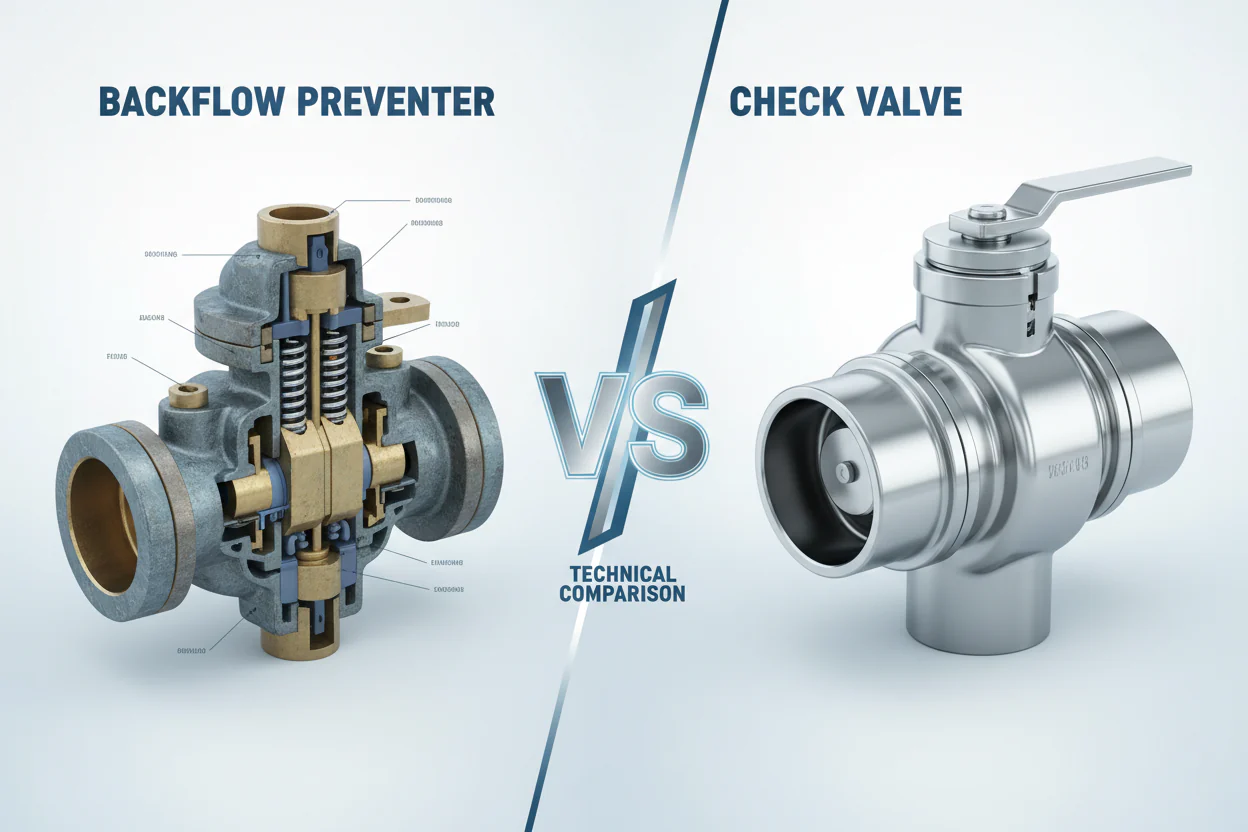
A backflow preventer consists of a dual-check valve structure, a pressure relief mechanism, and a test port, forming a complete protective assembly.
A check valve has a relatively simple structure, typically featuring a single disc, ball, or spring mechanism.
Backflow preventers are primarily used in:
Check valves are primarily used in:
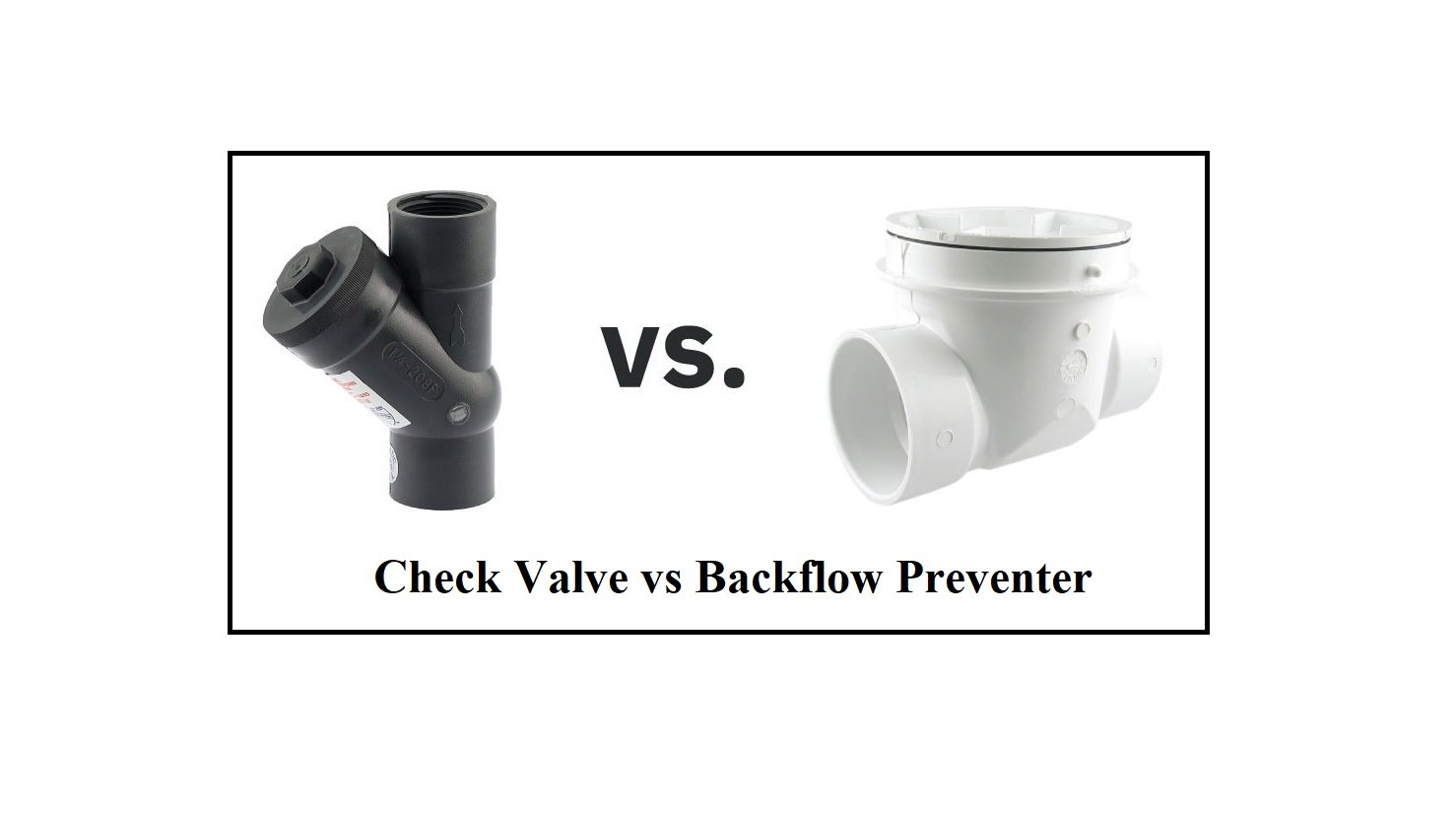
Due to their complex structure and stringent certification requirements, backflow preventers are more expensive and require regular inspection and maintenance.
Check valves are less expensive and easier to maintain, and are more commonly used in long-term industrial operations.
From an engineering perspective, check valves can provide basic backflow prevention in certain industrial piping systems, but they cannot replace the role of backflow preventers in drinking water or compliance systems. Although both are used to prevent backflow, their levels of protection are entirely different.
A check valve is more of a general-purpose one-way device, whereas a backflow preventer is a safety-grade contamination prevention device designed for drinking water and municipal systems, featuring higher structural redundancy and meeting stricter regulatory requirements.
Simply put, a check valve addresses the question of “Can backflow be prevented?”, while a backflow preventer addresses the question of “Can absolute safety and protection against contamination be ensured?”
| Application Area | Backflow Preventer | Check Valve |
|---|---|---|
| Drinking Water Systems | ✔ Required for preventing contamination and meeting regulations | ✘ Not suitable as a compliant protection device |
| Municipal Water Supply | ✔ Widely used in city water distribution systems | ✘ Only used in auxiliary or non-critical sections |
| Building Plumbing Systems | ✔ Used to protect potable water lines from backflow | ✔ Used in non-potable or secondary flow control |
| Industrial Pipelines | ◯ Used when contamination risk exists | ✔ Widely used for general backflow prevention |
| HVAC Systems | ◯ Used in regulated or critical loops | ✔ Common for circulation and pump protection |
| Oil & Gas Systems | ◯ Used in safety-critical sections | ✔ Standard component for flow control |
| Water Pump Systems | ✔ Used when water quality protection is required | ✔ Common for pump discharge protection |
Because it effectively prevents contaminated water from flowing back into the clean water system, ensuring the safety of drinking water and compliance with local water supply and drainage codes.
A check valve can prevent general backflow, but in systems with pressure fluctuations or a high risk of contamination, a single check valve is not sufficient to provide complete safety protection.
In high-safety or drinking water systems, a backflow preventer is more reliable because it features multiple layers of protection and meets compliance certification requirements.
As a professional manufacturer of industrial valves, we not only provide standard check valves and backflow preventers, but are also committed to offering our customers product selection support and system solutions tailored to their specific operating conditions. Different application scenarios vary significantly in terms of backflow prevention ratings, structural design, and compliance requirements; selecting the correct product is directly related to system safety and long-term operational stability.
We can provide customized valve solutions and technical recommendations based on the specific needs of water treatment, building plumbing, HVAC, and industrial piping systems,
—— We Will Provide You With Professional OEM Solutions.
Whether you require pump bearings, pump valves, mechanical seals, or other custom-engineered components, we support production based on your drawings as well as rapid prototyping.
Please complete the form on the right and upload your technical drawings or specifications. Our engineering team will review your requirements within 24 hours and provide a detailed quotation, application recommendations, and delivery schedule.
جميع الحقوق محفوظة © 2025 جميع الحقوق محفوظة.
واتساب لنا
 Arabic
  English
  Portuguese
  Russian
  Spanish