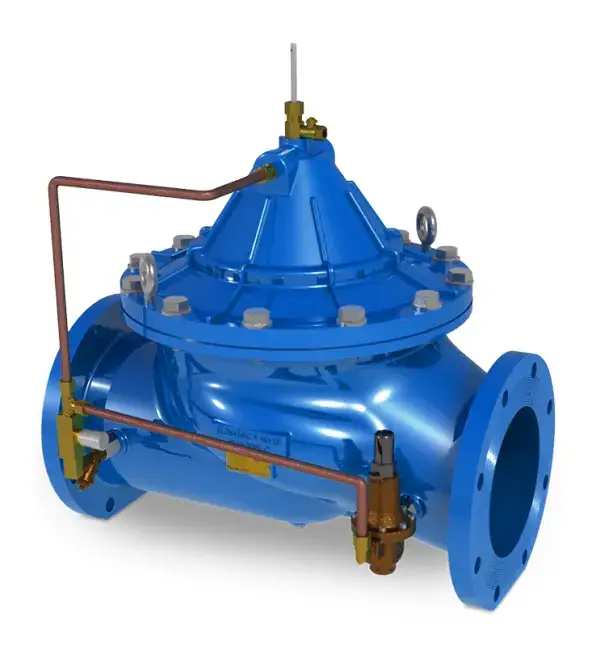

Why is check valve back pressure important?A check valve must close quickly, stay sealed, and withstand reverse pressure to keep your whole system safe.If back pressure exceeds the valve’s limit or the valve closes too slowly, you may experience internal leakage, backflow, water hammer, disc impact, vibration, and pump damage.
You should check the system back pressure if pressure drops quickly after pump shutdown, fluid flows backward, the pump restarts often, or the valve leaks or knocks.Understanding back pressure helps you select the correct check valve type.
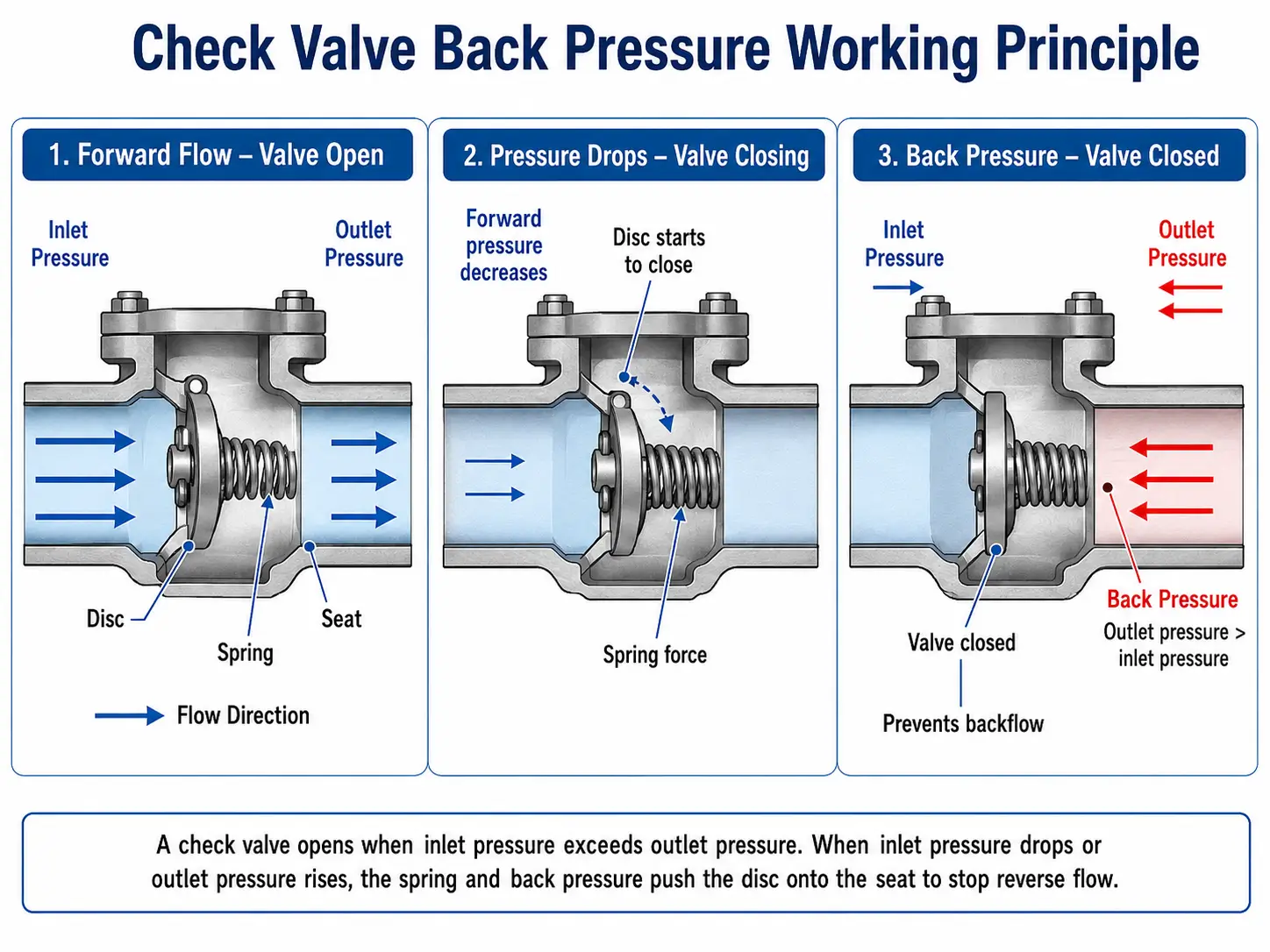
Do you know what back pressure is?Simply put, back pressure is the reverse pressure acting on the outlet side of a check valve.During normal flow, inlet pressure is higher than outlet pressure.This pressure difference opens the disc, ball, or poppet, allowing fluid to pass through the valve.Proper back pressure helps the check valve close and maintain a tight seal.
However, excessive, sudden, or unstable back pressure may slam the disc against the seat, causing water hammer, noise, vibration, and sealing surface damage.Therefore, when selecting a check valve, you should consider normal pressure, maximum back pressure, pressure change speed, closing speed, and the allowed leakage level.
You should understand that a check valve opens and closes automatically as the pressure changes between its inlet and outlet.It does not require manual operation or external control.
When outlet pressure becomes higher than inlet pressure, back pressure pushes the disc, ball, or poppet against the valve seat.Stable back pressure usually helps the closing part maintain a reliable seal.A check valve responds to back pressure through the following process:
Different check valve types respond to back pressure at different speeds.A spring-loaded check valve uses a spring to close the disc earlier and usually closes faster.It is more suitable for systems with frequent flow changes or systems that need to reduce backflow.A swing check valve mainly closes through the disc’s weight and reverse flow.
Lift, ball, and axial-flow check valves also have different closing distances, opening pressures, and back-pressure responses.You should select the correct design based on the system’s flow changes and maximum back pressure.Proper back pressure helps the check valve remain closed.
Do you know how check valve back pressure works?When inlet pressure is higher, the fluid pushes the disc away from the valve seat, opening the valve.When inlet pressure falls or outlet pressure rises, the spring, gravity, or reverse flow pushes the disc closed.Back pressure then presses the closing part against the valve seat, preventing fluid from flowing backward.
You should remember that excessive, sudden, or unstable back pressure may cause water hammer, disc impact, pipe vibration, part wear, and internal leakage.Therefore, when selecting a check valve, you should consider maximum back pressure, pressure change speed, closing time, and system flow changes.
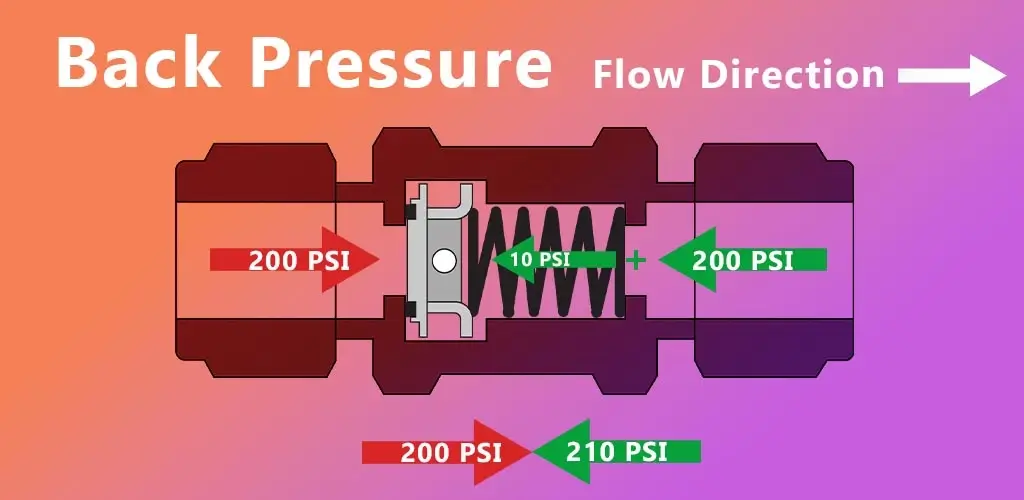
Check valve back pressure and cracking pressure both affect valve movement, but their direction, timing, and main functions are completely different.Cracking pressure is the minimum pressure difference between the inlet and outlet needed to start forward flow through the check valve.
When this pressure is reached, the disc, ball, or poppet begins moving away from the valve seat.However, the valve may not be fully open at this point.Back pressure acts on the outlet side of the check valve and tries to push the fluid back toward the inlet.Simply put, cracking pressure determines when the check valve starts opening.Back pressure determines how the check valve closes and stays sealed.
Check valve back pressure and pressure drop both relate to inlet and outlet pressure.However, they describe different flow conditions, pressure directions, and effects on your system.Back pressure acts on the outlet side of the check valve.It can block forward flow or push the fluid back toward the inlet.
When outlet pressure is higher than inlet pressure, back pressure pushes the disc, ball, or poppet against the seat and closes the valve.You can usually express check valve pressure drop as:Pressure Drop = Inlet Pressure − Outlet Pressure
This pressure is used to overcome spring force, the closing part’s weight, flow path resistance, and fluid friction.Simply put, back pressure acts on the outlet side.It mainly affects how the valve closes and prevents backflow.Pressure drop occurs during forward flow.
It shows how much pressure the fluid loses when passing through the check valve.If you notice low downstream flow or higher pump energy use, you should check whether the pressure drop is too high.If you notice backflow, pressure loss, valve impact, or water hammer after pump shutdown, you should check the back pressure and valve closing speed.
Check valves and back pressure valves both deal with pipe pressure, but they solve different problems.A check valve controls flow direction, while a back pressure valve controls upstream pressure.
A check valve allows fluid to flow in one direction.It closes automatically when outlet pressure becomes higher than inlet pressure, preventing backflow.A back pressure valve usually means a back pressure control valve or regulator.It changes its opening to keep upstream pressure near the set value.The table below helps you quickly understand their differences.
| Comparison | Check Valve | Back Pressure Valve |
|---|---|---|
| Common Name | Check valve, one-way valve | Back pressure valve, back pressure regulator |
| Main Function | Prevents fluid backflow | Controls and maintains upstream pressure |
| Control Target | Flow direction | Upstream pressure |
| Working Method | Opens or closes automatically | Adjusts its opening as pressure changes |
| Main Pressure Signal | Pressure difference between inlet and outlet | Upstream pressure at the valve inlet |
| Normal Condition | Opens during forward flow and closes under reverse pressure | Usually remains closed or partly open |
| Opening Condition | Forward pressure difference reaches cracking pressure | Upstream pressure reaches or exceeds the set value |
| Regulates Pressure | No | Yes |
| Prevents Backflow | Yes — this is its main function | Not always; it depends on the design |
| Common Purpose | Protects pumps, equipment, and pipes from backflow | Stabilizes pressure in pump outlets, tanks, or circulation systems |
| Main Selection Factors | Cracking pressure, flow, maximum back pressure, and pressure drop | Set pressure, flow range, control accuracy, and valve capacity |
You should normally use a check valve for the following needs:
You should normally use a back pressure valve for the following needs:
A check valve opens or closes according to flow direction and mainly prevents backflow.A back pressure valve continuously adjusts its opening according to upstream pressure and mainly maintains the set pressure.
You cannot use a standard check valve instead of a back pressure valve to control pressure.You also should not assume that a back pressure valve can replace a check valve to prevent reverse flow.
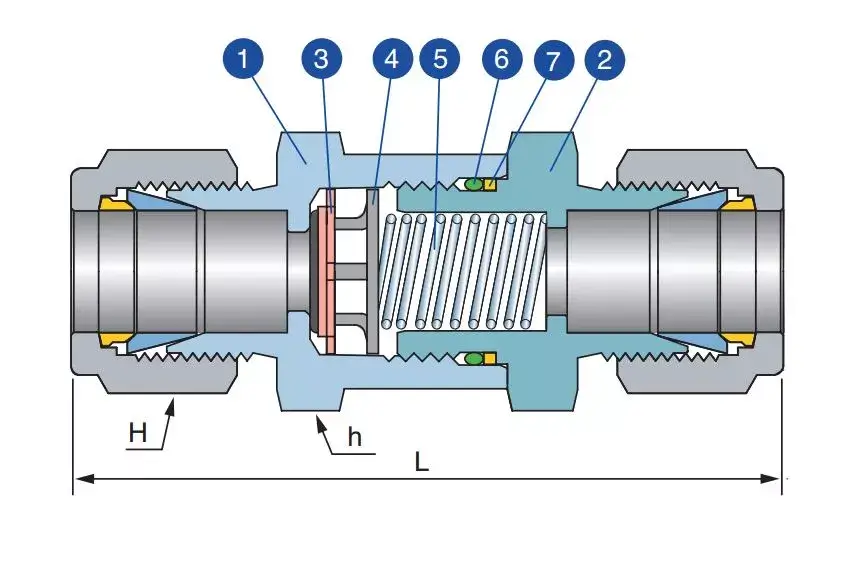
When determining check valve back pressure, you should not only check the pipe’s normal working pressure.You should measure the pressure at the check valve outlet.You should also compare inlet and outlet pressure changes under different operating conditions.
You can install pressure gauges or pressure sensors on both the inlet and outlet sides of the check valve.Place the measuring points as close to the check valve as possible.Avoid areas near pipe bends, pump outlets, and flow-control parts where strong pressure changes may occur.You should record:
Pump shutdown is one of the conditions where a check valve is most likely to experience back pressure.You should record the inlet and outlet pressures when the pump stops and after it has stopped.When outlet pressure is higher than inlet pressure, the difference is the reverse pressure difference acting on the check valve.
Standard pressure gauges usually show only slow pressure changes.They may not record short pressure peaks caused by pump shutdown, water hammer, or fast valve movement.You should use a faster pressure sensor or data recorder when your system has any of the following conditions:
The highest short-term back pressure may be much higher than normal pressure.Therefore, you should not select the valve using only stable operating pressure data.
After determining the back pressure, you should check whether the check valve meets the following requirements:
A check valve’s maximum working pressure may not equal the maximum reverse pressure it can safely withstand for a long time.You should check the technical data provided by the valve manufacturer.
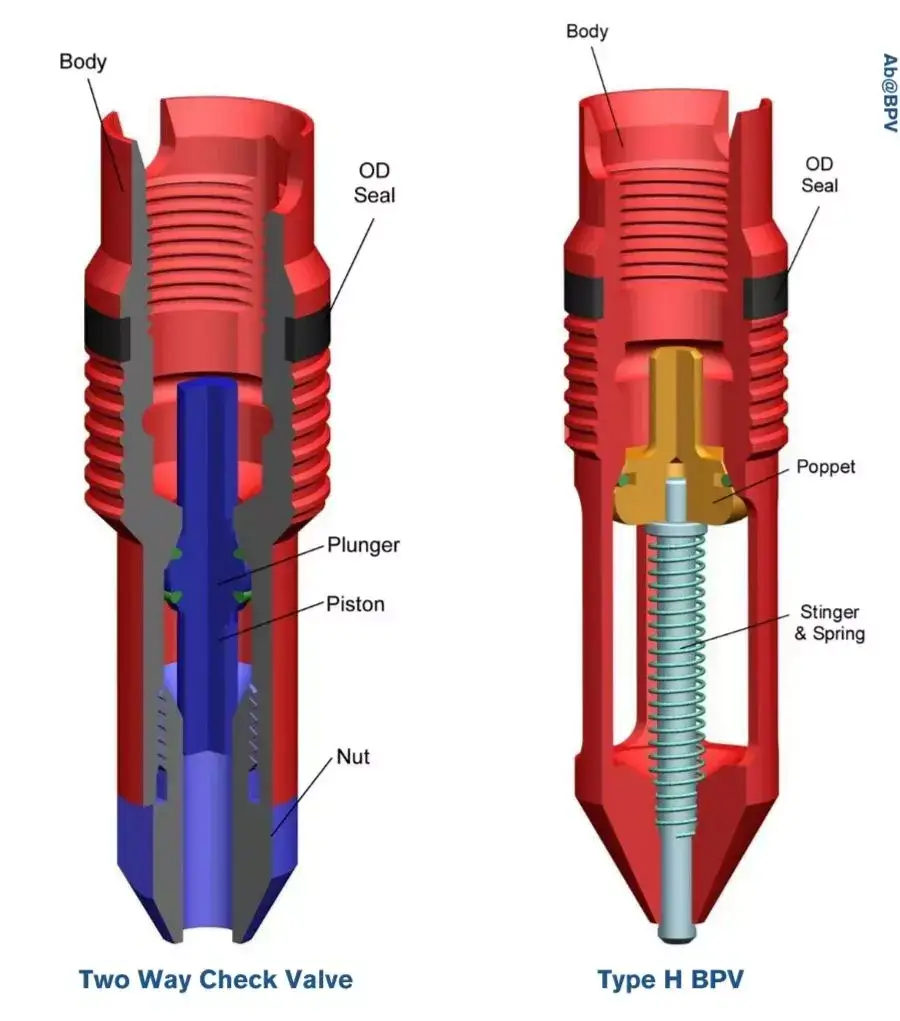
Proper back pressure pushes the closing part firmly against the valve seat, helping the check valve remain closed.However, the valve and piping system may be damaged if steady back pressure, reverse pressure, or pressure peaks exceed the valve’s design limits.
Simply put, excessive back pressure may cause internal leakage, water hammer, disc impact, seal damage, pipe vibration, and complete valve failure.When check valve back pressure is too high, you should:
You should not simply replace the existing valve with one that has a higher pressure rating.You also need to identify whether the high back pressure comes from an elevated tank, downstream pump, pressure vessel, fast-closing valve, water hammer, or poor pipe design.
Yes. When outlet pressure is higher than inlet pressure, back pressure pushes the disc, ball, or poppet against the valve seat.This keeps the check valve closed and prevents fluid from flowing backward.More stable back pressure usually helps the closing part stay firmly against the valve seat.However, back pressure only helps close the valve.
It cannot repair damaged or dirty sealing surfaces.You should also remember that higher back pressure is not always better.Excessive, sudden, or unstable back pressure may cause the disc to strike the valve seat violently.It may also cause water hammer, unusual noise, or damage to the valve seat and disc.Therefore, back pressure must remain within the valve’s allowed pressure range.
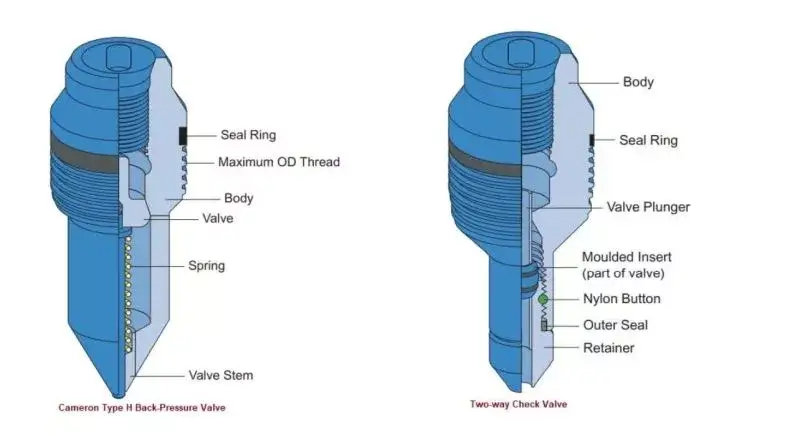
Back pressure in check valve systems often comes from elevated tanks, vertical pipes, downstream pumps, pressure vessels, fast-closing valves, water hammer, pipe blockages, parallel branches, thermal expansion, and pulsating pumps.When finding the source, you should not only inspect the check valve.
You should measure inlet and outlet pressures and record data during pump startup, shutdown, valve closing, and system pressure changes.After finding the real source, you can select the correct check valve and solve the problem by improving pipe design, controlling pressure changes, or adjusting equipment operation.
Check valve back pressure problems are usually not caused by one part alone.High outlet pressure, fast pressure changes, incorrect valve selection, or damaged sealing surfaces may affect closing and sealing performance.Common signs include backflow, internal leakage, disc impact, water hammer, unusual noise, pipe vibration, low flow, and frequent pump starts.
| المشكلة | Possible Cause | Recommended Solution |
|---|---|---|
| Fluid Flows Backward After Pump Shutdown | The check valve closes too slowly or does not seal tightly. | Check the seat and disc, then choose a faster-closing check valve. |
| Internal Leakage | The sealing surface is worn, damaged, or blocked by dirt. | Clean the valve and replace damaged seals or the complete valve. |
| Strong Disc Impact | Back pressure rises quickly or flow suddenly reverses. | Reduce closing speed or use a spring-loaded or axial-flow check valve. |
| Water Hammer | The pump stops suddenly or a downstream valve closes quickly. | Improve the shutdown process and install a slow-closing valve or water hammer arrestor. |
| Pipe Vibration and Noise | Back pressure and flow continue to change. | Check system pressure changes and improve pipe support. |
| The Check Valve Cannot Open | Outlet back pressure or cracking pressure is too high. | Increase inlet pressure or choose a valve with lower cracking pressure. |
| Low Forward Flow | The valve is too small or only partly opens. | Recalculate flow, pressure drop, and valve size. |
| Spring Fatigue or Breakage | The check valve opens and closes too often. | Replace the spring or use a valve designed for changing pressure. |
| Soft Seal Damage | Back pressure or temperature exceeds the seal limit. | Choose a seal suitable for the actual pressure and temperature. |
| Frequent Pump Starts | Check valve leakage causes downstream pressure to fall. | Check for reverse leakage and repair or replace the valve. |
You should not only inspect the check valve itself.You should also find the real source of back pressure.Then solve the problem through correct valve selection, better pipe design, and proper equipment operation.
You should understand that check valve back pressure is not always a problem.Proper and stable back pressure pushes the disc, ball, or poppet firmly against the valve seat.This helps the check valve remain closed and prevents fluid from flowing backward.
However, excessive, fast-changing, or unstable back pressure may cause internal leakage, disc impact, water hammer, pipe vibration, seal damage, low flow, and pump reversal.Therefore, you should not check only the pressure rating of the check valve.You should also measure inlet pressure, outlet pressure, maximum reverse pressure difference, and short pressure peaks.
Proper back-pressure control can reduce backflow, leakage, water hammer, and equipment damage.It can also improve the safety, stability, and service life of your entire piping system.
—— We Will Provide You With Professional OEM Solutions.
Whether you require pump bearings, pump valves, mechanical seals, or other custom-engineered components, we support production based on your drawings as well as rapid prototyping.
Please complete the form on the right and upload your technical drawings or specifications. Our engineering team will review your requirements within 24 hours and provide a detailed quotation, application recommendations, and delivery schedule.
جميع الحقوق محفوظة © 2025 جميع الحقوق محفوظة.
واتساب لنا
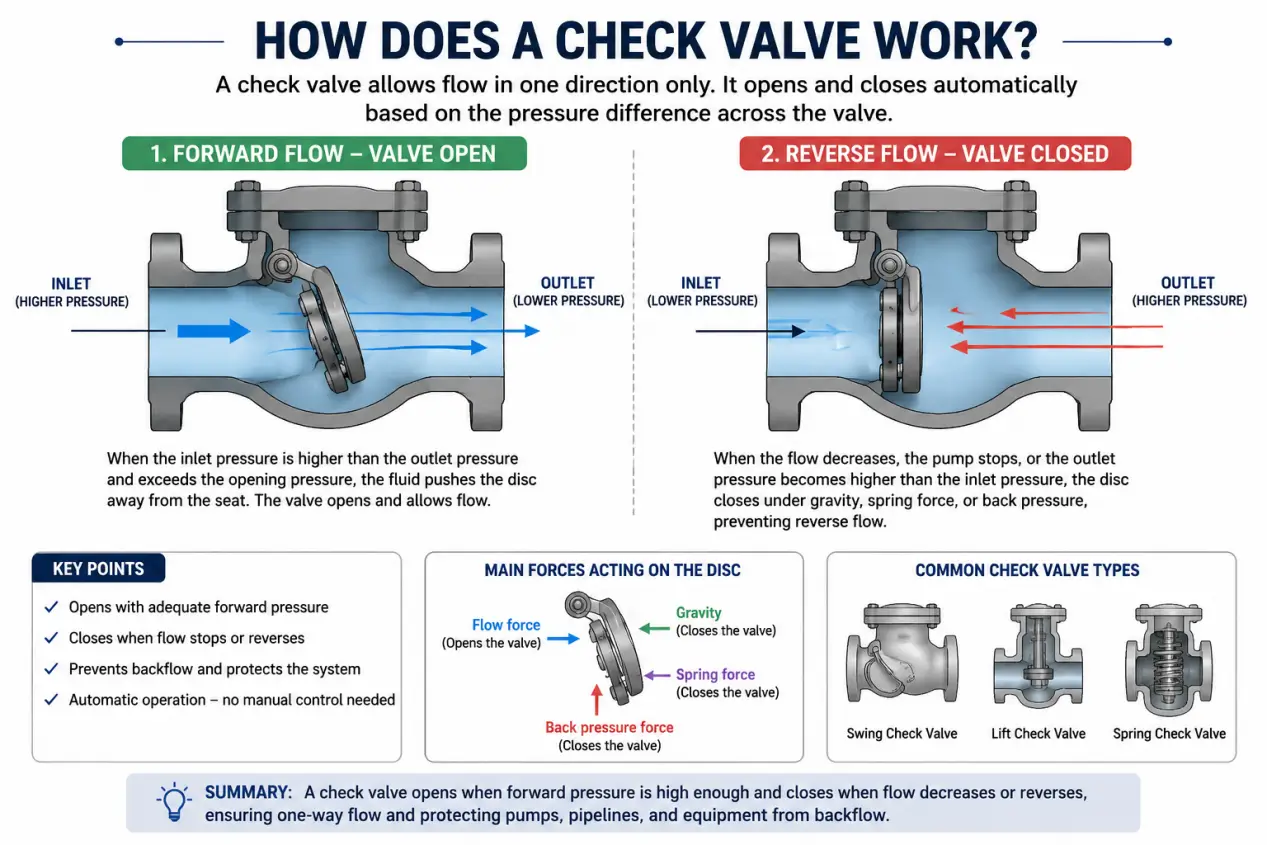
 Arabic
  English
  Portuguese
  Russian
  Spanish