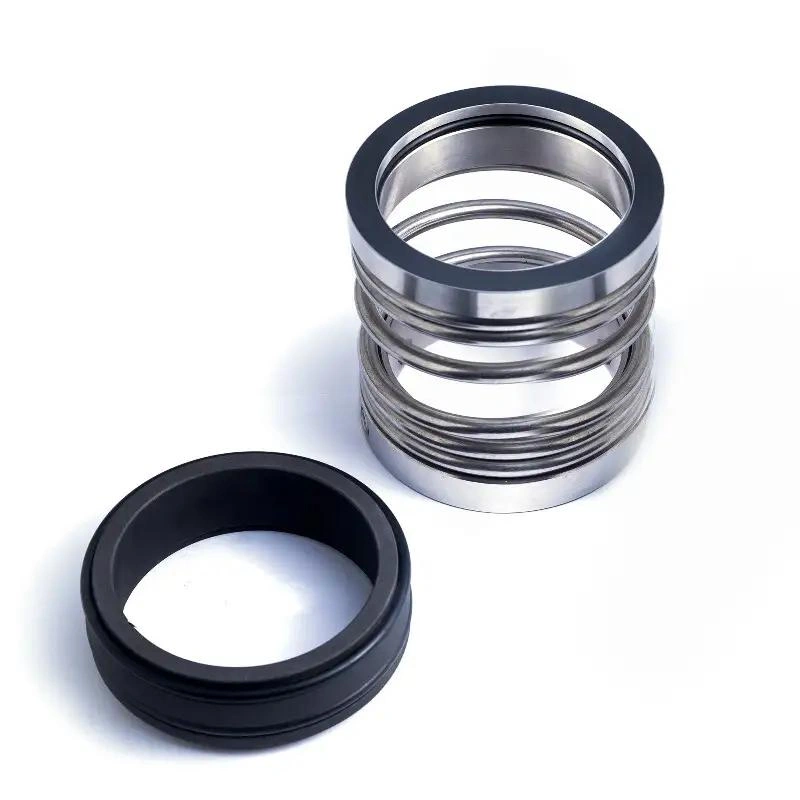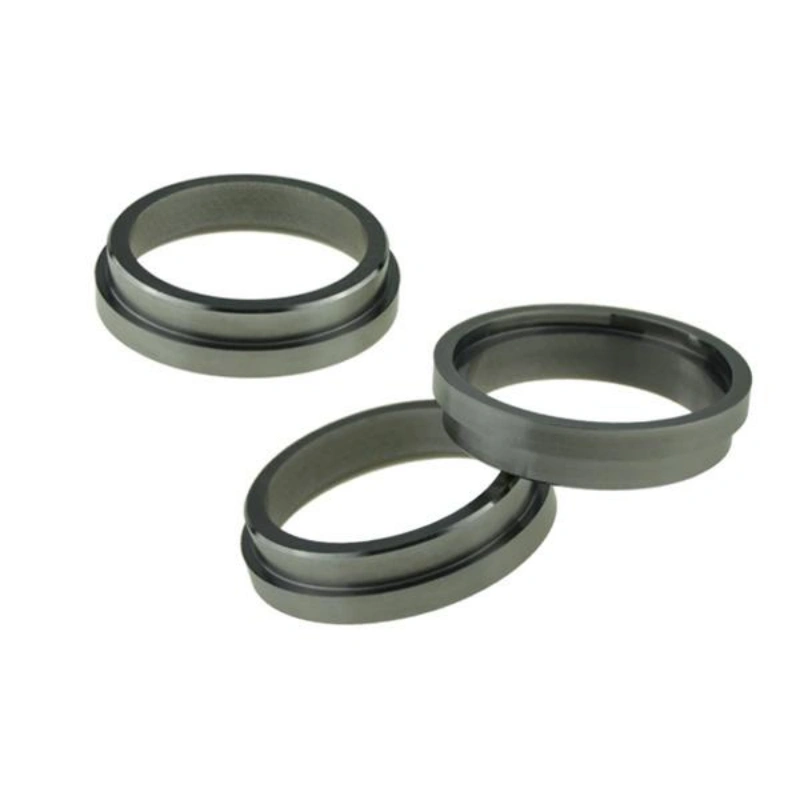


Both lip seals and mechanical seals are used to prevent fluid leakage along a rotating shaft, but they differ in their sealing mechanisms and the operating conditions for which they are suitable.
| Comparison | Lip Seal | Mechanical Seal |
|---|---|---|
| Sealing Principle | Flexible lip contacts the rotating shaft. | Rotating and stationary faces form the seal. |
| Complexity | Simple structure with fewer parts. | More complex with seal faces, springs, and secondary seals. |
| Pressure Capability | Better suited to low-pressure service. | Suitable for a wider pressure range. |
| Speed Capability | Limited by lip material, lubrication, and friction heat. | Handles wider speed ranges with proper lubrication and cooling. |
| Temperature | Mainly limited by lip material and operating conditions. | Depends on face materials, secondary seals, and cooling. |
| Leakage Control | Good for retaining lubricants and excluding contaminants. | Better for applications requiring tighter process leakage control. |
| Initial Cost | Lower. | Higher. |
| Installation & Maintenance | Easier to replace; shaft condition is important. | Requires more precise installation and may need support systems. |
| Typical Applications | Gearboxes, bearing housings, lubrication systems. | Centrifugal pumps, chemical pumps, process pumps. |
Tip: There is no absolute superiority or inferiority between the two. A standard lip seal is not suitable as a direct replacement for a mechanical seal in a pressurized pump, just as a mechanical seal may not necessarily be suitable for a simple lubricating oil sealing application.
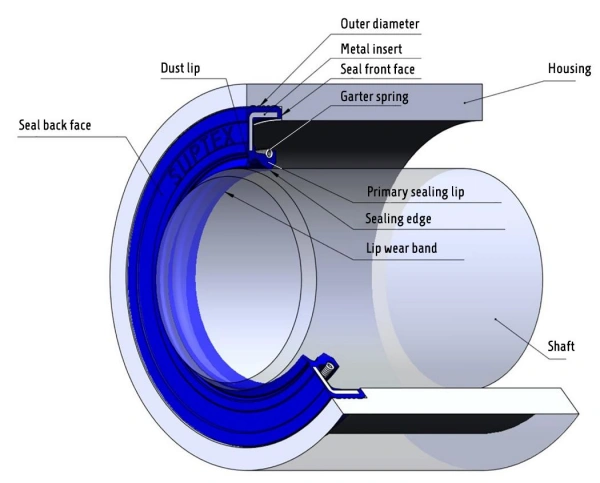
Lip seals rely on a flexible lip. It contacts the surface of the rotating shaft. Mechanical seals rely on two precision-machined sealing faces. They fit together to create the seal. Understanding this difference makes it easier to decide. You will know why they suit different types of equipment.
A lip seal consists of a metal frame, an elastic sealing lip, and a spring. The sealing lip is made of rubber or other elastic materials and fits snugly against the surface of the rotating shaft. Some designs also include a garter spring to help maintain contact force on the lip.
Tip: A tighter fit is not necessarily better for the lip. Excessive contact force may increase friction and temperature rise, accelerating material wear. Insufficient lubrication may also cause dry friction.
| Comparison | Lip Seal | Mechanical Seal |
|---|---|---|
| Sealing Location | Between the sealing lip and rotating shaft. | Between the rotating and stationary seal faces. |
| Sealing Force | Lip elasticity, interference fit, and spring force. | Spring force, process pressure, and fluid-film balance. |
| Lubrication | Thin lubricant film between lip and shaft. | Fluid film between the seal faces. |
| Main Wear Area | Sealing lip and shaft contact surface. | Rotating and stationary seal faces. |
| Typical Applications | Gearboxes, bearing housings, oil sealing. | Centrifugal pumps, chemical pumps, process equipment. |
If your equipment primarily requires lubrication and operates at low pressure, the contact seal of a lip seal is simpler and more practical. If you need to seal process fluids being conveyed under pressure, the face seal design of a mechanical seal is more suitable.
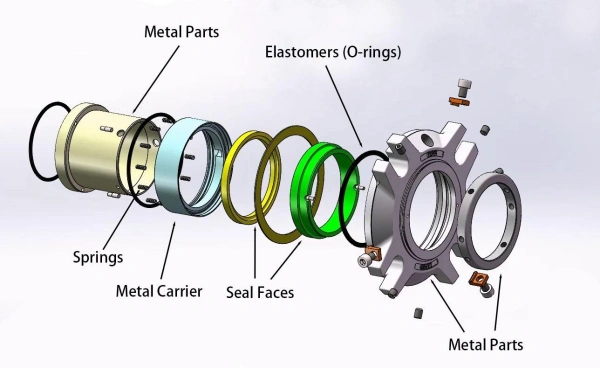
Lip seals and mechanical seals differ significantly in terms of structure, materials, and sealing contact methods. These differences affect the seals’ wear resistance, frictional heat generation, compatibility with various media, and operational reliability.
When selecting sealing materials, one should not focus solely on hardness or price; it is also necessary to consider the chemical properties of the medium, temperature, lubrication conditions, and the risk of wear.
| Material | Common Use | Key Features |
|---|---|---|
| NBR | Lip seals and some secondary seals. | Good for mineral oils and grease; limited temperature and chemical resistance. |
| FKM | Lip seals and mechanical seal secondary seals. | Good oil and heat resistance, but not compatible with all chemicals. |
| PTFE | Special lip seals and secondary seals. | Low friction and broad chemical resistance; requires careful installation. |
| Carbon Graphite | Mechanical seal faces. | Good self-lubricating properties; sensitive to abrasive particles. |
| Silicon Carbide (SiC) | Mechanical seal faces. | Hard, wear-resistant, and corrosion-resistant; brittle and sensitive to thermal shock. |
| Tungsten Carbide (TC) | Mechanical seal faces. | High wear resistance and mechanical strength; chemical resistance depends on grade and binder. |
The most important difference between the two lies in where the friction occurs.
In a lip seal, friction occurs primarily between the lip and the shaft surface. When the shaft rotates continuously, insufficient lubrication, an excessively rough shaft surface, or improper lip contact force can lead to overheating and wear of the lip.
In a mechanical seal, friction and wear occur primarily between the two sealing faces. During normal operation, an extremely thin fluid film is required between the faces to reduce friction and dissipate heat.
Tip: Higher hardness does not necessarily mean better sealing performance. For mechanical seals, the material pairing of the two sealing faces must be considered, while for lip seals, both the lip material and the condition of the shaft surface must be taken into account.
When making an actual selection, you should first confirm that the materials of the seal in contact with the medium are compatible, and then check the lubrication, surface condition, and assembly conditions at the sealing contact points.
Carefully inspect the shaft surface for scratches, corrosion, or wear grooves, and verify that the shaft’s dimensions, surface roughness, and eccentricity meet the manufacturer’s specifications.
In addition to the face materials, confirm that the materials of the O-rings, springs, and other wetted parts are suitable, and ensure that the precision sealing faces are not contaminated or damaged during installation.
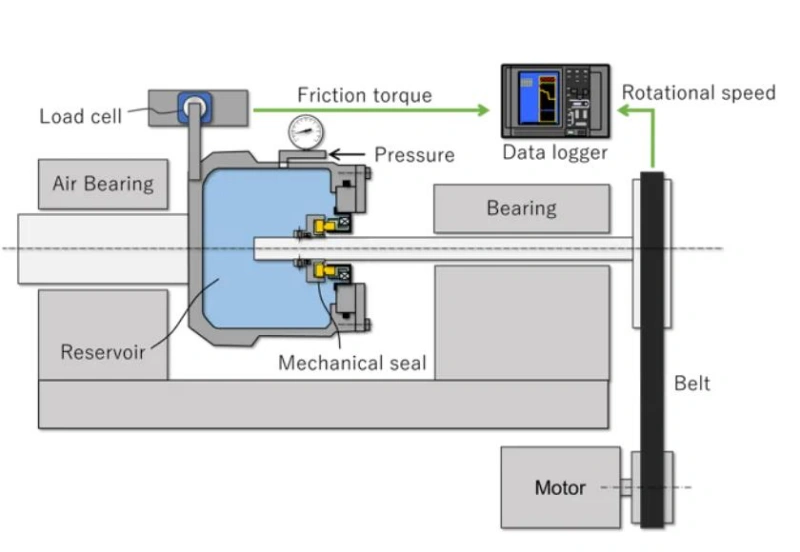
When selecting lip seals and mechanical seals, pressure, speed, and temperature are three key parameters. They directly affect the friction-induced heat, material aging, and operational reliability of the seals.
Tip: Pressure, speed, and temperature cannot be evaluated entirely in isolation. Even if a seal meets the nominal upper limits for each of these three parameters individually, this does not mean it can operate continuously under all these extreme conditions.
Both lip seals and mechanical seals are used to control media leakage around rotating shafts, but they differ in their leak control capabilities and fluid compatibility.
| Fluid Type | Lip Seal | Mechanical Seal |
|---|---|---|
| Lubricating Oil / Grease | Well suited; verify elastomer compatibility. | Suitable, but may be unnecessary for simple lubrication systems. |
| Water / Coolant | Requires a design suitable for water service. | Common in pumps; proper face lubrication is required. |
| Corrosive Chemicals | Requires chemical-resistant materials and design. | Can use corrosion-resistant faces and secondary seals. |
| Fluids with Solids | Particles can wear the lip and shaft surface. | Requires suitable materials and seal design. |
| Flammable / Toxic Fluids | Standard lip seals are not preferred as the primary process seal. | Use a mechanical seal system designed for leakage control. |
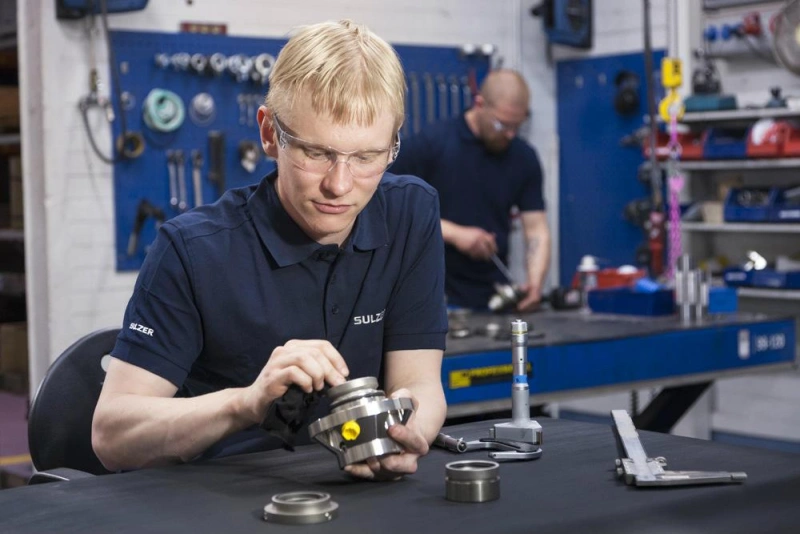
The service life of lip seals and mechanical seals depends not only on the seals themselves but is also influenced by lubrication conditions, the properties of the medium, operating temperature, the condition of the shaft, and the quality of installation.
Lip Seal: Under conditions of adequate lubrication, a well-maintained shaft surface, and stable operating conditions, lip seals can operate for extended periods. However, as usage time increases, the lip may gradually wear down, and the rubber may age due to the effects of temperature and the medium.
Mechanical Seal: When the sealing faces are well-lubricated, the medium is clean, and the equipment operates stably, mechanical seals can also achieve a long service life.
Tip: It cannot be simply assumed that a mechanical seal will always have a longer service life than a lip seal. Without specific model numbers and operating conditions, it is impossible to provide a reliable, fixed service life estimate.
A failure mode refers to the specific way in which a seal loses its normal function, such as wear, cracking, leakage, or damage to the sealing faces.
| Common Failure | Lip Seal | Mechanical Seal |
|---|---|---|
| Wear | Lip and shaft surface wear. | Seal face scoring or abnormal wear. |
| Poor Lubrication | Heat, hardening, or lip damage. | Overheating, thermal cracking, or face wear. |
| Material Aging | Rubber hardening, cracking, or loss of elasticity. | O-ring aging and reduced secondary sealing. |
| Contamination | Particles damage the lip and shaft. | Particles damage faces or prevent proper closing. |
| Incorrect Installation | Rolled lip, scratches, or displaced spring. | Face damage, wrong dimensions, or uneven loading. |
| Shaft Vibration / Runout | Unstable contact and localized wear. | Unstable face contact and possible leakage. |
Lip Seal: Focus on inspecting lubrication and the condition of the shaft surface. Regularly check for oil leaks, abnormal lip temperatures, and any ingress of dust or moisture; when replacing the seal, verify the dimensions and material of the new lip seal and inspect the shaft surface for scratches or wear grooves.
Mechanical Seal: Focus on inspecting the operating conditions of the sealing faces. Pay attention to whether the pump exhibits abnormal leakage, vibration, or temperature rise, and verify that the seal flushing or cooling system is functioning properly; Seal Flush improves the environment within the seal chamber through the flow of an appropriate fluid, aiding in lubrication, heat dissipation, or reducing the impact of contaminants.
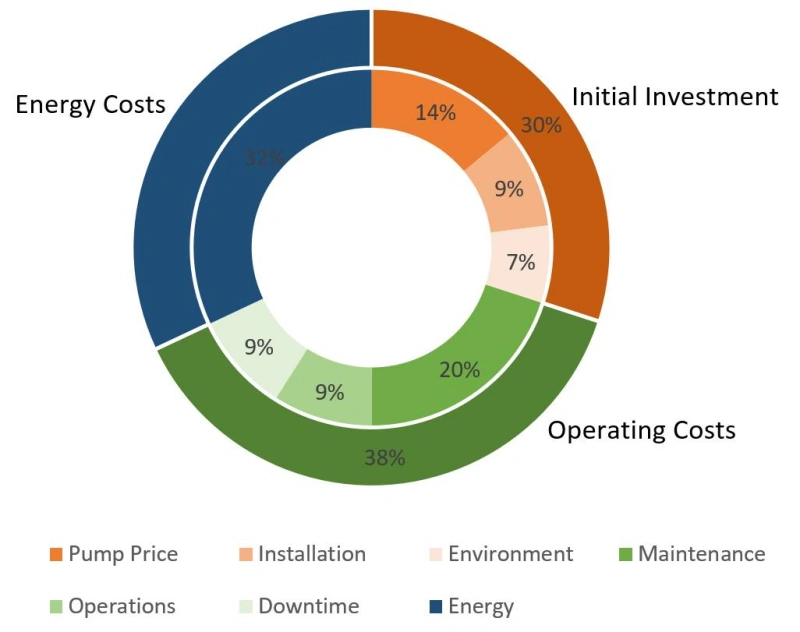
When selecting lip seals and mechanical seals, the purchase price is only part of the total cost. You must also consider the costs of installation, replacement, maintenance, leakage, and equipment downtime. The most economical choice is not necessarily the seal with the lowest purchase price.
Lip Seal: Simple in structure, with few parts; standard models are readily available, and installation and replacement are convenient. It offers a cost advantage in low-pressure lubrication environments such as standard gearboxes and bearing housings.
Mechanical Seal: Requires precision-machined end faces, auxiliary seals, and loading mechanisms, resulting in a higher purchase price; some also require a flush system or barrier fluid system, further increasing the initial investment.
Tip: If the equipment itself requires the use of a mechanical seal, do not switch to a lip seal simply to reduce procurement costs. It is only meaningful to compare costs if both options first meet the same operating conditions and safety requirements.
TCO (Total Cost of Ownership) = The total cost of equipment over its entire service life, not just the initial purchase price. In addition to procurement costs, three other cost categories must be considered:
Simplified TCO Formula:Total Cost = Purchase Cost + Installation Cost + Maintenance and Replacement Cost + Leakage Losses + Downtime Losses + Auxiliary System Operating Costs
Depending on actual operating conditions, seal-related energy costs, environmental treatment costs, and other expenses may be included. For long-term projects, the time value of money must be considered.
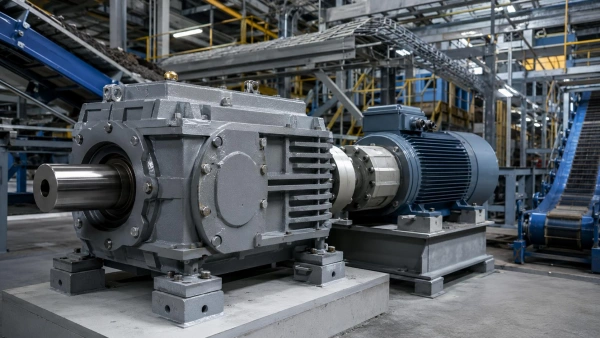
Lip seals are better suited for low-pressure lubrication systems, while mechanical seals are better suited for industrial pumps that require control of pressurized fluid leakage. However, the type of seal should not be determined solely by the equipment’s name. The key factors in selecting a seal include the seal location, the properties of the medium, the operating pressure, and the allowable leakage level.00
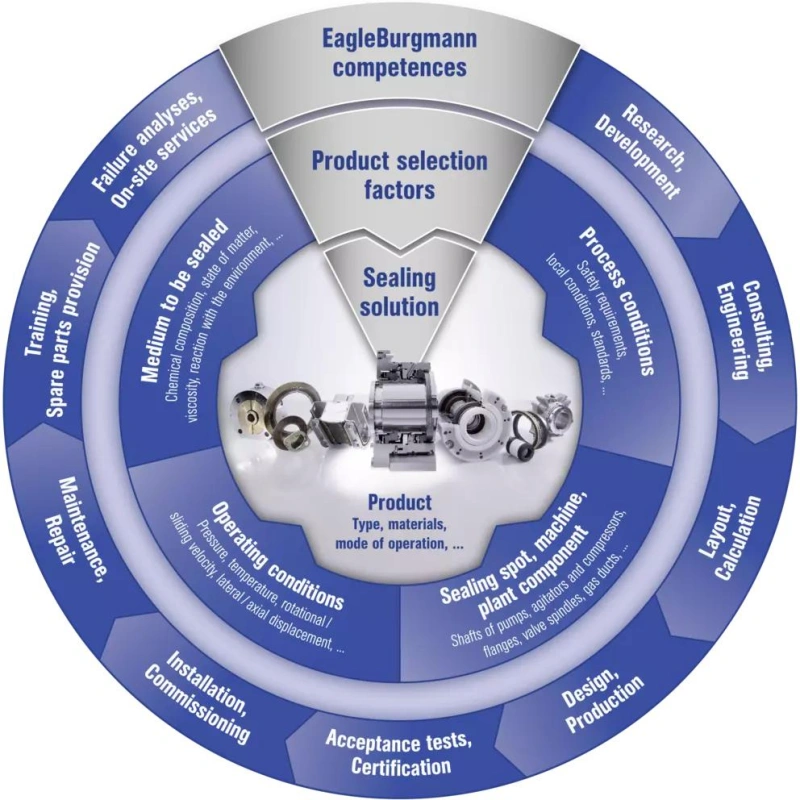
When selecting a model, one should not consider only price, size, or material; instead, a comprehensive evaluation must take into account the equipment type, sealing location, properties of the medium, operating pressure, rotational speed, temperature, and permissible leakage levels.
For gearboxes and bearing housings, the primary goal is to retain oil and prevent contamination; Lip Seals are the preferred choice. For pump shafts, the primary goal is to prevent process fluid leakage; Mechanical Seals are the preferred choice. Both types of seals may be used on the same piece of equipment; the determination is based on location, not the equipment name.
For Lip Seals, focus on material compatibility, linear velocity, and pressure differential; for Mechanical Seals, also consider lubricity, volatility, and solids content. Selection must take into account the medium, temperature, pressure, and velocity comprehensively; do not rely solely on individual limit values.
For standard lubricating oils and low-risk operating conditions, a lip seal is usually sufficient; for flammable, toxic, corrosive, or environmentally hazardous media, a specialized mechanical seal is required, with double-face seals and auxiliary systems used when necessary. A mechanical seal does not guarantee zero leakage; permissible leakage levels must be confirmed based on risk and regulations.
For lip seals, check the shaft surface, shaft diameter, bore diameter, and lip orientation; for mechanical seals, check the seal chamber, shaft sleeve, shaft runout, and installation space. When flushing, cooling, or isolation fluid systems are involved, confirm that the site meets the necessary installation and maintenance conditions.
Lip seals have a low initial cost and are easy to replace. Mechanical seals have a high initial cost but may be more cost-effective in applications involving continuous operation, significant leakage losses, or high downtime costs. Do not modify the existing sealing configuration based solely on cost; before making any changes, verify that the shaft, seal chamber, and equipment design are compatible.
Not exactly. An “oil seal” typically refers to a seal used to prevent lubricant leakage, while a “lip seal” is a type of seal named for its lip-shaped structure. Common rotary shaft oil seals are a type of lip seal, but not all lip seals are used to seal fluids.
Standard radial lip seals are typically suitable for operating conditions near atmospheric pressure or with small pressure differentials; some specialized high-pressure models can withstand higher pressures. Specific limits depend on the seal’s design, materials, rotational speed, and temperature, and should be determined by the manufacturer’s specifications.
Yes, but it depends on the sealing location and operating conditions. Lip seals are commonly used in pump bearing housings and can also be used for sealing the shafts of some low-pressure pumps. However, for industrial pumps that convey liquids under pressure, mechanical seals are generally more suitable.
For abrasive fluids containing sand, mineral slurry, and the like, specialized mechanical seals are typically the preferred choice. These seals can incorporate wear-resistant face materials and a flushing or isolation fluid system to reduce wear caused by particles. However, standard mechanical seals may also be damaged by particles.
Generally, yes. Adequate lubrication is required between the lip and the rotating shaft to reduce friction, heat generation, and wear. Standard rubber lip seals are not suitable for long-term dry running unless they feature a specialized design verified by the manufacturer.
Generally, they cannot be directly replaced. The two differ in structure, mounting dimensions, and sealing mechanisms. Before replacement, the shaft diameter, installation space, seal chamber, lubrication conditions, and auxiliary systems must be inspected; equipment modifications may be necessary.
The shaft surface should be smooth and free of scratches, corrosion, and visible wear grooves. For some common rubber radial shaft seals, manufacturers recommend a shaft surface roughness (Ra) of approximately 0.2–0.8 μm; however, specific requirements depend on the model, and attention must also be paid to the machining marks on the shaft surface.
Common causes include incorrect installation orientation, scratches on the lip, shaft surface wear, dimensional mismatch, insufficient lubrication, or excessive internal pressure. Additionally, shaft eccentricity and damage to the mounting bore may also cause leakage. You should first inspect the installation and the condition of the shaft surface rather than immediately replacing the seal again.
There is no definitive “better” option between lip seals and mechanical seals; the key is whether it is suitable for your equipment and operating conditions.
When selecting a seal, don’t focus solely on the purchase price or a single parameter. You must consider the properties of the medium, pressure, rotational speed, temperature, lubrication conditions, shaft surface condition, allowable leakage rate, and maintenance conditions. You must also confirm that the seal material is compatible with the medium. Risks such as wear, contamination, vibration, and installation errors should also be assessed in advance.
If you are selecting the right lip seal or mechanical seal for your equipment, Sakowitz can help you evaluate the most suitable sealing solution based on the medium, pressure, temperature, rotational speed, and leakage requirements.
—— We Will Provide You With Professional OEM Solutions.
Whether you require pump bearings, pump valves, mechanical seals, or other custom-engineered components, we support production based on your drawings as well as rapid prototyping.
Please complete the form on the right and upload your technical drawings or specifications. Our engineering team will review your requirements within 24 hours and provide a detailed quotation, application recommendations, and delivery schedule.
Copyright © 2025 Sakowit, All rights reserved.
WhatsApp us