Mechanical seals are critical components in pumps, mixers, and rotating equipment. Yet even the best-designed seals can fail prematurely, leading to leakage, equipment downtime, and expensive repairs. Understanding the root causes of mechanical seal failure is essential for improving reliability and extending service life.
1. Common Causes of Mechanical Seal Failure
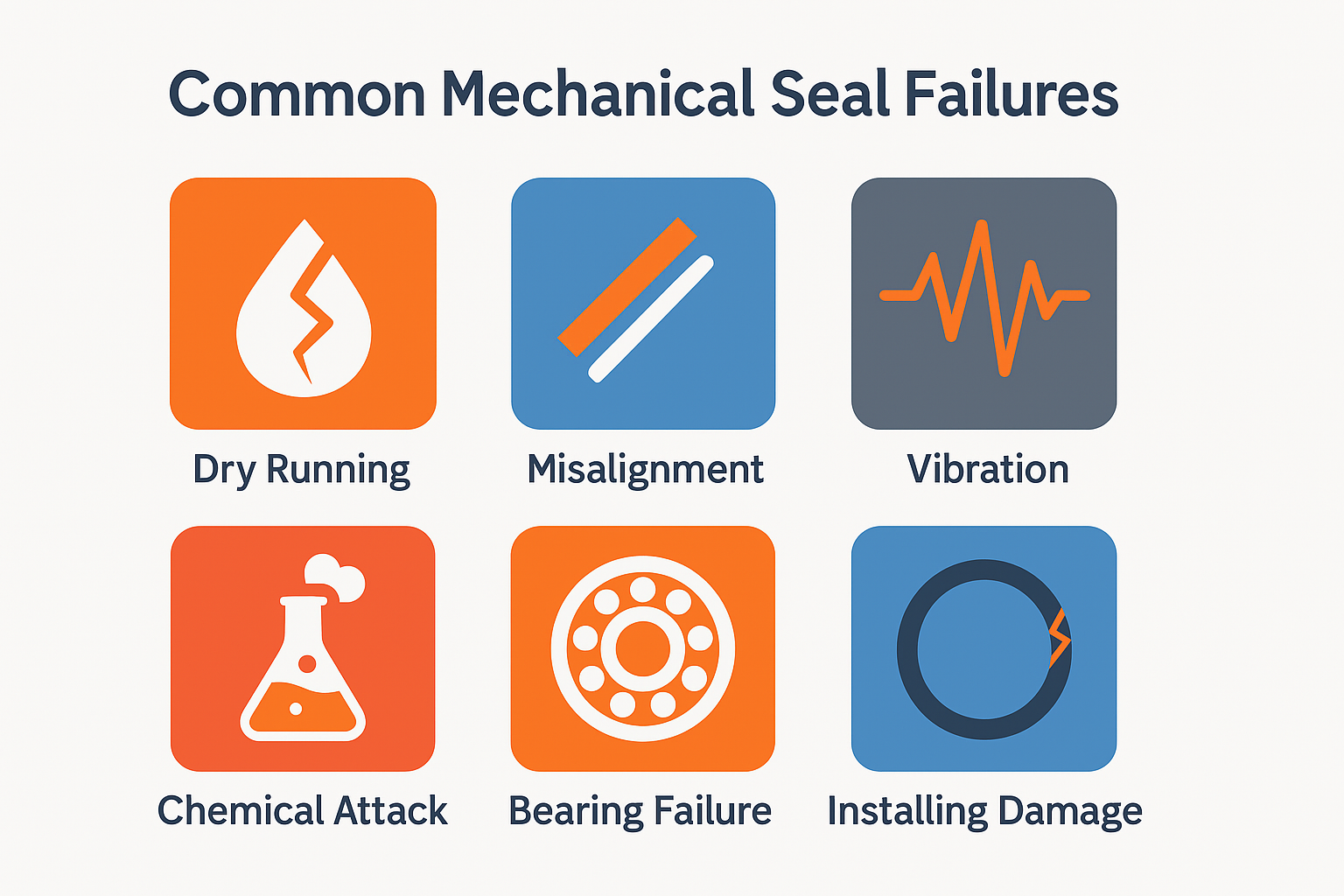
- Improper Installation:
Misalignment, uneven torque, or contamination during installation can lead to immediate or progressive failure.
- Dry Running:
Running a pump without fluid causes the seal faces to overheat due to lack of lubrication, leading to rapid wear and cracking.
- Chemical Incompatibility:
Using the wrong seal material in aggressive chemical environments (e.g., acids, solvents) can degrade elastomers or faces quickly.
- Excessive Vibration:
Vibration from misaligned shafts or cavitation can damage seal faces and cause them to open prematurely.
- High Temperature or Pressure Surges:
Exceeding the seal’s design limits can lead to blistering, extrusion, or failure of o-rings and secondary components.
- Poor Lubrication or Dirty Fluids:
Contaminants like sludge, sand, or metal particles can scratch sealing surfaces and cause leakage.
2. How to Prevent Mechanical Seal Failure
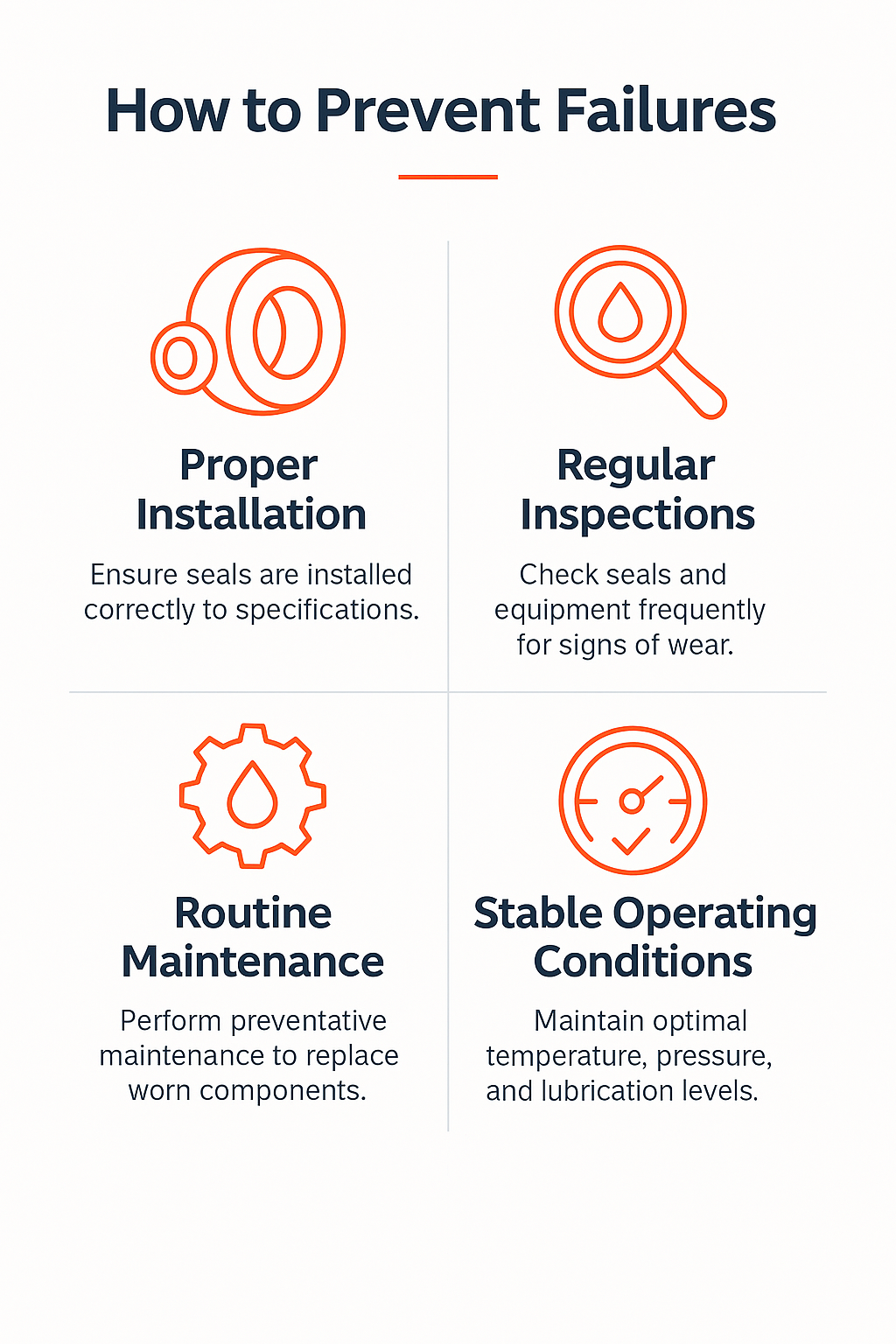
✅ Ensure proper alignment and installation torque according to manufacturer specs.
✅ Always prime the pump before starting to prevent dry running.
✅ Select seal materials compatible with process fluids (e.g., FKM, FFKM, silicon carbide).
✅ Install vibration dampening systems or correct any shaft misalignment.
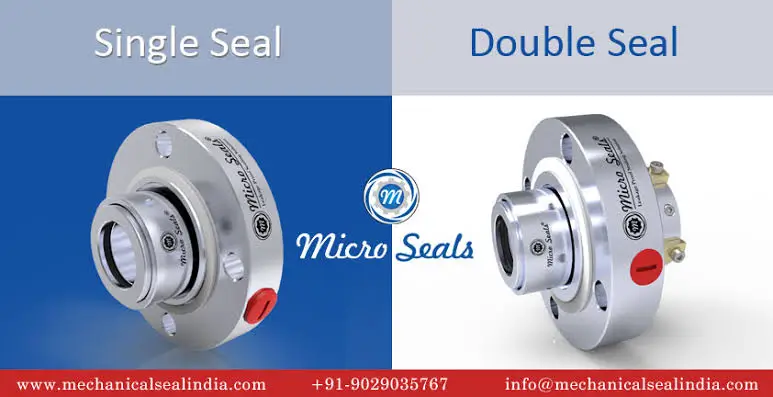
✅ Use double mechanical seals for high-pressure or hazardous environments.
✅ Implement routine fluid filtration to reduce contamination.
3. Recommended Products
Cartridge Mechanical Seal → https://sakowit.com/products/cartridge-mechanical-seal/
Double Mechanical Seal → https://sakowit.com/products/double-mechanical-seal/
Pump Seals for Industrial Use → https://sakowit.com/mechanical-seal-landing-page/
4. FAQ: Mechanical Seal Failures
- Q: Why do new mechanical seals fail so quickly?
A: Most early failures are due to improper installation or dry running during startup.
- Q: Can I repair a failed mechanical seal?
A: Some components like o-rings or springs can be replaced, but it’s usually safer and more cost-effective to replace the entire seal.
- Q: How long should a mechanical seal last?
A: With proper installation and operating conditions, seals can last 2 to 5 years depending on application.
- Q: How do I choose the right seal material?
A: Base your selection on chemical compatibility, pressure, temperature, and fluid type. Learn more at https://sakowit.com/seal-materials/fkm-vs-ffkm/
5. External Resources
Flowserve: Troubleshooting Mechanical Seals: https://www.flowserve.com/en/resources/mechanical-seals/
John Crane: Causes of Seal Failure: https://www.johncrane.com/en/resources
Still Facing Seal Failures?
Our team can help you troubleshoot your system and recommend the best seal for your pump or mixer.
Contact Us for Technical Support → https://sakowit.com/mechanical-seal-landing-page/